Cameroonian Food

Cameroonian cuisine mixes the forest and the savanna: cassava, plantain and cocoyam as staples, red palm oil as the base note, and French, English and African cooking traditions layered together. Street food is a way of life here, from morning beignets-haricot to the evening smoke of soya grills.

Dining out in Cameroon

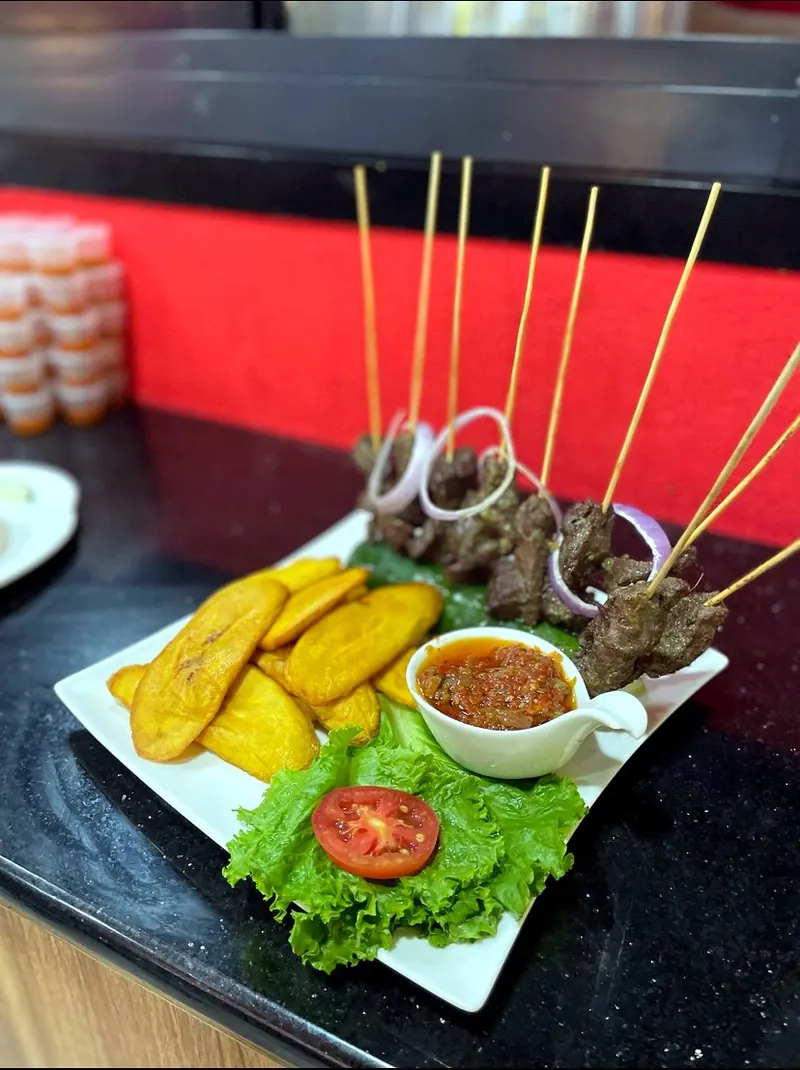
The maquis is the classic Cameroonian eatery: open-air, loud, and serving the full repertoire with cold drinks. Street stalls cover breakfast and late night: puff-puff (sweet fried dough), beignets with beans, and soya skewers off the grill. Hotel restaurants in Douala and Yaounde cover the international end.

Etiquette: wash your hands before eating, eat with your right hand when dishes are served for sharing, and greet the table when you arrive.

Dishes and drinks

Cameroonian cuisine has a large variety of dishes and regional specialities. Below is a selection of the most important.

Regional food guides

Cameroon is divided into ten regions, each with its own culinary traditions.

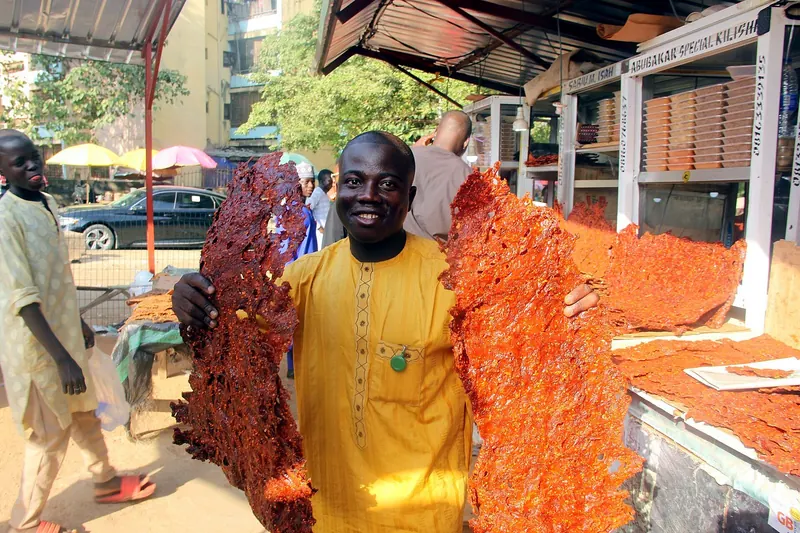
Adamawakilichi (spicy dried beef, the regional speciality)
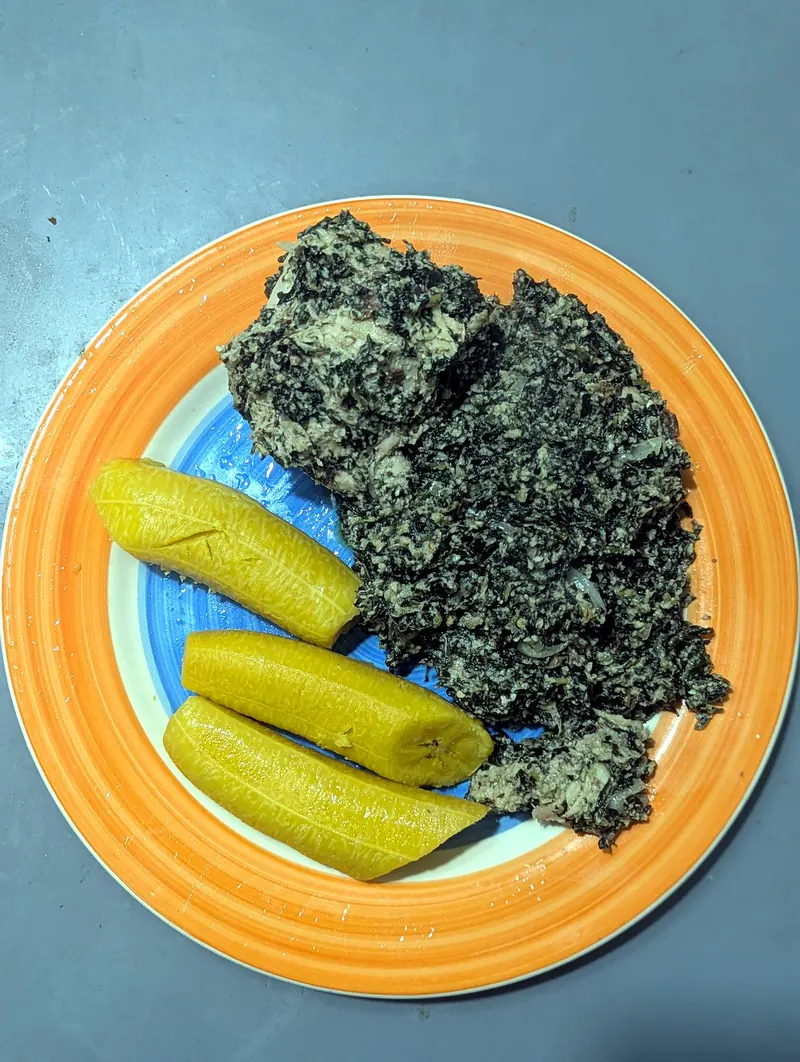
Centresaka-saka (pounded cassava leaves, the forest-region staple)
Eastforest river fish preparations
Far Northfolere (hibiscus drink); grilled meats
Littoralndole (the national dish); mbongo tchobi (Bassa black soup); miondo and bobolo (cassava sticks)
Northsoya (spicy grilled skewers, born in the north); folere (hibiscus drink)
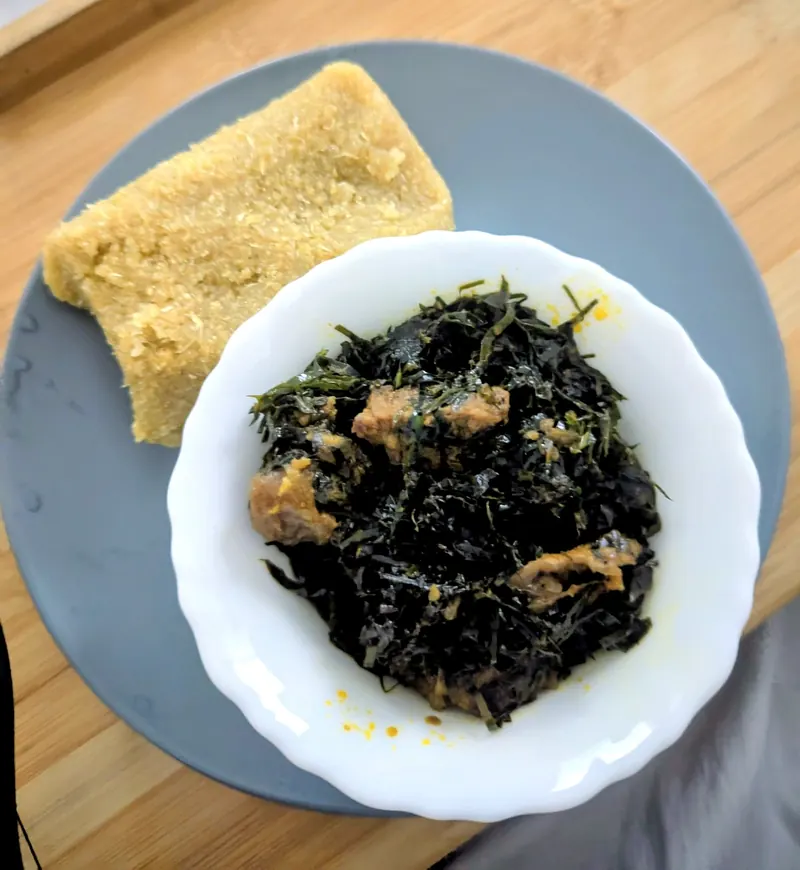
Northwestachu (pounded cocoyam with yellow soup); fufu corn with njama-njama
Southgrilled fish with miondo; saka-saka
Southwesteru (Manyu); ekwang (Oroko/Bafaw/Bakweri); Tole tea
Westkoki (black-eyed-pea pudding); kondre (plantain and goat stew)

Drinks

  • Folere: hibiscus drink, popular in the Sahelian north.
  • Palm wine: fresh sap tapped from palm trees in the coastal and forest regions, drunk the same day.
  • Certified products: Penja pepper and Oku honey both hold OAPI geographical-indication certification.