

Trains
The Reunification Express runs Hanoi to Ho Chi Minh City in about 30-36 hours; nobody rides it end to end. The useful segments are the overnight sleepers: Hanoi to Lao Cai (for Sapa), Hanoi to Hue, and Hue to Da Nang over the Hai Van Pass, one of Asia's great rail journeys.
Book soft sleepers (4-berth) well ahead in peak season. The railway's site and Baolau take foreign cards.

The Reunification Express on the north-south line: the Hue to Da Nang stretch over the Hai Van Pass is the scenic highlight. Photo via Wikimedia Commons.
Buses and sleeper buses
Sleeper buses are the backbone of Vietnamese travel: reclining berths, overnight runs, absurdly cheap. Hanoi to Sapa is about 6 hours, Hanoi to Ha Long 2.5, Ho Chi Minh City to the Mekong Delta 3-4.
Limousine vans (luxury minibuses with wide seats) now cover the popular routes and are worth the small premium.
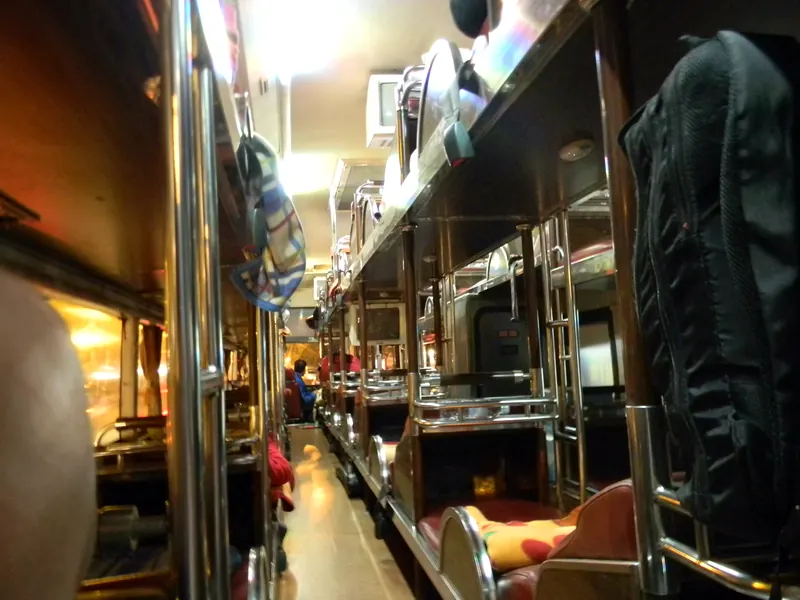
Inside a sleeper bus: reclining berths on the overnight runs between cities. Photo via Wikimedia Commons.
Flights
Vietnam Airlines, VietJet and Bamboo Airways link the main cities. Hanoi to Ho Chi Minh City is about 2 hours and often cheaper than the train. Book domestic flights a few weeks out for the best fares.
Boats and ferries
In the Mekong Delta and around Ha Long Bay, boats are transport, not just tours: ferries cross the delta's big rivers, slow boats link the floating markets, and cruise boats work the bay's islands.

A ferry crossing the Mekong River at My Tho, in the delta. Photo via Wikimedia Commons.
In the cities
Grab (the Southeast Asian Uber) works in every major city for cars and motorbike taxis; agree the price in the app and skip the haggling. Traditional metered taxis are fine too: Mai Linh and Vinasun are the reputable firms.
Renting a motorbike is the classic way to do the Ha Giang Loop or the Hai Van Pass, but only if you already ride: traffic is unforgiving. Always wear a helmet; it is the law.