Pacific seafood and the continent's best Asian kitchens
The Stanley Park Seawall, Vancouver. Photo via Wikimedia Commons.
How Vancouver eats
Vancouver's food scene sits at the meeting point of the Pacific and Asia: world-class Japanese restaurants, some of North America's best Chinese dining in nearby Richmond, and a deep bench of West Coast seafood.
Indigenous cooking traditions, spot prawns, wild salmon, and Dungeness crab give the city a local pantry few places can match, while Michelin recognition since 2022 has turned a handful of its dining rooms into genuine destinations.
Learn the foods
Start here, not with a restaurant. Learn what these foods are, where they come from, and how locals eat them, and the whole city opens up: every menu, every market, every street corner starts making sense.
BC Spot Prawns
Sweet, delicate local prawns harvested in May and June; served live and simply prepared at sushi counters and seafood restaurants during the short season. The annual Spot Prawn Festival at Fishermen's Wharf in False Creek marks their arrival.
Where it comes from: Spot prawns are a wild Pacific fishery with a season of only about six to eight weeks starting in May. The False Creek Spot Prawn Festival marks the opening, and for those weeks the prawns anchor menus across the city.
How to eat it: Eat them as simply as possible: boiled and peeled at the table, or raw as sashimi at a sushi counter. Sweetness fades fast, so same-day is the point.
Aburi (Flame-Seared) Sushi
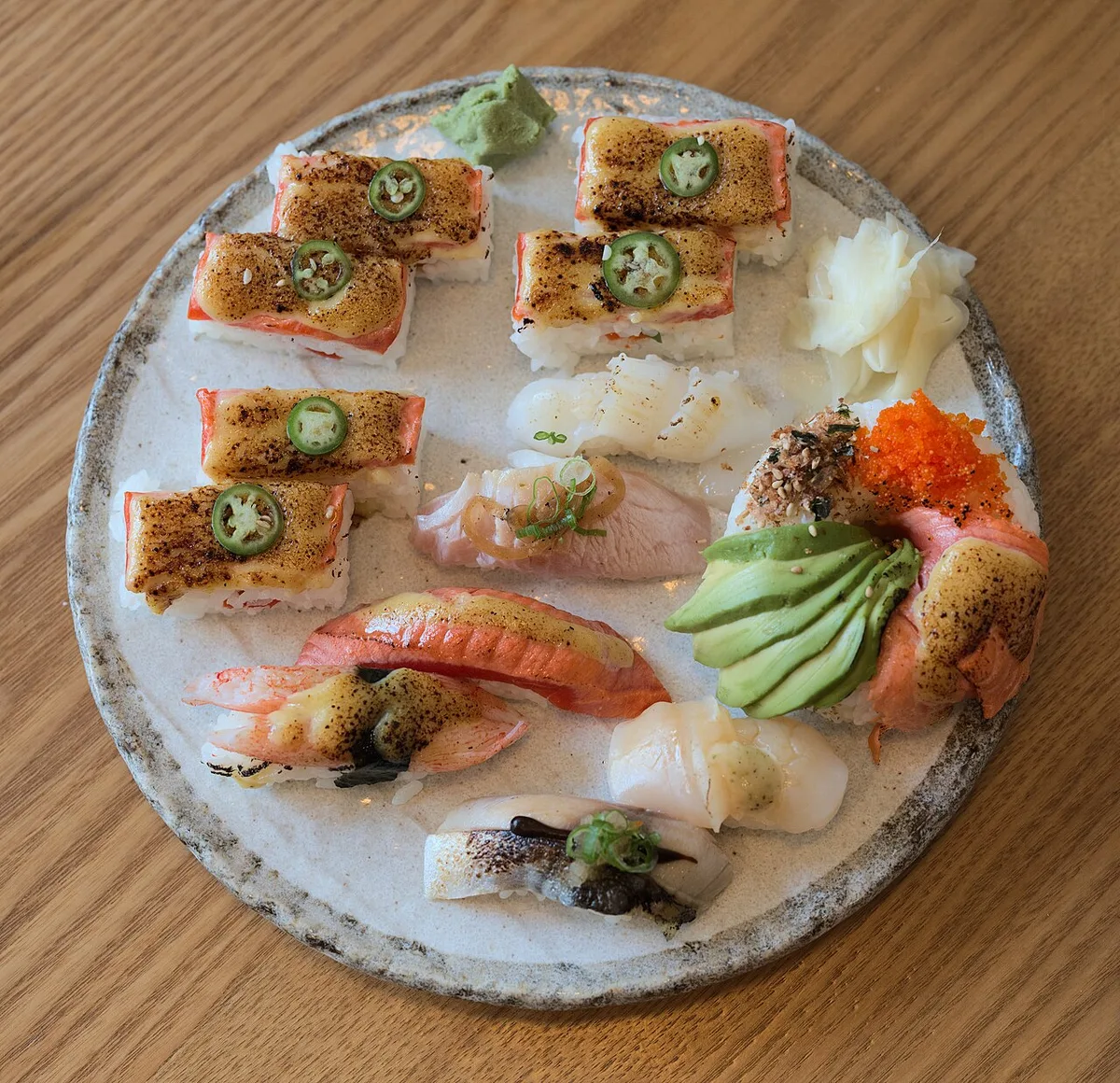
Vancouver's signature sushi style: nigiri or pressed oshi sushi lightly torched to caramelize the surface and release the fish's oils. Miku's salmon oshi is the dish most associated with the technique.
Where it comes from: Aburi means flame-seared, and Vancouver made it a signature: nigiri and pressed oshi sushi brushed with sauce and torched to order. Miku popularized the style from 2008, and its salmon oshi became the city's most copied dish.
How to eat it: Do not reach for the soy sauce; the chef has already seasoned it. Eat each piece in one bite, in the order served.
Richmond Dim Sum
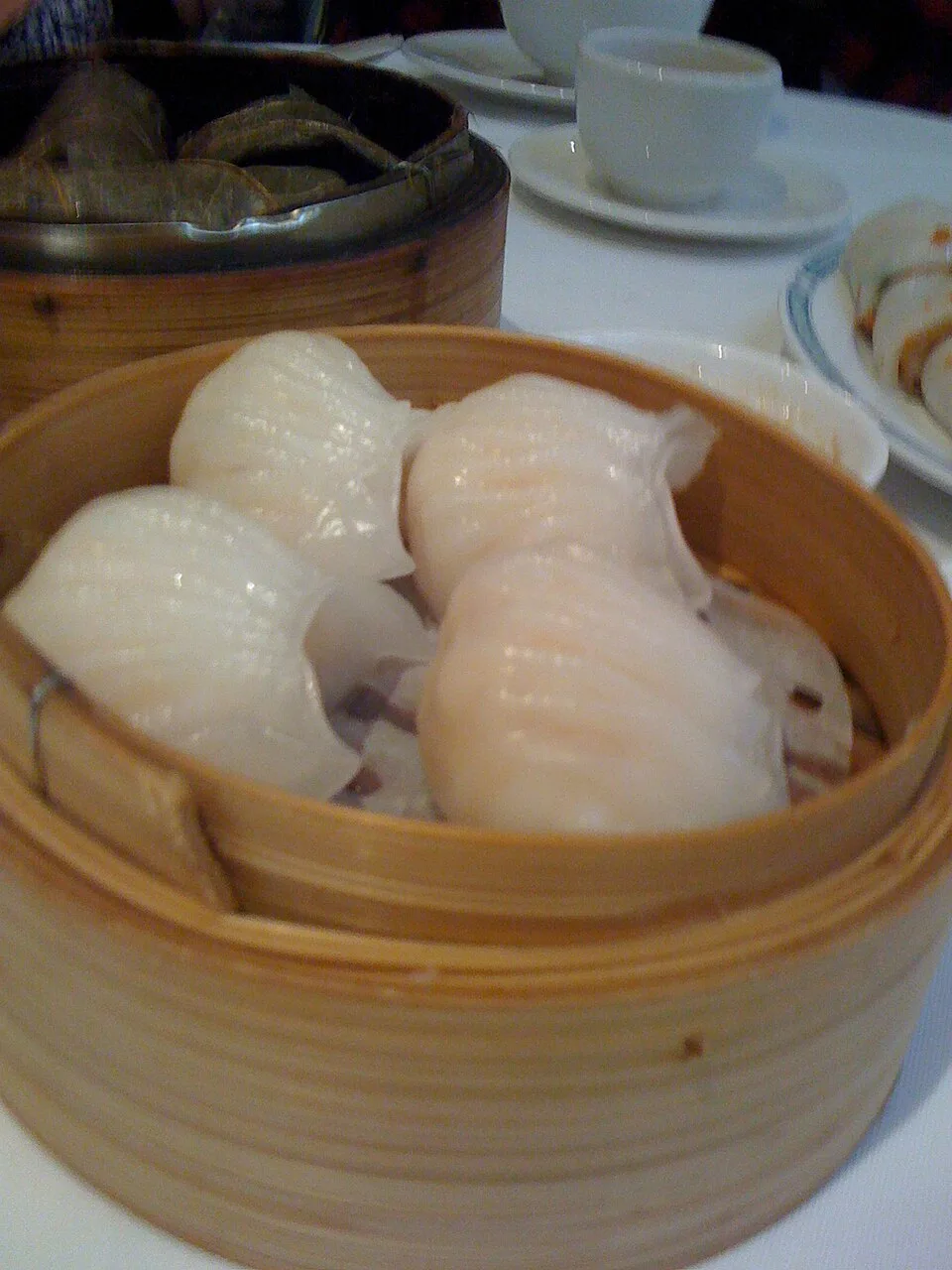
Cantonese small plates served from carts or order sheets in Richmond's big dim sum halls, at their liveliest on weekend mornings. Har gow, siu mai, steamed spare ribs, and egg custard tarts are the classics to chase.
Where it comes from: Waves of Hong Kong immigration in the 1980s and 1990s turned Richmond, the suburb south of Vancouver, into one of the strongest Cantonese food cities outside Asia. Dim sum is its flagship meal, served in big halls along No. 3 Road.
How to eat it: Go on a weekend morning and order off the sheet: har gow, siu mai, steamed spare ribs, egg tarts. When someone pours your tea, tap two fingers on the table to say thanks without interrupting the conversation.
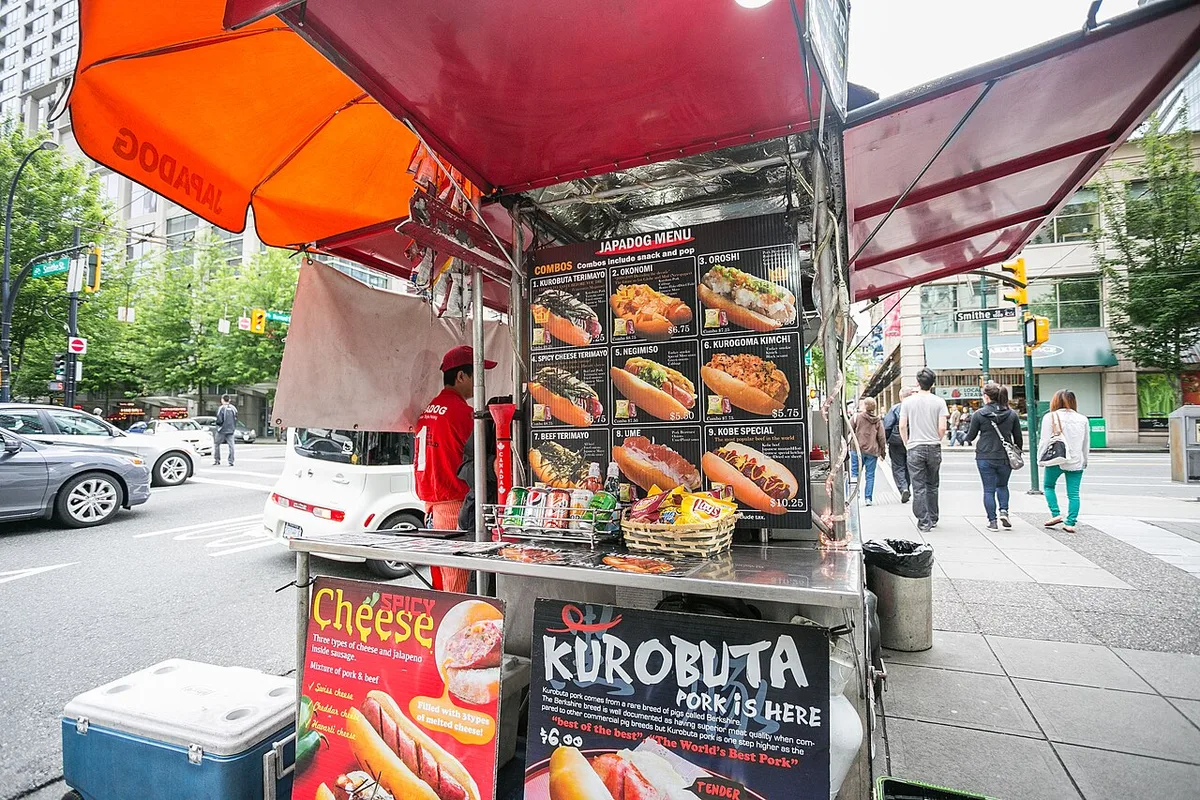
Japadog
Japanese-style hot dogs from carts and a Robson Street shop, topped with teriyaki sauce, Japanese mayo, seaweed, and grated daikon. An iconic Vancouver street food since 2005.
Where it comes from: Japadog began in 2005 as a single cart run by Noriki Tamura and became Vancouver's defining street food: Japanese toppings on quality dogs. The Robson Street shop followed the carts.
How to eat it: The classic order is the Kurobuta Terimayo: teriyaki sauce, Japanese mayo, and seaweed on a pork sausage.
Dungeness Crab
The sweet local crab of BC waters, served steamed, in seafood towers, or wok-fried with garlic at Chinese seafood restaurants. Live crab is most available from August through March.
Where it comes from: Dungeness is the sweet local crab of BC waters, pulled from traps along the Pacific coast. Chinese seafood restaurants made it a banquet centerpiece, wok-fried with garlic and green onion.
How to eat it: Order it live from the tank, wok-fried with garlic, and expect to use your hands and a bib. Most available from August through March.
Wild Salmon
Five wild species run through BC waters, with sockeye the most celebrated; menus feature it grilled on cedar planks, smoked, and in sushi. Cedar-plank salmon traces back centuries to Pacific Northwest Indigenous cooking.
Where it comes from: Five wild salmon species run BC rivers, and First Nations have fished these runs for millennia. Sockeye is the prized eating fish, rich and deep red; pink and chum fill the rest of the year.
How to eat it: In season, order it cedar-planked or as sashimi. If a menu just says salmon with no species named, ask; the species is the whole story.
Nanaimo Bars
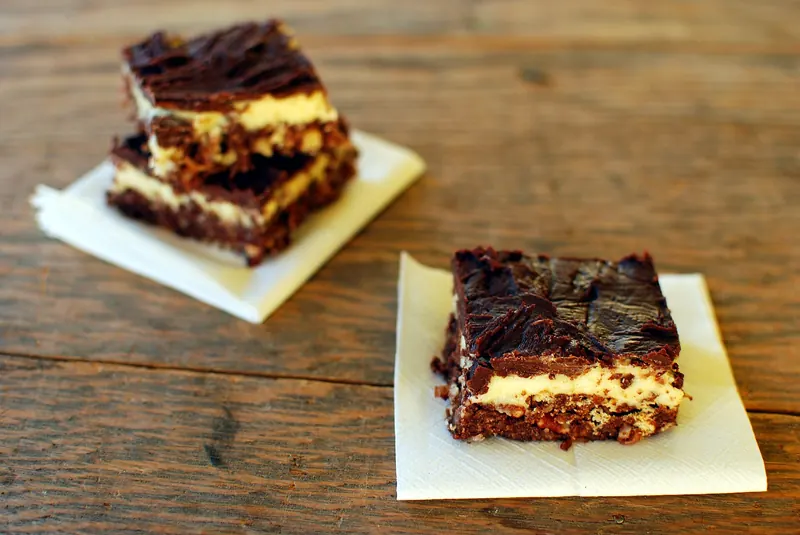
A no-bake BC dessert of crumb-coconut base, custard middle, and chocolate ganache top, named for the Vancouver Island city. Found in bakeries and cafes across Metro Vancouver.
Where it comes from: The Nanaimo bar comes from the Vancouver Island city of the same name: a chocolate-coconut crumb base, custard buttercream, and a chocolate top. The first known recipes circulated in Nanaimo in the early 1950s, and it became Canada's most famous square.
How to eat it: It is very sweet by design. A small piece with black coffee is the correct ratio.
Street food, decoded
Vancouver's street food is really market food, wharf food, and one legendary hot dog cart. Strict vending rules kept carts rare, so the city's casual eating concentrated where the ingredients land: Granville Island's market halls, the fishing docks at Steveston, and Richmond, where a seasonal night market and the dim sum halls do the work street stalls do in other cities.
The calendar rules everything. Spot prawns for a few weeks in late spring, salmon through the summer, the night market on summer weekends. Time your eating to what is running, not to a list of restaurants.
The dim sum hall
Richmond's big Cantonese halls serve dim sum from order sheets (the carts are mostly gone) to rooms full of families. Weekend mornings are the main event, with lines by 10 am.
The sushi counter
Vancouver eats sushi at every level, from conveyor-belt lunch to omakase counters, and its own style, aburi, is flame-seared and pre-seasoned by the chef. Richmond and downtown hold the deepest benches.
The night market stall
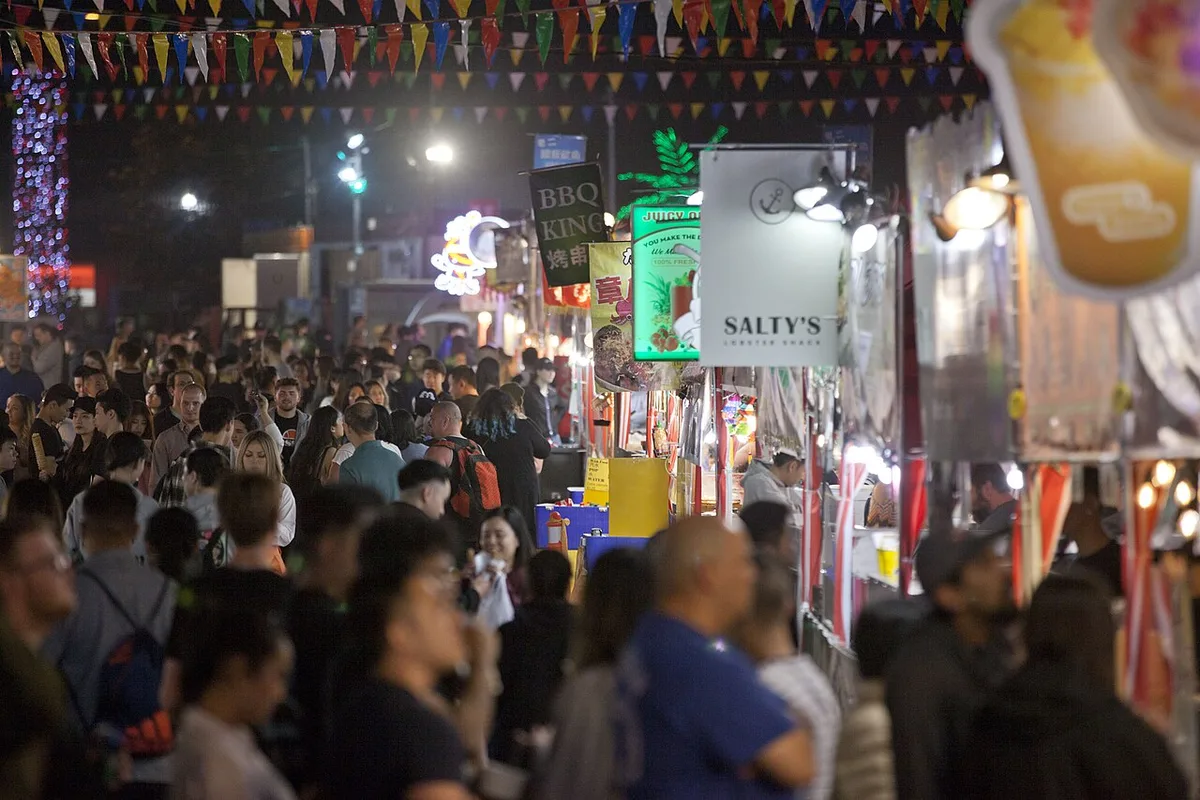
The Richmond Night Market runs on summer weekends near Bridgeport Station: skewers, tornado potatoes, dragon's beard candy, and hundreds of stalls. Go hungry, bring cash for the small stalls, and expect a crowd.
The wharf shack
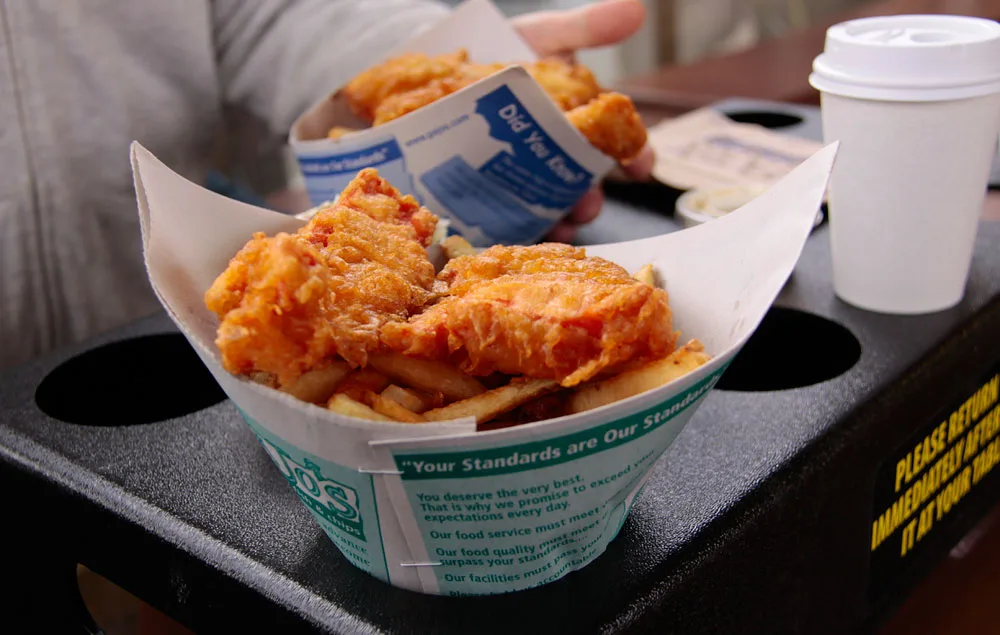
At Steveston, the old cannery village at the Fraser River's mouth, fish and chips shacks and chowder stands line the wharf, and on weekends fishermen sell the catch straight off the boats at the public sales float.
The food truck
Downtown's licensed trucks cluster around office blocks and the art gallery at lunch. Japadog started as one of these carts in 2005 before it became the city's signature.
The farmers market stall
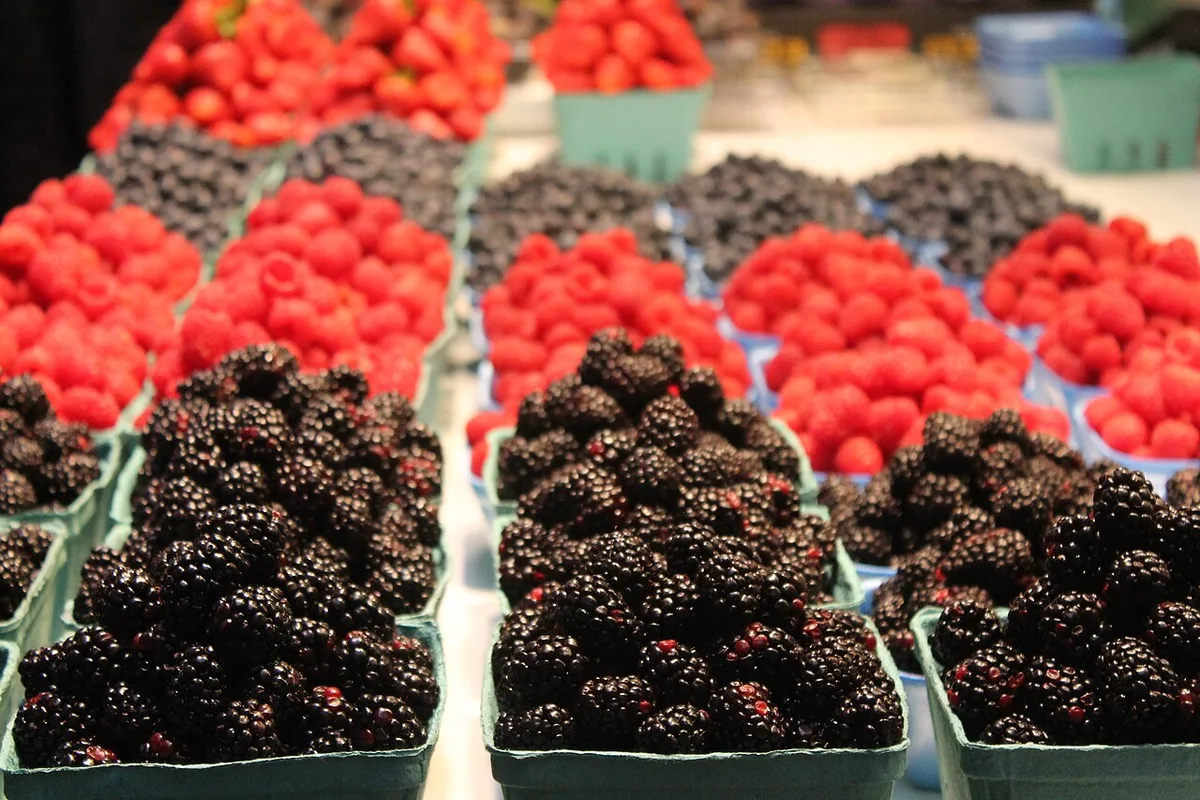
Weekly farmers markets (Trout Lake on Saturdays, Kitsilano on Sundays) are where BC produce, bakeries, and food stalls meet the neighborhoods. The season runs long here by Canadian standards.
The rules that keep it safe and good
Spot prawn season is roughly six to eight weeks from May. Restaurants announce it; if you are here then, build a meal around it.
Dim sum is a morning and lunch food. The halls peak between 10 am and 1 pm, and weekend waits are normal.
Richmond is a separate city 25 minutes away by SkyTrain. Treat it as its own food trip, not a detour.
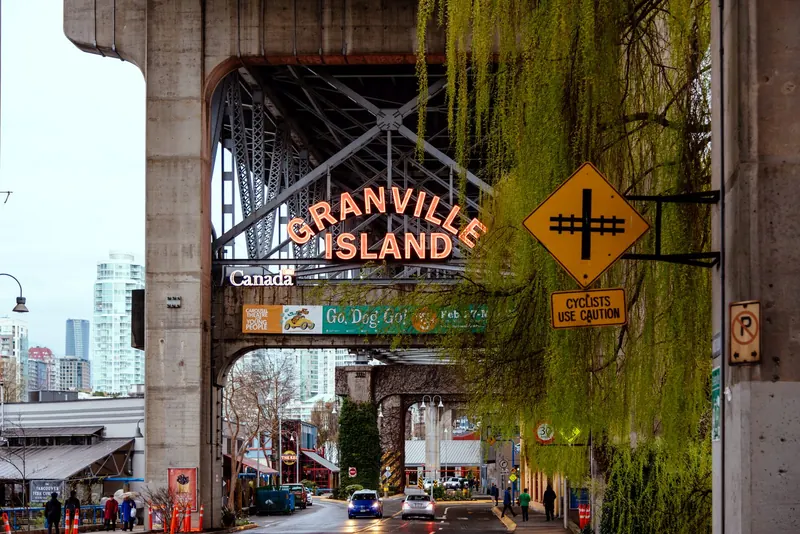
Granville Island's public market winds down by early evening. Mornings get the full market and shorter lines.
Alcohol is for patios and licensed rooms. The beach cookout runs on soft drinks and whatever the market sold you.
The markets
Markets are where Vancouver actually shops and eats. Each one has a different job; go in the morning, when the food counters are at their busiest.
AGranville Island Public Market
The city's food living room under the Granville Bridge: produce pyramids, seafood, charcuterie, bakeries, and food stalls around communal tables, with buskers outside and the Aquabus ferries at the dock.
Eat: Clam chowder, a Siegel's bagel, and a honey dip donut from Lee's, eaten outside facing the water.
BRichmond Night Market
One of North America's largest night markets, running summer weekend nights near Bridgeport Station: hundreds of food stalls, most of them East and Southeast Asian, plus the fairground energy of a much bigger crowd.
Eat: Skewers, tornado potato, and whatever stall has the longest line of families.
CLonsdale Quay Market
North Vancouver's waterfront market across the harbour by SeaBus: food stalls, seafood, and bakeries with the downtown skyline as the backdrop. The trip over is half the pleasure.
Eat: Chowder or fish and chips on the pier, watching the SeaBus come and go.
DSteveston Fishermen's Wharf
The working end of the old cannery village: fish and chips shacks along the boardwalk and, on weekends, the public sales float where boats sell spot prawns (in season), salmon, and crab directly.
Eat: Fish and chips at the wharf, then check what the boats are selling.
ETrout Lake Farmers Market
East Vancouver's Saturday market in John Hendry Park: BC farms, bakeries, food stalls, and half the neighborhood with coffee in hand. The most local-feeling market in the city.
Eat: Whatever the bakeries brought, plus the seasonal fruit everyone is lining up for.
Neighborhoods: 1 Gastown · 2 Yaletown · 3 Commercial Drive · 4 Richmond · 5 Main Street / Mount Pleasant · 6 KitsilanoMarkets: A Granville Island Public Market · B Richmond Night Market · C Lonsdale Quay Market · D Steveston Fishermen's Wharf · E Trout Lake Farmers MarketPins mark neighborhood centers, so you can place each area against where you are staying. Taxi times under each neighborhood below are measured from Waterfront Station.
1Gastown
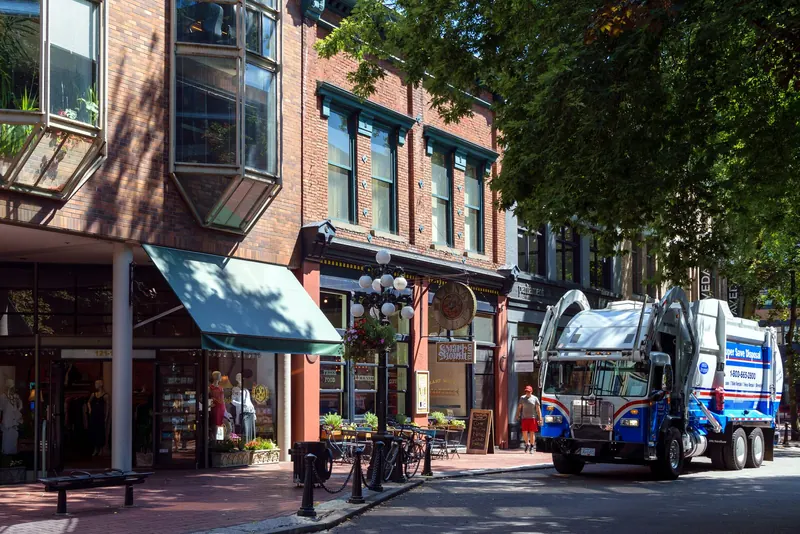
Vancouver's oldest quarter, centered on Water Street and the Steam Clock, dense with restaurants, cocktail bars, and cafes in Victorian-era buildings. It sits next to Chinatown, so dinner in Gastown pairs well with a wander through the city's historic Chinese district.
From Waterfront Station: 5 min by taxi
2Yaletown
A former warehouse district of brick-and-beam buildings, now the city's polished dining and patio strip along Mainland and Hamilton Streets. Home to flagship seafood rooms like Blue Water Cafe and a concentration of upscale lounges.
From Waterfront Station: 5 to 10 min by taxi
3Commercial Drive
Known locally as The Drive, this East Vancouver strip has long been the city's Italian and counterculture food corridor. It mixes old-school Italian delis and espresso bars with newer cafes and budget-friendly international restaurants.
From Waterfront Station: 10 to 15 min by taxi
4Richmond
The suburb south of Vancouver, reachable by Canada Line SkyTrain, hosts what many call North America's best Chinese dining outside Asia. No. 3 Road's 'Food Street', Aberdeen Centre, and the seasonal Richmond Night Market anchor dim sum, dumplings, and late-night street food.
From Waterfront Station: 25 min by Canada Line SkyTrain
5Main Street / Mount Pleasant
The corridor from Mount Pleasant to Riley Park is Vancouver's independent-restaurant heart, with chef-driven rooms like Published on Main, casual cafes, and a cluster of craft breweries near the Cambie Bridge.
From Waterfront Station: 10 min by taxi
6Kitsilano
A beachside neighborhood along West 4th Avenue with a strong brunch and cafe culture, plus standout rooms like Maenam. It pairs well with a walk on Kits Beach or a visit to Granville Island's Public Market across False Creek.
From Waterfront Station: 10 to 15 min by taxi
The people behind the food
The names that explain how Vancouver cooks the way it does now.
Hidekazu Tojo
Chef-owner, Tojo's
Tojo opened his room in 1988 and is often credited with the inside-out roll and the BC roll (barbecued salmon skin), inventions aimed at diners who would not eat raw fish or seaweed on the outside. Vancouver sushi starts here.
Vikram Vij
Chef-owner, Vij's
Vij opened in 1994 and reframed Indian food in Canada: regional dishes, BC ingredients, no shortcuts, and a dining room where the chef works the line of waiting guests with chai. His Rangoli and food-truck ventures spread the reach.
David Hawksworth
Chef-owner, Hawksworth
Hawksworth's room in the Rosewood Hotel Georgia (opened 2011) is Vancouver's fine-dining reference point: Pacific ingredients through French technique, and the kitchen that trained a generation of the city's chefs.
Andrea Carlson
Chef-owner, Burdock & Co
Carlson cooks the most place-bound food in the city at Burdock & Co on Main Street: foraged, farmed, and preserved BC, nearly everything from within the province. The room holds a Michelin star and a very short supply chain.
Pino Posteraro
Chef-owner, Cioppino's
Posteraro's Yaletown room has been the city's Italian benchmark since 1999, named for the fisherman's stew. When Vancouver chefs argue about Italian food, his name is the one they measure against.
If you only eat ten things here
Spot prawns in season, boiled simply, at a seafood counter or the False Creek festival.
Salmon oshi sushi at Miku, the aburi original.
A full dim sum lunch in Richmond, ordered off the sheet.
A Kurobuta Terimayo at Japadog.
Dungeness crab wok-fried with garlic at a Chinese seafood house.
A Nanaimo bar with black coffee.
Fish and chips on the boardwalk at Steveston.
A lap of the Richmond Night Market on a summer weekend.
A honey dip donut from Lee's at Granville Island, still warm.
Sockeye salmon in season, cedar-planked, while the runs are on.
Eating well here
the Drive
Commercial Drive, East Vancouver's Italian-rooted food strip. Nobody local calls it Commercial Drive.
aburi
Flame-seared. On a sushi menu it means the piece arrives torched and already seasoned; skip the soy.
BC roll
A roll built on barbecued salmon skin, created in Vancouver and credited to Chef Tojo.
spot prawn season
The six-to-eight-week window from May when the local prawns run. It functions as a food holiday.
doing Richmond
Making the SkyTrain trip to Richmond specifically to eat, usually dim sum or a Chinese banquet. A plan, not a place.
the Quay
Lonsdale Quay in North Vancouver, reached by SeaBus from Waterfront Station.
the Island
Vancouver Island, not Granville Island. Ferries, Nanaimo bars, and Victoria live there.
omakase
Chef's-choice sushi service. In Vancouver the good counters book out; reserve.
How much should I tip at Vancouver restaurants?
Tipping 15 to 20 percent before tax is standard for sit-down service, and it is not included in the bill. Counter service and takeout tipping is optional.
Which neighborhoods are best for food?
Gastown and Yaletown cover the central dining scene, Commercial Drive and Main Street have the independent and budget-friendly rooms, Kitsilano does brunch and cafes, and Richmond is the destination for Chinese food. Chinatown rewards adventurous eaters with creative rooms and cheap noodle shops.
What should I expect to spend on dinner?
Casual lunches and street food run in the $ band, most sit-down dinners with a drink land in the $$ band, upscale rooms like Vij's or Kissa Tanto are $$$, and tasting-menu fine dining at places like Tojo's, Hawksworth, or Published on Main is $$$$.
Do I need reservations?
Yes for the destination restaurants: Michelin-starred rooms and popular spots like Vij's, St. Lawrence, Kissa Tanto, and Tojo's typically need booking one to three weeks ahead, especially for weekend dinners. Many use OpenTable or take reservations directly; Kissa Tanto is not on booking platforms, so book through its own site.
When is the best season for Vancouver seafood?
BC spot prawns are a May to June event worth planning around. Dungeness crab is most available from August through March. Wild salmon runs vary by species through summer and fall, while BC oysters are good nearly year-round thanks to cold-water farming.
Is Richmond really worth the trip for Chinese food?
Yes. Richmond's Chinese dining, shaped by decades of immigration from Hong Kong and mainland China, is widely considered among the best in North America. The Canada Line SkyTrain reaches central Richmond in about 25 minutes from downtown, and weekend dim sum is the classic pilgrimage.