The CN Tower, Toronto. Photo via Wikimedia Commons.
How Toronto eats
Toronto is one of the most multicultural food cities in North America, with more than 250 ethnic communities shaping a dining scene that spans tasting-menu fine dining, immigrant-run institutions, and late-night diners.
The Michelin Guide launched a Toronto edition in 2022 and the city now holds 15 starred restaurants. Start any serious food trip at the 120-plus vendors of St. Lawrence Market, then work outward by neighborhood.
Learn the foods
Start here, not with a restaurant. Learn what these foods are, where they come from, and how locals eat them, and the whole city opens up: every menu, every market, every street corner starts making sense.
Peameal bacon sandwich
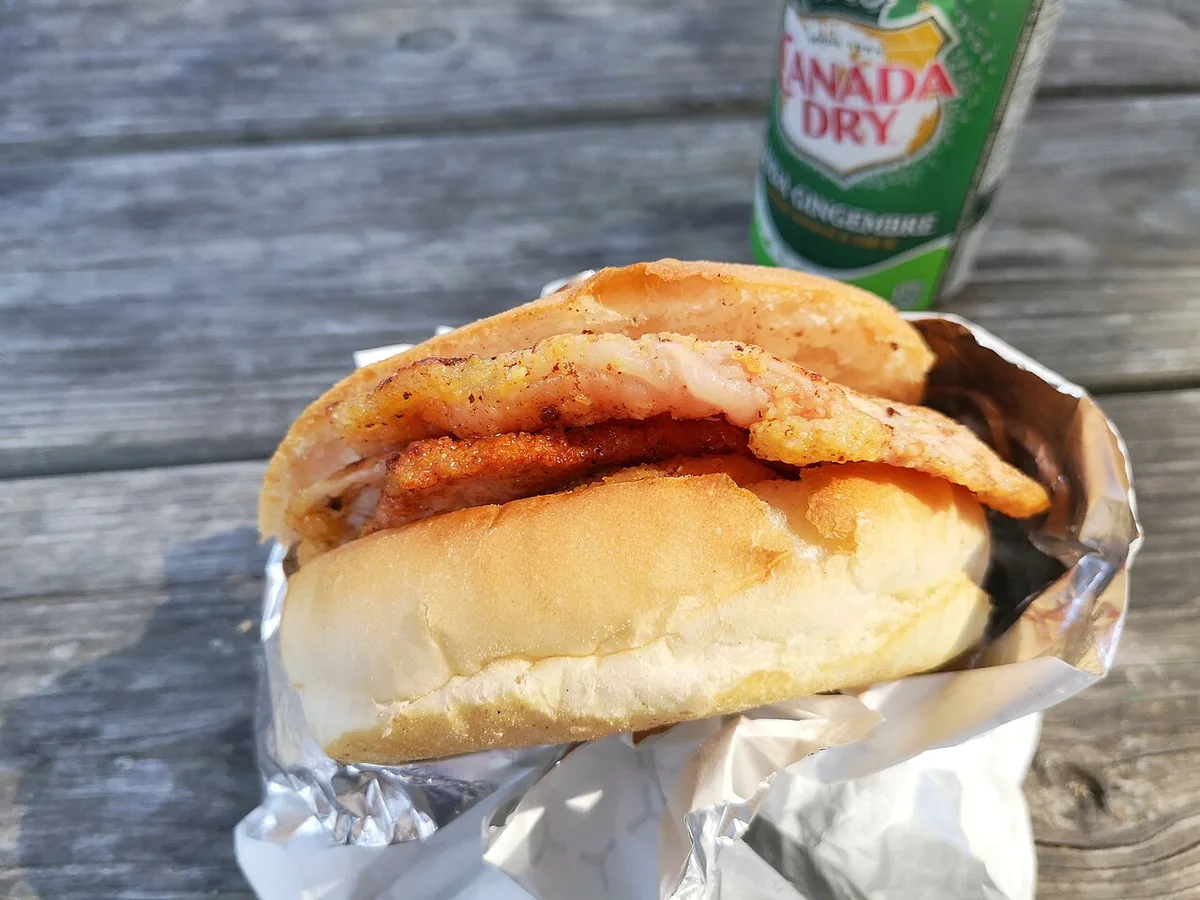
Toronto's signature sandwich: cornmeal-crusted back bacon on a bun, served with maple or honey mustard at Carousel Bakery inside St. Lawrence Market. Peameal bacon was invented in the market over 130 years ago.
Where it comes from: Peameal bacon is a Toronto invention: in the late 1800s, pork packer William Davies rolled cured loins in ground yellow peas (later cornmeal) to keep them fresh, and the sandwich that followed became the St. Lawrence Market's signature.
How to eat it: Order it at Carousel Bakery inside the market, on a soft bun with honey mustard, and eat it at the counter. Saturday morning is the classic time.
Toronto-style pizza
A recognized local style: thin-crust pizza brushed with garlic oil. It was invented by Vietnamese immigrants from Hue who learned pizza-making from Italian owners in Toronto.
Where it comes from: Toronto-style pizza was created by Vietnamese immigrants from Hue who arrived in the 1980s, learned the trade in Italian pizzerias, and added their own finish: a brush of garlic oil over a thin, crisp crust.
How to eat it: Buy it by the slice and eat it folded, walking. The garlic oil should glisten; if it does not, you are at the wrong shop.
Butter tart
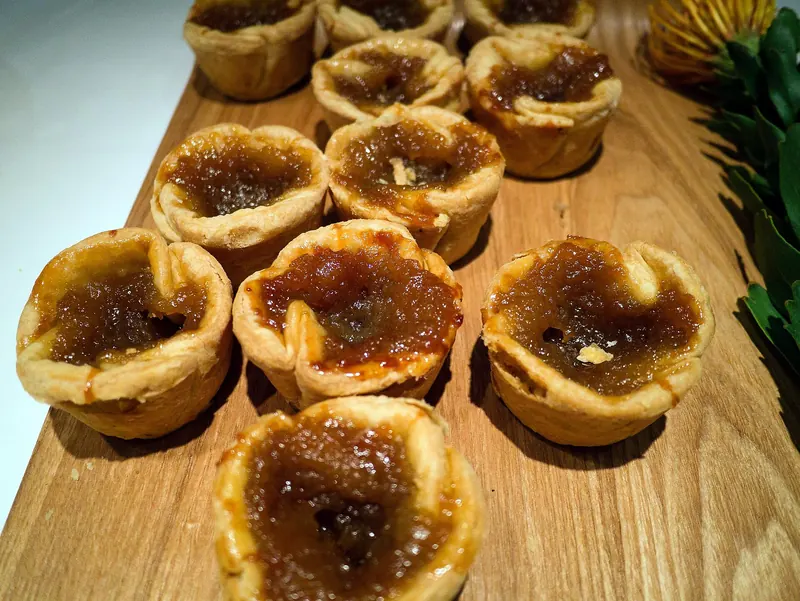
The classic Ontario dessert: a flaky pastry shell filled with a gooey butter, sugar, and egg custard, sometimes with raisins or pecans. Found in bakeries across the city.
Where it comes from: The butter tart is pioneer Ontario baking: butter, sugar, and egg in a flaky shell. The first published recipe appeared in a Barrie, Ontario cookbook in 1900, and bakeries have argued about raisins ever since.
How to eat it: Eat one warm if the bakery offers. Then take a side in the city's longest-running argument: raisins, pecans, or neither.
Jerk chicken
Toronto's large Jamaican community makes this a city staple, from takeout spots in Kensington and Scarborough to sit-down rooms like Chubby's. Expect allspice and Scotch bonnet heat with rice and peas.
Where it comes from: Jamaican migration from the 1960s onward made jerk a Toronto staple: chicken marinated in allspice and Scotch bonnet, grilled over open flame, and sold from takeout counters across Kensington, Eglinton West, and Scarborough.
How to eat it: Order it with rice and peas, and ask for oxtail gravy if the shop has it. Heat levels are honest here; medium first.
Shawarma
Toronto has one of North America's densest shawarma scenes, concentrated along streets like Lawrence and in Scarborough. The shawarma plate with garlic sauce, turnips, and fries is a local late-night ritual.
Where it comes from: Lebanese and Middle Eastern communities built one of the densest shawarma scenes in North America, concentrated on Lawrence Avenue East in Scarborough, where shops compete on garlic sauce and charcoal.
How to eat it: The plate beats the wrap: rice or fries, toum (garlic sauce), pickles, and pink pickled turnips. Eat the fries with the garlic sauce, not ketchup.
Butter chicken
A Toronto restaurant-menu mainstay thanks to the city's large South Asian population, from casual takeout counters to refined rooms like Pukka. Usually served with naan or basmati rice.
Where it comes from: Butter chicken was created in Delhi in the 1950s and became a Toronto menu mainstay through the city's large South Asian community, from downtown rooms to the Punjabi kitchens of Brampton and Scarborough.
How to eat it: Order it family style with garlic naan for the sauce. The dish is the sauce; the chicken is the vehicle.
Portuguese custard tarts
Pastel de nata, the flaky egg-custard tart of Lisbon, baked across Little Portugal. Best warm with a dusting of cinnamon.
Where it comes from: Pastel de nata comes from Lisbon, where the recipe began in the Jerónimos Monastery in Belém. Toronto's Little Portugal, built by Azorean and mainland immigration from the 1950s, bakes them daily across the west end.
How to eat it: Eat it warm, within the hour, dusted with cinnamon. A good one shatters; a great one is still slightly molten in the middle.
Street food, decoded
Toronto street food runs on two forces that pull in opposite directions. The first is licensing: the city's food carts are few, regulated, and mostly parked downtown, so the classic cart hot dog is nearly a heritage item. The second is immigration: with more than 250 ethnic communities, the street food moved indoors, into market halls, patty shops, roti counters, and food trucks.
So eat the way the city actually eats. Start at a market counter in the morning, graze a neighborhood strip at lunch, and treat bakeries as street food with a roof. The formats below are the ones Torontonians genuinely queue for.
The market counter
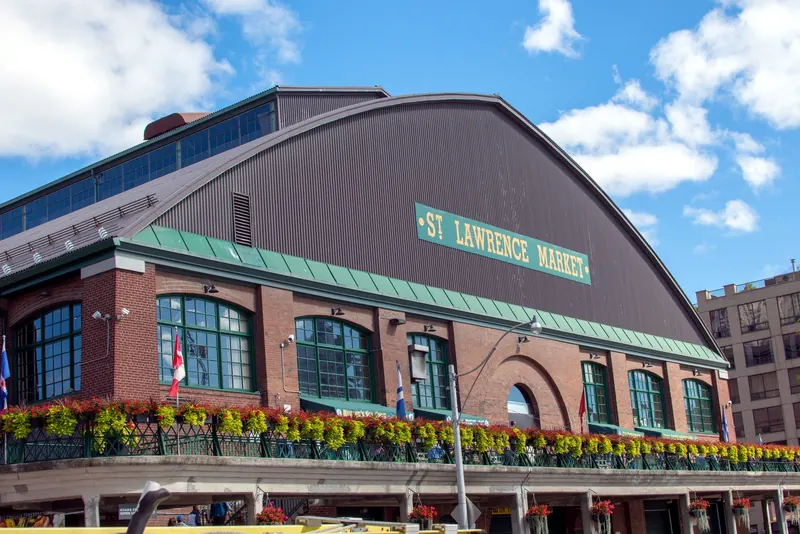
St. Lawrence Market's stalls are Toronto's original street food: peameal bacon at Carousel Bakery, seafood, cheese, mustard, and produce, eaten standing up or carried to the tables upstairs. Saturday, when the farmers take over the North building, is the week's peak.
The street dog
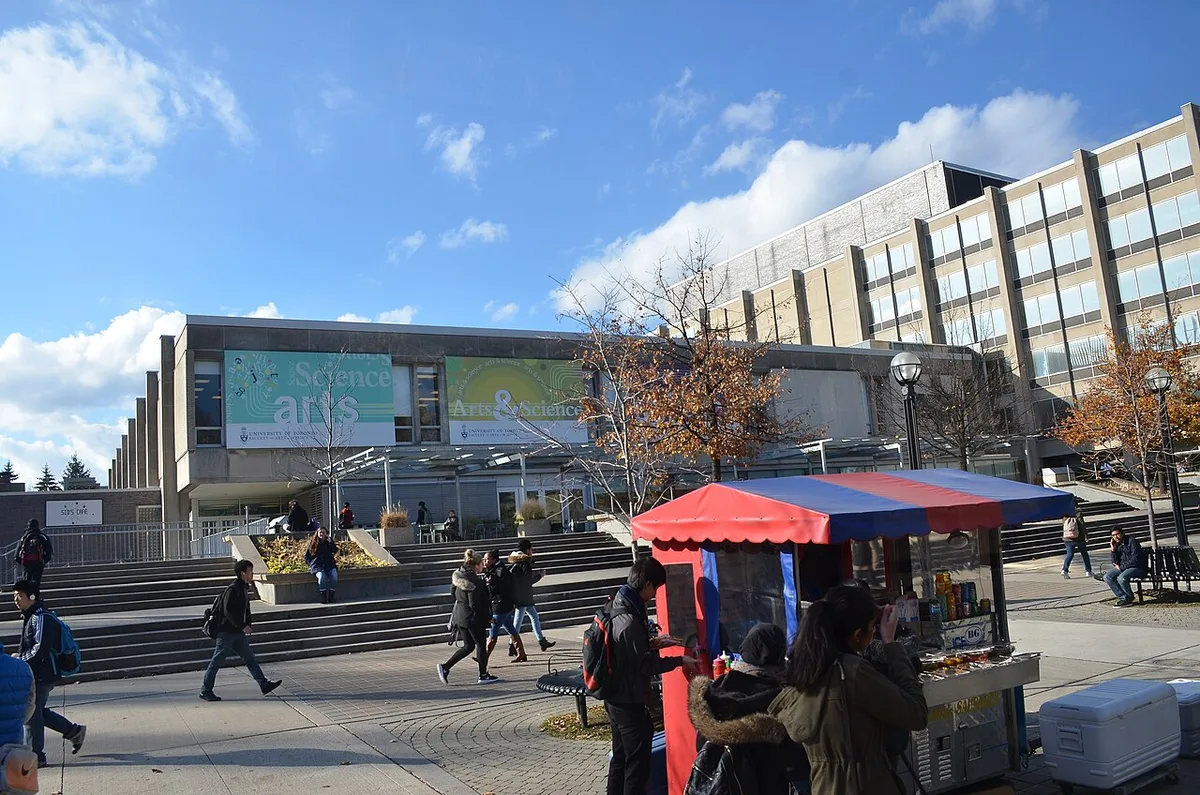
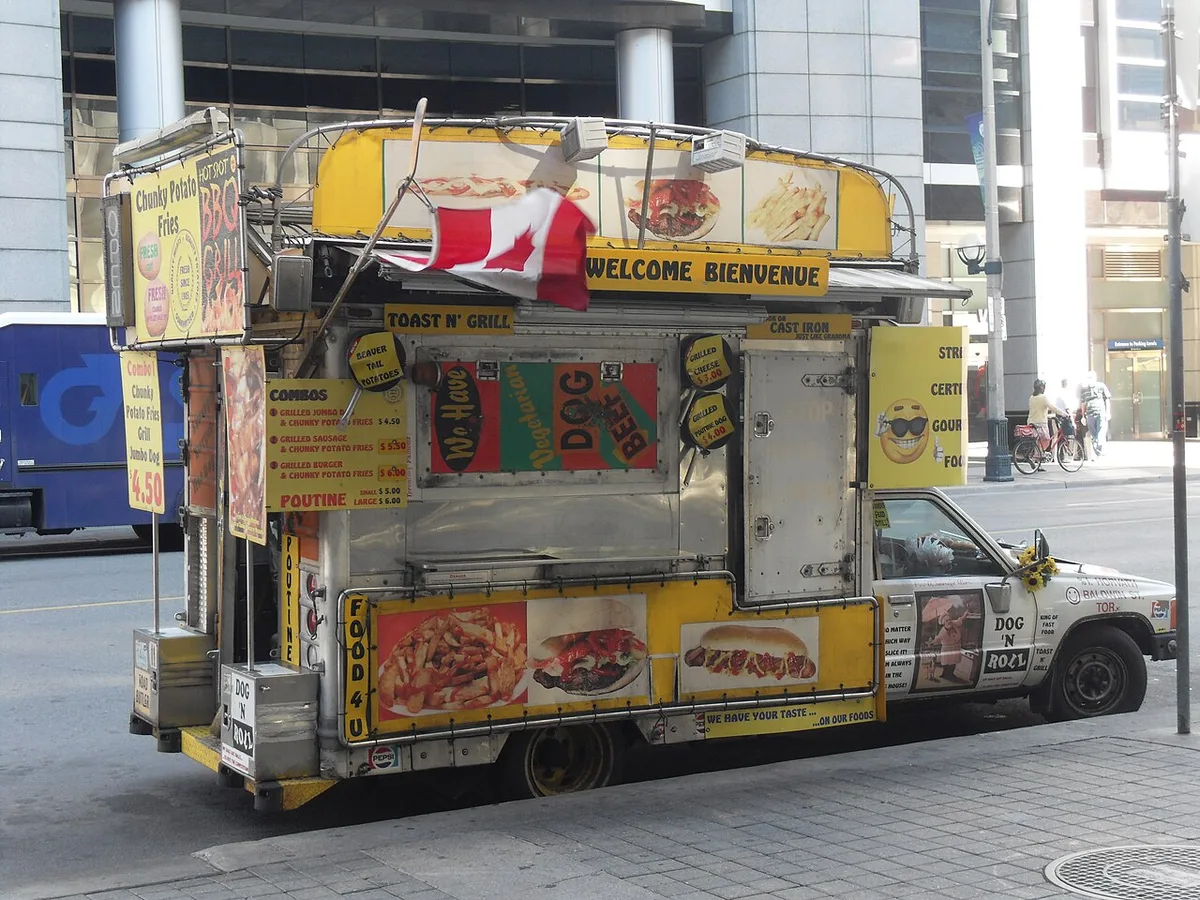
Downtown's licensed carts sell grilled hot dogs and sausages loaded with toppings, corn relish and crispy onions above all. Locals call it street meat without irony. The carts cluster around office towers, Queen's Quay, and the stadium district on game days.
The patty shop
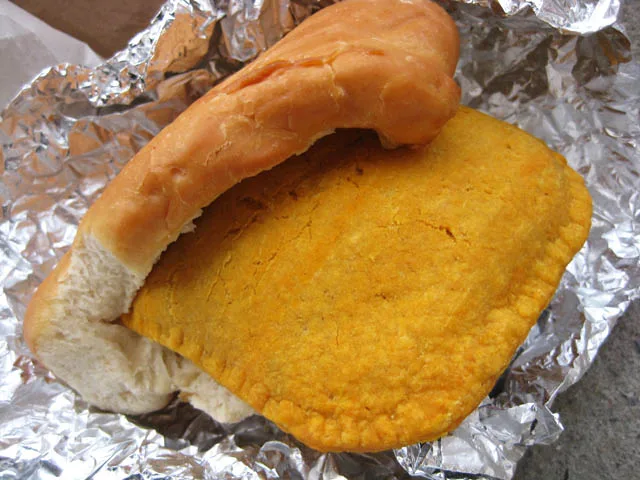
Jamaican beef patties are sold everywhere, including kiosks inside subway stations, and the full Toronto order is a patty tucked into coco bread. Spicy means Scotch bonnet spicy. Patty shops also do jerk chicken, oxtail, and curry goat for the same counter price.
The roti shop
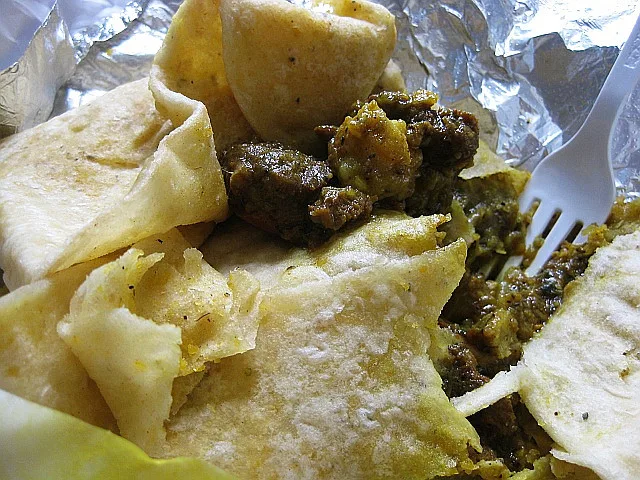
Trinidadian and Guyanese roti shops wrap curries (chicken, goat, chickpea) in dhalpuri or paratha roti and sell them by weight of appetite. Kensington, Parkdale, and Scarborough hold the deepest benches. A chicken roti is a complete lunch for the price of a coffee downtown.
The food truck
Toronto's trucks work office districts at lunch, festivals all summer, and the Exhibition grounds in August. The city's restrictive vending rules kept the fleet small, so a good truck gathers a line fast; the line is usually the review.
The bakery counter
Butter tarts in Ontario bakeries, custard tarts in Little Portugal, cannoli in Little Italy, patties and festival bread in Caribbean bakeries. Toronto's bakery counters function as dessert street food: cheap, fast, and eaten on the sidewalk.
The rules that keep it safe and good
Street carts are city-licensed and post their prices; the downtown core and the waterfront are where they concentrate.
Alcohol belongs on licensed patios. Public drinking is not part of Toronto street eating, whatever the festival weekend suggests.
Saturday is market day: the St. Lawrence farmers' market runs in the North building, and Brick Works runs its farmers' market too. Go before 10 am for the full selection.
From December to March, eat indoors. The market halls, bakeries, and roti shops are the winter street food; the carts mostly vanish.
Small counters move fast at lunch. Order, pay, and step aside for the next person; deciding at the register is the one unforgivable sin.
The markets
Markets are where Toronto actually shops and eats. Each one has a different job; go in the morning, when the food counters are at their busiest.
ASt. Lawrence Market
Toronto's food front door since 1803: 120-plus vendors in the South Market building, the Saturday farmers' market in the North building, and a Sunday antique market. Arrive hungry and walk the whole hall before buying anything.
Eat: The peameal bacon sandwich at Carousel Bakery, then a loop of the cheese and seafood stalls.
BKensington Market
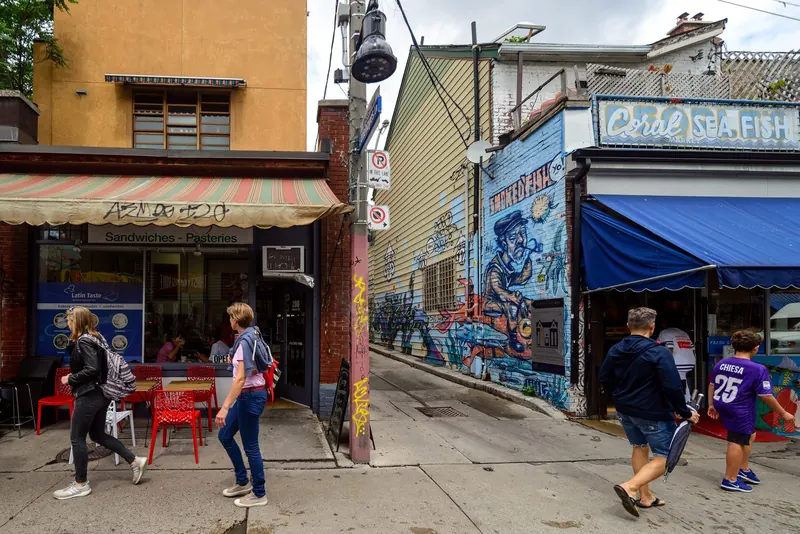
Not a building but a whole neighborhood of grocers, cheese shops, bakeries, and produce stands beside Chinatown, protected as a National Historic Site. The best cheap eating in the city is within four blocks.
Eat: Empanadas, a roti, and whatever the Latin grocers are grilling on Pedestrian Sundays (last Sunday of the month, May to October).
CEvergreen Brick Works
A former brick factory in the Don Valley turned market and gardens. The Saturday farmers' market is the city's best for Ontario produce, prepared food stalls, and coffee, with ravine trails starting at the door.
Eat: Whatever the farm stalls are cooking that week, eaten at the communal tables.
DChinatown (Spadina Avenue)
One of North America's largest Chinatowns: roast-meat windows, dumpling houses, bakeries, and grocers along Spadina and Dundas. Functionally a market street, and the gateway to Kensington next door.
Eat: Barbecue pork and dumplings, then a bakery run for coconut buns and egg tarts.
EArtscape Wychwood Barns
A converted streetcar barn on St. Clair West hosting a long-running Saturday farmers' market, strong on bread, preserves, and ready-to-eat stalls from the neighborhoods around it.
Eat: Fresh bread and whatever the preserve makers are sampling.
Neighborhoods: 1 King West · 2 Ossington · 3 Leslieville · 4 Kensington Market · 5 Greektown (The Danforth) · 6 Little ItalyMarkets: A St. Lawrence Market · B Kensington Market · C Evergreen Brick Works · D Chinatown (Spadina Avenue) · E Artscape Wychwood BarnsPins mark neighborhood centers, so you can place each area against where you are staying. Taxi times under each neighborhood below are measured from Union Station.
1King West
Toronto's entertainment and nightlife corridor, dense with upscale restaurants, cocktail bars, and chef-driven spots. Best for a big night out; restaurants fill up on weekends so book ahead.
From Union Station: 10 min by taxi
2Ossington
A former Portuguese strip turned trendy restaurant row between Queen and Dundas, packed with bars, izakayas, and indie dining rooms. Known for late-night energy and some of the city's best value date-night spots.
From Union Station: 15 min by taxi
3Leslieville
An east-end neighborhood known for family-run eateries, brunch institutions, and Queen Street East's independent food shops. Home to Maha's Brunch and a growing corridor of coffee roasters and bakeries, with strong weekend brunch culture.
From Union Station: 15 min by taxi
4Kensington Market
Toronto's historic multicultural market district, with Latin, Caribbean, and Asian grocers, cheese shops, and bakeries. One of the best areas for affordable eats: empanadas, jerk chicken, dumplings, and produce stands within a few blocks.
From Union Station: 10 min by taxi
5Greektown (The Danforth)
Centered on Danforth Avenue, this is Toronto's historic Greek enclave with tavernas serving souvlaki, spanakopita, and grilled seafood. The annual Taste of the Danforth festival draws over a million visitors.
From Union Station: 15 to 20 min by taxi
6Little Italy
The College Street strip anchored by Italian restaurants, pasticcerias, and espresso bars, adjacent to Little Portugal. A dense, walkable dining corridor that stays lively late into the evening.
From Union Station: 15 min by taxi
The people behind the food
The names that explain how Toronto cooks the way it does now.
Patrick Kriss
Chef-owner, Alo
Kriss set Toronto's fine-dining benchmark with Alo, a blind tasting-menu room that has repeatedly topped Canada's 100 Best list, then extended the reach with the more casual Aloette and Alobar. If you book one splurge, his is the room.
Grant van Gameren
Chef-owner, Bar Isabel and Bar Raval
Van Gameren came up through The Black Hoof and built the city's Spanish core: Bar Isabel for the dining room, and Bar Raval, a Gaudí-inspired standing tapas bar, around the corner. His rooms made College and Ossington serious eating streets.
Matty Matheson
Chef and broadcaster
The loudest ambassador Toronto food has: a former executive chef turned TV presence (and producer and actor on The Bear), with Matty's Patty's smashing burgers and Prime Seafood Palace doing his version of a steakhouse.
Craig Wong
Chef-owner, Patois
Third-generation Jamaican-Chinese, Wong cooks the food of that exact intersection at Patois: jerk chicken chow mein, oxtail, and Chinese-Jamaican dishes you will not find in any other city, because they come from this one's history.
Jen Agg
Restaurateur, Bar Vendetta
Agg helped start Toronto's modern nose-to-tail era with The Black Hoof in 2008 and wrote the memoir of running rooms in a hard industry. Bar Vendetta carries her formula forward: natural wine, sharp small plates, no fuss.
If you only eat ten things here
A peameal bacon sandwich at Carousel Bakery in St. Lawrence Market.
A beef patty on coco bread from a patty shop or a station kiosk.
A butter tart, then a second one with the opposite filling, to take your side in the raisin argument.
A chicken roti at a West Indian roti shop in Kensington or Parkdale.
Souvlaki and grilled octopus at a taverna on the Danforth.
A shawarma plate with toum on Lawrence Avenue East in Scarborough.
Dim sum in Chinatown, ordered off the sheet, not the cart.
A pastel de nata in Little Portugal, still warm.
A garlic-oil slice of Toronto-style pizza, eaten walking.
One splurge tasting menu: Alo, if you can get the booking.
Eating well here
double-double
Coffee with two creams and two sugars, Tim Hortons shorthand that every coffee shop in the city understands.
peameal
The cornmeal-crusted back bacon itself. In Toronto the word names the food, not a meal made of peas.
street meat
Any hot dog or sausage from a downtown cart, said with affection.
the market
St. Lawrence Market, no qualifier needed. Other markets get their full names.
roti
The whole curry wrap, not just the bread. 'A chicken roti' is a complete order.
patty on coco bread
A Jamaican beef patty served inside a coco bread bun, the full Toronto patty-shop order.
the Danforth
Danforth Avenue, Greektown's main street. Directions in the east end are given by it.
LCBO
The provincial liquor store chain. Wine and spirits for a picnic or a gift come from here, not the grocery store.
How much should I tip at restaurants in Toronto?
The standard is 15 to 20 percent of the pre-tax bill for sit-down service, 10 to 15 percent at casual counters, and a loonie or two per drink at bars. Some tasting-menu restaurants add a mandatory service charge, so check the bill before adding extra.
Which neighborhoods are best for food?
King West for upscale dining and nightlife, Ossington for trendy bars and indie restaurants, Leslieville for brunch, Kensington Market for affordable multicultural eats, Greektown for Greek tavernas, and Little Italy and Little Portugal for Italian and Portuguese. Most serious eating trips touch three or four of these.
What should I budget for meals per day?
Budget travelers can eat well for $40 to $70 a day using market stalls, diners, and takeout. A comfortable mid-range day with a sit-down dinner runs $80 to $150 per person. Fine dining tasting menus at places like Alo, Canoe, or Edulis typically start well above $200 per person before wine.
Do I need reservations?
Yes for the big names: Alo, Canoe, Don Alfonso 1890, Lee, DaiLo, and Chubby's book out days or weeks ahead. Maha's Brunch and Mildred's Temple Kitchen are walk-in only on weekends, so arrive before 9:30 am to beat the line. Casual spots in Kensington and Greektown rarely need booking.
Is Toronto good for vegetarians and vegans?
Very. Indian restaurants like Pukka mark vegetarian and vegan dishes clearly, Middle Eastern spots like Fat Pasha lean plant-forward with falafel and the salatim platter, and Kensington Market has dedicated vegan counters. Most fine dining rooms, including Canoe, offer vegetarian tasting menus on request.
What local food should I not leave without trying?
The peameal bacon sandwich at St. Lawrence Market is the single most Toronto-specific food. After that, try a garlic-oil-brushed slice of Toronto-style pizza, a butter tart from a bakery, and a shawarma plate with garlic sauce, all dishes that reflect the city's immigrant food history.