Bougatsa for breakfast, and the north's great table
The White Tower on the Thessaloniki waterfront. Photo via Wikimedia Commons.
How Thessaloniki eats
Thessaloniki makes Greece's strongest claim to be its food capital, and the evidence is structural: this port stacked Byzantine, Ottoman, and Sephardic Jewish kitchens for five centuries, then absorbed the 1922 refugees from Asia Minor, who arrived with the recipes of Smyrna and Constantinople and rebuilt the city's table around them. The result is richer, sweeter, spicier food than the south, eaten more slowly (the local word is 'halara': relaxed, unbothered, on purpose).
The day has fixed points: bougatsa for breakfast (custard phyllo under powdered sugar, eaten with a fork from the paper), coffee along the waterfront, meze and tsipouro as the evening builds, and sweets from the shops that made the city famous for them. Dinner runs late even by Greek standards, and nobody here has ever apologized for it.
Learn the foods
Start here, not with a restaurant. Learn what these foods are, where they come from, and how locals eat them, and the whole city opens up: every menu, every market, every street corner starts making sense.
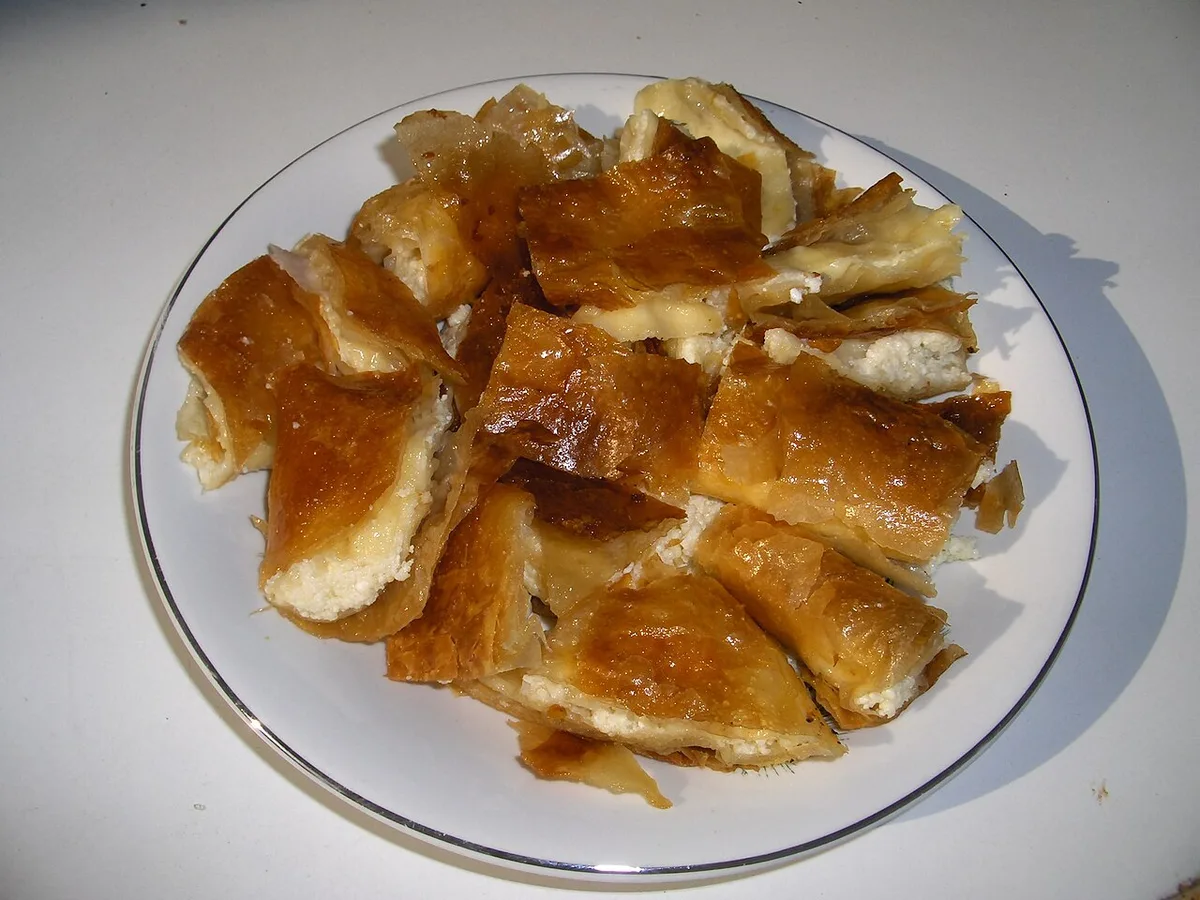
Bougatsa
Thessaloniki's breakfast and proudest export: phyllo around warm semolina custard (or cheese, or mince), cut with a spatula, snowed with powdered sugar and cinnamon. Sweet bougatsa is dessert wearing a breakfast alibi.
Where it comes from: Bougatsa came with the refugees and Constantinople's bakeries; the city adopted it so completely that the rest of Greece eats it as a Thessaloniki word. The great shops (Serraikon's lineage and its rivals) serve it on paper, with the custard still warm from the oven's morning run.
How to eat it: With the fork they give you, standing or at the counter, sugar first. 'Bougatsa me krema' is the custard classic; cheese ('me tyri') is the local's second religion.
Soutzoukakia Smyrneika
Oblong cumin-and-garlic meatballs in cinnamon-touched tomato sauce, Smyrna style, over rice or mashed potato. The refugee kitchen's signature comfort, on every serious menu in the city.
Where it comes from: The name carries the map: Smyrna (Izmir), lost in 1922, whose Greek cooks re-founded Thessaloniki's food. The cumin and cinnamon are the accent the dish never lost, and the city defends it as heritage, not seasoning.
How to eat it: With rice, bread for the sauce, and no discussion of whose grandmother's is better. That argument is the city's other sport.
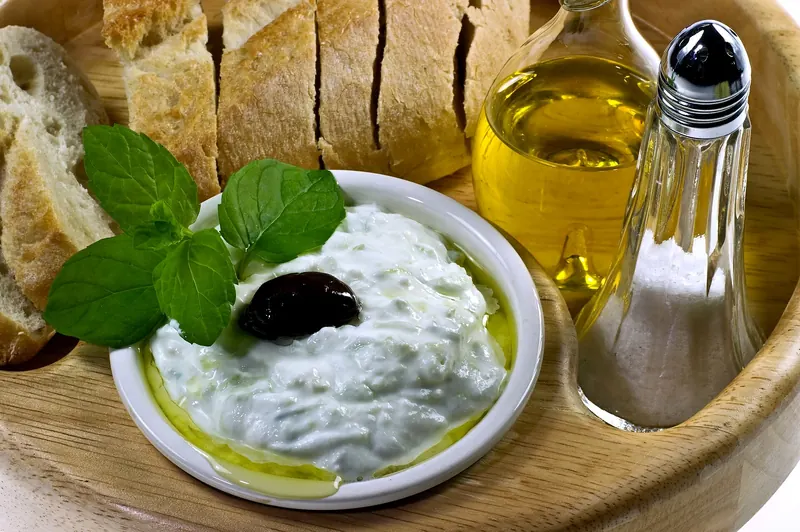
The meze table and tzatziki
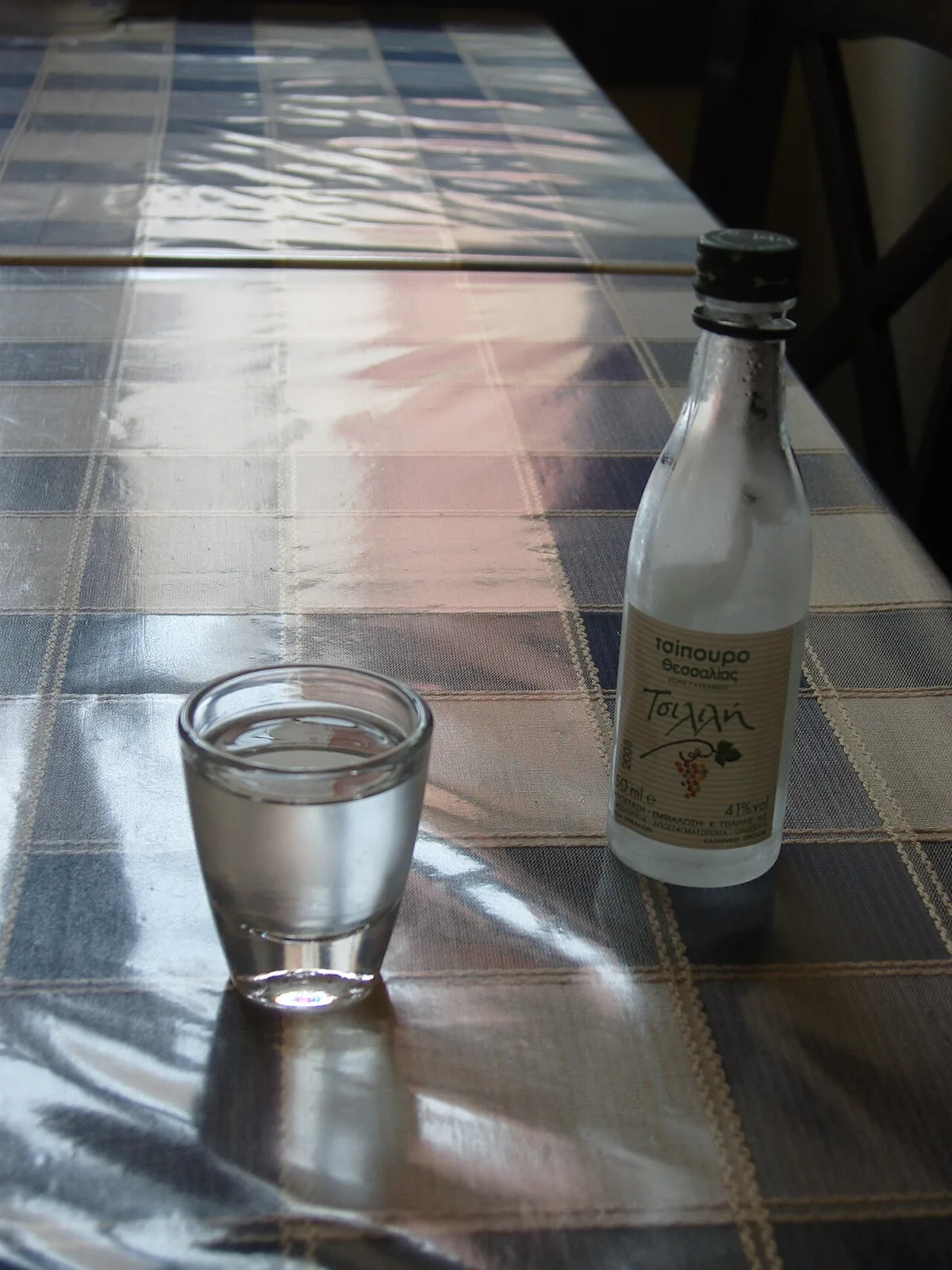
Tsipouro or ouzo with waves of small plates: tzatziki, grilled peppers, cheese saganaki, little fish. In Thessaloniki the meze is not a prelude; it is the evening's full program.
Where it comes from: The northern meze runs bigger than Athens': portions are plates, not tastes, and the tsipouro houses keep them coming as long as the bottle lasts. Ladadika's rows run on this system nightly.
How to eat it: Order the bottle and the first three plates; let the house pace the rest. Bread, always, and the bill arrives smaller than the evening felt.
Trigona Panoramatos
Crisp phyllo cones filled with custard cream, syrup-glazed, from the suburb of Panorama that named them. Thessaloniki's signature sweet, bought by the box and guarded in the taxi home.
Where it comes from: The Elenidis family shop in Panorama made the trigona famous from 1960 on, and the cone's engineering (shattering shell, cream that survives the ride) is the city's sweet patent. Imitations exist; the original's queue is the review.
How to eat it: Fresh, same day, ideally at the Panorama shop with the city below. They travel badly past a day, which is an instruction to eat them now.
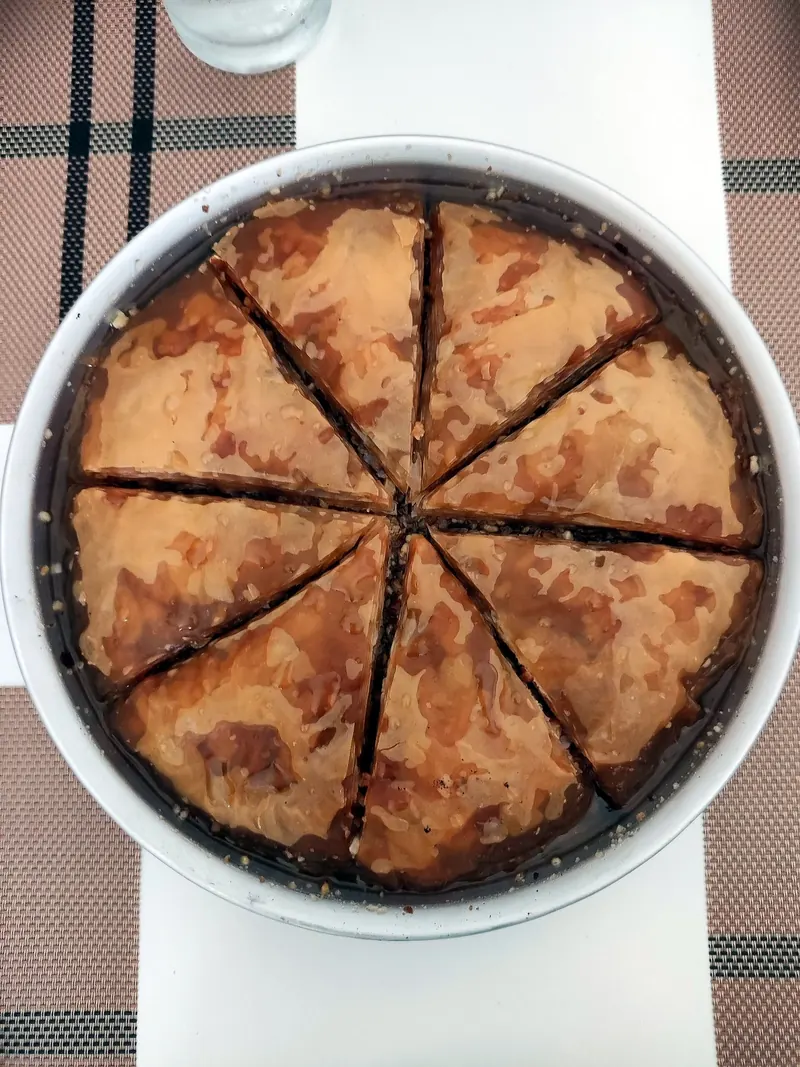
Baklava and the syrup sweets
The zacharoplasteio canon: baklava, kataifi, and a dozen honey-and-syrup confections with Ottoman and Asia Minor papers. Thessaloniki's sweet shops are its cathedrals of sugar.
Where it comes from: A port that was Ottoman for nearly five centuries and Sephardic for four keeps its sweets accordingly: the great shops (Terkenlis among them, since 1948) sell tsoureki at Easter and baklava all year, and the recipes arrived with empires.
How to eat it: By the piece with a Greek coffee, or by the kilo box for people you like. The walnut-versus-pistachio question is settled per shop, not per customer.
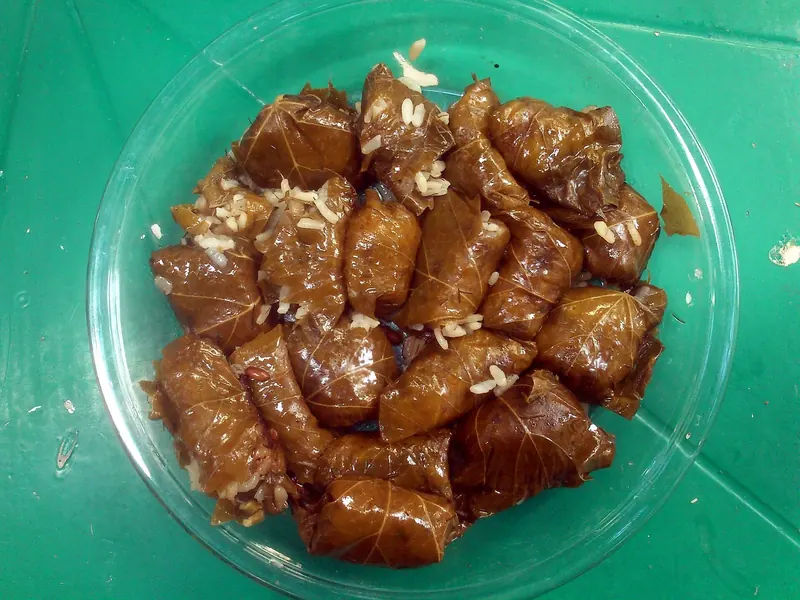
Dolmades, the refugee way
Vine leaves with rice, currants, and pine nuts in the Asia Minor style (yalanci: 'the liar's', because there is no meat), lemon and olive oil over. A Lenten plate that outclasses most mains.
Where it comes from: The meatless stuffed leaf came with the refugees' grandmothers, who brought Constantinople's dolma craft with them. In this city the yalanci is not a compromise; it is the reference version.
How to eat it: Cool or room temperature, with yogurt if offered, as one of several meze. Two bites, by hand or fork, argument after.
Koulouri Thessalonikis
The sesame bread ring, thinner and crisper here than anywhere: sold from carts and bakeries all day, eaten plain, with cheese, or as the base of a quick street breakfast.
Where it comes from: Every Greek city has the ring; Thessaloniki claims the crispest and the naming rights are only half a joke. The carts on Aristotelous sell out by mid-morning on school days, which tells you the demographic truth of the thing.
How to eat it: Warm from the cart, walking the waterfront. The correct pairing is bougatsa an hour later; this city stacks breakfasts.
Street food, decoded
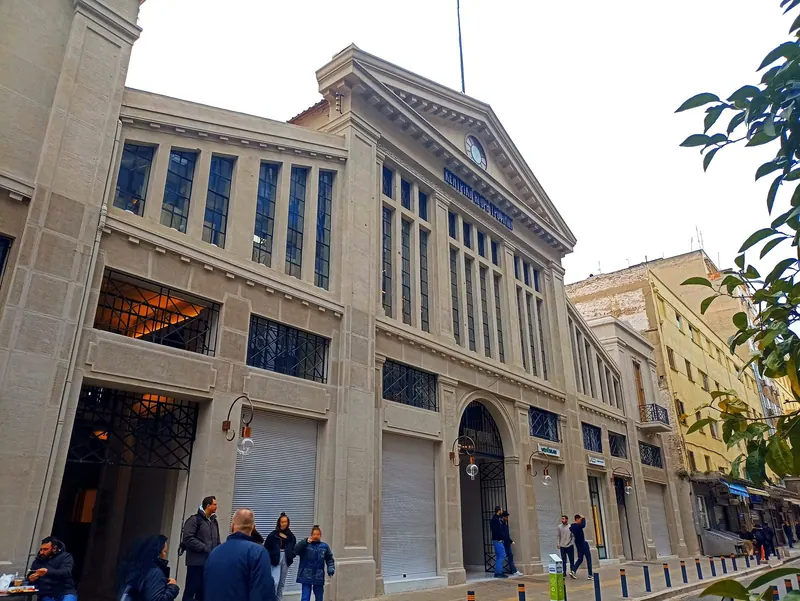
Thessaloniki grazes north-style: a bougatsa at dawn, a koulouri an hour later, coffee as a civic duty, and then the long build toward the meze table. The markets are the city's middle: Modiano's restored hall (1922, the great food market of the Jewish port) and rawer Kapani beside it, with Athonos Square's taverna tables spilling into the lanes.
Everything here runs 'halara': the coffee takes an hour because the conversation does. Visitors who schedule tightly eat well anyway; the city feeds on its own clock and simply includes you.
The bougatsa shop
Counter, oven, paper, sugar snow: the morning institution, sweet or cheese, eaten with a fork among workers and students. The day's first appointment, never skipped.
The tsipouro meze house
Bottles and waves of plates in Ladadika and Ano Poli: the north's evening system, where the drinks order the food for you, course by course.
The zacharoplasteio
The great sweet shops: Terkenlis and family, counters of baklava, tsoureki, and trigona under glass. Thessaloniki measures celebrations in kilos from these counters.
The market taverna
Athonos Square and the Kapani lanes: tavernas cooking the market's own goods at lunch, shoppers and stallholders at the same tables. The city's truest lunch.
The waterfront cafe row
The promenade's cafes from the White Tower to Aristotelous: freddo by day, wine by night, the bay flat and shining. A format, a view, and a schedule: none.
The souvlaki counter
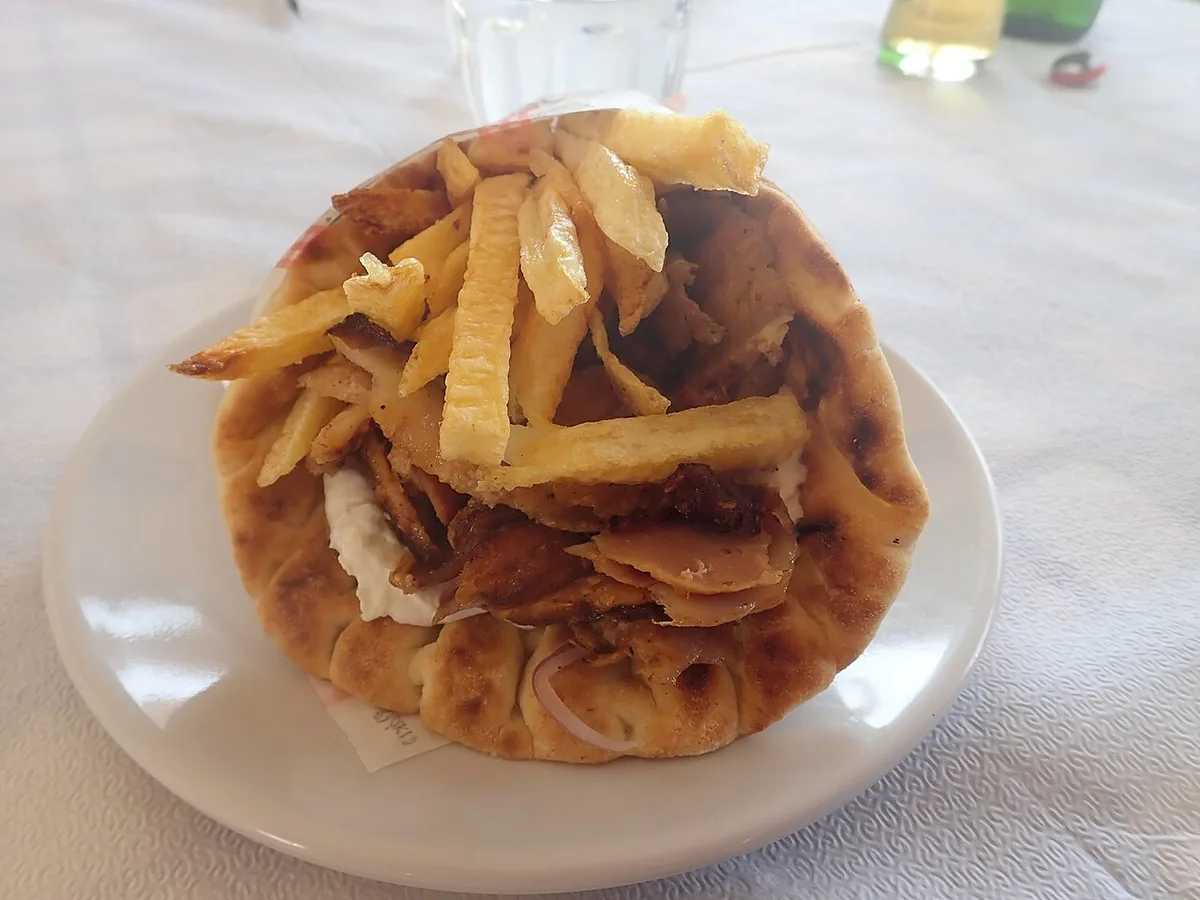
The north's wraps, ordered as 'souvlaki' ( Athenians, look away), gyros turning, pitas oiled. Neighborhood shops, late hours, the walking-home dinner.
The rules that keep it safe and good
Breakfast is bougatsa and it is not negotiable; the shops peak before 10 and the custard waits for no one.
Say 'kalamaki' for a skewer and 'souvlaki' for a wrap here; reversing them outs you as Athenian, and the teasing is affectionate but thorough.
Halara is no slogan: services run at conversation speed. Complaining about the pace in Thessaloniki is like complaining about rain in London; noted, ignored, rained on.
Modiano closes earlier than Kapani's lanes; do the restored hall first, the raw market second, lunch at Athonos third.
Trigona are bought on departure day, never before: the cream's clock is the law of the return journey.
The markets
Markets are where Thessaloniki actually shops and eats. Each one has a different job; go in the morning, when the food counters are at their busiest.
AModiano Market
The great covered food market of 1922, built for the port's Jewish merchants and restored to glory: deli counters, tavernas, and specialty shops under one glass roof. The city's food hall and its memory.
Eat: Graze the counters; lunch at the market tavernas inside.
BKapani (Vlali) Market
The older, rawer market beside Modiano: fish, meat, olives, and spice stalls in tight lanes, the working pantry of the center since Ottoman times.
Eat: Snacks from the lanes' grills; spices and olives to carry home.
CAthonos Square
A square of tavernas at the markets' edge, tables under trees, cooking the day's market goods at lunch. Shop in the morning, sit here at 2.
Eat: The day's specials, whatever the stalls sold out of first.
DBezesteni
The Ottoman covered market of the 15th century, once the cloth and valuables hall, now small shops under domes. The city's oldest roof, still trading.
Eat: Coffee at its edge after the markets; the shopping is the point here.
EThe Flower Market and Aristotelous lanes
Flower stalls and food shops in the lanes off the great square: herbs, cheeses, and the center's daily provisioning, prettiest in the morning.
Eat: Koulouri from the carts, then the square's cafes for the long coffee.
Neighborhoods: 1 Ladadika · 2 Ano Poli (Upper Town) · 3 Aristotelous and the Waterfront · 4 The Market Quarter · 5 KalamariaMarkets: A Modiano Market · B Kapani (Vlali) Market · C Athonos Square · D Bezesteni · E The Flower Market and Aristotelous lanesPins mark neighborhood centers, so you can place each area against where you are staying. Taxi times under each neighborhood below are measured from the White Tower.
1Ladadika
The old oil-and-spice merchants' quarter by the port: painted warehouses turned taverna and meze-house rows, ouzo glasses on every table after dark. The city's evening engine room.
From the White Tower: 5 min on foot from the White Tower
2Ano Poli (Upper Town)
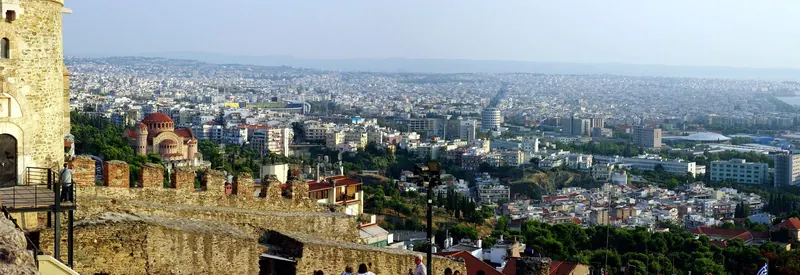
The only quarter the 1917 fire spared: Ottoman-era houses, Byzantine walls, and small tavernas with the whole city and bay below. The climb is the appetite's best friend.
From the White Tower: 20 min uphill on foot, or a short taxi
3Aristotelous and the Waterfront
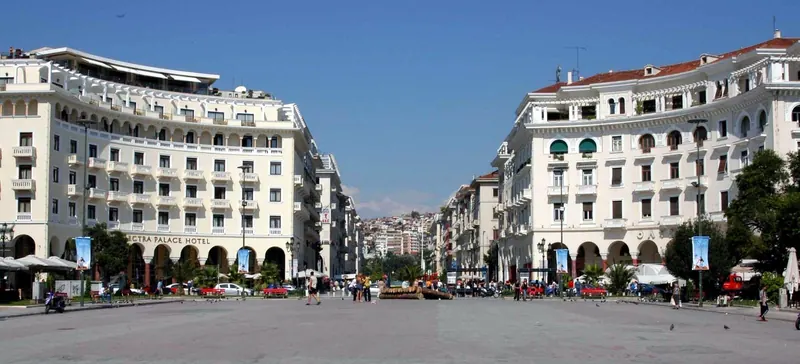
The grand square down to the sea: cafe society, koulouri sellers, the White Tower at the promenade's end, and the city's front room since the French rebuilt it a century ago.
From the White Tower: The White Tower stands here; you are there
4The Market Quarter
Modiano and Kapani markets, the Bezesteni, and Athonos Square's taverna tables: the city's pantry and its lunch, watched over by spice shops a century old.
From the White Tower: 10 min on foot
5Kalamaria
The seaside suburb east, where the refugee families settled: fish tavernas on the water, the city's Sunday lunch address, and ouzo with the bay doing the decoration.
From the White Tower: 20 min by taxi or bus
The people behind the food
The names that explain how Thessaloniki cooks the way it does now.
Trigona Elenidi
Institution, Panorama, since 1960
The family shop that invented the city's signature sweet: phyllo cones and custard, made in Panorama and carried down like treasure. The queue of Thessalonians buying boxes for Athens relatives is the whole north-south argument in one image.
Terkenlis
Institution, Tsimiski street, since 1948
The great bakery house: tsoureki (the chocolate-covered version is the city's famous Easter-to-anytime gift), baklava, and counters that anchor every celebration. A Thessaloniki institution with branches wherever its diaspora landed.
The Modiano stall families
Institution, Modiano Market
Delis and tavernas run by families who traded in the hall across its ruin and restoration: the market's living memory, slicing, pouring, and remembering the port that built it.
The Asia Minor recipe keepers
Craft, citywide
The refugee grandmothers and their descendants, whose soutzoukakia, yalanci dolmades, and syrup sweets rebuilt this city's table after 1922. Thessaloniki's cuisine is their luggage, unpacked over a century.
The Ano Poli taverna keepers
Institution, Upper Town
The small houses under the Byzantine walls serving meze above the whole lit bay: the climb filters the crowd, the view does the rest, and their kitchens keep the old town's recipes in daily use.
If you only eat ten things here
Bougatsa me krema at 8 a.m., sugar snowed, fork only.
Modiano at opening, Kapani after, lunch at Athonos Square.
A Ladadika meze evening: bottle, waves, no plan past midnight.
Trigona at the Panorama original, city spread below.
Soutzoukakia where the sauce smells of cinnamon from the door.
The Ano Poli climb rewarded by taverna meze above the bay.
A Terkenlis box: tsoureki if the season allows, baklava regardless.
Koulouri on the waterfront, White Tower ahead, coffee after.
Kalamaria fish lunch on a Sunday, ouzo with the bay.
The kalamaki joke, told correctly, in the right city.
Eating well here
bougatsa
The custard phyllo, and the morning itself. 'Me krema' sweet, 'me tyri' cheese.
kalamaki
The skewer, in Thessaloniki usage. In Athens it is the straw. Choose your city before speaking.
halara
'Relaxed': the city's official pace and proudest export. Resistance is noted and ignored.
re
The northern all-purpose interjection: 're file' (hey, friend) opens half the sentences in the city.
trigona
'Triangles': the custard cones of Panorama. Bought last-day, eaten first-night.
tsipouro
The grape spirit of the meze table, with or without anise ('me glykaniso' settles it).
soutzoukakia
The Smyrna meatballs. If a menu lacks them here, the kitchen has questions to answer.
logariasmo, parakalo
'The bill, please': in Thessaloniki it arrives at halara speed too.
Is Thessaloniki's food really better than Athens'?
It is different in a way locals call better: richer, more spiced, more layered, with the Ottoman and refugee canon intact, and portions that assume appetite. Athens answers with its market and its souvlaki. The only resolution is to eat both cities and take the argument home.
What is the kalamaki thing I keep hearing about?
The national joke, felt strongly on both sides: in Thessaloniki, the wrap is 'souvlaki' and the skewer is 'kalamaki'; in Athens it is exactly reversed. Order with a point and a smile and you will be fed correctly in both cities, then teased in both dialects.
When does the city eat?
Late, and then some: bougatsa at 8, coffee at 11, lunch at 2, meze from 8, dinner at 10. The waterfront cafes are the afternoon institution; Ano Poli's tavernas are the evening's reward for the climb.
What should I bring home?
Trigona the day you leave (fresh only), tsoureki from Terkenlis if Easter is near, bougatsa spice mixes and spoon sweets from the market quarter, and the conviction that the north eats better. Locals will check the box for the trigona.
Is one day enough?
One day gets you bougatsa, the markets, a Ladadika evening, and regret. Two days adds Ano Poli and Kalamaria and turns regret into a return booking.