The Kasbah Mosque, Tangier. Photo via Wikimedia Commons.
How Tangier eats
Tangier sits 14 kilometers from Spain, and its table faces both ways. The port lands sardines and sole in the morning; Spanish bakeries sell churros a few lanes from bissara stalls; and above the strait, Café Hafa has poured mint tea on its cliff terraces since 1921 for everyone from Paul Bowles to the Rolling Stones to the neighborhood itself. This is Morocco's most cosmopolitan kitchen, and its least precious.
The eating geography is a hillside: the Kasbah on top, the medina tumbling to the port, the Grand Socco as the hinge, and the French-Spanish new town spreading east. Learn the slope and you have the city. Tangier rewards cafe sitting more than any city in Morocco: order tea, watch the strait, and let the afternoon happen.
Learn the foods
Start here, not with a restaurant. Learn what these foods are, where they come from, and how locals eat them, and the whole city opens up: every menu, every market, every street corner starts making sense.
Bocadillo
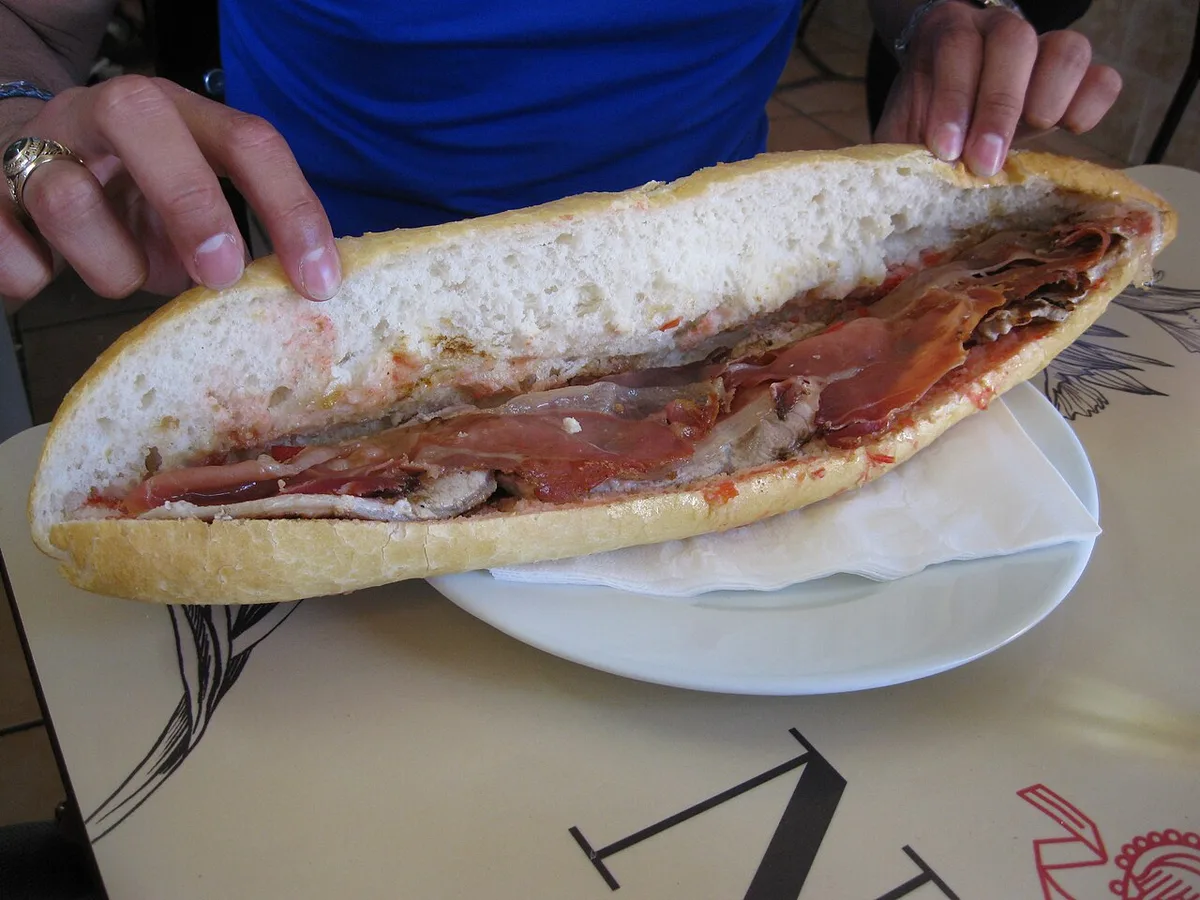
Tangier's sandwich: a baguette loaded with tuna, egg, olives, fries, salad, and sauce from medina counters, built to order for a few dirhams. The city's true fast food, Spanish in name, Tangier in execution.
Where it comes from: The bocadillo crossed the strait with Spanish Tangier and stayed, growing Moroccan fillings: harissa heat, preserved lemon, whatever the counter holds. Every medina neighborhood has its counter, and every Tangerino has a verdict on the best.
How to eat it: At the counter, pointing at what you want in it, eaten walking or on the nearest step. Order 'completo' and trust the builder.
Grilled sardines at the port
Sardines and the morning's fish, grilled at the portside restaurants with chermoula, bread, and salad. Tangier's harbor lunch, priced by the catch.
Where it comes from: Tangier's port fed two continents' fishing fleets, and its grill houses run on the same short chain as Casablanca's: boat, stall, charcoal. Sardines here are a staple, not a garnish.
How to eat it: By weight, agreed first, eaten with fingers and bread. Lunch, when the fish is hours old, not days.
Bissara
The north's dawn soup: fava beans cooked down with garlic, olive oil, cumin, and paprika, at stalls around Bab Fahs and the medina gates. Tangier starts its day with it.
Where it comes from: Northern Morocco runs on bissara the way the south runs on harira; in Tangier the stalls serve porters, drivers, and ferry passengers from first light. It is the city's cheapest hot meal and one of its best.
How to eat it: Standing at a stall in the morning, bread dunked, oil slicked on top at the ladle. Then coffee, Spanish style, after.
Harira
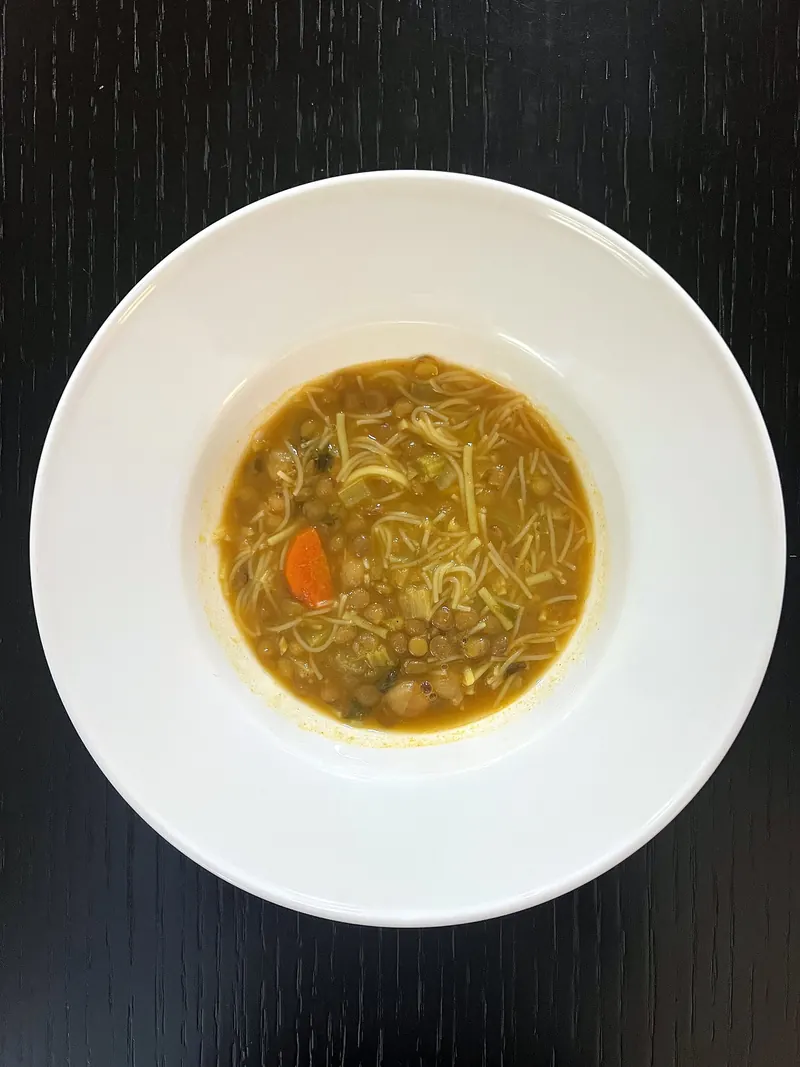
The tomato, lentil, and chickpea soup of the evening, ladled in the medina with dates and chebakia: Tangier's nightfall bowl before the grills take over.
Where it comes from: Tangier eats late, on a Spanish-adjacent clock, and harira is the bridge between the cafe afternoon and the grill night. Medina stalls time it to the maghrib call.
How to eat it: At dusk, at a stall table, then a slow walk to wherever dinner turns out to be.
Churros and chocolate
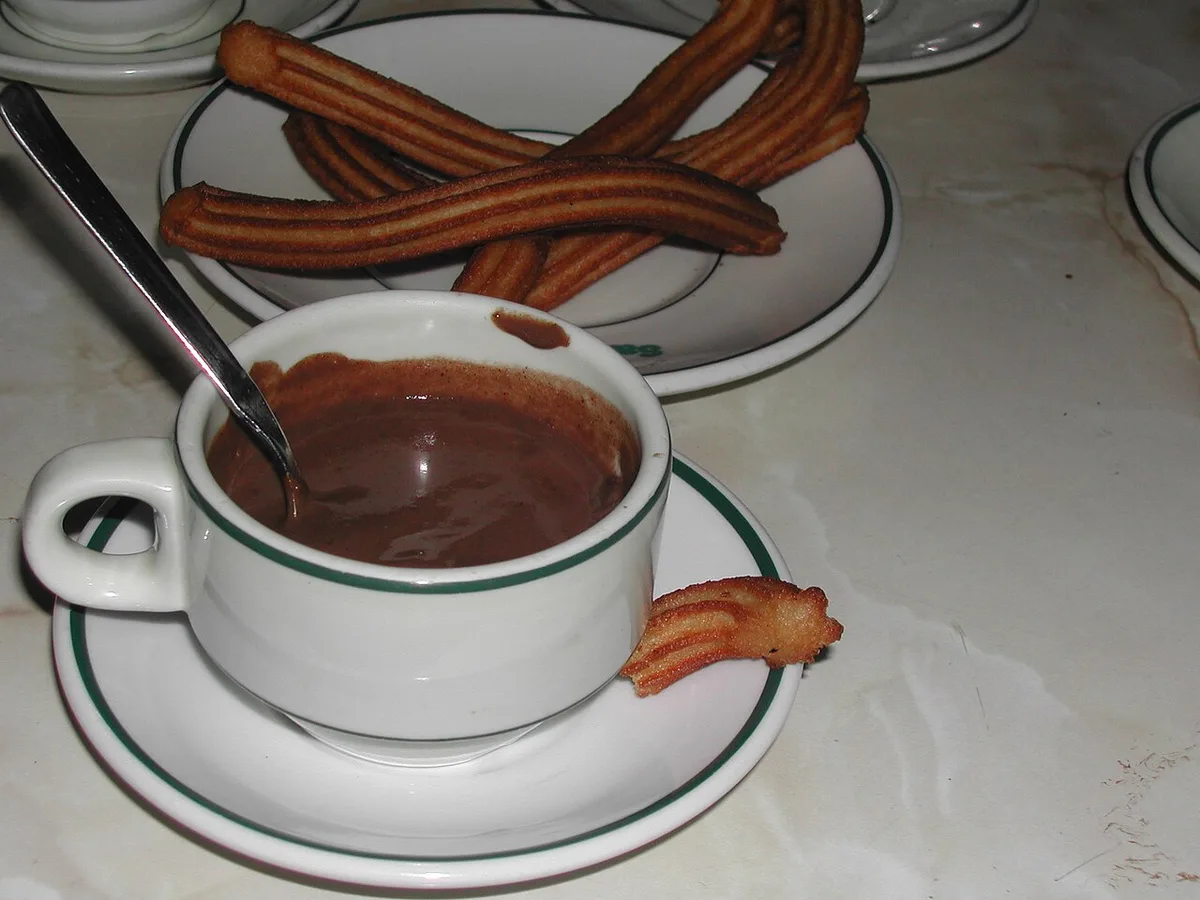
Spanish mornings survive in Tangier's bakeries and cafes: churros with thick hot chocolate, a legacy of the Spanish years that never left the breakfast table.
Where it comes from: Tangier was international, then Spanish-adjacent, for so long that its palate is bilingual. The bakeries of the new town still fry churros the Andalusian way, and Tangerinos queue without finding it exotic at all.
How to eat it: For breakfast in the Ville Nouvelle, dunked, unhurried. Then mint tea later; Tangier does both loyalties daily.
Chicken tagine with preserved lemon
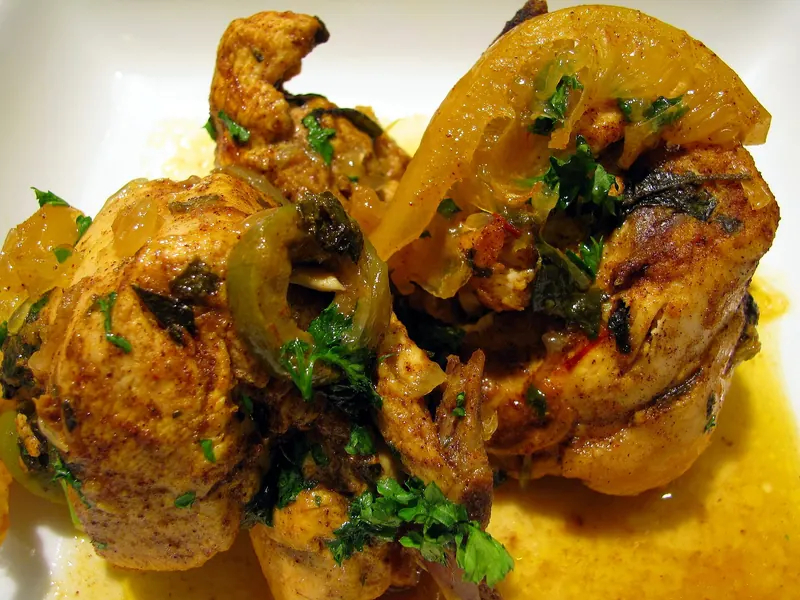
The national classic, northern edition: chicken, preserved lemon, olives, and saffron, served in medina restaurants and riads as the reference plate.
Where it comes from: However international Tangier gets, the tagine anchors it: the dish every visitor is offered and every family cooks. The preserved lemons here come from the region's own groves.
How to eat it: Shared, with bread, peel and all. Order it where the room is full of Tangerinos.
Msemen and mint tea at Café Hafa
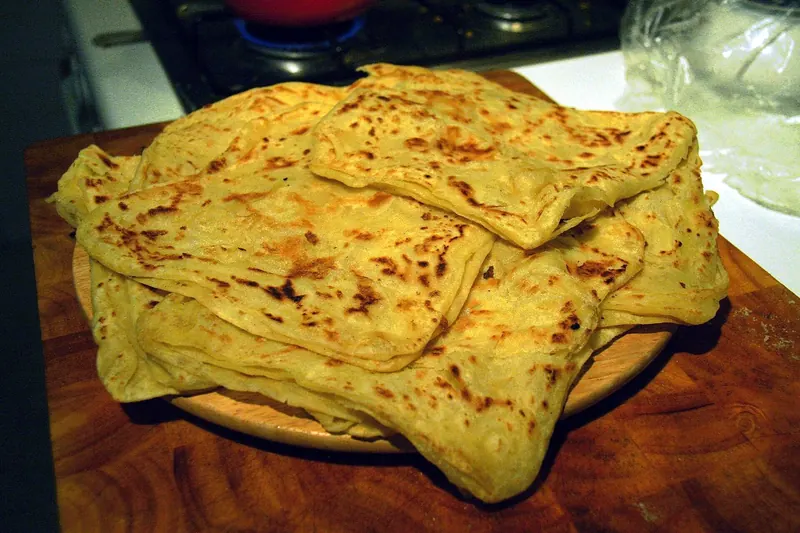
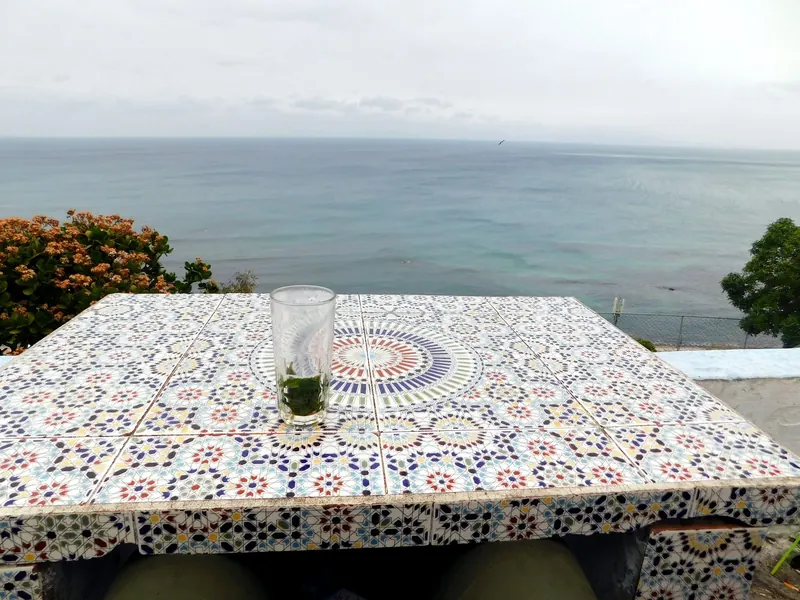
Flaky msemen and mint tea on Hafa's mosaic terraces, the strait in front of you and Spain on the horizon: Tangier's defining food moment is mostly a drink and a view.
Where it comes from: Café Hafa opened in 1921 and kept its form: terraced tables, tea, and time. Bowles brought guests, the Stones dropped in, and the neighborhood never stopped coming. The msemen is good; the sitting is the dish.
How to eat it: Late afternoon, terrace edge, at least one full pot of tea. Do not schedule anything after; nobody does.
Street food, decoded
Tangier's street food is bilingual: bissara at dawn by the gates, bocadillo counters through the medina, churros in the new town, and grills wherever the port's catch lands. Prices are set by porters, drivers, and ferry crews, which keeps everything honest and fast.
Above it all sits the cafe layer, and in Tangier the cafe is not a break from eating; it is the main event. Hafa at sunset, the Petit Socco for people-watching, the Pasteur terraces for pastry: budget your afternoons for sitting, and the city will feed you in between.
Café Hafa at sunset
Terraced tables down a cliff, mint tea and msemen, Spain across the water. A century of Tangerinos and famous visitors cannot all be wrong about an afternoon.
The bocadillo counter
Medina counters building baguettes to order: tuna, egg, fries, olives, sauce. Point, pay a few dirhams, eat like the city.
The port fish grill
Grill restaurants by the harbor cooking the morning's catch: choose fish, agree the weight price, bread and salad appear. Lunch is the sitting.
The Petit Socco cafe sit
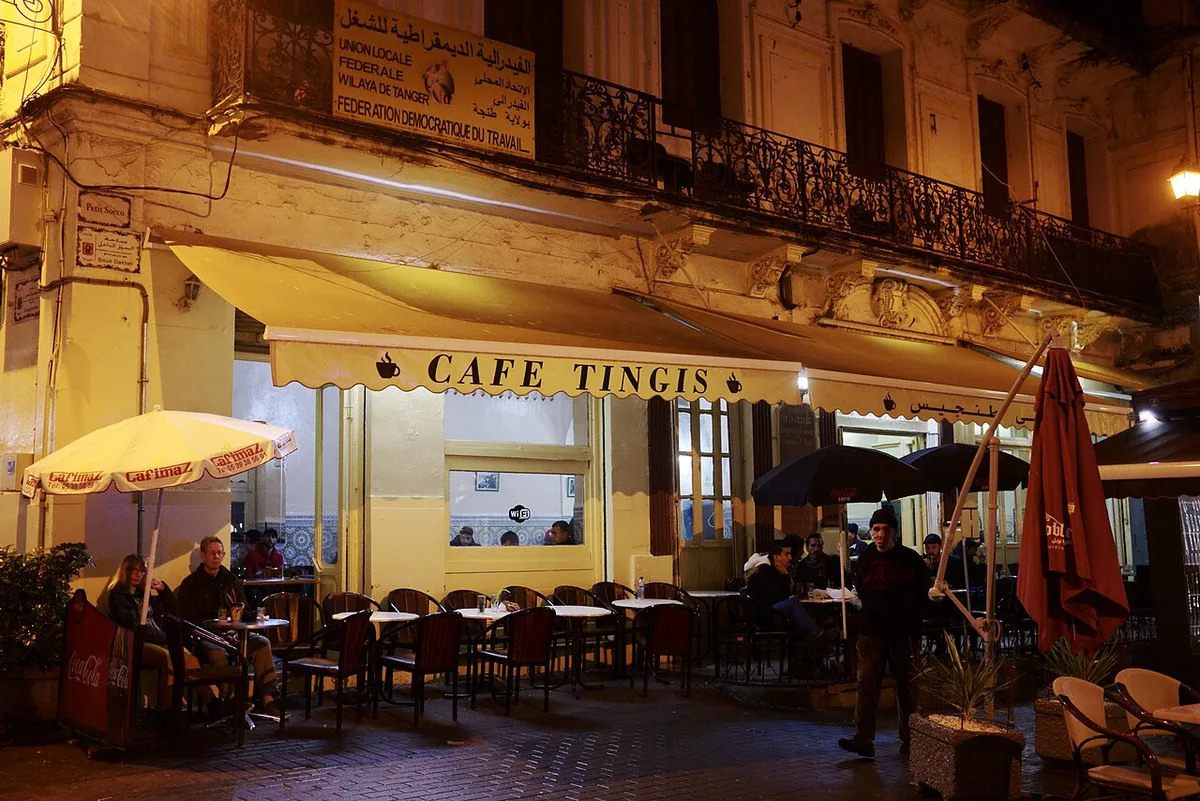
The little square's cafes (Central, Tingis) were the beating heart of international Tangier. Order tea and watch the medina go by its front door.
The Spanish bakery breakfast
Churros and thick chocolate in the new town's bakeries: Tangier's other breakfast, a street away from the bissara stalls.
The medina grill
Brochettes, kefta, and harira in the medina lanes at night, when Tangier's late clock starts dinner. Follow the smoke downhill.
The rules that keep it safe and good
Tangier eats late: lunch at 2, dinner after 9, cafes all afternoon. Kitchens that look closed at 7 are just early.
The medina runs on a slope: Kasbah on top, port at the bottom. Downhill is always findable; uphill is the workout.
At the port grills, agree the per-weight price before the fish is chosen, not after it is cooked.
Cafe sitting is sacred: one tea buys the chair for the afternoon, at Hafa and everywhere else. Nobody will move you along.
Ferry days surge the medina at midday; the stalls feed locals on their own schedule regardless. Eat at local hours and skip the surge.
The markets
Markets are where Tangier actually shops and eats. Each one has a different job; go in the morning, when the food counters are at their busiest.
AGrand Socco market
The covered market halls at the great square: produce, olives, cheese, and provisions for the medina and the new town alike, at the city's front door.
Eat: Olives, cheese, and bread for a Kasbah picnic above the port.
BThe medina souks
Food lanes threaded through the old city's commerce: spice sellers, olive stalls, bread, and the counters and stalls that feed the medina. Graze downhill toward the port.
Eat: A bocadillo built to order, bissara if it is still morning.
CThe port fish market
Where the boats land: sardines, sole, bream, and the day's surprises, sold at port pace with grill restaurants beside it. Come before lunch and eat what you just watched arrive.
Eat: The freshest fish on the board, grilled next door.
DMarché Central, Ville Nouvelle
The new town's central market: produce, flowers, and European-Moroccan provisions for the Pasteur quarter's kitchens and patisseries.
Eat: Bakery breakfast after: churros if the morning is young.
EBab Fahs and the gate stalls
Around the medina's landward gates: bissara stalls at dawn, juice carts, and the snacks of the arriving city. Tangier's front porch, working class and delicious.
Neighborhoods: 1 The Kasbah · 2 The Medina · 3 Grand Socco · 4 Ville Nouvelle · 5 Marshan and Café Hafa · 6 The Port and the BeachMarkets: A Grand Socco market · B The medina souks · C The port fish market · D Marché Central, Ville Nouvelle · E Bab Fahs and the gate stallsPins mark neighborhood centers, so you can place each area against where you are staying. Taxi times under each neighborhood below are measured from the Petit Socco.
1The Kasbah
The fortress quarter on the hill: the sultan's palace museum, white lanes, small riad restaurants, and the city's best views over the port and strait. The quiet top of Tangier.
From the Petit Socco: 10 min on foot, uphill
2The Medina
The old city between the Kasbah and the port: bocadillo counters, bissara stalls, grills, and the Petit Socco's cafes at its heart. Tangier's everyday eating, dense and cheap.
From the Petit Socco: The Petit Socco is its heart; you are there
3Grand Socco
The great square at the medina's gate: market halls, the Rif cinema, and the hinge between old city and new. Everyone passes here; the food stalls serve the passing trade.
From the Petit Socco: 2 min on foot
4Ville Nouvelle
The French and Spanish new town along Boulevard Pasteur: cafe terraces, patisseries, the Terrasse des Paresseux cannons, and Tangier's European register, pastries included.
From the Petit Socco: 5 min on foot
5Marshan and Café Hafa
The plateau west of the Kasbah: villas, the Marshan palace quarter, and Café Hafa's terraces stepping down the cliff toward the strait. The sunset address of Tangier since 1921.
From the Petit Socco: 15 min on foot, or a short taxi
6The Port and the Beach
The working port and the city beach east of the medina: fish market, grill restaurants, and the corniche's evening promenade. Where Tangier eats what it catches.
From the Petit Socco: 10 min on foot
The people behind the food
The names that explain how Tangier cooks the way it does now.
Café Hafa
Institution, Marshan
Since 1921, the cliff-terrace cafe above the strait: mint tea, mosaic tables, and a guest book running from Paul Bowles and the Beat writers to the Rolling Stones, while the neighborhood kept its own tables throughout. Tangier's front room, still unbothered.
The Petit Socco cafes
Institution, the medina
Café Central and Café Tingis on the little square were the switchboard of international Tangier: writers, spies, smugglers, and tea. The square still runs on their terraces, at medina prices.
The port grill keepers
Institution, the harbor
The families grilling the fleet's catch at the port's edge, fluent in fish and ferry schedules. Their sardines have fed arrivals from three continents for generations.
The bocadillo builders
Craft, the medina
The counter men of the medina who build a bocadillo in under a minute, fries inside, sauce decisive. Every Tangerino's loyalty to one counter is a considered position, defended in public.
The Spanish bakeries
Institution, Ville Nouvelle
The new town's bakeries keeping the churro-and-chocolate morning alive a century on: Tangier's Spanish layer, still warm from the fryer at breakfast.
If you only eat ten things here
Mint tea at Café Hafa at golden hour, full pot, no plans after.
A completo bocadillo from a medina counter.
Grilled sardines at the port, hours off the boat.
Bissara at a gate stall at dawn.
Churros and chocolate in a Ville Nouvelle bakery.
A Petit Socco cafe sit, tea and the whole medina passing.
Harira at dusk in the medina, dates on the side.
A Kasbah riad dinner above the port lights.
Olives and cheese from the Grand Socco market for a hilltop picnic.
Msemen and a second tea at Hafa, because one sitting is rarely enough.
Eating well here
socco
From the Spanish zoco (market): Grand Socco and Petit Socco are the city's two market squares, big and little.
bocadillo
The loaded baguette sandwich of the medina counters. 'Completo' gets everything.
hafa
'Edge' or 'brink': Café Hafa is the cafe on the edge, of the cliff and of Africa.
kasbah
The fortress quarter on the hill, Tangier's oldest and quietest lanes.
bissara
The fava dawn soup of the north. Breakfast, with olive oil and cumin.
atay
Mint tea. At Hafa it arrives with the strait as the second course.
yallah
'Let's go': the medina's all-purpose hurry-up, friendly division.
shukran
Thank you, in both of Tangier's languages at once.
What should I eat first in Tangier?
A bocadillo from a medina counter for lunch, then mint tea at Café Hafa at sunset. Those two bookends, the working sandwich and the famous tea terrace, explain the city faster than any single restaurant.
Is Tangier's food different from the rest of Morocco?
Yes: Spanish is the second language of its kitchen. Churros for breakfast, bocadillos at counters, later hours, and port fish done simply. The Moroccan canon is all here too, but the strait is an ingredient.
Where should I stay to eat well?
The Kasbah or upper medina for character, stalls, and Hafa at walking distance; the Ville Nouvelle for cafes and patisseries. The beach hotels are a taxi from everything traditional.
Is Café Hafa worth the hype?
It is not hype; it is a century-old neighborhood cafe with a famous guest list and an unbeatable terrace. The tea is ordinary and the view is not. Go at golden hour and sit as long as the Tangerinos do.
Can I eat well on a ferry day trip from Spain?
Easily: port grills for lunch, a medina bocadillo and bissara if you are thorough, Hafa for tea, and the medina souks for olives and spices before the boat. Tangier was built for arrivals.