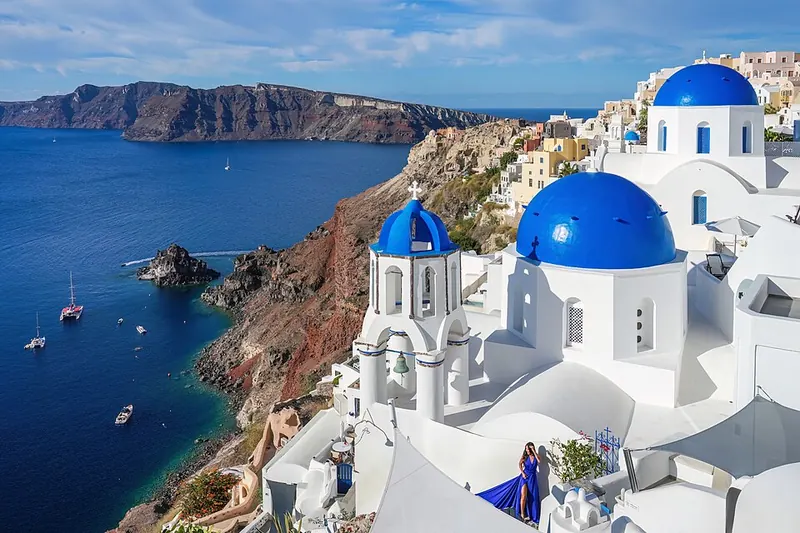
The three domes of Oia, Santorini. Photo via Wikimedia Commons.
How Santorini eats
Santorini's kitchen is written by a volcano: vines coiled into baskets against the wind, fava split peas and little tomatoes sweetened by ash soil and almost no rain, white eggplants, and capers from the cliffs. What grows here grows nowhere else quite like it, and the island's traditional dishes (fava puree, tomatokeftedes, chloro cheese) are a geology lesson you can eat.
It is also two islands at the table. The caldera rim, Oia and Fira, sells the sunset at fine-dining prices; the interior and south (Pyrgos, Megalochori, Akrotiri, the Kamari side) keep village tavernas where the same ingredients cook for the island. Eat one sunset dinner for the view, then eat like the island for the rest of the stay.
Learn the foods
Start here, not with a restaurant. Learn what these foods are, where they come from, and how locals eat them, and the whole city opens up: every menu, every market, every street corner starts making sense.
Fava
Not the bean: a puree of the island's yellow split peas, silk-smooth, topped with olive oil, lemon, capers, and chopped onion. Santorini's first plate, on every table, better here than anywhere.
Where it comes from: The fava pea has grown in the ash for 3,500 years (seeds were found at Akrotiri) and carries a protected designation. Cooked down with just water and patience, it becomes the island's answer to hummus, older than the eruption that buried the city that grew it.
How to eat it: Warm, with bread, oil pooled on top. If a taverna offers it 'married' (pandremeni, with tomato sauce and capers), that is the upgrade.
Tomatokeftedes
Tomato fritters: the island's tiny, intense tomatoes chopped with mint and onion, battered and fried crisp. Santorini's other signature, impossible to replicate with ordinary tomatoes.
Where it comes from: The island's tomato industry once canned paste for export (the old Nomikos factory at Vlychada is now a museum); the fresh fruit, grown dry in volcanic soil, concentrates to something between tomato and preserve. The fritter is its celebration.
How to eat it: Hot, by hand, as a meze with a glass of assyrtiko. Order them wherever the menu's tomatoes are the island's own.
Assyrtiko and Vinsanto
The wines of ash: assyrtiko, a white of bone dryness and mineral cut grown in basket-coiled vines, and vinsanto, the sun-dried sweet wine aged in barrels for years. The caldera's liquid form.
Where it comes from: The kouloura basket vine is the island's invention: the vine is wound into a ground-level basket that shields the grapes from the wind and sips the dew. Assyrtiko from these vines is among Greece's great wines, and the vinsanto tradition runs back through Venetian traders to the island's monasteries.
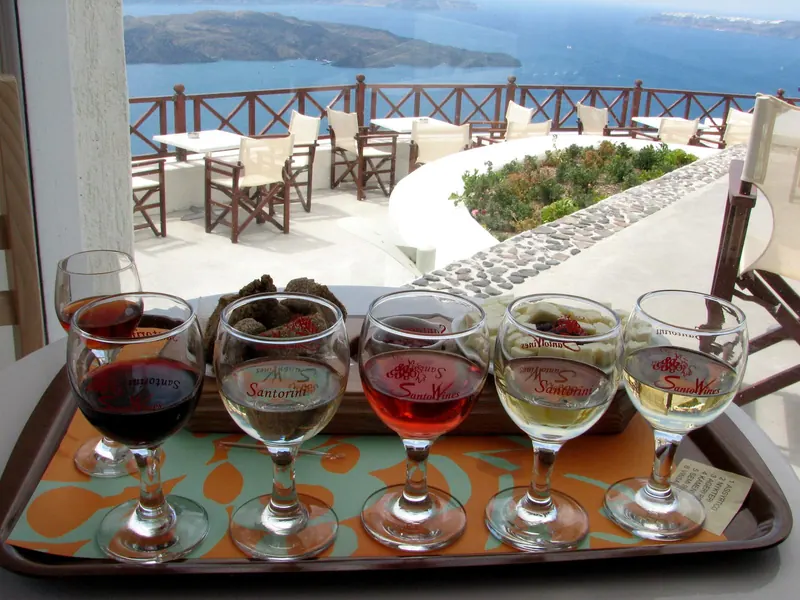
How to eat it: A tasting flight on a winery terrace (Santo Wines above Pyrgos is the cooperative's showcase) beats a glass anywhere else. Vinsanto is dessert: small glass, no hurry.
Chloro cheese
The island's fresh goat cheese: soft, slightly sharp, made in small quantities and eaten with tomato, capers, and oil, or spread on rusks. The cheese the island makes for itself.
Where it comes from: Goats on a dry island give little milk, so chloro never became an export. It appears on village menus and at farm shops, and its season is the green months; if you see it, it is the order.
How to eat it: With the island's tomatoes and a rusk, oil over all. Pair it with the fava and the meal is complete.
White eggplant
Santorini's pale aubergine, sweeter and less seedy than the purple kind, fried, baked with tomato, or in the island's salads. The market curiosity that earns its place.
Where it comes from: Island seed-saving kept this variety alive while the mainland standardized; growers will tell you the ash soil bleaches and sweetens it. Both claims are unprovable and the eggplant is delicious anyway.
How to eat it: Fried slices with garlic sauce, or baked imam-style in a village taverna. Summer is its season.
The Ammoudi catch
Whole grilled fish, octopus, and calamari at the cove tavernas, priced by the kilo and chosen from the day's boats. The island's seafood at its simplest address.
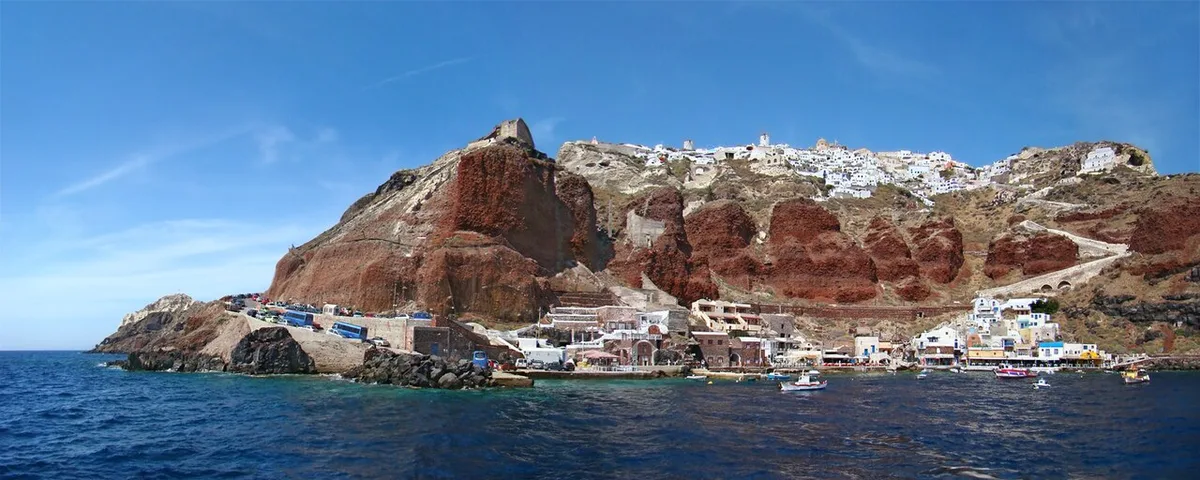
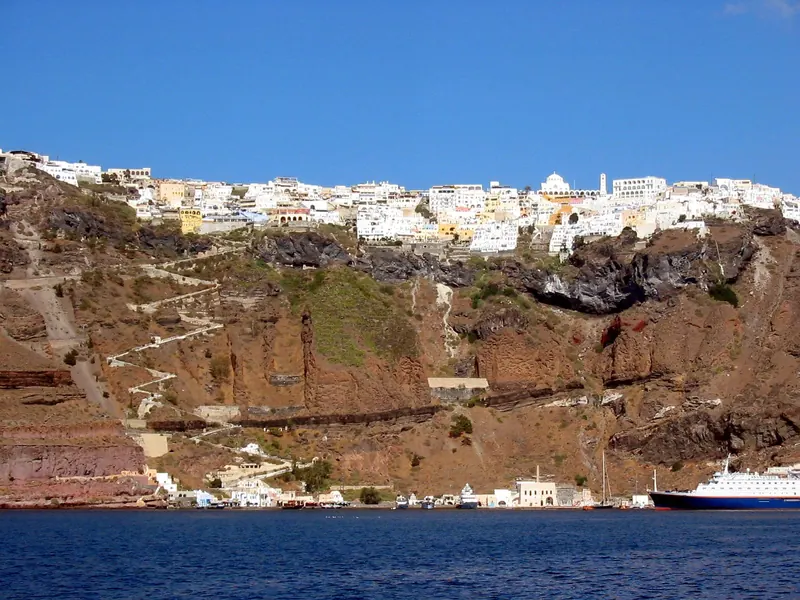
Where it comes from: Ammoudi was Oia's port when everything came by donkey up the steps; the tavernas remain where the caiques land. The fish is Aegean, the setting is the caldera's base, and the steps back up are the traditional dessert.
How to eat it: Lunch, not dinner: pick the fish from the case, agree the kilo price, grilled with lemon and oil, tomato salad beside. Swim after, steps last.
Melitinia
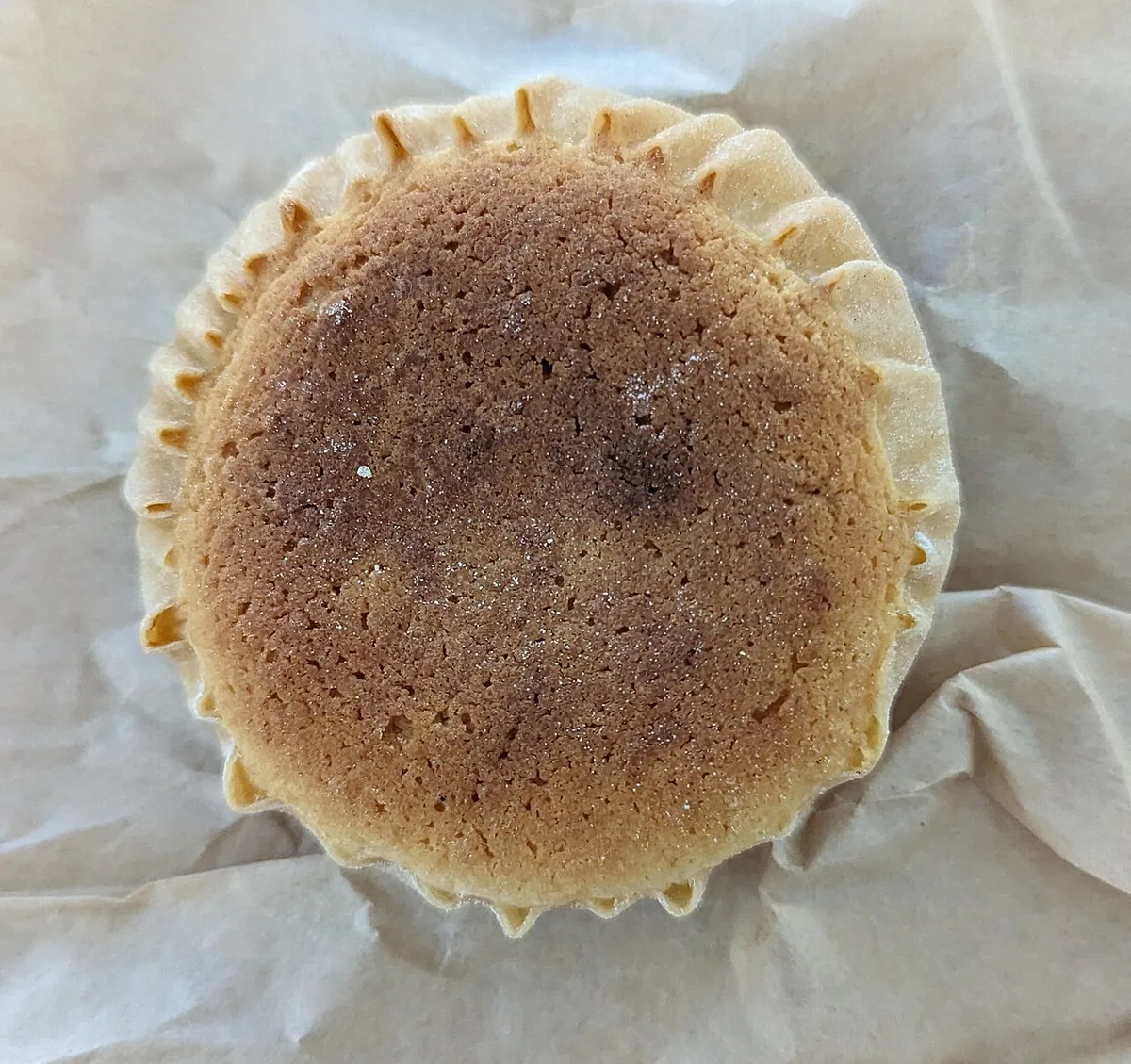
Little sweet cheese pastries, pinched by hand into fluted cups, made for Easter and weddings and sold by good bakeries year-round. The island's delicate sweet.
Where it comes from: Each melitini's rim is pinched dozens of times (the count is a baker's signature), a craft carried by the island's women for feast days. Finding them outside Easter week is the bakeries' gift to visitors.
How to eat it: With a Greek coffee, mid-morning, two at a time. They keep a day; buy for the ferry.
Street food, decoded
Santorini's street food is thin (the island does tavernas, not stalls), so the grazing game here is the bakery and the gyros counter in Fira, the winery terrace at golden hour, and the long village lunch. The island's food system, in the end, is the taverna lunch: fava, fritters, salad, and the catch, taken slowly because the afternoon heat enforces it.
Learn the geography and the prices divide themselves: rim (view tax), interior (the island), south (the farms and fish). The buses from Fira connect all three, and the island is small enough that no meal requires a car, only a decision.
The village taverna
Pyrgos, Megalochori, Akrotiri: family rooms serving the island canon at island prices, fava by default, the day's fish written on a board. The format that keeps Santorini Greek.
The winery terrace
Santo Wines and the estate wineries pour flights above the caldera: five glasses, a board of island cheeses and fava, and the sunset doing the rest. Book the late seating.
The Ammoudi fish lunch
Steps down, fish chosen, swim while it grills, steps up. A format with exercise built into both ends and the island's best midday light.
The Fira gyros counter
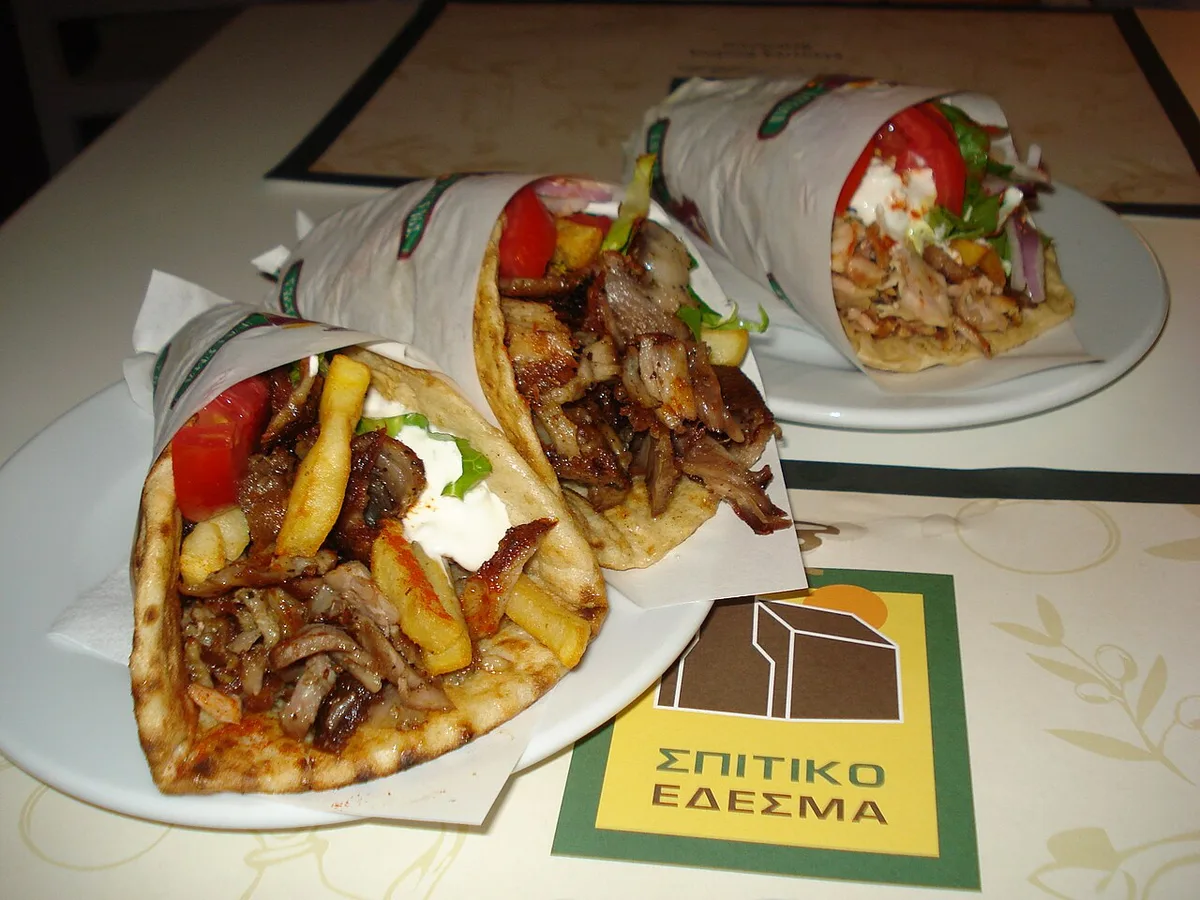
The capital's fast row: gyros, souvlaki, and bakeries feeding the whole island's errands. The rim's honest prices hide one street back from it.
The caldera tasting menu
The rim's fine dining, Greek ingredients at world prices. Worth it once, at sunset, in Oia or Imerovigli, with the reservation made before the ferry.
The bakery morning
Melitinia, pies, and coffee in a village bakery: the island's quiet start, before the cruise crowds climb from the port.
The rules that keep it safe and good
Fish is priced by the kilo everywhere: agree the price when you choose the fish, not when the bill arrives.
The sunset seats (Oia rim, winery terraces) book out days ahead in season; the village taverna at the same hour requires no reservation and feeds you better.
Fava comes first and free-ish everywhere traditional; a taverna that fumbles the fava will fumble the rest. It is the island's handshake.
Buses radiate from Fira and stop being useful late; a village dinner means a taxi back, priced into the evening.
Tap water on the island is desalinated and tastes it: tavernas serve bottled for drinking, and nobody will be offended that you noticed.
The markets
Markets are where Santorini actually shops and eats. Each one has a different job; go in the morning, when the food counters are at their busiest.
ASanto Wines, Pyrgos
The island's wine cooperative (growers' union since 1947) with the great caldera terrace: tastings of assyrtiko and vinsanto, a shop of island produce (fava, capers, tomato paste) at honest prices.
Eat: A flight and the island board: fava, chloro, capers, rusks.
BFira's market streets
The capital's lanes behind the rim: food shops, bakeries, and the island's everyday provisioning, plus the bus station that makes the whole island reachable.
Eat: Bakery pies and a gyros from the counters the island uses.
CPyrgos village center
The old capital's square and lanes: tavernas, bakeries, and kafenia under the castle hill, the island's living room away from the rim.
Eat: The full village lunch: fava, fritters, whatever the board says.
DKamari's beachfront
The black-sand beach strip on the island's east: tavernas and cafes along the promenade, local families beside visitors, prices back on earth.
Eat: A beach taverna lunch after the swim; the island's east does fish well.
EThe Tomato Industrial Museum, Vlychada
The old Nomikos tomato-paste factory turned museum: the island's vanished industry, and the shop sells the island's tomato products and fava. Santorini's food history in one building.
Eat: The museum shop's tomato paste and fava are the island's best souvenirs.
Neighborhoods: 1 Oia · 2 Ammoudi Bay · 3 Fira · 4 Imerovigli · 5 Pyrgos · 6 Akrotiri and the SouthMarkets: A Santo Wines, Pyrgos · B Fira's market streets · C Pyrgos village center · D Kamari's beachfront · E The Tomato Industrial Museum, VlychadaPins mark neighborhood centers, so you can place each area against where you are staying. Taxi times under each neighborhood below are measured from Oia.
1Oia
The marble-street village at the caldera's north tip: the famous sunset, cave houses, and fine dining at fine prices. Book the view once; eat in its lanes, not on its rim, the rest of the time.
From Oia: Oia is the reference point; you are there
2Ammoudi Bay
Down the steps from Oia: a fishing cove of seafood tavernas at the water's edge, octopus drying on lines, the day's catch grilled whole. The island's best lunch, reached by 200 steps.
From Oia: 10 min down the steps (the climb back is the price)
3Fira
The capital on the cliff: everything from gyros counters and bakeries to tasting menus, plus the bus hub and the old port below. The practical base with the caldera at its shoulder.
From Oia: 25 min by bus
4Imerovigli
The quiet caldera village between Fira and Oia: a few tavernas, the Skaros rock, and the sunset without the ceremony. Where the island exhales.
From Oia: 20 min by bus
5Pyrgos
The old capital in the island's center: a hilltop castle village of tavernas, bakeries, and the Santo Wines terrace below it. The locals' recommendation, every time.
From Oia: 35 min by bus
6Akrotiri and the South
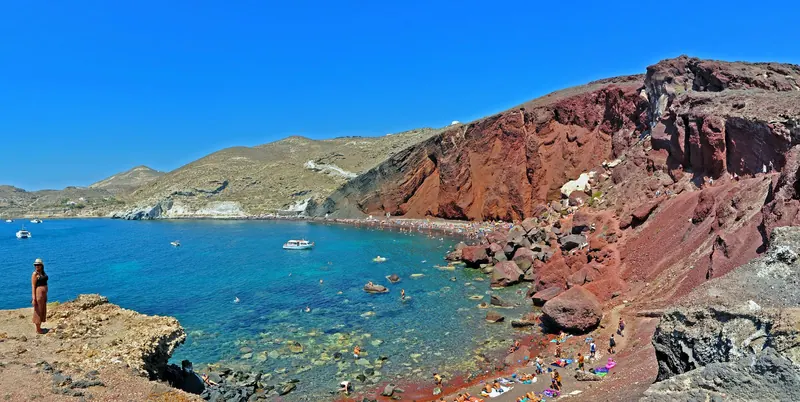
The island's far south: the ancient city, the Red Beach, fish tavernas by Akrotiri's shore, and the island's farm country in between. Santorini before the postcards, still feeding itself.
From Oia: 45 min by bus
The people behind the food
The names that explain how Santorini cooks the way it does now.
Santo Wines and the growers' union
Institution, Pyrgos, since 1947
The cooperative that bottles most of the island's small growers: Santorini's wine survived tourism's land prices largely because the union held. Its terrace pour is the island's essential afternoon.
The kouloura vine growers
Craft, islandwide
The farmers who coil each vine into its basket by hand every year, farming grapes in ash without irrigation: the assyrtiko in your glass is their geometry. Some vines' rootstocks are centuries old, ungrafted, phylloxera-free in the sand.
The Ammoudi taverna families
Institution, Ammoudi Bay
The cove's fish houses, grilling at the water where the boats land, octopus on the lines above the tables. They feed Oia's sunset crowd lunch and the island's fishermen always.
The fava farmers of the south
Craft, Akrotiri and Pyrgos
The families still growing and hand-splitting the island pea on small plots the hotels keep bidding for. Every plate of fava in this guide is their argument for staying.
The Nomikos museum keepers
Institution, Vlychada
The custodians of the tomato factory that once employed the island: they keep the machines, the stories, and the island's tomato varieties, the memory of Santorini before the sunset economy.
If you only eat ten things here
Fava in a Pyrgos taverna, 'married' style, before anything else.
A Santo Wines flight at golden hour, vinsanto to finish.
Tomatokeftedes with the island's own tomatoes, eaten too hot.
The Ammoudi lunch: steps down, fish chosen, swim, steps up.
One caldera tasting menu at sunset, booked and unashamed.
Melitinia and coffee in a village bakery at 10 a.m.
Chloro cheese the day you spot it; it does not wait.
The Tomato Museum, then the island's paste in your suitcase.
Kamari beach taverna lunch, prices back on earth, sand below.
White eggplant fried in Akrotiri, where the farms still are.
Eating well here
fava
The split-pea puree, not the bean. If it arrives without capers and oil, you are at the wrong table.
assyrtiko
The white grape of the ash: say 'a-SEER-tee-ko'. Dry, mineral, the island's signature pour.
vinsanto
The sun-dried sweet wine, aged years in oak. A small glass is a dessert and a history lesson.
kouloura
The basket-coiled vine, Santorini's sculpture and survival trick in one.
tomatokeftedes
'Tomato balls': the fritters. Order by the plate; they vanish by the hand.
chloro
The island's fresh goat cheese. Seasonal, scarce, and the correct order when seen.
stin ygeia mas
'To our health': the toast, said with eye contact, before the assyrtiko.
logariasmo, parakalo
'The bill, please': on the rim it arrives with the view included.
Is Santorini's food overpriced?
On the caldera rim, yes, you pay for the sunset in the plate. The same ingredients cook for half in Pyrgos, Megalochori, and the south, in tavernas the island uses itself. Budget one rim dinner; eat village the rest of the trip.
When are the crowds worst?
July and August, when cruise ships stack Fira and Oia at midday and sunset. April to May and late September to October keep the weather and lose the crush; winter closes much of the island but not its village tavernas.
What wine should I actually buy?
A dry assyrtiko from a named estate for drinking now, and a small bottle of vinsanto for keeping. The winery terraces (Santo Wines is the island cooperative) pour the full range with the caldera as the tasting note.
Where should I stay to eat well?
Pyrgos or Megalochori for the village table with buses to the rim; Imerovigli for quiet with views; Fira for logistics. Oia is a visit, not a base, unless the sunset is the whole point.
Is the fava really made from fava beans?
No: it is the island's yellow split pea (Lathyrus), a different plant entirely, protected by name. The confusion is universal; the puree is unmistakable once the capers land.