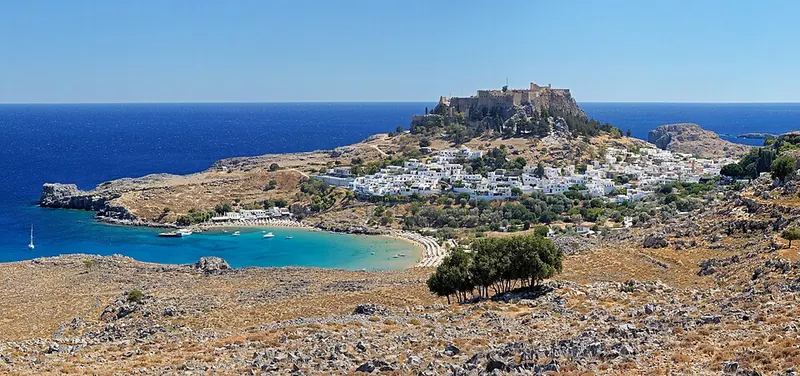
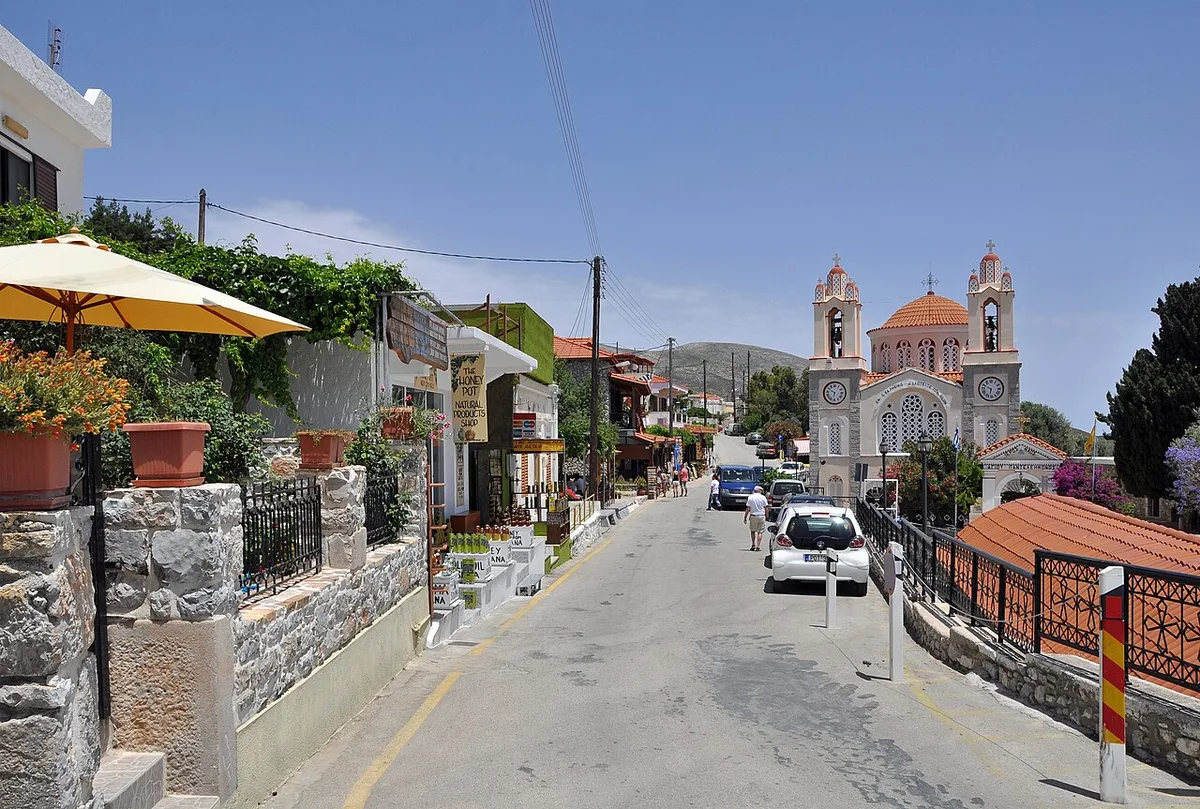
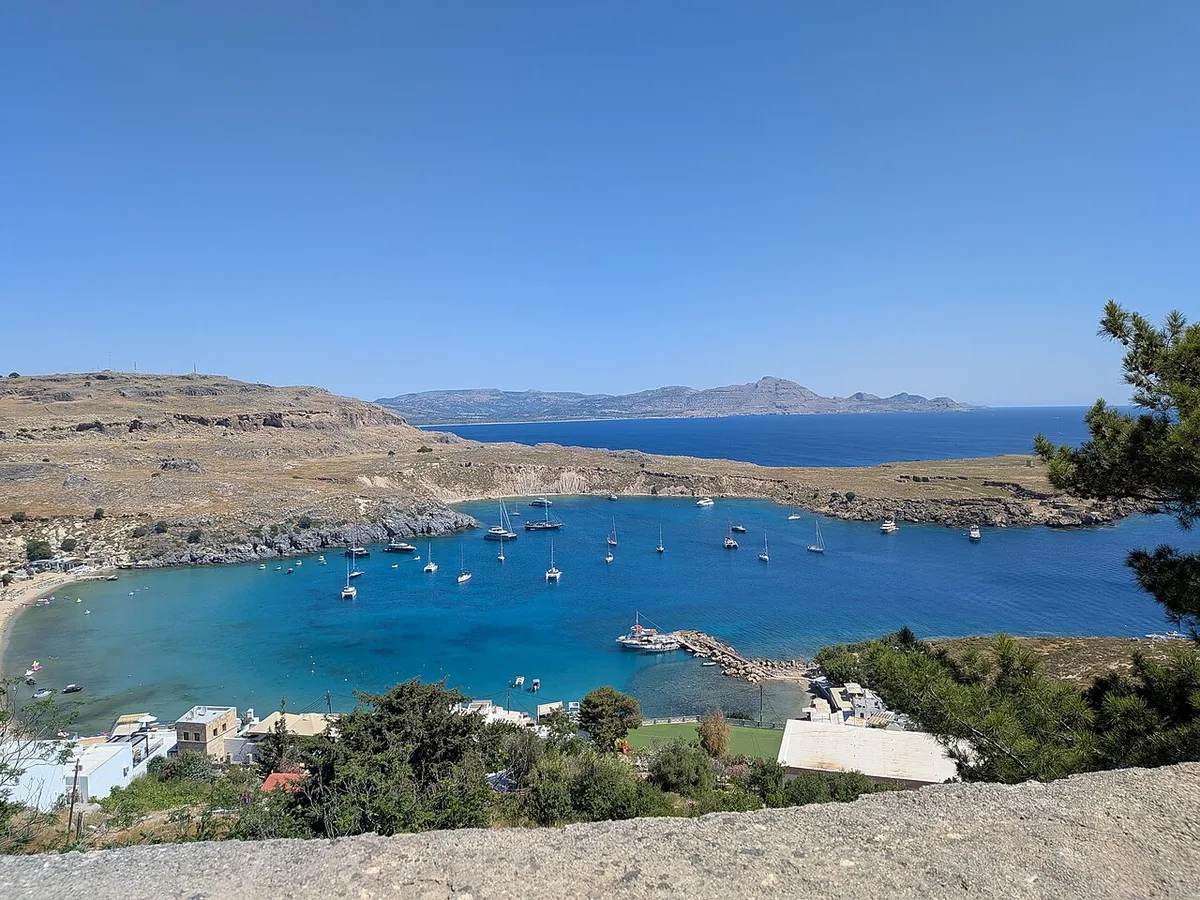
The Temple of Athena Lindia on the acropolis of Lindos. Photo via Wikimedia Commons.
How Rhodes eats
Rhodes is the Aegean's crossroads island, and its table shows every flag that flew here: the Knights' medieval old town (a living UNESCO city, not a ruin), Italian-era markets, village kitchens in the hills, and Lindos, the whitewashed captains' village under its acropolis. The food is island Greek with Rhodian signatures: pitaroudia chickpea fritters, honey in everything from Siana village, and the tiny Symi shrimp that arrive from the next island over.
Eat in the old town's lanes beyond the main bazaar street, where the grill houses serve the city, and in the villages, where the chickpeas, honey, and wine come from. Rhodes rewards the traveler who treats the medieval town as a neighborhood, because for several thousand people it still is one.
Learn the foods
Start here, not with a restaurant. Learn what these foods are, where they come from, and how locals eat them, and the whole city opens up: every menu, every market, every street corner starts making sense.
Pitaroudia
Rhodes' chickpea fritters: ground chickpeas with tomato, onion, mint, and cumin, fried crisp and eaten by the plateful. The island's signature meze, rarely found off it.
Where it comes from: The fritter is Rhodes' chickpea pride: the island grows and grinds its own, and the pitaroudia recipe (tomato in the mix, where other islands use herbs) is the local fingerprint. Every taverna claims the crispest; the argument is the appetizer.
How to eat it: Hot, as the first meze, with a squeeze of lemon and no sauce to hide the fry. Order the second plate when the first lands; timing is everything.
Symi shrimp (garidaki)
The tiny shrimp from Symi island, fried whole in the shell and eaten shell, head, and all, sweet and crunchy as nuts. The Dodecanese delicacy that Rhodes' fish tavernas serve as their own.
Where it comes from: Symi's little red shrimp live deep and are caught small; the fry-in-shell method turns the whole animal into the dish. Rhodes, the big island neighbor, imports them daily and serves them at its best fish tables.
How to eat it: Whole, by hand, no peeling: the crunch is the dish. A plate per two people is a starter; a plate each is the correct error.
Karavoli
Rhodes' snails, stewed with tomato, onion, and sometimes rosemary: the island's answer to Crete's chochlioi, saucier and eaten with bread or over the local pasta.
Where it comes from: Every Aegean island keeps a snail dish from the lean centuries; Rhodes' version went tomato-rich, closer to a stew than a fry. Village kitchens still gather them after the winter rains.
How to eat it: With bread for the sauce and patience for the picks. Order them where the menu is handwritten.
Village chickpea stew
Slow chickpeas baked or stewed with onion and bay, the mountain villages' Sunday dish (Siana's version is famous), served with lemon and oil. Rhodes' humble plate at its best.
Where it comes from: The overnight chickpea bake is a Greek village canon, and Rhodes' hills (with their wood ovens) keep it faithfully: chickpeas from the island's own fields, cooked until they turn to velvet. It is the dish the pitaroudia's chickpeas dream of in winter.
How to eat it: At a village taverna on the Embonas drive, with the local red and whatever grills beside it.
Melekouni
Rhodes' wedding sweet: sesame seeds bound with thyme honey into bars, flavored with orange and spices, cut in diamonds and given at weddings and baptisms. The island's edible celebration.
Where it comes from: Melekouni is made by the village women in the days before a wedding, in quantities that assume the whole island attends. The honey is Siana's, the sesame toasted, and the bar keeps for weeks, which is why it sails home in every visitor's bag.
How to eat it: With a Greek coffee, one diamond at a time. Buy boxes in Siana or the old town's sweet shops.
Soumada
The almond drink of Siana: a sweet white almond syrup diluted with cold water (or made into a soft drink), the village's welcome glass and Rhodes' refresher since the Italian years and long before.
Where it comes from: Siana, in the island's south, is famous for two liquids: its honey and this almond cordial, served to visitors at the village's shops and kafenia. It is the taste of the southern drive, and the bottles line the village's shelves like a flag.
How to eat it: Ice cold, at the village kafenio, with the honey shops after. Dilute to taste; it is sweeter than it looks.
The harbor catch
Grilled fish, octopus, and calamari at Mandraki and the old town's fish tavernas: the Aegean day's boats, priced by the kilo, olive oil and lemon the only sauce that matters.
Where it comes from: Rhodes has fished its strait (Turkey's coast is visible from the harbor) for three thousand years; the Colossus watched the same boats. The new town's fish tavernas by the market are where the city eats its own catch.
How to eat it: Choose from the case, confirm the kilo price, grilled plain. The fava or chickpea plate first, as the island insists.
Street food, decoded
Rhodes grazes in lanes and villages: a pitaroudia plate in an old-town grill house, a soumada in Siana, the winery pour at Embonas, and the harbor's fish at the day's end. The island's tourist machinery is everywhere, but its food system sits one street inside it, run for the several thousand people who live in the medieval town and the villages beyond.
The drive is the other table: the interior's loop (Embonas' wine and grills, Siana's honey and almonds, the monastery lanes) is the island's Sunday institution, and every village kafenio on it will feed you something honest.
The old-town grill house
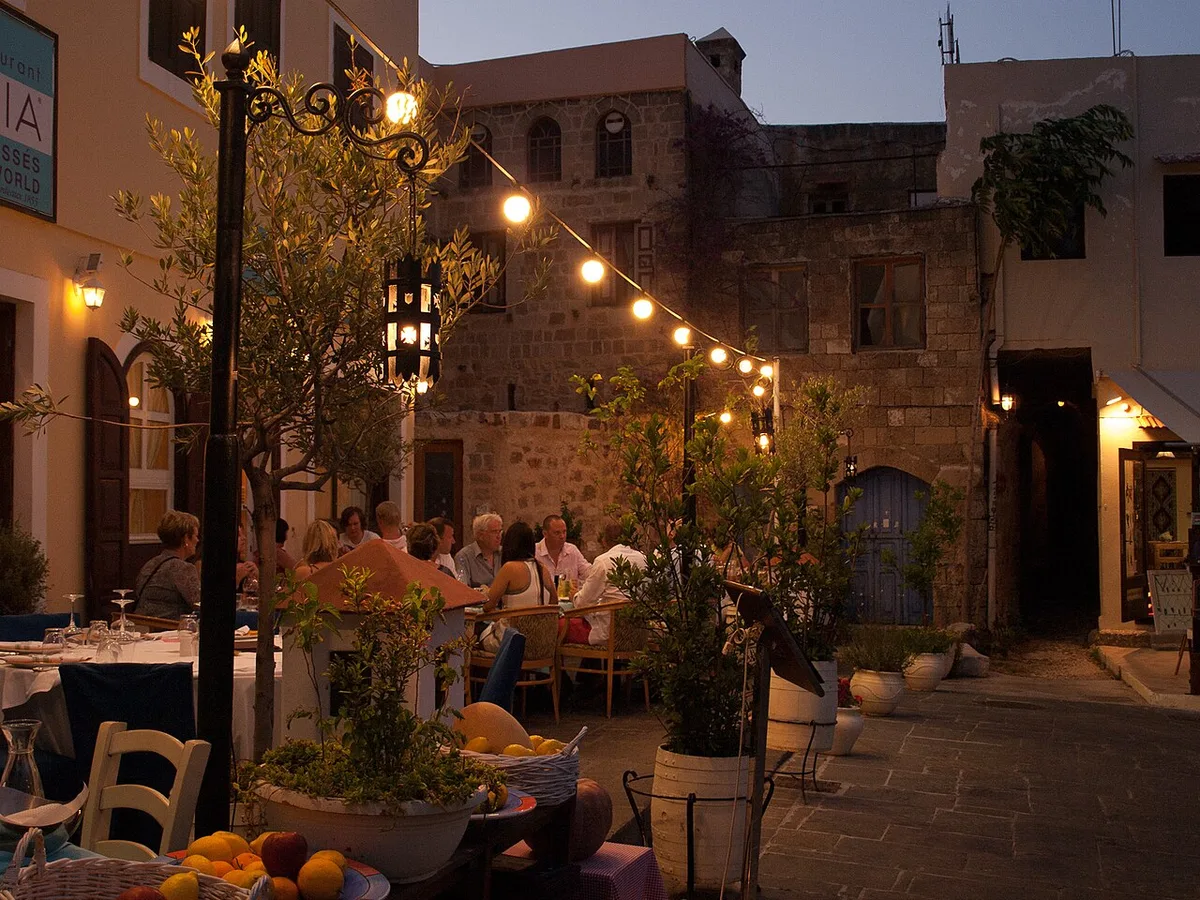
Beyond the bazaar's noise: souvlaki, pitaroudia, and grills in lanes the residents use, courtyards instead of touts. The medieval town's own dining rooms.
The Mandraki fish taverna
By the New Market and the harbor: the day's catch at city prices, deer statues for a view, the city's own seafood register.
The Lindos rooftop
Dinner above the white lanes: captains' houses with roof terraces, the acropolis lit above, seafood below. Book the roof, arrive by dusk.
The wine village lunch
Embonas' tavernas pour the estates' reds beside the island's grilled meats: the interior's Sunday system, an hour's drive that changes the island entirely.
The village kafenio stop
Siana and the southern villages: soumada or coffee, melekouni after, honey by the jar. The road's punctuation marks.
The beach taverna
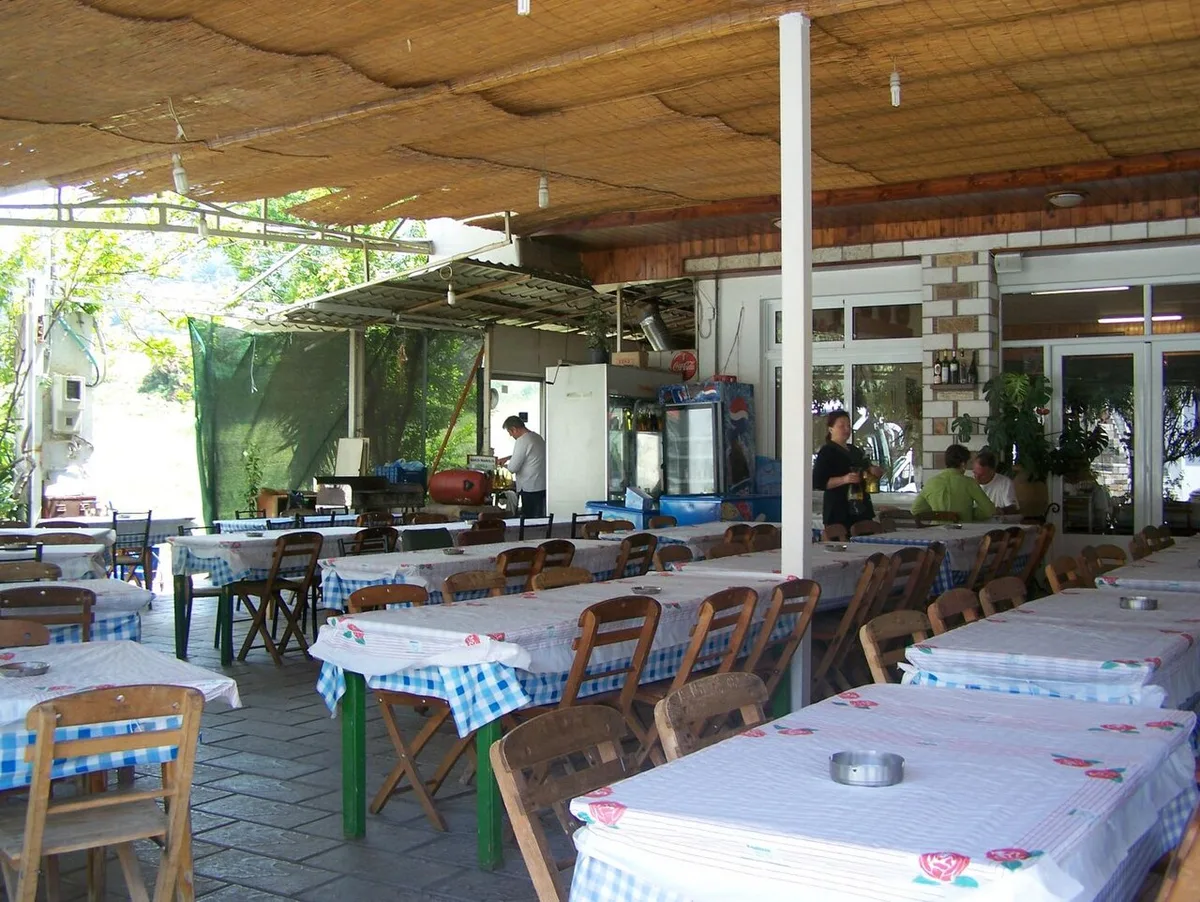
West coast and Lindos' bays: grilled fish with your feet near the sand, the swim between courses built into the format.
The rules that keep it safe and good
The bazaar street's prices halve two lanes in: the old town's depth is its discount, in money and in noise.
Fish by the kilo: choose it, price it, then grill it. The Symi shrimp are the exception, sold by the plate and worth it.
Lindos runs on day-trip time: the village is yours before 10 and after 5; schedule the acropolis and the meals into those hours.
The interior drive needs its own day and a designated driver: Embonas pours generously and the mountain roads collect their toll in attention.
Melekouni and honey are the suitcase goods: both travel perfectly, and Siana's shops expect the purchase and price it fairly.
The markets
Markets are where Rhodes actually shops and eats. Each one has a different job; go in the morning, when the food counters are at their busiest.
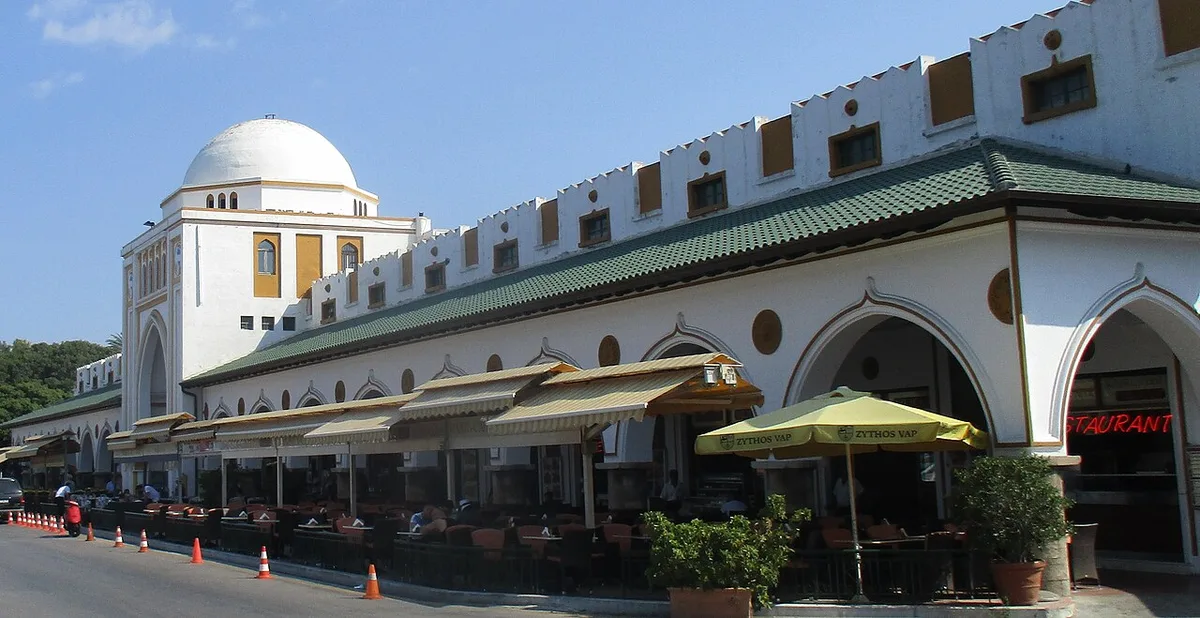
ANea Agora (New Market)
The Italian-era market by Mandraki harbor: an arcaded courtyard of cafes, food shops, and tavernas, the new town's living room since the 1920s.
Eat: Coffee and a meze under the arches; fish from the tavernas at its edge.
BSokratous Bazaar
The old town's main commercial street since the Knights: leather, sweets, and souvenirs at full volume, with the lanes of the lived-in town branching off it. Walk it once, then leave it.
Eat: Melekouni and spoon sweets from the sweet shops; lunch two lanes away.
CEmbonas Village
The wine capital under Attavyros: estate shops (Emery's cellars), grill tavernas, and the island's meat-and-red-wine country in one village square.
Eat: The full grill lunch with the estate red; bottles for the suitcase.
DSiana Village
The southern village of honey and soumada: shops of jars and bottles, a famous church, and kafenia pouring the almond drink to every passerby.
Eat: Soumada cold at the kafenio; honey and melekouni to carry.
EThe Rhodes Town Laiki
The weekly farmers markets of the new town: island produce, chickpeas, olives, and cheeses at local prices, the provisioning the tavernas share with households.
Eat: Market snacks and the day's fruit; the chickpeas explain the island.
Neighborhoods: 1 The Old Town · 2 Mandraki and the New Town · 3 Lindos · 4 Embonas and the Wine Villages · 5 Ialysos and the West CoastMarkets: A Nea Agora (New Market) · B Sokratous Bazaar · C Embonas Village · D Siana Village · E The Rhodes Town LaikiPins mark neighborhood centers, so you can place each area against where you are staying. Taxi times under each neighborhood below are measured from the Palace of the Grand Master.
1The Old Town
The Knights' medieval city: Sokratous bazaar at its loudest, then lanes of grill houses, meze tavernas, and residents' courtyards beyond. The deeper in, the better it eats.
From the Palace of the Grand Master: The Palace of the Grand Master is its reference; you are there
2Mandraki and the New Town
The harbor of the Colossus legend and the Italian-era new town: the Nea Agora market, cafes, and the city's everyday tavernas along the water. Where Rhodes Town lives outside the walls.
From the Palace of the Grand Master: 10 min on foot from the walls
3Lindos
The white village under its acropolis, 50 km south: captains' houses turned tavernas, rooftop tables over the lanes, and St Paul's Bay below. Go early, eat above the crowds.
From the Palace of the Grand Master: 1 hr by bus
4Embonas and the Wine Villages
Mount Attavyros' slopes in the interior: Embonas, Rhodes' wine capital, with grill tavernas serving the island's meats and the estates' reds. The island's Sunday drive and lunch.
From the Palace of the Grand Master: 1 hr by car
5Ialysos and the West Coast
The resort strip and ancient Ialysos on the west shore: beach tavernas, windsurf energy, and the road to the island's quieter villages and Kamiros' ruins.
From the Palace of the Grand Master: 20 min by taxi
The people behind the food
The names that explain how Rhodes cooks the way it does now.
The Emery wine estate
Institution, Embonas, since 1923
Rhodes' historic winery in the island's wine village, making the local reds (and the island's famous sparkling experiments) for a century. The cellar door in Embonas is the interior drive's anchor.
The Siana honey makers
Craft, Siana village
The families whose thyme honey fills the island's melekouni and its gift shops, keeping hives on the southern hills and a famous welcome (a glass of soumada) at their doors.
The melekouni bakers
Craft, islandwide
The women who toast the sesame and bind the honey bars before every wedding season, in quantities counted by the village. The sweet is their signature, and no factory has taken it from them.
The Nea Agora cafe keepers
Institution, Mandraki
The arcade's hosts, serving the new town's coffee and meze under the Italian arches for generations of regulars. Their courtyard is Rhodes Town's front room, unchanged in function for a century.
The Lindos taverna families
Institution, Lindos
The captains' houses turned restaurants, roofs above the lanes, kitchens keeping the village's seafood and chickpea canon for the visitors who climb to them and the village that still lives there.
If you only eat ten things here
Pitaroudia hot in an old-town grill house, lemon over, second plate timed.
Symi shrimp whole and crunchy at a Mandraki fish taverna.
Lindos at dawn: acropolis first, rooftop breakfast after.
The Embonas run: estate tasting, grill lunch, the island's red.
Soumada and honey in Siana, melekouni for the bag.
Village chickpea stew on the mountain road, wood-oven country.
Nea Agora coffee under the arches, harbor volta at dusk.
A Lindos rooftop dinner, acropolis lit, lanes below.
Karavoli where the menu is handwritten, bread deployed.
The Symi day ferry, shrimp at source, verdict argued at dinner.
Eating well here
pitaroudia
The chickpea fritters, Rhodes' signature. Crispy outside, soft in: the lemon is not optional.
melekouni
The sesame-honey wedding bar. Buy the box; it outlasts the trip and the intentions.
soumada
The almond cordial of Siana, diluted ice-cold. The southern drive's welcome glass.
garidaki
'Little shrimp': the Symi fry, eaten whole. One plate is never the final count.
karavoli
The island's snails, tomato-stewed. Bread is the instrument.
volta
The evening stroll, harbor-side at Mandraki. Dinner follows it; nothing precedes it.
efcharisto
'Thank you': in the villages it is answered with more food. Budget accordingly.
logariasmo, parakalo
'The bill, please': after which the house may send a sweet 'from us'. It is not over until it is over.
Where do locals eat in the Old Town?
Beyond Sokratous: the lanes toward the Jewish quarter and the walls hide the grill houses and meze tavernas the residents use, at half the bazaar's prices. A useful rule: if the tout is in four languages, walk two streets further.
Is Lindos worth more than a day trip?
Lindos rewards an overnight: the acropolis at opening, the village lanes empty at dawn, dinner on a rooftop, and St Paul's Bay for the swim. Day-trippers meet the crowd; sleepers meet the village.
What is the Colossus connection to the food?
Only that the harbor it guarded still lands the fish: Mandraki's tavernas sit where the wonder stood. The deer statues mark the legendary feet; dinner is on the same quay, which is connection enough.
Should I day-trip to Symi?
For the shrimp and the neoclassical harbor, yes: the ferry runs daily, the garidaki are fresher at source, and you are back for dinner. Eat the shrimp there at lunch and compare with Rhodes' version at night; the islands argue it too.
When is the island best?
May to June and September to October: warm sea, open tavernas, and the old town's lanes walkable. August packs Rhodes Town and Lindos alike; winter quiets the resorts but the old town and villages eat on.