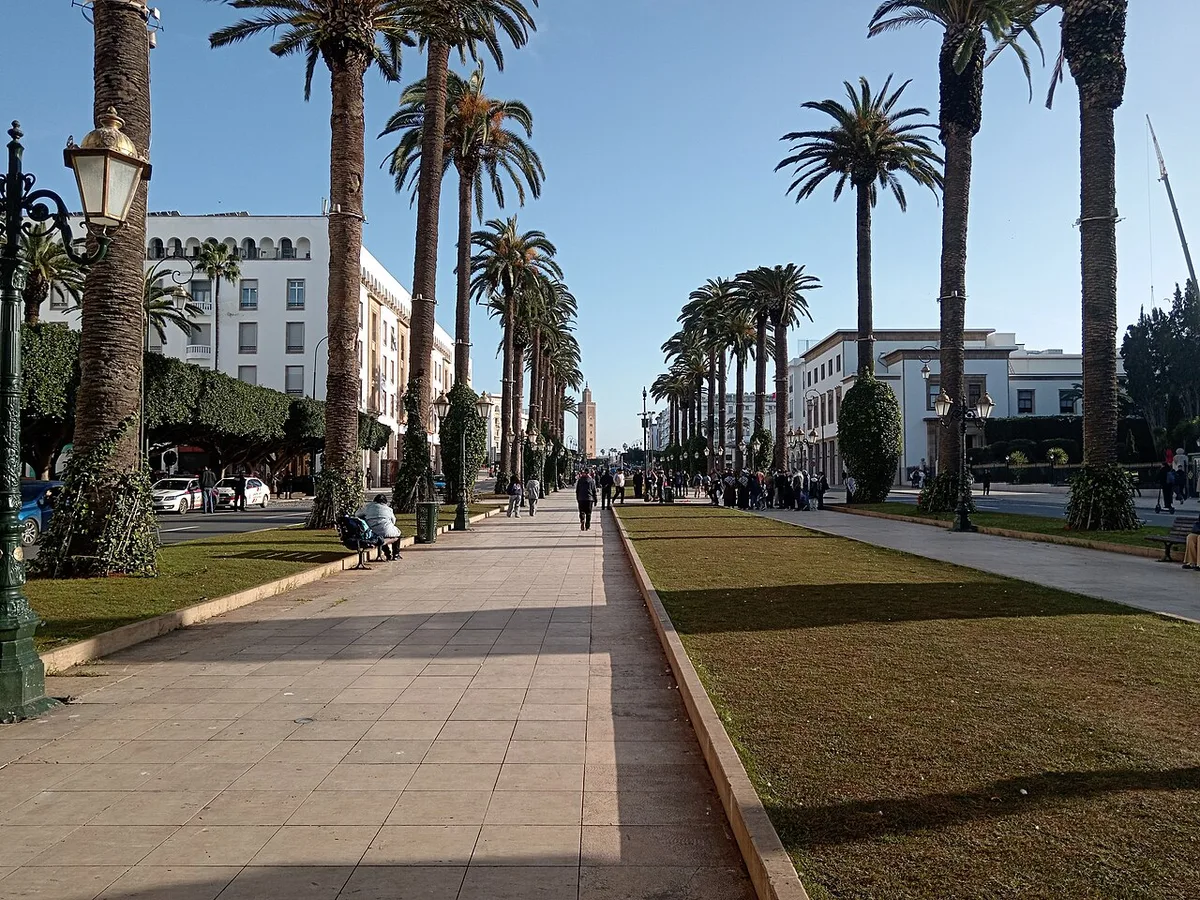
The Hassan Tower, Rabat. Photo via Wikimedia Commons.
How Rabat eats
Rabat is the political capital and cooks like one: measured, well-mannered, and better than its reputation. The medina is small and sane, the Kasbah of the Udayas sits above the Bou Regreg river where Café Maure pours mint tea over the water, and across the river, Salé (the old pirate republic) keeps its own older table. Nothing here shouts; everything is within a short walk or a five-minute taxi.
The eating splits three ways: medina stalls and grills for the everyday, Ville Nouvelle brasseries from the French years, and the modern dining rooms of Agdal and Souissi serving the diplomatic city. Rabat will not overwhelm you like Fès or Marrakech. It will feed you properly, at capital prices, with the river in view.
Learn the foods
Start here, not with a restaurant. Learn what these foods are, where they come from, and how locals eat them, and the whole city opens up: every menu, every market, every street corner starts making sense.
Pastilla
The Fassi celebration pie is fully naturalized in the capital: warqa pastry, spiced chicken or pigeon, almond, cinnamon sugar. Rabat's riads and restaurants serve the canon faithfully.
Where it comes from: Capitals import the country's best dishes and standardize them; pastilla in Rabat is the state version of a Fès original, served at official tables and family celebrations alike.
How to eat it: With your fingers, crisp shell first. In Rabat it opens formal dinners; treat it as the main event it is.
Grilled fish of the Bou Regreg
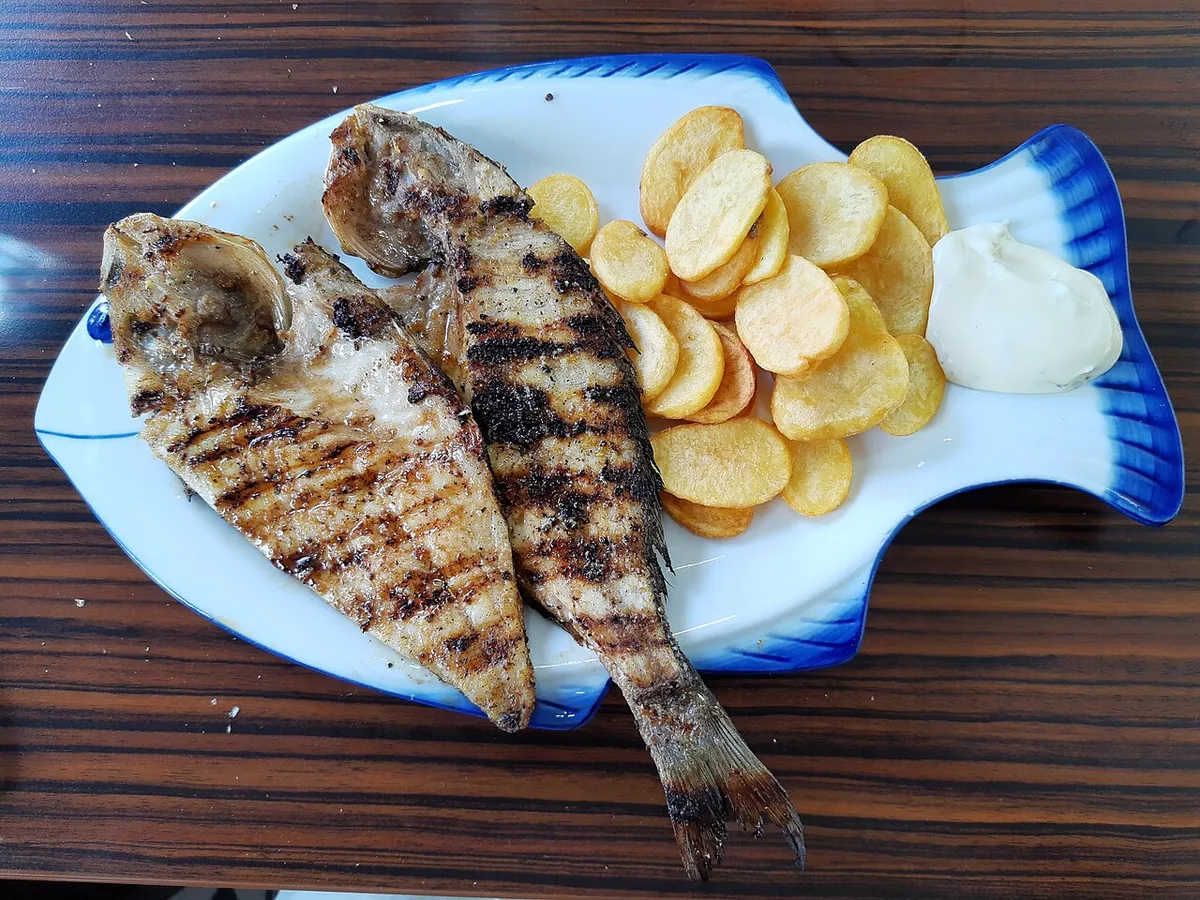
Fish from the river mouth and the Atlantic, grilled at the simple restaurants below the Kasbah and along the corniche toward Salé: sardines, sole, and sea bass with chermoula.
Where it comes from: The Bou Regreg made both cities: Rabat's kasbah guarded the river mouth, Salé's corsairs sailed from it. The fish grills under the fortress walls run on the same water, considerably more peaceful now.
How to eat it: Lunch, outdoors, fish by weight agreed first. The view of Salé across the river is part of the plate.
Chicken tagine with preserved lemon
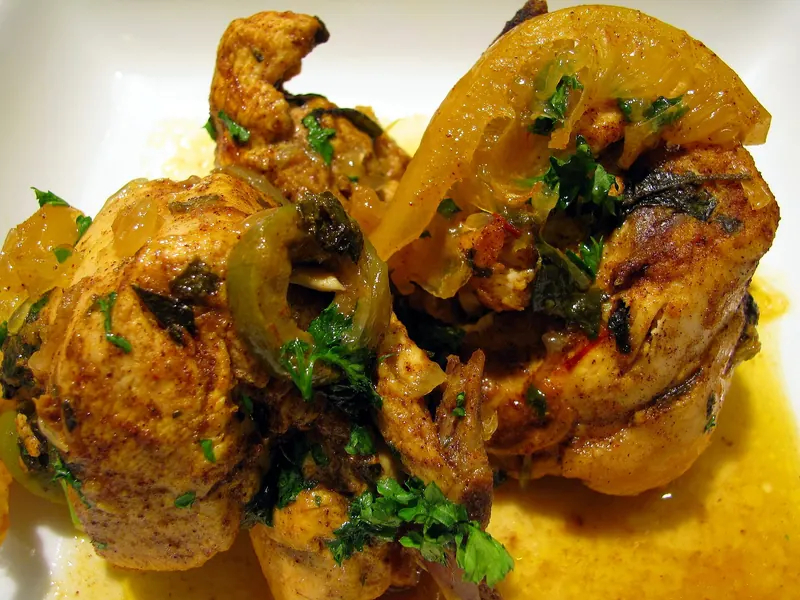
The national classic in the capital's kitchens: chicken, preserved lemon, olives, saffron. Rabat's version is the reference rendition, unshowy and exact.
Where it comes from: Every Moroccan region argues its tagine; the capital's role is to keep the canonical one. Preserved lemons from the medina's stalls, olives from the souk, and no improvisation required.
How to eat it: Shared, with bread, lemon peel eaten. It is the dish to order when you want to know what the standard tastes like.
Couscous
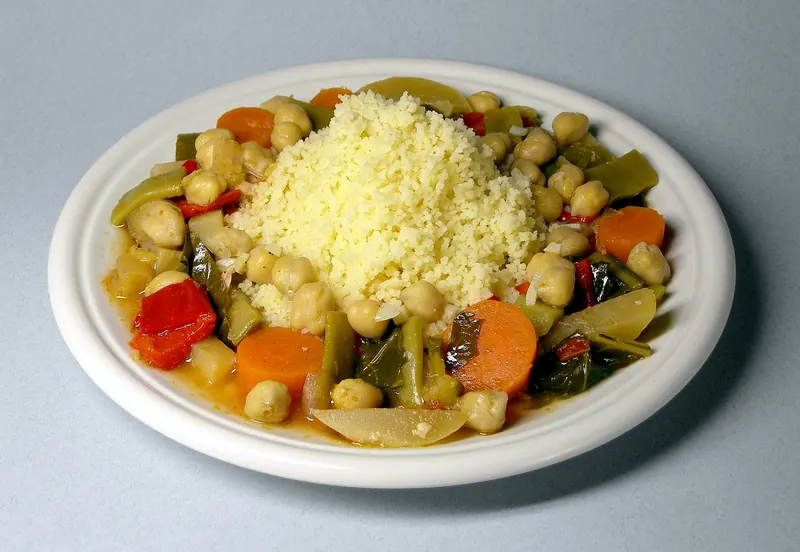
Friday's platter, observed in the capital with bureaucratic reliability: restaurants fill at midday, offices empty, and the semolina arrives mounded with vegetables and meat.
Where it comes from: In a government city, Friday couscous is practically scheduled by decree: the week's machinery pauses for it. Visitors who time lunch to Friday eat with the whole capital at once.
How to eat it: Friday, 1 p.m., shared platter. Book or arrive early; the good places are full of families.
Harira
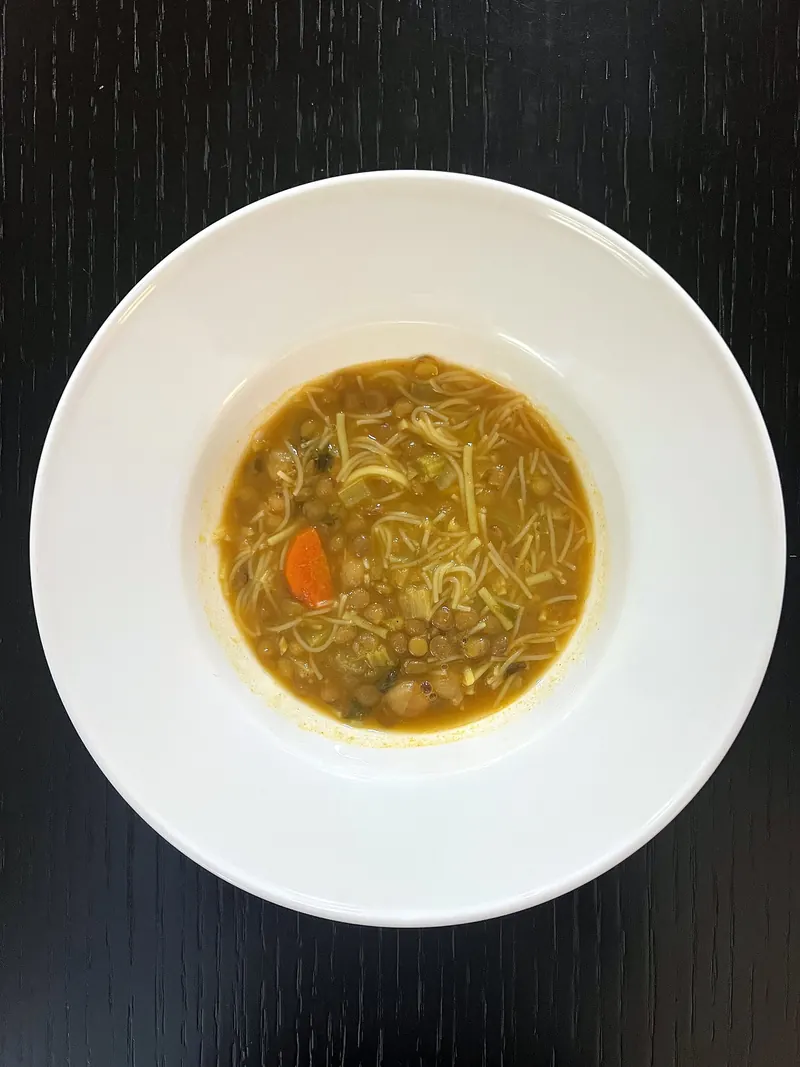
The tomato, lentil, and chickpea soup of the evening: medina stalls ladle it with dates and chebakia, and it is the natural first course of a Rabat night.
Where it comes from: Rabat's medina is small enough that its harira stalls serve a neighborhood, not a crowd: the same faces nightly, the soup judged by regulars. That is the best quality control there is.
How to eat it: At dusk at a medina stall, before a grill dinner, or as the whole light dinner with bread and dates.
Kaab el ghazal at Café Maure
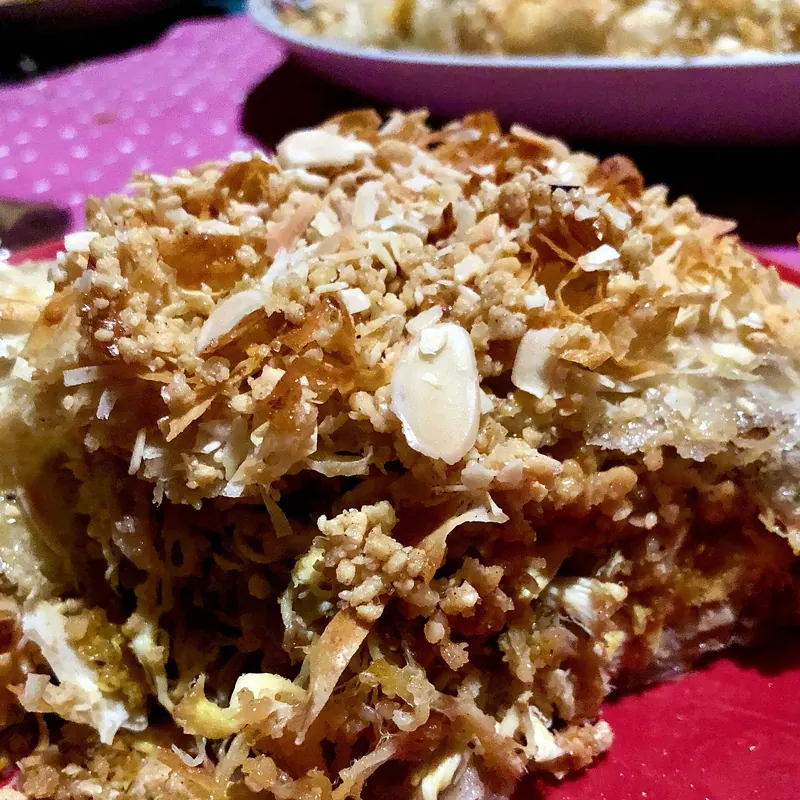
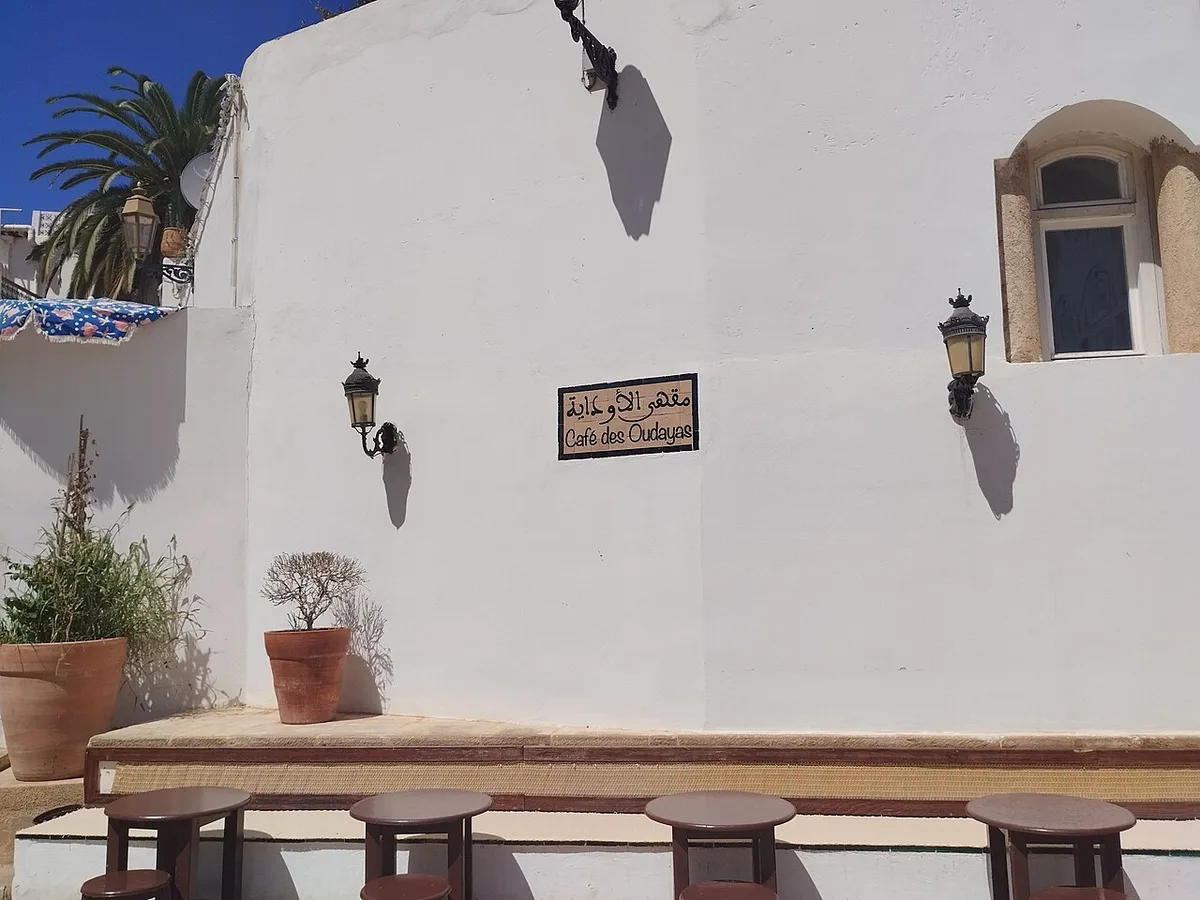
Gazelle's-ankle almond pastries with mint tea on Café Maure's terrace inside the Kasbah, the Bou Regreg below and Salé across: less a dish than Rabat's defining pause.
Where it comes from: Café Maure has poured tea over this river view for generations of Rabatis; the cafe sits in the Kasbah's Andalusian quarter, built by refugees from Spain who brought the pastry culture with them.
How to eat it: Late afternoon. Order tea and pastries, take the terrace edge, and let the river do the entertaining.
Msemen and mint tea
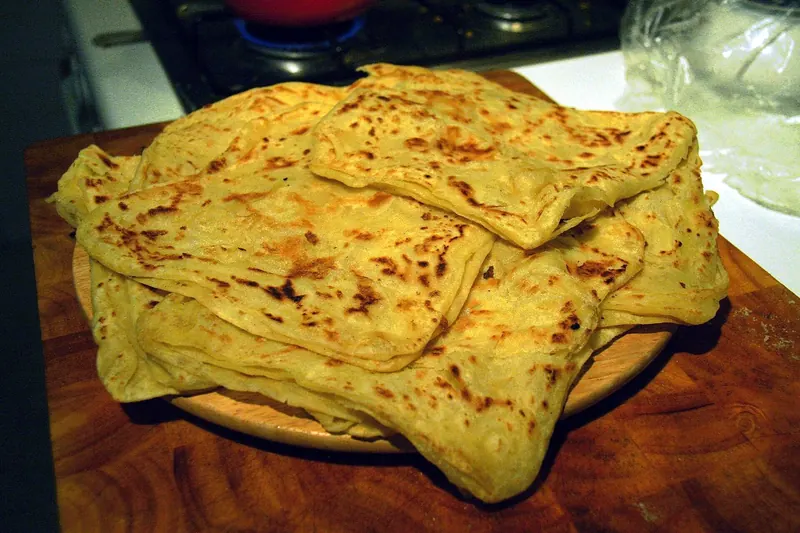
Flaky msemen with cheese or amlou and high-poured tea: the medina's morning and the cafe's all-day excuse, from Rue des Consuls doorways to Agdal terraces.
Where it comes from: Rabat's cafe culture is diplomatic-grade lingering: nobody hurries a tea. The msemen, griddled to order in shopfronts, is how the city marks time between meals.
How to eat it: Tear, drag through amlou, sip sweet tea. If you are in a hurry in Rabat, you are doing Rabat wrong.
Street food, decoded
Rabat's street food is a neighborhood service: harira and grills in a medina small enough to cross in 20 minutes, tea terraces in the Kasbah, and fish below the fortress walls. The scale is human and the prices are set by regulars, which makes Rabat the gentlest place in Morocco to learn how the medina system works.
Across the river, Salé runs the same systems a generation back in time: market lanes, pastry shops, and grills with no eye on visitors at all. Eat in both cities on the same day; the tram makes it one food town with two tempers.
The medina stall lunch
Harira, brochettes, and bread along the medina's lanes and Rue des Consuls: quick, local, and regulars-judged. The capital's cheapest good lunch.
The Kasbah tea terrace
Café Maure inside the Udayas: mint tea and almond pastries above the river mouth. A format of one venue, perfected over generations.
The river fish grill
Simple grill restaurants below the Kasbah and along the water: the day's fish, chermoula, bread, and both cities in view. Lunch is the sitting.
The Ville Nouvelle brasserie
Arcaded Avenue Mohammed V brasseries and patisseries from the French years: Moroccan classics and French plates for the government lunch crowd.
The Agdal cafe
The modern quarter's cafes and rotisseries: students, diplomats, and families at long tables. Rabat's present tense, coffee included.
The Salé market graze
Salé's medina lanes: bread ovens, olive stalls, pastry shops, and grills serving the old corsair city itself. Cross the river hungry.
The rules that keep it safe and good
Rabat runs on the tram: lines cross the medina edge, Agdal, and the river to Salé. It is the easiest Moroccan city to eat across.
The medina is small and calm: regulars set the prices and the pace. Haggling here is gentle; food prices are basically fixed.
Friday couscous empties the offices at midday; join it or avoid competing for tables.
The Kasbah is a residential quarter as much as a monument: keep voices down in the lanes, and dress a notch more conservatively than at the beach cities.
Salé repays respect: it is a proud, conservative city. Ask before photographing people, and let the medina set the tempo.
The markets
Markets are where Rabat actually shops and eats. Each one has a different job; go in the morning, when the food counters are at their busiest.
AThe medina souks and Rue des Consuls
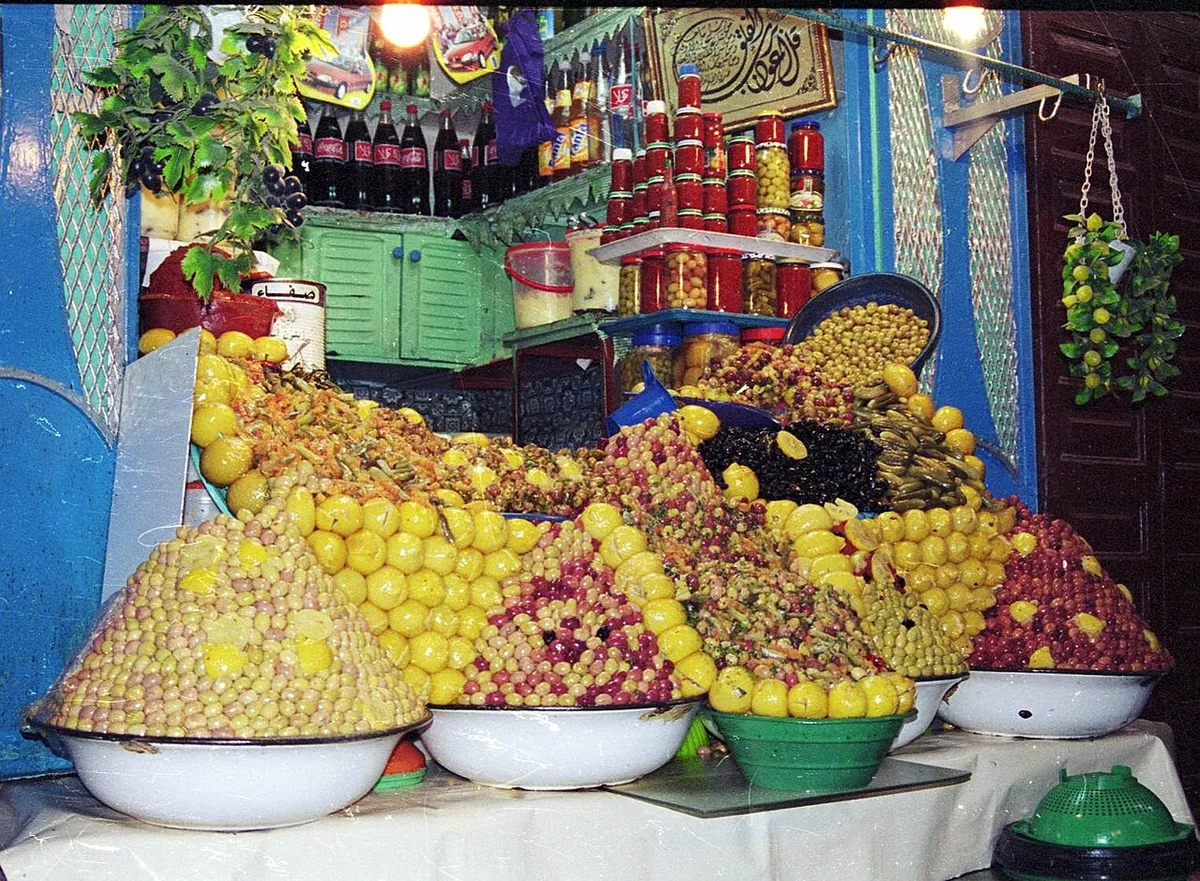
Rabat's old-city market: carpets and leather on the famous Consuls street, food stalls and grills through the lanes, olives and preserved lemons for the pantry. Compact and complete.
Eat: Harira and brochettes in the lanes; preserved lemons and olives to carry home.
BMarché Central, Ville Nouvelle
The covered central market off Avenue Mohammed V: flowers at the front, produce, fish, and meat inside, feeding the brasserie quarter. Morning is the hour.
Eat: Patisserie after the loop; this is the pantry of the French-Moroccan kitchen.
CSalé medina market
Across the river: the old city's market lanes around its great mosque and kissarias, produce and pastry for Salé itself. The least visited serious market in the region.
Eat: Pastries and bread from the lanes; grill lunch where the Salétins queue.
DAgdal market
The modern quarter's market streets: produce, cheese, rotisserie chickens, and the ingredients of the diplomatic city's home cooking. Everyday Rabat, well stocked.
Eat: Rotisserie chicken and market snacks; a picnic for the tram ride.
EThe Kasbah fish stalls
Below the Udayas, where the river meets the sea: fish landed and sold at small scale, with grills nearby. More a scene than a supermarket; go for lunch.
Eat: The day's fish grilled with chermoula, river on one side, Salé on the other.
Neighborhoods: 1 The Medina · 2 Kasbah of the Udayas · 3 Ville Nouvelle · 4 Agdal · 5 Souissi · 6 SaléMarkets: A The medina souks and Rue des Consuls · B Marché Central, Ville Nouvelle · C Salé medina market · D Agdal market · E The Kasbah fish stallsPins mark neighborhood centers, so you can place each area against where you are staying. Taxi times under each neighborhood below are measured from Bab El Had.
1The Medina
Rabat's compact old city between Avenue Mohammed V and the river: Rue des Consuls, food stalls, grills, and a souk you can learn in an hour. The calmest medina eating in Morocco.
From Bab El Had: Bab El Had is its gate; you are there
2Kasbah of the Udayas
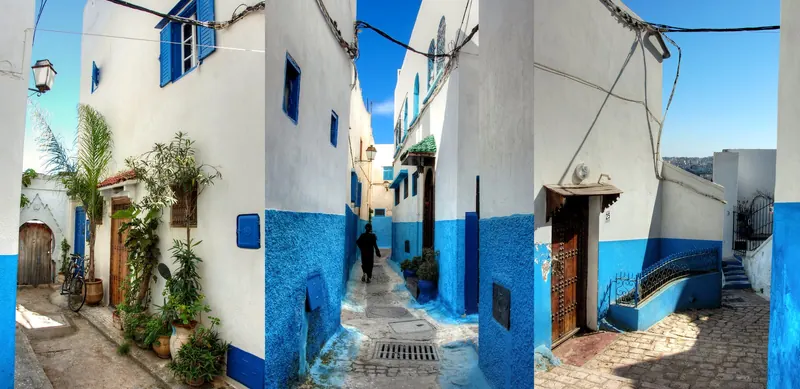
The blue-and-white fortress quarter above the Bou Regreg: Andalusian gardens, the oldest mosque in the city, and Café Maure's terrace over the river mouth. Come for tea at golden hour.
From Bab El Had: 10 min on foot
3Ville Nouvelle
The French-era center along Avenue Mohammed V: the Marché Central, brasseries, patisseries, and the parliament end of town. The capital at lunch, in arcades.
From Bab El Had: 15 min on foot, or one tram stop
4Agdal
The modern, student-and-embassy quarter: cafes, rotisseries, international kitchens, and the city's everyday dining rooms. Where Rabat eats when it is not being traditional.
From Bab El Had: 5 min by taxi, or the tram
5Souissi
The villa quarter of embassies and big houses: destination restaurants, hotel tables, and the diplomatic dinner circuit. Book ahead; this is the capital's polished register.
From Bab El Had: 10 min by taxi
6Salé
Across the Bou Regreg by tram or rowing boat: the old corsair city, older than Rabat, with its own medina, markets, and pastry traditions. A half-day trip that eats like a separate town, because it is one.
From Bab El Had: 10 min by tram across the river
The people behind the food
The names that explain how Rabat cooks the way it does now.
Café Maure
Institution, Kasbah of the Udayas
The tea terrace inside the Kasbah walls, pouring mint tea over the Bou Regreg for generations. Rabatis bring their visitors here the way Parisians bring theirs to a particular bridge: it is the city's front room, and the pastries hold up their end.
The Rue des Consuls merchants
Institution, the medina
The carpet and craft merchants of the medina's famous street, named for the foreign consuls who lived on it, who will pour tea and talk for an hour whether or not you buy. The street's hospitality is a food culture of its own.
The Salé pâtissiers
Craft, Salé
Salé's pastry makers keep the old city's sweet traditions: almond pastries and celebration cakes made for Salétin families, in shops tourists rarely find. Cross the river for them specifically.
The Kasbah grill keepers
Institution, below the Udayas
The fish grill families under the fortress walls, reading the river mouth's catch daily. Their terraces are where Rabat eats fish when it wants it without ceremony.
The Agdal restaurateurs
The new table, Agdal
The chefs and cafe owners of the modern quarter, cooking for students, officials, and embassy families in one room. Agdal is where Rabat's food experiments happen first.
If you only eat ten things here
Mint tea and kaab el ghazal on Café Maure's terrace at golden hour.
Grilled fish below the Kasbah, Salé across the water.
A medina stall lunch: harira, then brochettes, on Rue des Consuls' lanes.
Friday couscous with the whole capital at 1 p.m.
The tram to Salé for a market morning and a pastry run.
A Ville Nouvelle brasserie lunch under the arcades.
Pastilla at a medina riad dinner.
The Marché Central loop, flowers to fish, before 11.
An Agdal evening in the modern dining quarter.
Preserved lemons and olives from the medina, packed for home.
Eating well here
oued
River. The Oued Bou Regreg is the water everything in Rabat and Salé faces.
kasbah
The fortress quarter. Rabat's, the Udayas, is the city's oldest and prettiest.
kaab el ghazal
'Gazelle's ankles': the almond crescent pastry. Café Maure's plate of them is a Rabat rite.
consuls
Rue des Consuls, the medina's famous street, named for the diplomats who once lived there.
atay
Mint tea, poured high. In the Kasbah it comes with the river view included.
bsaha
'To your health', said to anyone eating. Use it at every stall.
tramway
The Rabat-Salé tram: medina, Agdal, and across the river. Your food map on rails.
shukran
Thank you. Said with a hand on the heart, it covers the medina.
Is Rabat worth a food stop, or just a day trip?
Give it a night. The medina, the Kasbah tea terrace, a Ville Nouvelle lunch, and a Salé half-day make a complete, calm food city, and it is the natural break between Casablanca and Fès on the train line.
Should I cross to Salé?
Yes, by tram (10 minutes) or by the little rowing boats under the Kasbah. Salé's medina is older, quieter, and prouder than Rabat's, with its own markets and pâtisseries, and almost none of the capital's polish. Eat lunch there.
Where should I stay to eat well?
The medina or the Kasbah edge for character and stalls; Agdal for modern dining at your door; Souissi for hotel polish. Everything is a short tram or taxi ride in this city, so the choice matters less than in Fès or Casablanca.
What is different about eating in a capital?
Prices run a little higher, service a little more formal, and the modern restaurants are genuinely good: embassies create demand. The medina layer stays local and cheap; Rabat lets you choose your register meal by meal.
When is Café Maure at its best?
Late afternoon into golden hour, when the light hits the Bou Regreg and Salé turns gold across the water. It is popular for a reason; arrive before the sunset crowd.