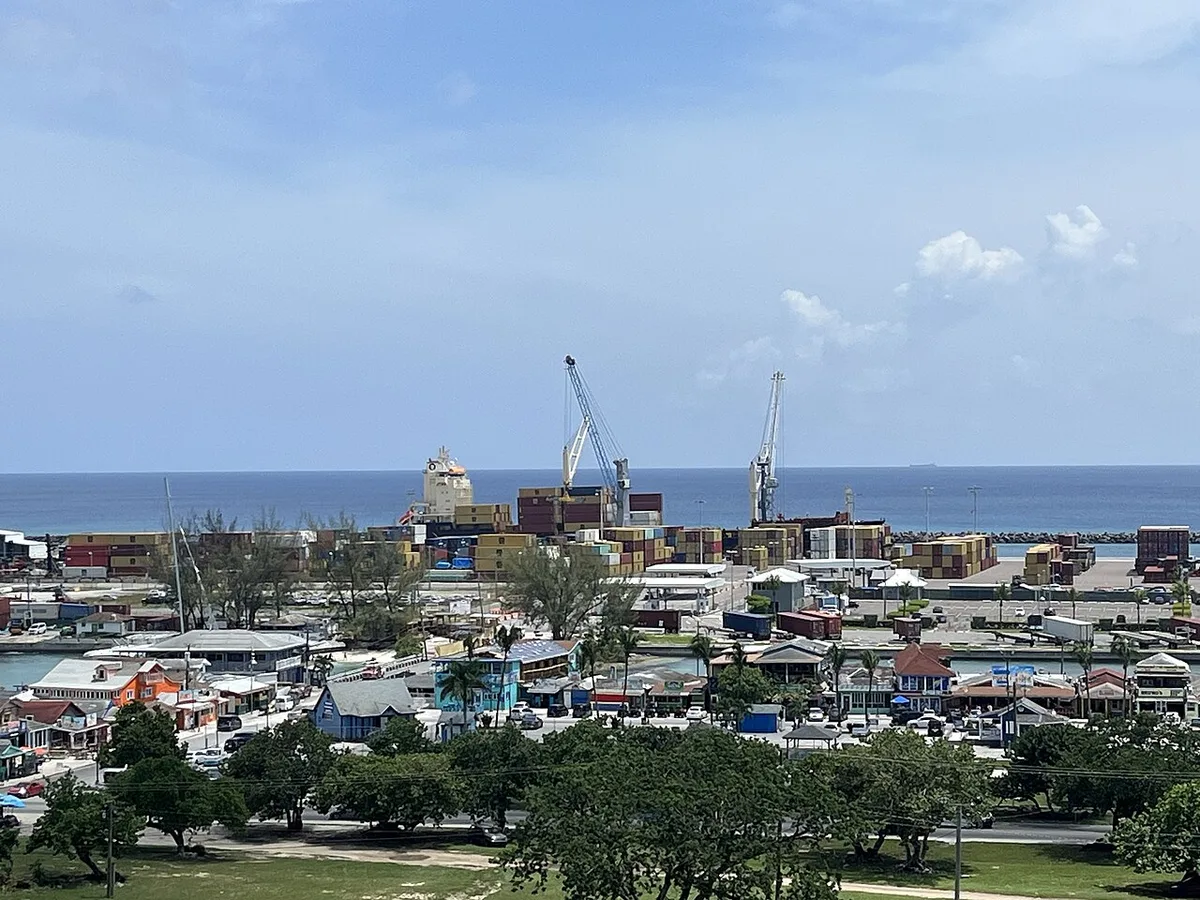
Nassau Harbour with cruise ships and Atlantis, Bahamas. Photo via Wikimedia Commons.
How Nassau eats
Nassau's table is built on one animal: the queen conch, pulled from the shallows and eaten cracked (tenderized and fried), in fritters, stewed, and above all as conch salad, chopped to order with onion, pepper, and citrus at the stalls of Arawak Cay and Potter's Cay Dock. The cruise ships dock at Bay Street; the Bahamian city eats ten minutes west at the Fish Fry, where the shacks serve the harbor's catch with peas 'n rice and the whole island comes to lime.
The pattern is shore-based: conch salad where the boats land, fried snapper at the Cay, a Sky Juice (gin and coconut water) from a stall, and the Straw Market and Bay Street for the walking between. Nassau's food is not elaborate; it is fresh, fried, and citrus-bright, and its institutions are shacks with decades of regulars.
Learn the foods
Start here, not with a restaurant. Learn what these foods are, where they come from, and how locals eat them, and the whole city opens up: every menu, every market, every street corner starts making sense.
Conch salad
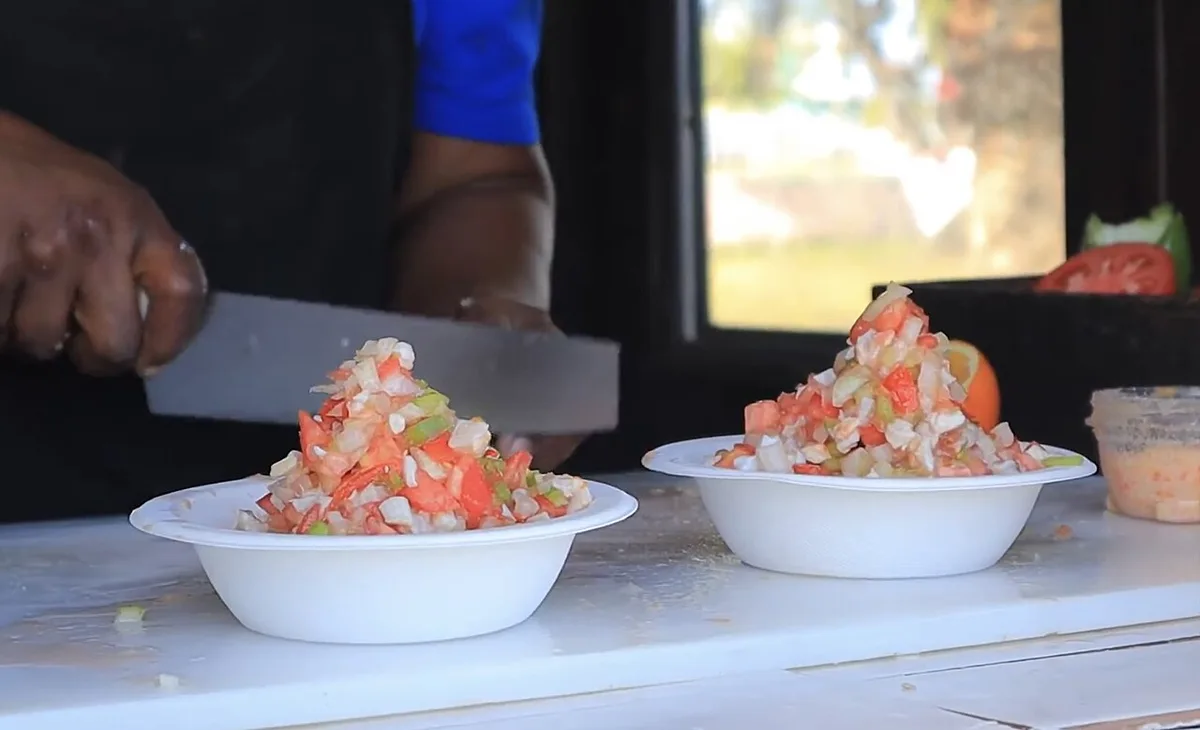
The national dish in a cup: raw queen conch chopped to order with onion, sweet pepper, tomato, celery, Scotch bonnet heat, and a squeeze of lime and orange, eaten with a spoon as the juice turns ceviche-bright. Made in front of you at Potter's Cay and the Cay shacks.
Where it comes from: The conch fed the Bahamas for centuries (the Lucayans ate it first), and the salad is its purest form: no cooking, just knife work and citrus, the conch sweet and snapping. Every stall has its man's reputation, and the 'scorched' variation (scorched conch, briefly rinsed and seasoned) is the connoisseur's quieter order.
How to eat it: At the stall, 'regular' or 'tropical' (with fruit), heat declared, spoon in hand, the juice finished last. It is made to order; the chopping is the show and the wait is short.
Cracked conch and conch fritters
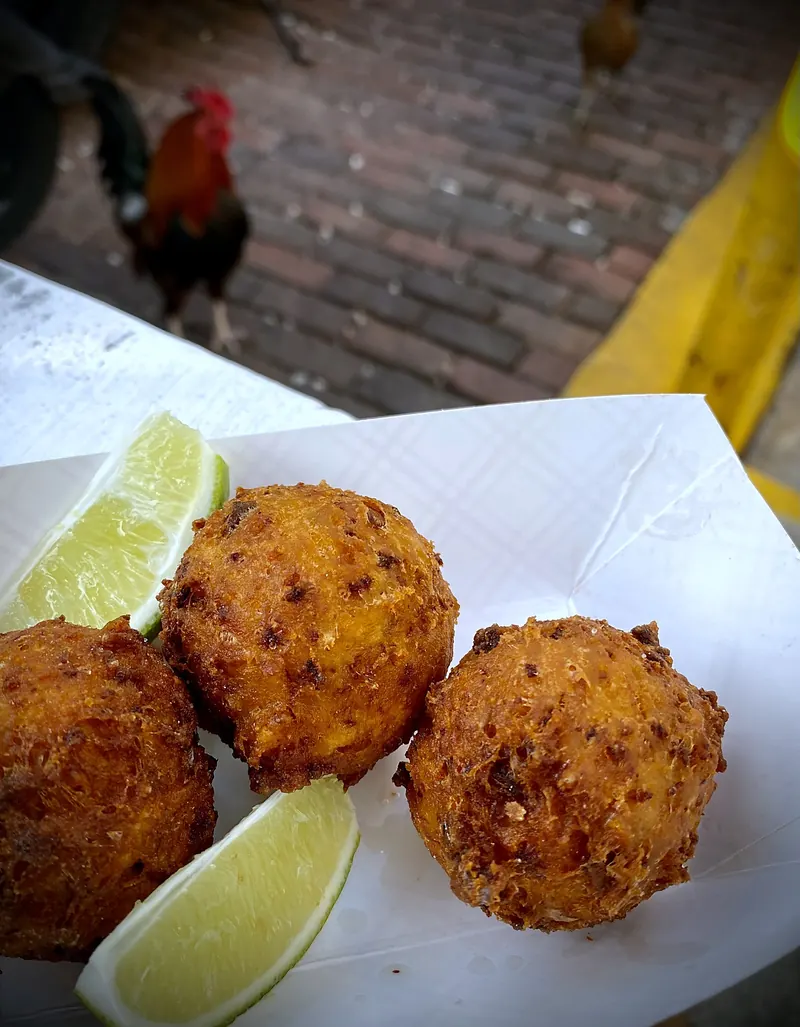
The cooked canon: cracked conch (pounded thin, battered, and fried crisp, the islands' schnitzel) and fritters (chopped conch in seasoned batter, fried golden), with fries, peas 'n rice, and the house sauce.
Where it comes from: Cracking is the craft: the conch meat beaten until it surrenders, then a light batter and a fast fry, a technique the Fish Fry shacks run like a percussion section at lunch. The fritter is the snack form, sold everywhere from stalls to bars, and judged, like everything here, by the lightness of the fry.
How to eat it: At Arawak Cay, cracked conch with peas 'n rice and a Kalik beer; fritters for the table while you wait, lime over, hot sauce by drops.
Peas 'n rice
Pigeon peas and rice cooked with tomato, onion, thyme, and a piece of salt pork or bacon: the Bahamian plate's foundation, browner and more tomato'd than its Caribbean cousins, beside every conch and fish in the city.
Where it comes from: Every island in this sea cooks the pair and guards its version: the Bahamian one leans tomato and thyme, takes its color proudly, and shows up at Sunday dinner and the lunch counter alike. Its absence from a plate marks the meal as a snack.
How to eat it: Under the cracked conch or the stew fish, the grains taking the gravy. Sunday's version, with the full dinner around it, is the reference standard.
Stew fish and boil' fish
The Bahamian breakfasts: boil' fish (grouper or snapper simmered with lime, onion, and pepper, eaten with Johnny cake) and stew fish (the browned, gravy-rich version). Morning dishes, deeply local, served early at the cookshops.
Where it comes from: The Bahamas wakes to fish: the boil' is the Lime-and-onion clarity the fishermen eat, the stew its Sunday sibling, and Johnny cake (the griddled cornmeal-wheat bread) is their partner. Visitors sleeping to brunch miss the city's most Bahamian meal entirely, which the city notes without surprise.
How to eat it: Before 10 at a cookshop or the Cay's morning shacks, with Johnny cake for the broth. Lime squeezed, pepper respected, coffee after.
Fried snapper and grouper fingers
The harbor's fish, whole and crisp or in fingers: Nassau grouper (the local pride, under careful seasonal closure for its spawning) and snapper, fried at the shacks and served with the full plate. The Cay's other headline.
Where it comes from: The grouper's winter closure (December to February, protecting the spawning aggregations) is a Bahamian conservation point of pride; in season the fish is the table's prize. The fry shops' whole snapper, scored and crisped with the head on, is the plate the regulars order without the menu.
How to eat it: Whole, with peas 'n rice and coleslaw, fingers for the table's cautious. Ask what the boats brought; the shack will answer like a stock report.
Sky Juice
The stall drink: gin (or rum) with fresh coconut water and sweet milk, served in the coconut or a cup at Arawak Cay and the beach stalls. Refreshment with a payload, the Fish Fry's signature pour.
Where it comes from: Sky Juice (also 'gully wash') is the Bahamas' coconut cocktail, born where the palms meet the gin bottle, and the Cay's pourers make it to order with the nut cracked in front of you. It tastes like a beach and lands like a cocktail; the ratio is the pourer's art.
How to eat it: One, with the fritters, in the afternoon. The coconut meat after is the snack the drink was hiding.
Guava duff
The national dessert: guava rolled in dough, boiled in a cloth (the duff), sliced and served warm with a rum or brandy butter sauce. Sunday dinner's crown and the bakeries' pride.
Where it comes from: Duff is boiling-cake technology from the British layer of the islands, guava from its own groves: the roll steamed in its bag until set, the sauce decided by the family. Bahamians abroad rank their losses, and guava duff's sauce is argued at every reunion.
How to eat it: Warm, sauce generous, at a Sunday table or a Bahamian restaurant that lists it. It does not travel; eat it here, twice if the week allows.
Street food, decoded
Nassau's food system is a shoreline: the boats at Potter's Cay, the shacks at Arawak Cay, the stalls between. Conch is chopped, cracked, and frittered within sight of the water it came from, and the city's lunch happens at shack tables with the harbor for wallpaper.
The moves are waterfront logic: salad at the dock, the full fry at the Cay, a Sky Juice at the stall between, and Over-the-Hill's cookshops for the city's own lunch away from the shore. Everything is close; the port is the middle, not the edge.
The Fish Fry shack
Arawak Cay's open-fronted seafood houses: cracked conch, fried snapper, peas 'n rice, music, and the island at the long tables. Nassau's dining institution, wearing shorts.
The conch salad stall
A man, a board, a pile of conch, citrus in hand: salad chopped to order at Potter's Cay and the Cay. The queue watches its lunch made like a show.
The cookshop
Over-the-Hill and downtown lunch rooms: stew fish in the morning, the day's plate at noon, Johnny cake for the broth. The city's working table.
The Sky Juice stall
Coconuts cracked to order, gin and milk over the water: the Fish Fry's refreshment stand and its most photogenic pour.
The Straw Market hall
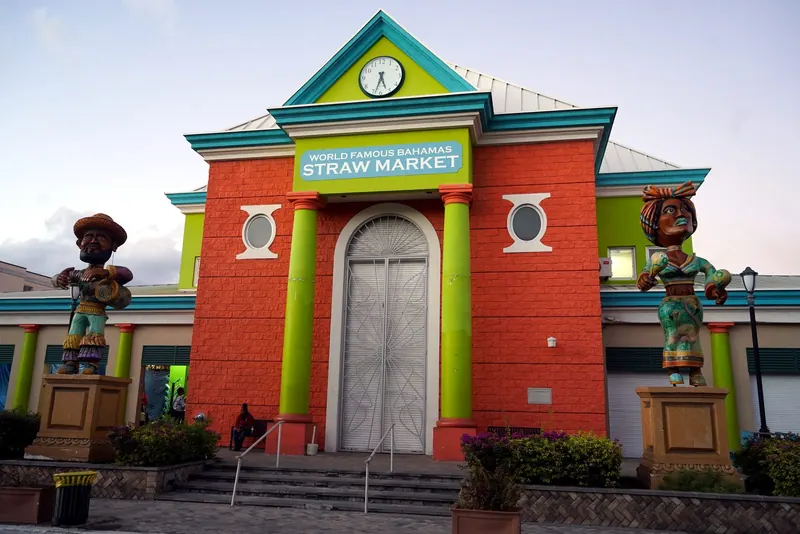
The great craft market by the port: straw work (the name is literal) and carvings, with the food stalls and juice men at its edges for the shoppers.
The beach shack row
West along the shore toward Cable Beach: local seafood restaurants and bars where Nassau takes its Sunday drive, the sea on one side, the fryers on the other.
The rules that keep it safe and good
Conch salad heat is set when you order: 'regular' already carries Scotch bonnet respect; calibrate before the 'hot' upgrade, not after.
At the Cay, the shacks have their loyalists and their touts: walk the row once, read the tables (full of Bahamian families is the review), then sit.
The Fish Fry peaks at lunch and Sunday: shacks that look quiet at 11 are full by 12:30, and the kitchen's pace is island by design.
Johnny cake with boil' fish is a morning appointment: the cookshops sell the day's pot out by mid-morning.
Take the jitney like a local (exact small bills, call your stop): the drivers know every shack in this guide by its corner.
The markets
Markets are where Nassau actually shops and eats. Each one has a different job; go in the morning, when the food counters are at their busiest.
AArawak Cay (the Fish Fry)
The famous shore row of seafood shacks west of downtown: conch in all forms, fried fish, Sky Juice stalls, and the whole island at table from noon to late.
Eat: Cracked conch and peas 'n rice at a full shack; fritters and a Sky Juice at the stalls first.
BPotter's Cay Dock
The fishing landing under the bridge: boats unloading, conch and fish stalls at the dock's edge, mail boats for the Family Islands at their berths.
Eat: Conch salad chopped in front of you, eaten on the dock with the boats below.
CThe Straw Market
The big hall by the port selling the islands' straw work, carvings, and crafts since the 1940s (rebuilt after fire, as proud as ever): Nassau's shopping institution.
Eat: Snacks and juice at the edges; the eating that matters is the Cay, ten minutes west.
DMontagu Fish Market
The eastern shore market by the fort: fish stalls and conch men serving the neighborhoods, with the beach and the ramparts beside it. The locals' Saturday provisioning.
Eat: Whatever the stalls fry at midday; conch salad if the man is set up.
EFox Hill and the Eastern Markets
The old village of Fox Hill (one of the freed-slave villages) with its market and cookshops: the city's historic Bahamian east, church suppers and Emancipation tradition included.
Eat: A cookshop lunch in the village; ask what the day made.
Neighborhoods: 1 Downtown and Bay Street · 2 Arawak Cay (the Fish Fry) · 3 Potter's Cay Dock · 4 Over-the-Hill · 5 Cable Beach and the WestMarkets: A Arawak Cay (the Fish Fry) · B Potter's Cay Dock · C The Straw Market · D Montagu Fish Market · E Fox Hill and the Eastern MarketsPins mark neighborhood centers, so you can place each area against where you are staying. Taxi times under each neighborhood below are measured from Bay Street.
1Downtown and Bay Street
The port and shopping spine: the Straw Market, the colonial facades, and the lunch counters behind the jewelry rows where the downtown workforce eats. The cruise crowd's Nassau, with a working city inside it.
From Bay Street: Bay Street is the reference point; you are there
2Arawak Cay (the Fish Fry)
Ten minutes west along the shore: the famous row of seafood shacks (Goldie's, Twin Brothers, Oh Andros among them), conch every way, music, and the island's families at the long tables. Nassau's true dining room.
From Bay Street: 10 min on foot along the shore
3Potter's Cay Dock
Under the Paradise Island bridge: the fishing boats' landing, with conch salad stalls where the catch is chopped in front of you and the mail boats load for the Family Islands. The freshest address in the city.
From Bay Street: 15 min on foot east
4Over-the-Hill
The historic Bahamian neighborhoods south of the ridge (Grants Town, Bain Town): cookshops, churches, and the city's African-Bahamian heart, eating its canon at local prices a short walk from the port.
From Bay Street: 10 min on foot, uphill
5Cable Beach and the West
The resort shore west (Baha Mar's guests in front, the neighborhoods behind): local seafood restaurants along West Bay Street and the fish fry energy spreading down the coast. Nassau's evening drive.
From Bay Street: 15 min by taxi or jitney
The people behind the food
The names that explain how Nassau cooks the way it does now.
Goldie's Conch House
Institution, Arawak Cay
The Cay's famous shack, named for its founder the conch man: cracked conch and salads served at the long tables for decades, the Fish Fry's first address for most visitors and plenty of Nassau.
Twin Brothers
Institution, Arawak Cay
The shack that grew into the Cay's grand dining room, famous for its daiquiris alongside the seafood: the Fish Fry's celebration table, where the island takes its guests.
The Potter's Cay salad men
Craft, the dock
The choppers of Potter's Cay, whose knife work (conch, onion, pepper, citrus, in that rhythm) is the city's most-watched cooking. Their stalls' queues are a daily plebiscite.
The Green Parrot and the harbor bars
Institution, the waterfront
The harbor-side bars east of the port where the boating city drinks: fish sandwiches, Kaliks, and the regatta talk of a sailing nation. Nassau's nautical living room.
The Straw Market vendors
Craft, Bay Street
The straw workers and vendors (the market women are a Bahamian institution with their own association) keeping the plait and the bargaining culture alive at the port's gate since the sponging era.
If you only eat ten things here
Conch salad at Potter's Cay, chopped in front of you, juice finished.
Cracked conch at the Fish Fry, full shack, Kalik cold.
A Sky Juice at the Cay stall, coconut cracked to order.
Boil' fish and Johnny cake before 10 at a cookshop, once at least.
Fried whole snapper with peas 'n rice, head on, no flinching.
Guava duff warm with rum sauce, Sunday if the week allows.
The Straw Market walked once, straw work bargained kindly.
Montagu market on a Saturday, the east's own fish row.
Over-the-Hill cookshop lunch where downtown's workers go.
Sunset along West Bay Street, switcha in hand, the Cay behind you.
Eating well here
conch
Pronounced 'konk': the animal, the salad, the fritter, the economy. The K is silent in spelling and loud in importance.
peas 'n rice
The tomato-thyme pigeon peas rice: the plate's foundation, ordered as one word and one thought.
sky juice
Gin, coconut water, sweet milk, in the nut if the stall is proud. One is refreshment; plan the second.
boil' fish
The lime-and-onion fish breakfast, Johnny cake beside. The apostrophe is pronounced with the whole city behind it.
Kalik
The Bahamian lager, named for the cowbells of Junkanoo. The Fish Fry's table beer.
Junkanoo
The Boxing Day and New Year festival of costume and drums: the city's great party, and its food stalls' finest nights.
switcha
The Bahamian lemonade-limeade, sweet and sharp: the non-drinker's Sky Juice and the conch's best friend.
the bill, please
At the shacks, settle at the counter after; nobody at Arawak Cay hurries a table in the shade.
Arawak Cay or Potter's Cay?
Both, for different courses: Potter's Cay for the conch salad at the boats (the freshest, the show of the chopping), Arawak Cay for the full Fish Fry dinner (cracked conch, fried fish, the shacks' music and long tables). They are a 20-minute waterfront walk apart, with Bay Street between for the Straw Market.
Is conch sustainable and legal?
Queen conch is fished under Bahamian rules and CITES export controls (you cannot casually fly shells or meat home), and the fishery is under heavy pressure; the stalls serve legal local catch. Eat it in Nassau where it supports the boats, and skip the souvenir shell trade.
The grouper closure: when?
Nassau grouper season closes roughly December through February to protect spawning. In those months the shacks serve snapper and other fish; the closure is a point of national conservation pride and the menu explains it happily.
How far is Nassau itself from the cruise port?
Ten minutes on foot: the port gates open onto Bay Street, Potter's Cay is east under the bridge, Arawak Cay west along the shore. The port's fence is psychological; the city's food is a short walk in either direction, and the jitney buses run it for a couple of dollars.
What is a jitney and lunch timing?
The jitney is the city's minibus system (numbered routes, cheap, hail and ride), and lunch is the big meal: the shacks and cookshops peak from noon, the Fish Fry runs through the evening, and Sunday dinner is the week's formal plate. Breakfast fish is early; plan one dawn for it.