The exterior of Notre-Dame Basilica in Old Montreal. Photo via Wikimedia Commons.
How Montreal eats
Montreal is one of North America's great food cities, built on French-Canadian roots and generations of immigrant cooking: Jewish, Italian, Portuguese, Syrian, and more.
Smoked meat, wood-fired bagels, and poutine are the calling cards, while the city also holds Michelin-recognized fine dining rooms. The dining culture takes food seriously without stiffness, and there is excellent eating in every price band.
Learn the foods
Start here, not with a restaurant. Learn what these foods are, where they come from, and how locals eat them, and the whole city opens up: every menu, every market, every street corner starts making sense.
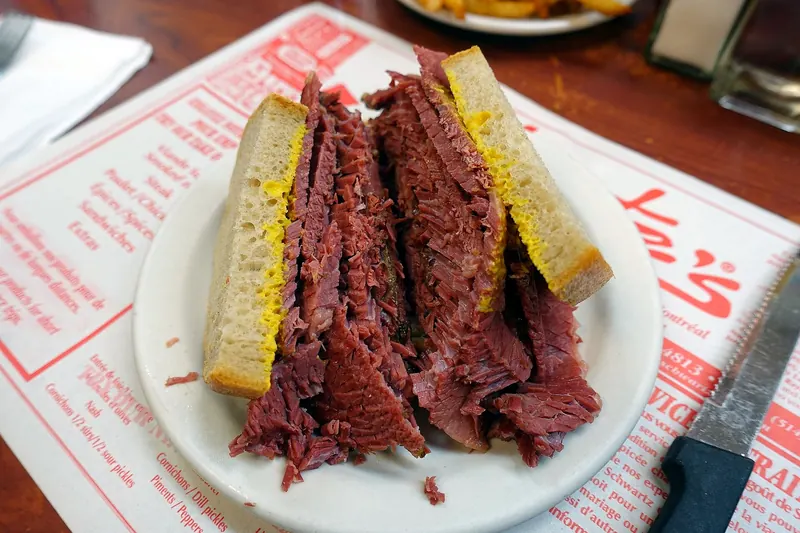
Smoked meat sandwich
Beef brisket cured with spices for about 10 days, smoked, steamed, and hand-sliced onto rye bread with yellow mustard. Schwartz's Deli is the classic place to order it.
Where it comes from: Smoked meat is Montreal's Jewish deli tradition, built by Romanian-Jewish immigrants in the early 1900s: brisket cured about ten days, smoked, steamed, and cut by hand. Schwartz's, open since 1928, is the standard every other deli answers to.
How to eat it: Order it medium (the fat is the point), on rye with yellow mustard, with a pickle and a black cherry Coke. The counter at Schwartz's moves fast; know your order.
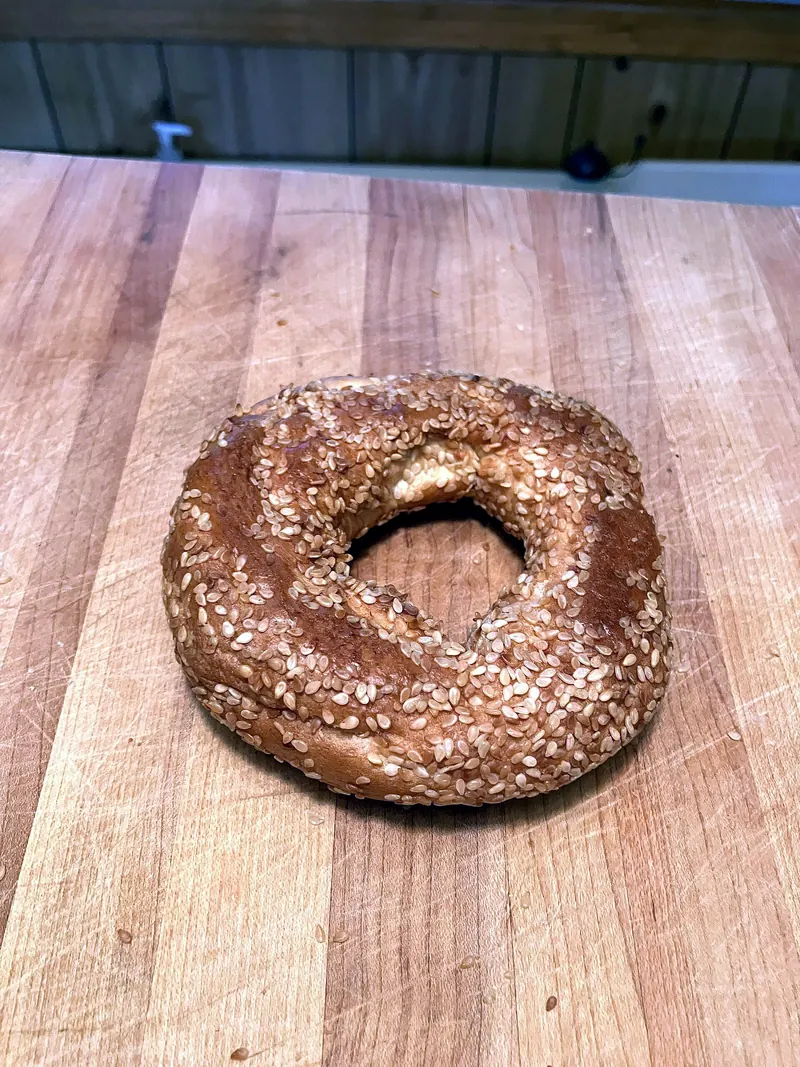
Montreal-style bagel
Smaller, denser, and slightly sweeter than New York bagels, hand-rolled, boiled in honey water, and baked in a wood-fired oven. Try one hot with cream cheese or smoked salmon.
Where it comes from: Montreal bagels came with Jewish immigration and never left the wood oven: hand-rolled, boiled in honey water, baked on long wooden boards. Fairmount (1919) and St-Viateur (1957) are the two names, and locals pledge to one.
How to eat it: Buy a hot sesame straight from the paper bag and eat it walking, no toasting, nothing on it. That is the test of the style.
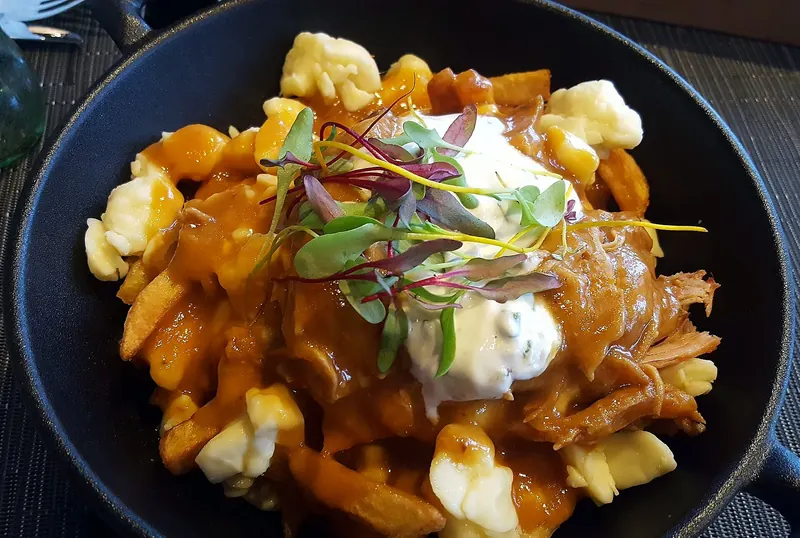
Poutine
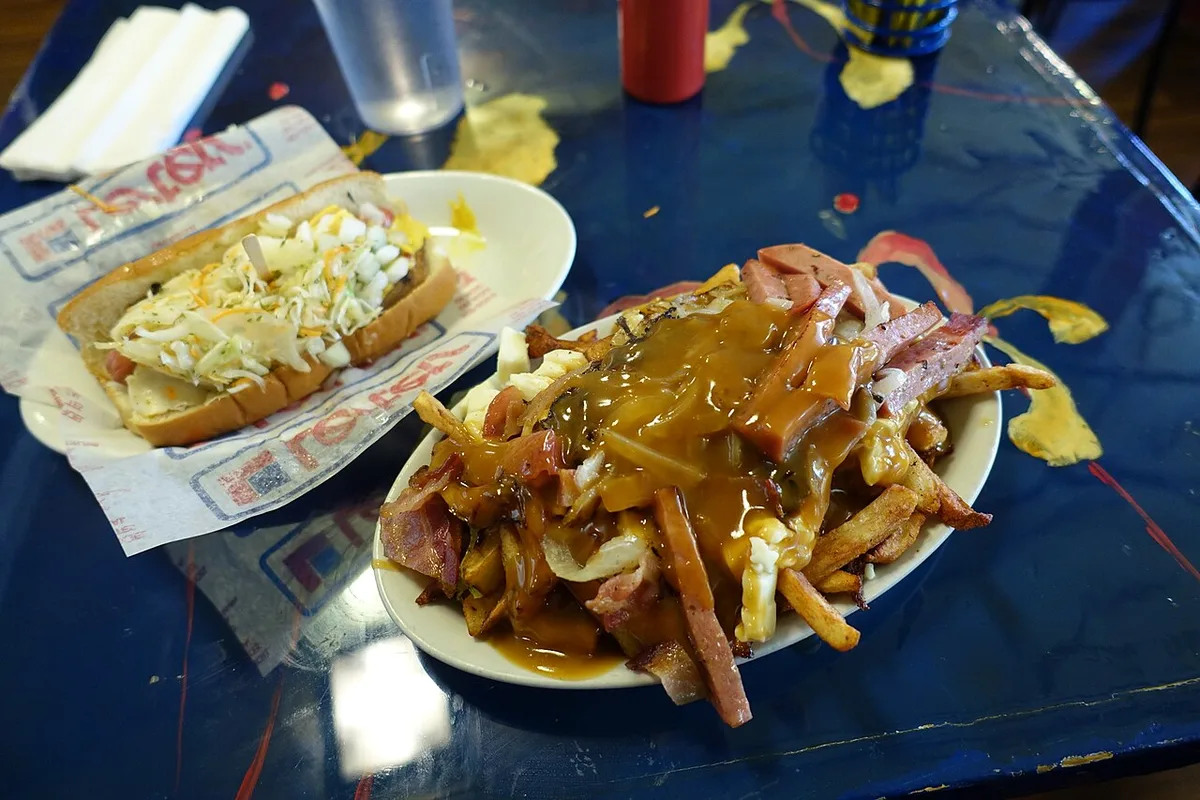
Hot fries topped with fresh Quebec cheese curds and covered in brown gravy. The classic late-night comfort dish; upscale versions like the foie gras poutine at Au Pied de Cochon also exist.
Where it comes from: Poutine was invented in rural Quebec in the late 1950s (Warwick and Drummondville both claim it) and became the province's defining dish: fries, fresh cheese curds, and brown gravy, built to be eaten immediately.
How to eat it: The curds must squeak against your teeth; that is how you know they were fresh that day. Eat it on the spot, ideally late at night. Poutine does not travel.
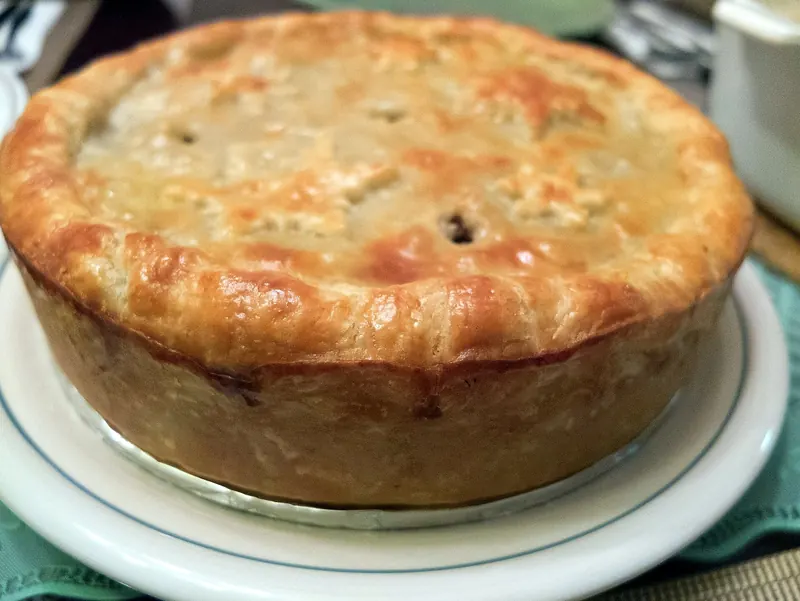
Tourtière
A savory French-Canadian meat pie, traditionally made with pork, veal, and warming spices, strongly associated with holiday meals in Quebec. Modern bistros serve it year-round.
Where it comes from: Tourtière is the French-Canadian holiday meat pie: pork (often with veal or game) and warm spices in a double crust, served at réveillon, the Christmas Eve feast. The Lac-Saint-Jean version is a deep-dish cousin filled with cubed meats and potatoes.
How to eat it: Order it with fruit ketchup, the traditional sweet-tart counterpoint. In winter it appears on bistro menus across the city.
Cretons
A spiced minced-pork spread, similar to rillettes, served cold on toast as part of a traditional Quebec breakfast. A staple at sugar shacks and classic breakfast counters.
Where it comes from: Cretons is a spiced minced-pork spread, cooked down with milk, onion, and clove until it sets, part of the traditional Quebec breakfast since the farmhouse era. It is rillettes' plainer, heartier cousin.
How to eat it: Spread it cold on toast, ideally with a little mustard, next to eggs and beans at a classic breakfast counter.
Fèves au lard
Baked beans slow-cooked with pork and maple syrup, a cornerstone of traditional Quebec cooking and a standard dish at sugar shacks during maple season.
Where it comes from: Baked beans with pork and maple syrup are sugar-shack and lumber-camp food: slow pots that fed men working in the cold, sweetened with the spring's maple. They anchor the traditional cabane à sucre meal.
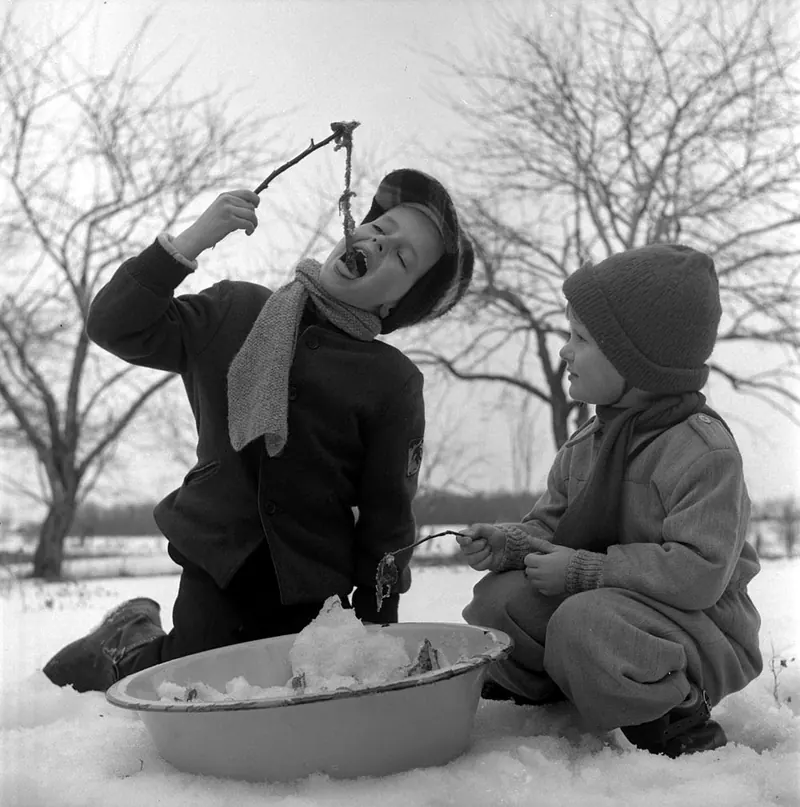
How to eat it: Eat them at a sugar shack in maple season (March and April), alongside oreilles de crisse and maple taffy on snow.
Pouding chômeur
A humble poor-man's pudding: a simple cake baked in hot maple syrup or caramel sauce until it soaks through. One of Quebec's most beloved desserts.
Where it comes from: Pouding chômeur, the unemployed person's pudding, is Depression-era Montreal: cake batter baked in hot maple syrup, created in working-class kitchens and factory canteens around 1929. The syrup sinks and becomes the sauce.
How to eat it: Eat it warm. The bottom of the dish, where the maple pools, is the part everyone actually wants.
Street food, decoded
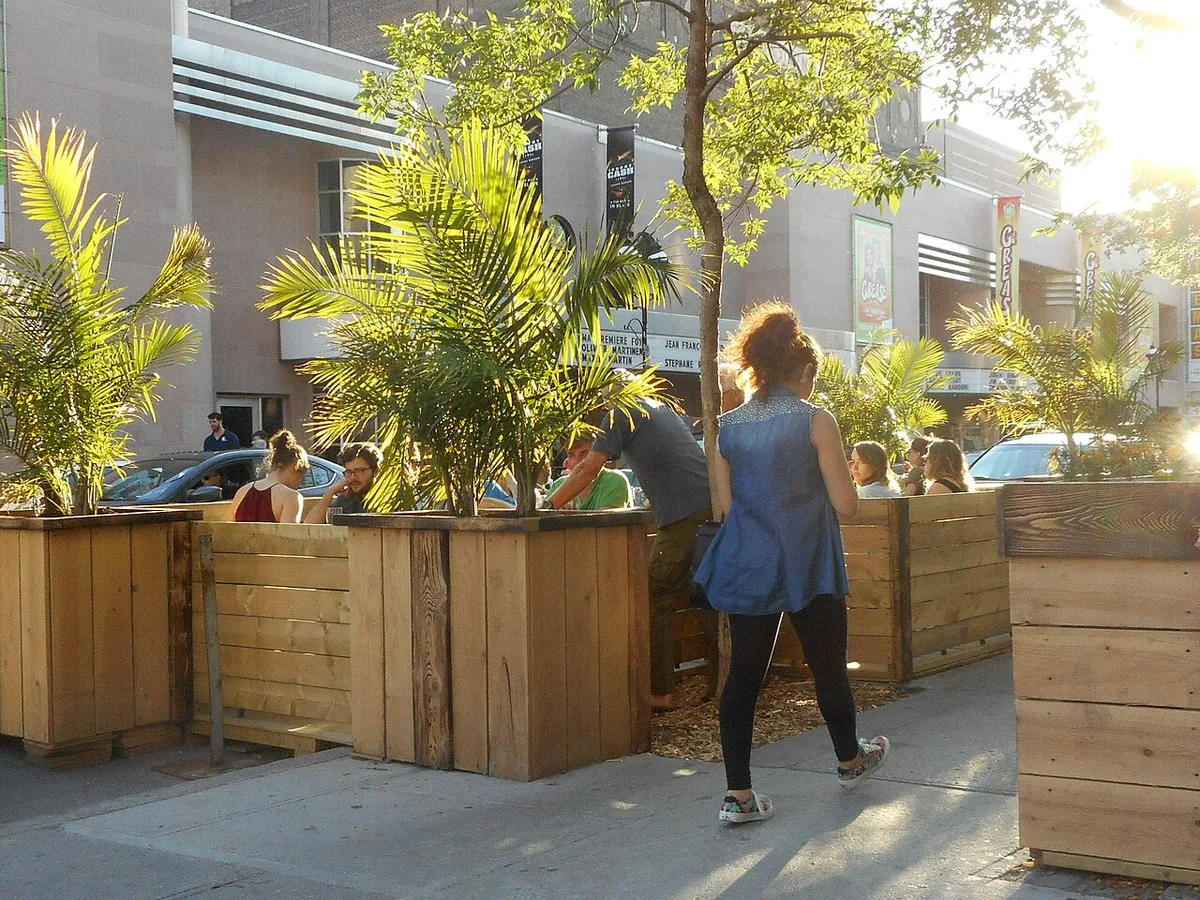
Montreal's street food is a set of institutions rather than stalls: the deli counter, the wood-oven bagel shop, the casse-croûte (snack bar), and the market hall. Winter pushes everything indoors for five months, and summer answers with the terrasse, when the whole city eats outside at once.
The second institution is the apportez votre vin bistro: hundreds of neighborhood restaurants where you bring your own wine, bought at the provincial SAQ. It is why Montreal eats out more, and better for the money, than any other Canadian city.
The casse-croûte
The Quebec snack bar: poutine, steamé hot dogs, burgers, and fries in brown gravy, served at counters and picnic tables. Every neighborhood has one, and the late-night ones are civic infrastructure.
The deli counter
Smoked meat delis run on counter seats and speed: order your fat level, get the sandwich, eat, go. Schwartz's on Saint-Laurent is the original, with a line that moves faster than it looks.
The bagel shop
Fairmount and St-Viateur bake in wood ovens nearly around the clock, and the correct purchase is a hot sesame eaten from the bag on the sidewalk. Bagel shops are bakeries, not cafes; there is nowhere to sit, and that is the point.
The BYOB bistro
Plateau and Mile End bistros where the food is serious and the wine is yours: buy a bottle at the SAQ, bring it, and pay little or no corkage at many rooms. Reservations matter; the rooms are small.
The terrasse
From May to October, every cafe and bistro spills onto terraces, and the cinq à sept (5-to-7 drinks) becomes the warm-up for the city's dinner hour. Saint-Denis and the Old Port fill first.
The sugar shack
In March and April, cabanes à sucre in the countryside around the city serve the maple feast: pea soup, fèves au lard, oreilles de crisse, and taffy poured on snow. It is a day trip and a rite of spring.
The rules that keep it safe and good
Bring your own wine proudly: buy it at the SAQ (the provincial store) and check the bistro's corkage when you book; many Plateau rooms charge nothing.
Say bonjour first. Menus in the east end may be French-only; staff will help, and the effort is noticed.
Smoked meat is ordered by fat: lean, medium, medium-fat, fat. Medium is the correct first order.
Terrasse season is short and sacred. From May to October, a sunny evening means eating outside, full stop.
Poutine is late-night food. The classic move is after the bars, at a casse-croûte, eaten immediately.
The markets
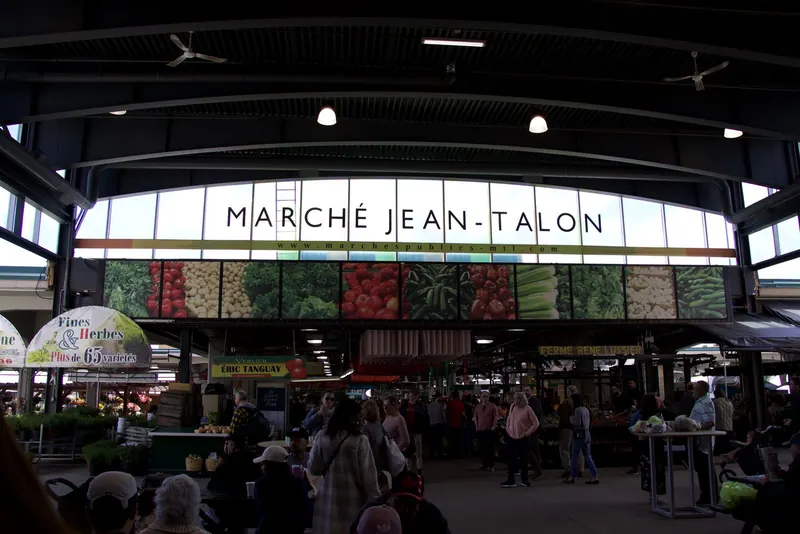
Markets are where Montreal actually shops and eats. Each one has a different job; go in the morning, when the food counters are at their busiest.
AJean-Talon Market
One of North America's largest open-air markets, open year-round in Little Italy since 1933: Quebec farms, cheese, maple, flowers, and prepared food in every aisle. Go on a weekend morning for the full noise of it.
Eat: Whatever Quebec is harvesting, plus a stop at the cheese and charcuterie stalls for a picnic bag.
BAtwater Market
The art deco market hall on the Lachine Canal in Saint-Henri (1933): butchers, cheese, bakeries, and a strong food-counter floor upstairs. More polished than Jean-Talon, just as serious.
Eat: A counter lunch upstairs, then cheese and bread for the canal-side grass.
CMaisonneuve Market
The east end's market beside the old Maisonneuve city hall: smaller, local, and strong on produce and Quebec specialties, with the Pie-IX and Viau neighborhoods as its clientele.
Eat: Seasonal produce and a bakery loop; pair it with the Botanical Garden nearby.
DMarché des Éclusiers
The Old Port's seasonal farmers market by the Lachine Canal locks: local farms, food stalls, and drinks on a terrace facing the water, summer into fall.
Eat: A market lunch at the locks, then walk the canal path toward Atwater.
EThe Saint-Laurent strip
Not a market hall but a market street: the Main runs from Portuguese chicken shops and grocers through the delis to Mile End bakeries. A walking graze up Saint-Laurent is a market day by another name.
Eat: Smoked meat at Schwartz's, Portuguese chicken on Rachel, a bagel at St-Viateur. In that order, walking north.
Neighborhoods: 1 Old Montreal · 2 Plateau Mont-Royal · 3 Mile End · 4 Little Italy · 5 Griffintown · 6 Saint-HenriMarkets: A Jean-Talon Market · B Atwater Market · C Maisonneuve Market · D Marché des Éclusiers · E The Saint-Laurent stripPins mark neighborhood centers, so you can place each area against where you are staying. Taxi times under each neighborhood below are measured from the Old Port.
1Old Montreal
The historic quarter by the St. Lawrence River, with cobblestone streets and stone buildings from the 17th to 19th centuries. It holds many of the city's most upscale dining rooms, including Toqué!, plus bistros and wine bars along Saint-Paul and Notre-Dame streets.
From the Old Port: the Old Port is the reference point; you are there
2Plateau Mont-Royal
A dense, walkable residential district known for its colorful row houses and Saint-Laurent Boulevard. It packs in smoked meat delis like Schwartz's, the Au Pied de Cochon bistro, brunch institutions like L'Avenue, and countless cafés and wine bars.
From the Old Port: 10 min by taxi
3Mile End
The city's indie and arts district, historically the center of the Jewish community that gave Montreal its bagel culture. Home to both Fairmount Bagel and St-Viateur Bagel, plus Buvette Chez Simone and a deep bench of cafés, bakeries, and casual restaurants.
From the Old Port: 10 to 15 min by taxi
4Little Italy
Centered on the Jean-Talon Market, one of Canada's largest public markets, with Italian grocers, coffee bars, and pastry shops along Saint-Laurent and Dante. Hosts Impasto and Mon Lapin, making it one of the densest fine-casual food streets in the city.
From the Old Port: 15 min by taxi
5Griffintown
A former industrial neighborhood along the Lachine Canal that has filled with condos, cocktail bars, and modern restaurants over the past decade. Good for contemporary dining and canal-side patios, close to Atwater Market.
From the Old Port: 5 to 10 min by taxi
6Saint-Henri
A working-class turned creative district west of downtown, anchored by Atwater Market's butchers and produce halls. Joe Beef and Liverpool House put its Notre-Dame Street strip on the culinary map, joined by newer bars, brasseries, and cafés.
From the Old Port: 10 min by taxi
The people behind the food
The names that explain how Montreal cooks the way it does now.
Normand Laprise
Chef-owner, Toqué!
Laprise founded Toqué! in 1993 and built Quebec's farm-to-table movement before it had a name here, sourcing from small Quebec producers when fine dining meant imports. The Relais & Châteaux room is still the city's culinary north star.
Martin Picard
Chef-owner, Au Pied de Cochon
Picard took Quebec tradition and turned the volume up: foie gras on poutine, duck in a can, and a famous sugar shack where the maple feast becomes fine dining. Au Pied de Cochon is the city's most joyful excess.
David McMillan and Frédéric Morin
Co-owners, Joe Beef
Joe Beef (opened 2005 in Little Burgundy) made Montreal famous abroad: a small, rich, unapologetic room cooking French-Quebec food at full intensity. Their books and the Liverpool House sibling spread the influence.
Chuck Hughes
Chef-owner, Garde Manger
Hughes runs Garde Manger in the Old Port, a loud, seafood-first room that became a TV-era emblem of Montreal's style: serious cooking, no stiffness, tattoos and oysters.
Dyan Solomon
Co-owner, Olive et Gourmando
Solomon's Old Montreal bakery-cafe (opened 1997) set the standard for the city's daytime eating: breads, pastries, and sandwiches that people cross town for. If a visitor asks where locals actually lunch, this is a correct answer.
If you only eat ten things here
A medium smoked meat sandwich at Schwartz's, counter seat if you can get one.
A hot sesame bagel from St-Viateur, eaten from the bag outside.
A classic poutine, late at night, eaten immediately.
The foie gras poutine at Au Pied de Cochon, once, as a splurge.
Portuguese grilled chicken in the Plateau, with piri piri and fries.
An orange julep at the big orange on Décarie.
Tourtière with fruit ketchup at a bistro in winter.
A BYOB dinner on the Plateau with a bottle you chose at the SAQ.
Cretons on toast at a traditional breakfast counter.
Maple taffy on snow at a sugar shack, if your trip lands in March or April.
Eating well here
apportez votre vin
'Bring your own wine', printed on bistro windows across the Plateau. Buy the bottle at the SAQ first.
dépanneur
The corner store. Beer and basics live here; wine for dinner comes from the SAQ.
cinq à sept
The 5-to-7 after-work drink, a Montreal institution that often becomes dinner.
steamé, all-dressed
A steamed hot dog with the works: mustard, relish, onions, and coleslaw. Ordering is one breath.
terrasse
Any patio, and a way of life from May to October.
cabane à sucre
A sugar shack: where maple syrup is made and the spring feast is served.
la facture
The bill. 'Le check' will mark you instantly.
SAQ
The provincial liquor board's stores; the wine run before a BYOB dinner starts here.
Do I need to tip in Montreal restaurants?
Yes. Tipping 15 to 20 percent of the pre-tax bill is the standard in sit-down restaurants, with 15 percent considered the minimum for good service. Quebec adds two sales taxes (GST and QST) on top of menu prices, so check the subtotal before taxes when calculating your tip.
Do I need to speak French to eat out in Montreal?
No, but a little helps. Montreal restaurants commonly greet and serve in French first, and menus may be French-only in some spots, but English is widely understood in the dining scene. Starting with a polite 'bonjour' goes a long way.
What are the best food neighborhoods?
The Plateau for delis, brunch, and bistros; Mile End for bagels and wine bars; Little Italy for Italian food around Jean-Talon Market; Old Montreal for upscale dining; Saint-Henri and Little Burgundy for destination restaurants like Joe Beef; and Outremont for Middle Eastern gems like Damas.
How much should I budget for meals?
Casual spots ($) like bagel bakeries and Schwartz's run a light lunch bill. Mid-range restaurants ($$) cover most brunches, wine bars, and neighborhood bistros. Upscale rooms ($$$) like Damas, Impasto, and Mon Lapin, and fine dining ($$$$) like Toqué!, Europea, Joe Beef, and Maison Boulud, are the top end.
Do I need reservations?
For the destination restaurants, yes, and often far ahead: Joe Beef, Au Pied de Cochon, Mon Lapin, Toqué!, and Europea book out quickly, sometimes weeks out. Mid-range spots often take same-week bookings. Delis, bagel shops, and brunch lines like L'Avenue are walk-in, though you may queue.
What are my late-night dining options?
Many kitchens close between 10 and 11pm, so plan dinners accordingly. But both Fairmount Bagel and St-Viateur Bagel bake 24 hours, Schwartz's serves until midnight on weekends, and several poutineries and late-night bars cover the after-hours crowd.