Cabrito, carne asada, and northern Mexico's fine dining capital
Cerro de la Silla overlooking Monterrey. Photo via Wikimedia Commons.
How Monterrey eats
Monterrey eats differently from the rest of Mexico, and it knows it. This is cattle country: weekend carne asadas are a social institution, the cabrito is treated as heritage (milk-fed kids under 40 days, roasted for hours over mesquite fire), and the city has two Michelin-starred restaurants, Pangea and Koli Cocina de Origen, both built on northern ingredients. Flour tortillas rule here, beef is the center of the plate, and machacado (dried beef scrambled with egg) is breakfast.
The scene splits into three layers that barely overlap. San Pedro Garza García holds the fine dining corridor: the González Beristáin group's Pangea and Bardot at Parque Arboleda, the Rivera Río brothers' Koli in Del Valle, and steakhouses like Cara de Vaca in Centrito Valle. The Centro and Barrio Antiguo keep the old institutions: El Gran Pastor for cabrito, Al Restaurant for breakfast since 1940, brewpubs like Sierra Madre Brewing Co. And then the taquerías: Tacos Orinoco's trompo empire born on Río Orinoco, late-night El Pata in Cumbres, and modern norestense cooking at El Jonuco out in Apodaca.
Learn the foods
Start here, not with a restaurant. Learn what these foods are, where they come from, and how locals eat them, and the whole city opens up: every menu, every market, every street corner starts making sense.
Cabrito
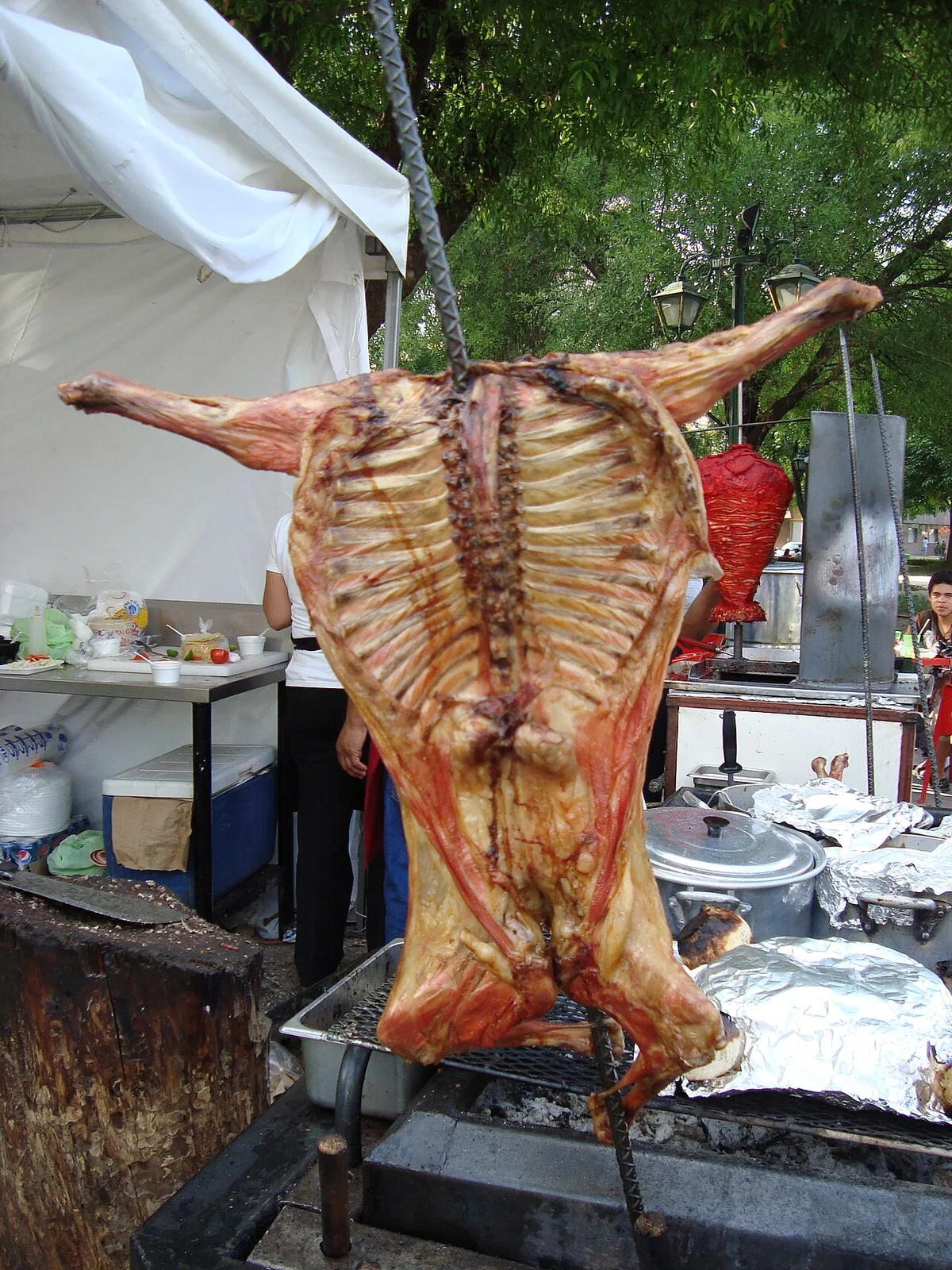
The crown of Nuevo León cooking: milk-fed kid goat roasted slowly over mesquite until the skin crisps and the meat falls apart. Order by cut (riñonada, paleta, pierna) at El Gran Pastor, or try Pangea's fine-dining version. Fritada de cabrito, the crispy stewed version, is the locals' other order.
Where it comes from: Cabrito is Nuevo León's heritage dish: a milk-fed kid, under about 40 days old, roasted slowly over mesquite. Goat herding shaped the northeast's colonial ranching economy, and the roast became its celebration food, centered on the restaurants of downtown Monterrey.
How to eat it: Order by cut: riñonada (the kidney section, richest), paleta (shoulder), or pierna (leg). Eat it with frijoles con veneno and flour tortillas, at lunch, unhurried.
Carne asada
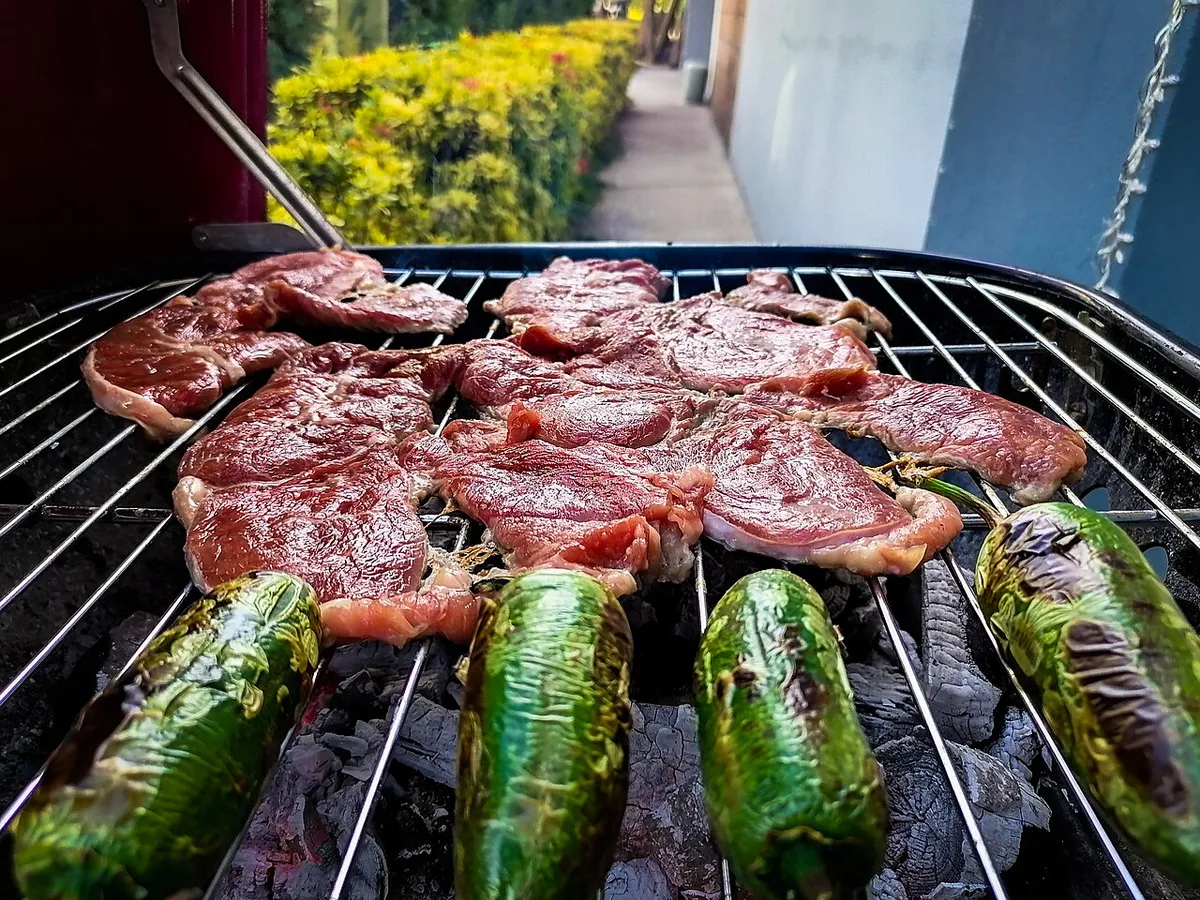
More than a dish, a weekly ritual: beef (arrachera, ribeye, agujas) grilled over mesquite and eaten with flour tortillas, grilled cebollitas, guacamole, and beer. Cara de Vaca and La Nacional do the restaurant version; every backyard in the city does its own.
Where it comes from: Carne asada in Monterrey is not a dish but the week's social structure: beef over mesquite in backyards every weekend, a ritual of the cattle-ranching north. Restaurants in San Pedro do the polished version; the backyard version is the original.
How to eat it: As a guest: arrive with beer, eat the first cuts standing by the grill, and never ask when it will be ready. Arrachera, agujas, and grilled cebollitas in flour tortillas, in that flow.
Machacado
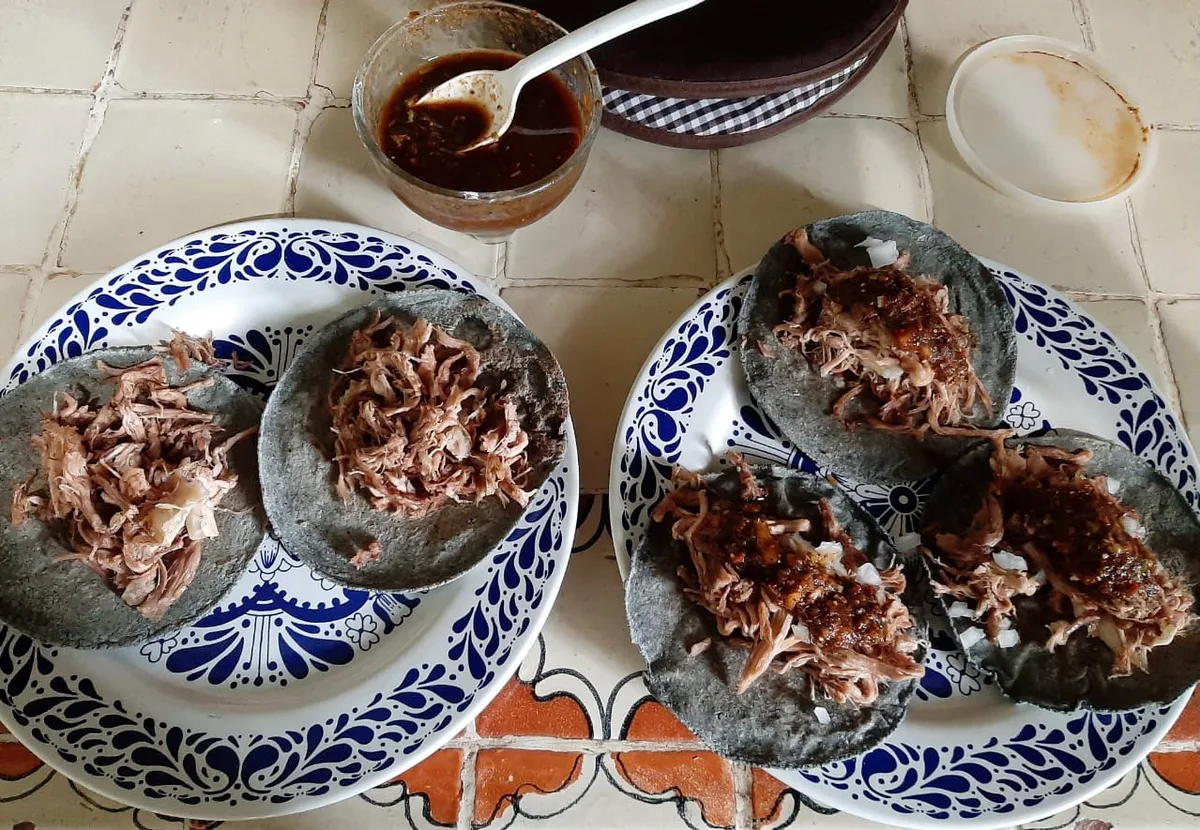
Dried, shredded beef rehydrated and scrambled with egg, onion, and chile: Monterrey's defining breakfast, eaten in flour tortillas. Al Restaurant and La Nacional both do canonical versions.
Where it comes from: Machacado comes from ranch preservation: beef salted and dried (machaca), then shredded, rehydrated, and scrambled with egg, onion, and chile. It is Monterrey's defining breakfast, built for workdays on the range and kept for weekends in the city.
How to eat it: Order it for breakfast in flour tortillas with salsa, at an institution like Al Restaurant, which has served it since 1940.
Frijoles con veneno
Refried beans finished with rendered beef fat from the grill and chile, a traditional cabrito accompaniment at houses like El Gran Pastor. Rich, smoky, and served with fresh flour tortillas.
Where it comes from: The 'poisoned' beans are refried beans finished with the rendered fat and drippings of the grill: veneno is a joke name for the richest thing on the table. They are the traditional partner to cabrito in the old Centro houses.
How to eat it: Order them wherever you order cabrito. They are not a side; they are half the dish.
Tacos de trompo
The northern cousin of tacos al pastor: marinated pork shaved off the vertical spit onto flour tortillas. Tacos Orinoco built an empire on them, with three trompos running and a secret Salsa Animal.
Where it comes from: The trompo is the north's vertical spit: marinated pork shaved onto tortillas, cousin to Mexico City's al pastor but served here on flour. Tacos Orinoco turned it into an empire from a single street in San Pedro.
How to eat it: Late at night, on flour tortillas, with the house salsa. Order more than you planned; everyone does.
Street food, decoded
Monterrey eats beef, fire, and flour tortillas, and its street food follows the working day of an industrial city. Mornings belong to tacos mañaneros (barbacoa, machacado, chicharrón) sold from stands and small shops. Midday is the big meal, cabrito in the Centro houses. Night belongs to the trompo and the steakhouse, and the whole week bends toward the weekend carne asada.
Understand the carne asada first and the city makes sense: it is a backyard institution that restaurants imitate, not the other way around. If you get invited to one, cancel your other plans.
The morning taco stand
Tacos mañaneros are the regio breakfast: barbacoa, machacado con huevo, chicharrón, and bean tacos on flour tortillas, sold fast from stands and small counters before the workday heat builds.
The cabrito house
Mesquite-roast restaurants, El Gran Pastor the most famous, where whole kids turn on spits and the order is by cut. Lunch is the main performance; by late afternoon the day's roasts are done.
The backyard carne asada
Every weekend, backyards across the city: arrachera and agujas over mesquite, cebollitas on the grill's edge, guacamole, salsa, and flour tortillas. Steakhouses like Cara de Vaca sell the restaurant version; the institution itself is domestic.
The cantina
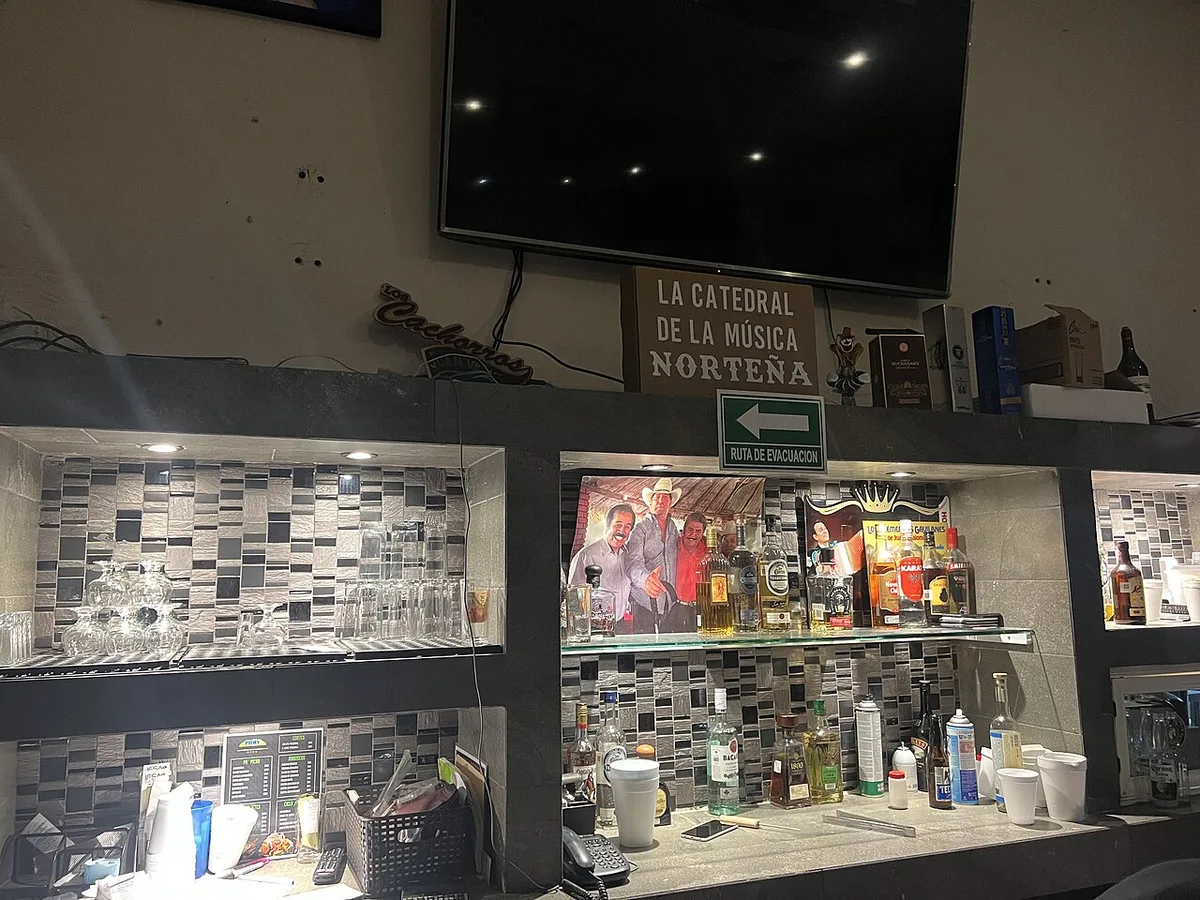
Old-school cantinas like La Nacional serve drinks with serious food: machacado, asado de puerco, and carne asada plates in rooms that have barely changed in decades.
The cervecería
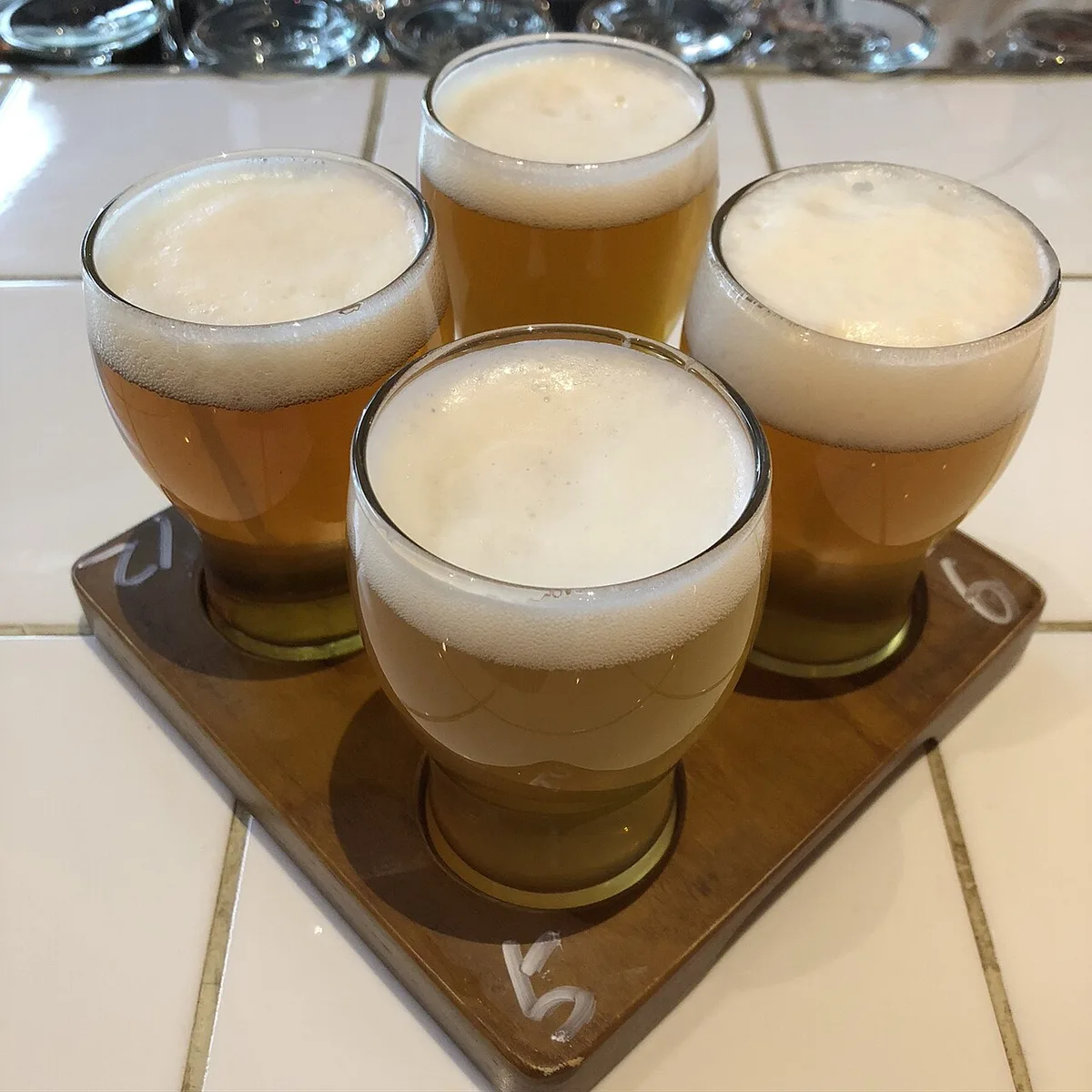
Sierra Madre Brewing Co., pouring since the late 1990s, made Monterrey a Mexican craft-beer pioneer, in a city whose industrial giants (Cuauhtémoc Moctezuma) built the national beer industry. Brewpubs cluster in Barrio Antiguo and San Pedro.
The dulcería
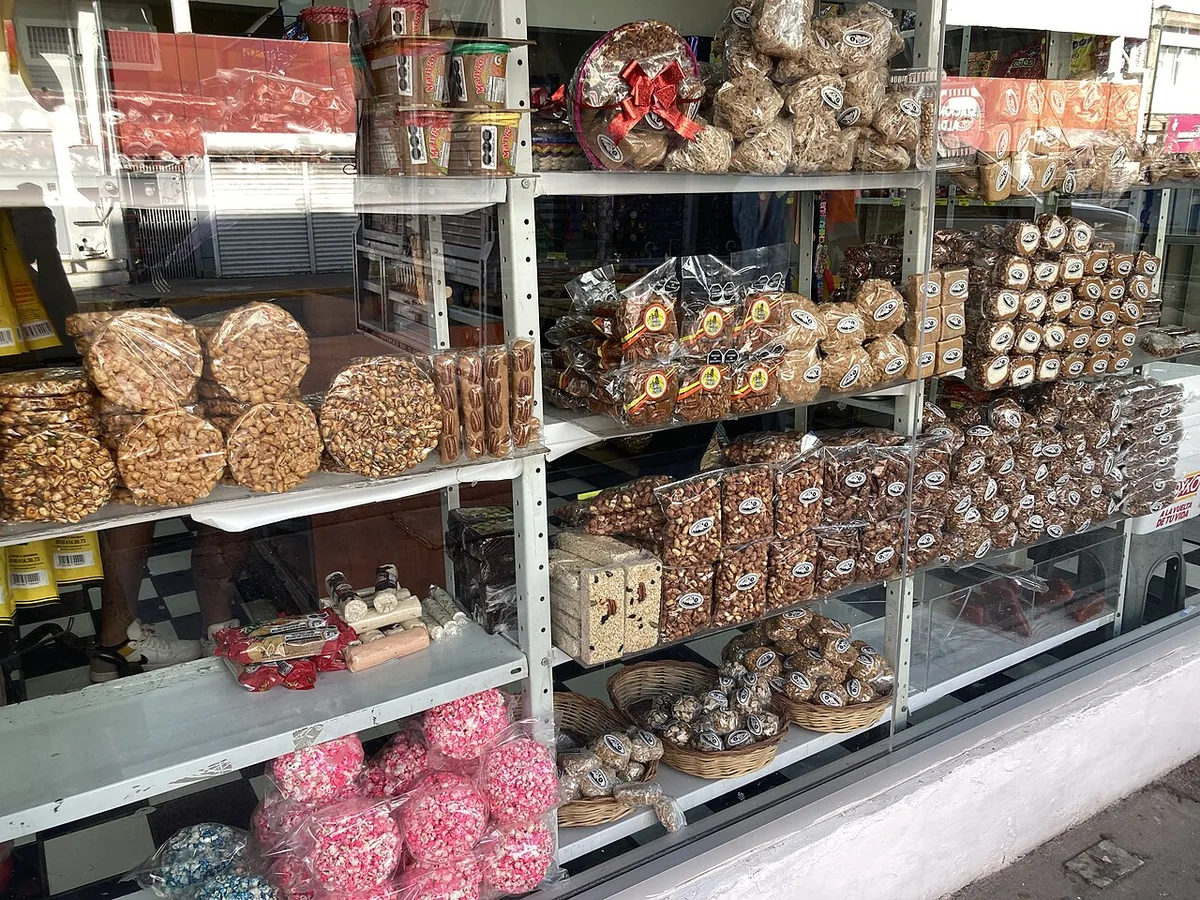
Sweet shops sell glorias, the milk-candy rolls from Linares, along with cajeta and nut candies from across Nuevo León. A box of glorias is the standard Monterrey gift.
The rules that keep it safe and good
Cabrito is lunch. The great houses roast for the midday meal; a cabrito dinner is the exception, not the plan.
Flour tortillas are the default everywhere. Corn is available, but ordering flour is ordering like a regio.
Summer heat rearranges the day: dinners start at 9 or 10 pm, and the trompo stands do their brisk business after dark.
If a carne asada invitation arrives, it outranks restaurant reservations. Bring beer or a dessert, and eat the grill-side cuts when they are offered.
Tipping runs 10 to 15 percent at sit-down restaurants, as in the rest of Mexico.
The markets
Markets are where Monterrey actually shops and eats. Each one has a different job; go in the morning, when the food counters are at their busiest.
AMercado Juárez
Downtown's main market by the Macroplaza quarter: produce, meats, herbs, candies, and food stalls serving the Centro's workday crowd. Pair it with the cabrito houses on the surrounding streets.
Eat: Glorias and dulces de leche to take away, and a stall lunch if the morning runs long.
BMesón Estrella
The city's great wholesale food market, famous beyond the trade for its food stalls: tacos, menudo, and market cooking at trader hours. Early morning is the full experience.
Eat: Whatever the stall lines of porters and traders are ordering; market rules apply here more than anywhere.
CBarrio Antiguo Sunday market
On Sundays the old town's streets fill with an antiques and street market: vendors, snacks, and the neighborhood's cafes opening onto the cobblestones. The gentlest introduction to the Centro.
Eat: Street snacks as you browse, then a cervecería lunch when the heat builds.
DPaseo Santa Lucía
The riverwalk from the Macroplaza to Parque Fundidora: food kiosks, cafes, and evening crowds along the artificial river. Come at golden hour when the city cools.
Eat: An evening graze along the water, ending with dinner in Barrio Antiguo.
EMercado Colón
A traditional downtown market hall for produce, meats, and everyday food shopping, serving the Centro's residents while the newer markets serve the suburbs.
Eat: A working-market breakfast of tacos mañaneros before the day starts.
Neighborhoods: 1 San Pedro Garza García (Valle del Campestre / Del Valle) · 2 Barrio Antiguo · 3 Centro (Av. Madero) · 4 Cumbres · 5 ApodacaMarkets: A Mercado Juárez · B Mesón Estrella · C Barrio Antiguo Sunday market · D Paseo Santa Lucía · E Mercado ColónPins mark neighborhood centers, so you can place each area against where you are staying. Taxi times under each neighborhood below are measured from the Macroplaza.
1San Pedro Garza García (Valle del Campestre / Del Valle)
The wealthy suburb's Valle corridor holds Monterrey's fine dining cluster: Pangea, Bardot, Koli, and Cara de Vaca are all here, plus Centrito Valle's nightlife strip.
From the Macroplaza: 15 min by taxi
2Barrio Antiguo
The historic center's cobblestone blocks around the Faro del Comercio, with brewpubs, chilaquerías like Catrinas, and the city's oldest nightlife. Best explored on foot in the evening.
From the Macroplaza: 5 min on foot
3Centro (Av. Madero)
The downtown avenue lined with classic institutions: El Gran Pastor for cabrito, Al Restaurant for breakfast since 1940, and the La Nacional cantina. Traditional Monterrey at its most concentrated.
From the Macroplaza: 5 to 10 min on foot
4Cumbres
A family-neighborhood corridor west of downtown with beloved local spots like Tacos El Pata and long-running neighborhood restaurants. Late-night tacos are the draw.
From the Macroplaza: 20 min by taxi
5Apodaca
A northeast municipality worth the drive for El Jonuco's modern norestense cooking, a 4.8-rated OpenTable standout, and close to the airport.
From the Macroplaza: 30 min by taxi
The people behind the food
The names that explain how Monterrey cooks the way it does now.
Guillermo Beristáin
Chef, Pangea
Beristáin opened Pangea in San Pedro in the late 1990s and effectively founded Monterrey fine dining: French technique on northern ingredients, in a business city that had only steakhouses. Pangea holds a Michelin star and trained much of the scene that followed.
The Rivera Río brothers
Chefs, Koli Cocina de Origen
Rodrigo, Patricio, and Daniel Rivera Río cook Nuevo León's own traditions at Koli: a tasting menu built entirely from the state's ingredients and memory. The second of the city's Michelin stars, and its most personal cooking.
Dante Ferrero
Chef-butcher, Casa Benell
Ferrero built his name on whole-animal cooking, roasting entire cows for crowds, and runs Casa Benell as a temple of Argentine-norestense fire. In a beef city, he is the high priest of the grill.
Adrián Herrera
Chef and writer, Fonda San Francisco
Herrera is Monterrey's culinary provocateur: a chef and newspaper columnist whose Fonda San Francisco in San Pedro cooks Mexican food with research, humor, and no reverence. His writing shapes how regios argue about their own food.
The cabrito masters of El Gran Pastor
Institution, Centro
El Gran Pastor has roasted cabrito on the Centro's main avenue for generations, and its spit masters are the keepers of the city's defining technique: mesquite, patience, and kids roasted whole. Every regio has a position on whether it is still the best; go and form yours.
If you only eat ten things here
Cabrito riñonada at El Gran Pastor, at lunch, with frijoles con veneno.
A machacado breakfast at Al Restaurant, in flour tortillas.
Tacos de trompo at Tacos Orinoco, late at night.
A steakhouse carne asada dinner in San Pedro, mesquite smoke included.
Tacos mañaneros from a stand before 10 am.
A discada, if a local's weekend makes room for you.
Craft beer at Sierra Madre Brewing in Barrio Antiguo.
A box of glorias from a dulcería, half of which will not survive the day.
An evening walk and graze along Paseo Santa Lucía.
One splurge tasting menu: Pangea or Koli, booked ahead.
Eating well here
regio
A person from Monterrey, short for regiomontano. Regios use it with pride.
machaca / machacado
The dried shredded beef, and the breakfast dish it becomes with egg. Order machacado.
carne asada (the event)
'Hay carne asada el sábado' means a gathering, not a menu item. The grilling is the party.
discada
Mixed meats and vegetables cooked on a large steel disc (originally a plow disc) over fire, the ranch party dish.
cabrito al pastor
Kid roasted on a spit over coals. Here 'al pastor' names the spit method, not the taco style.
frijoles charros
Brothy beans with pork, tomato, and chile, the other great bean of the north, distinct from the con veneno refried style.
glorias
Milk-candy rolls with nuts from Linares, Nuevo León. The gift you bring back from Monterrey.
tacos mañaneros
Morning tacos: the breakfast format of stands across the city, over by late morning.
What makes Monterrey food different from the rest of Mexico?
Beef and fire. This is ranch country: the defining plates are cabrito (milk-fed kid goat roasted over mesquite), carne asada, and machacado for breakfast. Flour tortillas replace corn more often than anywhere else in Mexico, and the city pairs tradition with serious fine dining: two Michelin stars at Pangea and Koli.
How much should I budget for meals per day?
Street level is very affordable: tacos run roughly 35-65 pesos each, so a taquería meal is easy under 200 pesos. Mid-range restaurants (El Gran Pastor, La Nacional, El Jonuco) are comfortable casual spending. The tasting menus at Pangea and Koli are special-occasion territory.
Where should I stay to eat well?
San Pedro Garza García puts fine dining (Pangea, Bardot, Koli) and Centrito Valle's nightlife within walking distance. The Centro and Barrio Antiguo put you near the old institutions, cabrito houses, and brewpubs.
How does tipping work?
Service is rarely included on the bill. The standard is 10-15% for good service at sit-down restaurants; many card terminals now suggest 10, 15, or 20%. Street taquerías and casual spots are tip-optional but a small amount is appreciated.
Do I need reservations?
Yes for fine dining: Pangea and Koli both require booking well ahead, and El Jonuco fills up on weekends. Mid-range spots like La Nacional and Cara de Vaca take OpenTable reservations. Taquerías and breakfast spots are walk-in friendly, though Sunday mornings and Friday nights get busy.