The Koutoubia minaret, Marrakech. Photo via Wikimedia Commons.
How Marrakech eats
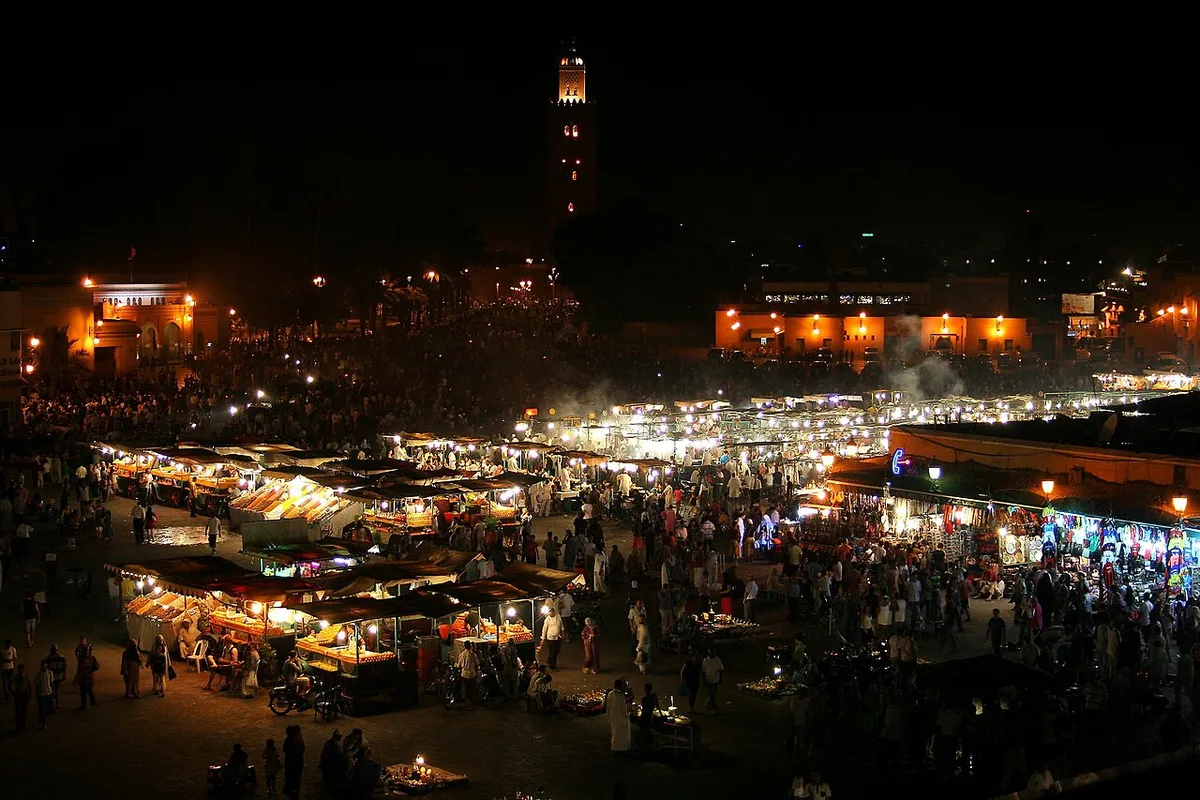
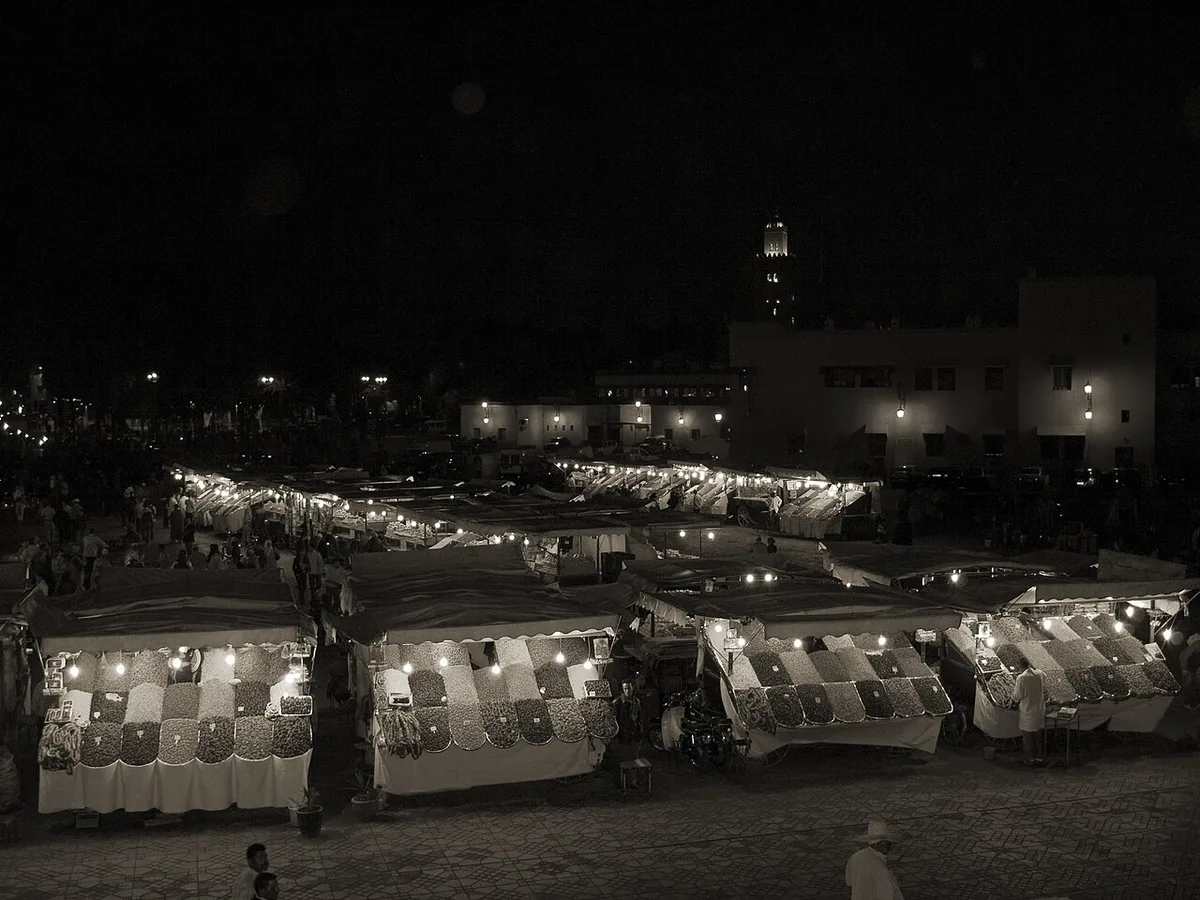
Marrakech has been feeding crowds in the open air for close to a thousand years. Jemaa el-Fnaa, the great square at the medina's heart, turns into one of the world's oldest restaurants every evening: a hundred grill stalls, smoke, drummers, and a seating plan of shared benches. UNESCO lists the square's cultural space for its oral traditions and spectacle, and the food is the core of both.
Around it, the medina runs on souks, spice markets, and riad kitchens, while the French-built new town of Gueliz answers with cafes, patisseries, and the city's modern dining rooms. Eat in both cities: the medina for the tradition, Gueliz for the present tense.
Learn the foods
Start here, not with a restaurant. Learn what these foods are, where they come from, and how locals eat them, and the whole city opens up: every menu, every market, every street corner starts making sense.
Tanjia
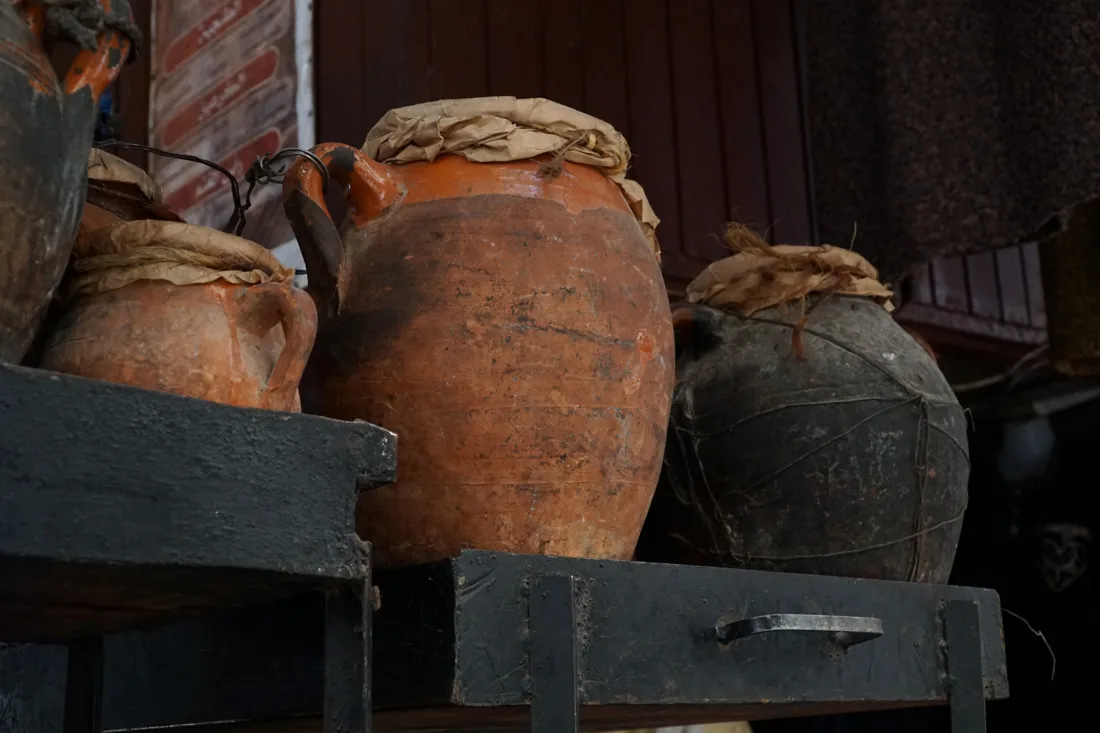
Marrakech's own dish and no one else's: beef with preserved lemon, garlic, and saffron, sealed in a clay urn (the tanjia) and slow-cooked for hours in the ashes of a hammam furnace. It is traditionally made by men, for gatherings of men, and ordered a day ahead.
Where it comes from: The tanjia belongs to the farnatchi, the keeper of the public furnace: workers and shopkeepers would drop a sealed urn in the hammam ashes in the morning and collect it, falling apart, at day's end. A bachelor dish by origin, cooked by the furnace while its owner worked or bathed.
How to eat it: Order it a day ahead through a riad or restaurant, and eat it the local way: from the urn, with khobz (bread) as your utensil, in a group. It is not a solo dish.
Tagine
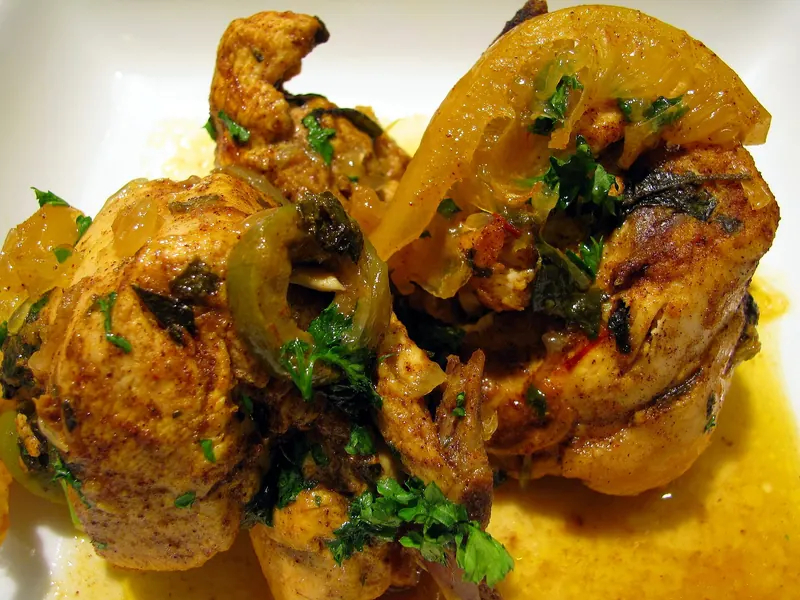
The conical-pot stew that names a whole cuisine: chicken with preserved lemon and green olives, kefta (meatballs) with eggs in tomato, lamb with prunes and almonds. Every family and stall has its versions.
Where it comes from: The tagine is both vessel and dish: the cone funnels steam back onto the food, cooking slowly over charcoal with little water, an old solution to a dry climate. The technique came long before the recipes written down for it.
How to eat it: Eat from the shared pot with bread, working from your own wedge of the circle. The sauce is the point; bread is how you get it.
Couscous
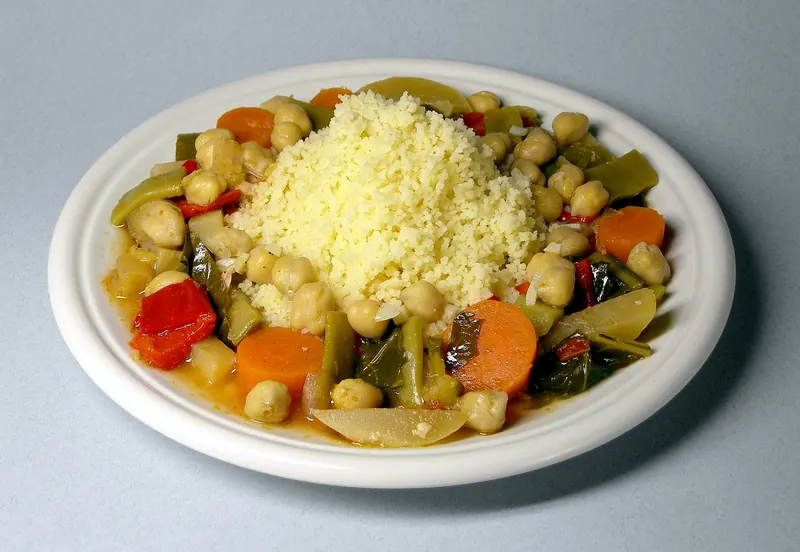
Hand-rolled semolina steamed over a spiced broth until it swells, served mounded with vegetables, chickpeas, and meat, the broth on the side. Morocco's Friday dish, after prayers, eaten communally.
Where it comes from: Couscous is Amazigh (Berber) in origin and ancient in the Maghreb; in Morocco the rolling and triple-steaming is women's work passed hand to hand. UNESCO inscribed the couscous of the Maghreb as shared heritage in 2020.
How to eat it: On Friday, at lunch, from the shared platter. Locals shape a small ball with the right hand; a spoon is forgiven and quietly faster.
Harira
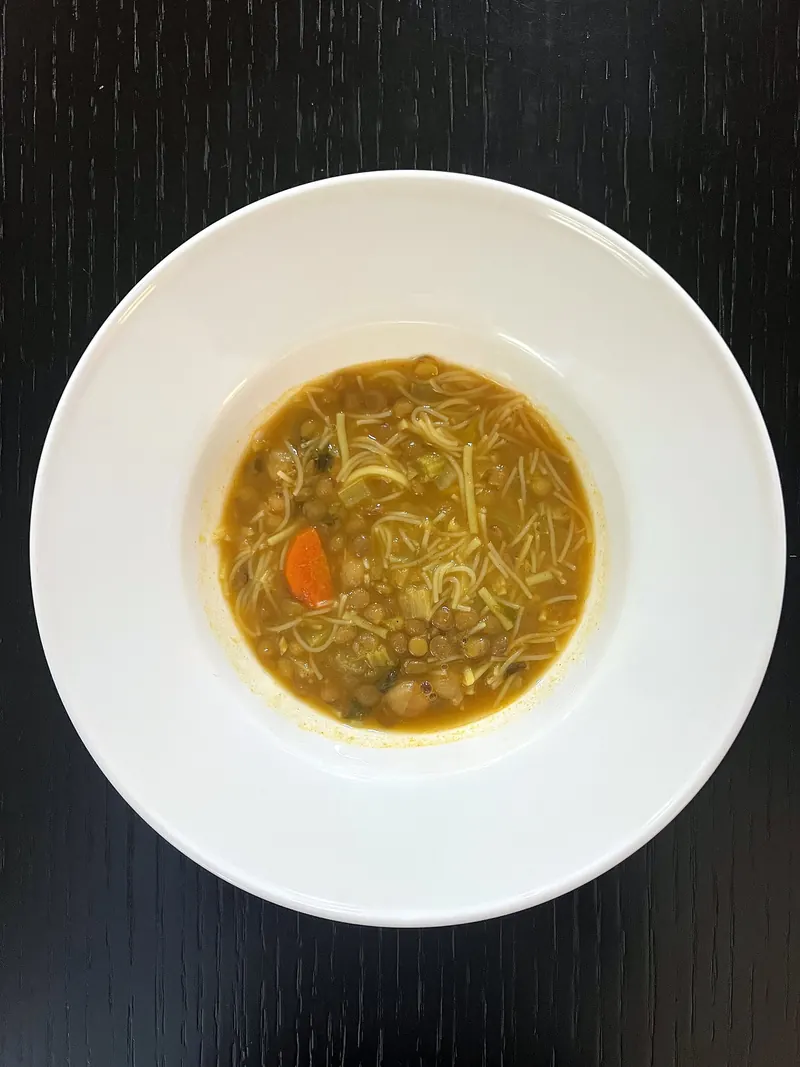
The tomato, lentil, and chickpea soup enriched with celery, herbs, and a little meat: Morocco's iftar soup, breaking the Ramadan fast at sunset, and an evening staple at the Jemaa el-Fnaa stalls year-round.
Where it comes from: Harira is the sound of sunset in Ramadan: the first food after the fast, served with dates and chebakia (honey sesame cookies). Outside Ramadan it remains the medina's default bowl, cheap and everywhere.
How to eat it: With dates or chebakia on the side and a spoon, at a stall bench, as the square warms up for the night.
Pastilla
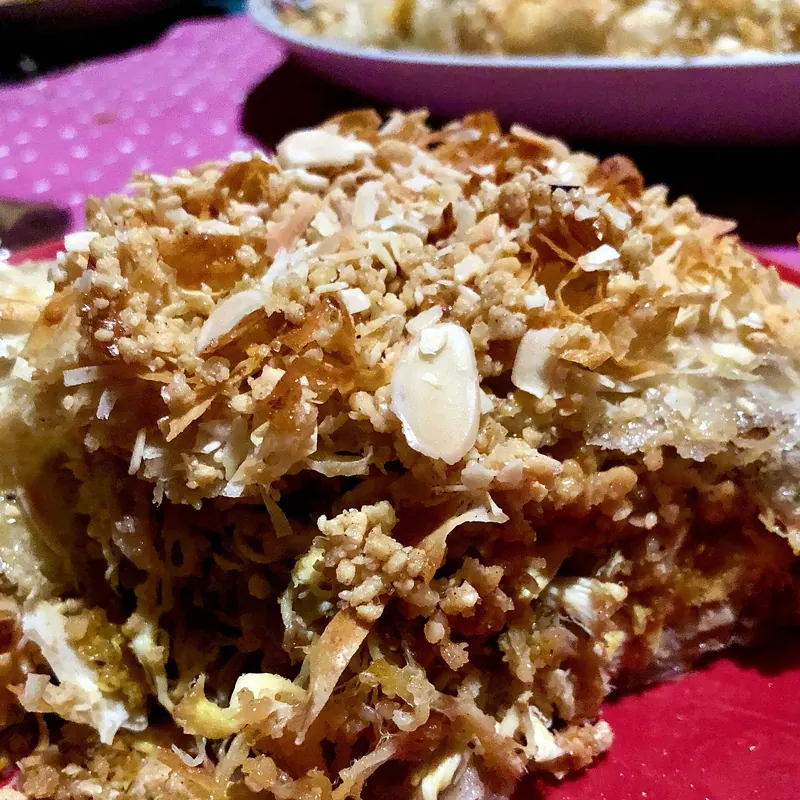
Fez's great sweet-savory pie, fully at home in Marrakech: paper-thin warqa pastry around spiced pigeon or chicken, almonds, egg, cinnamon, and sugar. A celebration dish, served first.
Where it comes from: Pastilla descends from the refined cooking of Andalusia carried south by refugees, then perfected in Fez. The warqa leaves are made fresh on a hot griddle, one at a time, by specialists.
How to eat it: With your fingers, breaking the crisp shell so the cinnamon sugar and the savory filling land together. Expect it at weddings, riads, and good restaurants, not stalls.
Mechoui
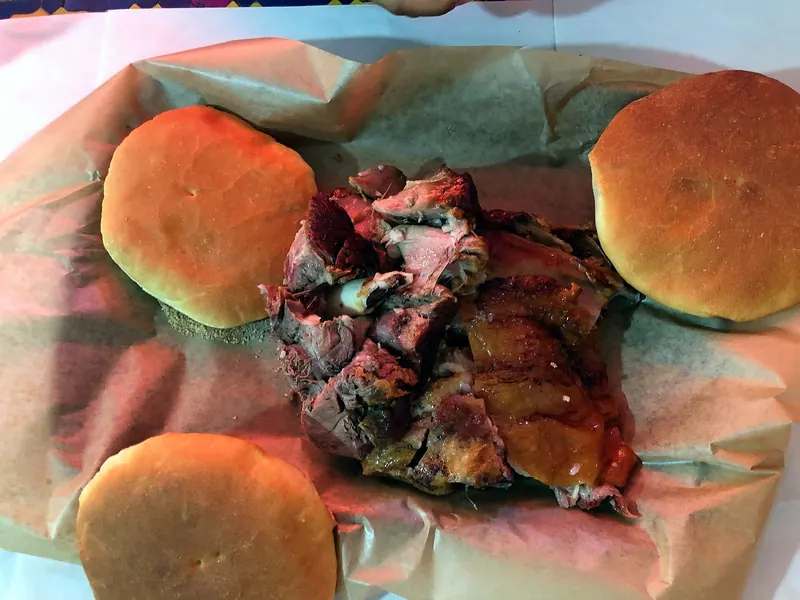
Whole lamb roasted slowly until the skin crisps and the meat falls, sold by weight in the mechoui lane by Jemaa el-Fnaa, with cumin and salt for dipping. Marrakech's great carnivore stop.
Where it comes from: Roasting whole animals for a crowd is the Maghreb's feast format; the mechoui shops near the square turned it into a daily trade, lambs coming off the pit through the day and sold by the kilo to families and passersby alike.
How to eat it: Order by weight at the counter (a quarter kilo feeds one well), take the cumin-salt dip, and eat the crisp skin first. Hands, bread, no ceremony.
Msemen and mint tea
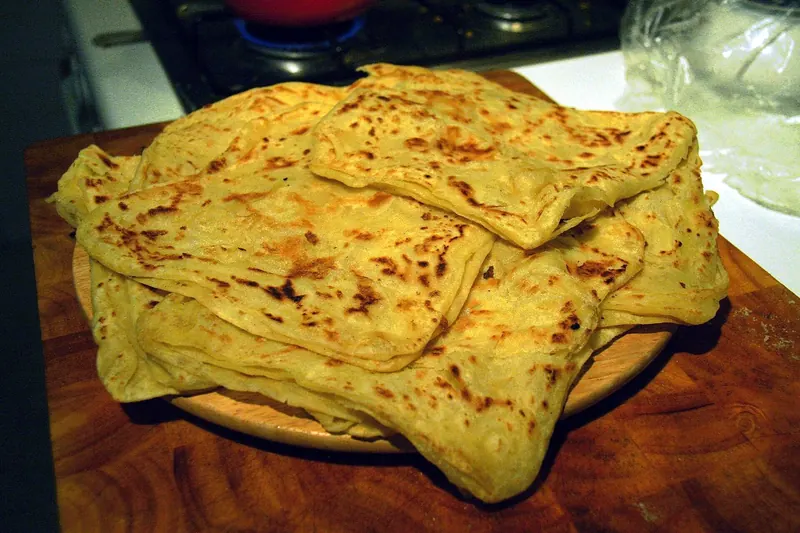
Msemen, the flaky square flatbread griddled in oil, with amlou (almond-honey spread) or soft cheese, and a pot of gunpowder green tea poured high with fresh mint: the Moroccan breakfast and the Moroccan welcome in one.
Where it comes from: Mint tea is the country's handshake: green tea, fresh mint, and serious sugar, poured from a height to raise the foam. Refusing a first glass is refusing the conversation; the msemen beside it makes it breakfast.
How to eat it: Tear the msemen, drag it through amlou, and drink the tea sweet. If you want less sugar, say so before the pot is made (bla sokkar, no sugar).
Street food, decoded
Every evening at Jemaa el-Fnaa, a hundred stall keepers wheel in their grills, light the charcoal, and raise the smoke that has marked dinner in Marrakech for centuries. The square's food stalls are the system: numbered pitches, shared benches, menus shouted and shown, and a crowd that is still mostly Moroccan. Eat where the families are, and the tout who walked you there was unnecessary.
By day the medina grazes differently: msemen and mint tea at cafe tables, olives and bread in the souks, brochettes from small grills, tanjia cooking invisibly in the hammam ashes. Learn the two shifts, day grazing and the night square, and you understand how this city eats.
The night stalls of Jemaa el-Fnaa
Rows of grill stalls firing at dusk: brochettes, kefta, merguez, grilled fish, harira, and snail soup (babouche), eaten on benches at shared tables. The keepers court you hard; the food, once you sit, settles the negotiation.
Mechoui Alley
The lane by the square where whole lambs roast and are sold by weight all day, with cumin and salt for dipping. Order at the counter, eat at the shared tables, hands only.
The souk graze
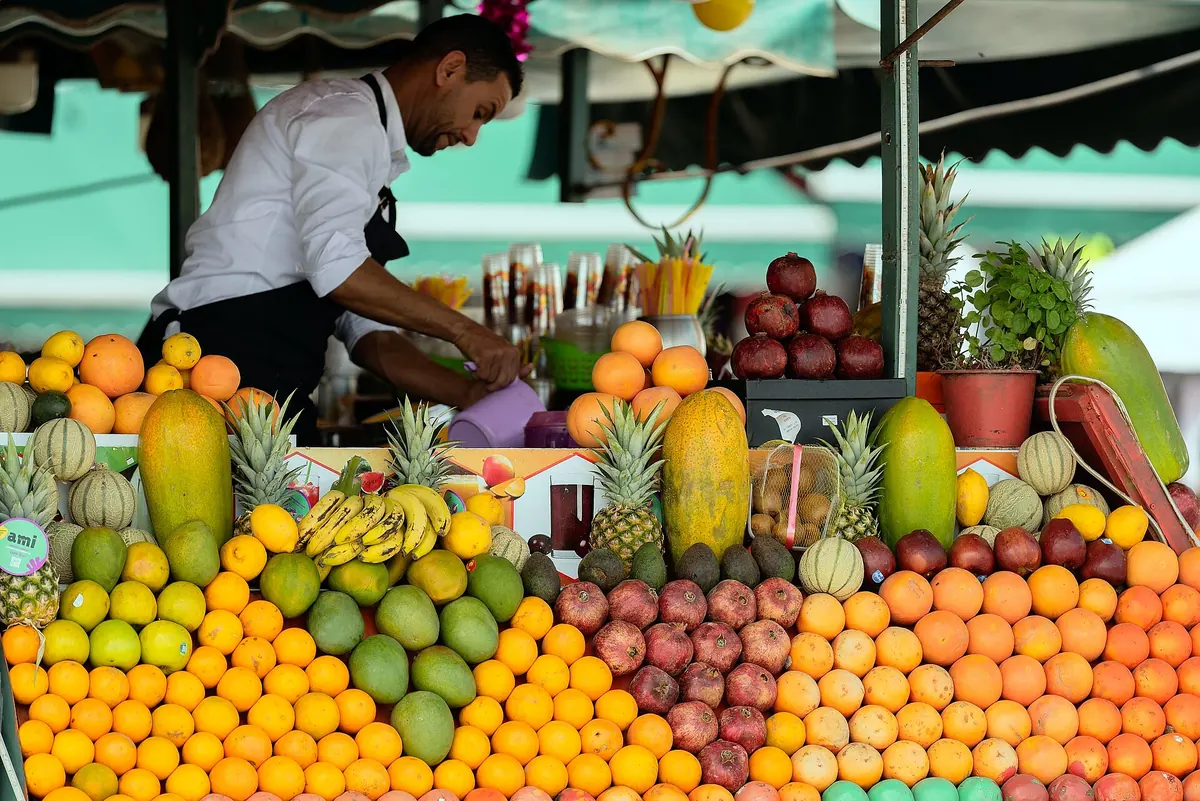
Eating while shopping the souks: msemen from griddle carts, olives by the scoop, dried fruits and nuts, fresh orange juice. The medina's daytime format, a few dirhams at a time.
The rooftop terrace
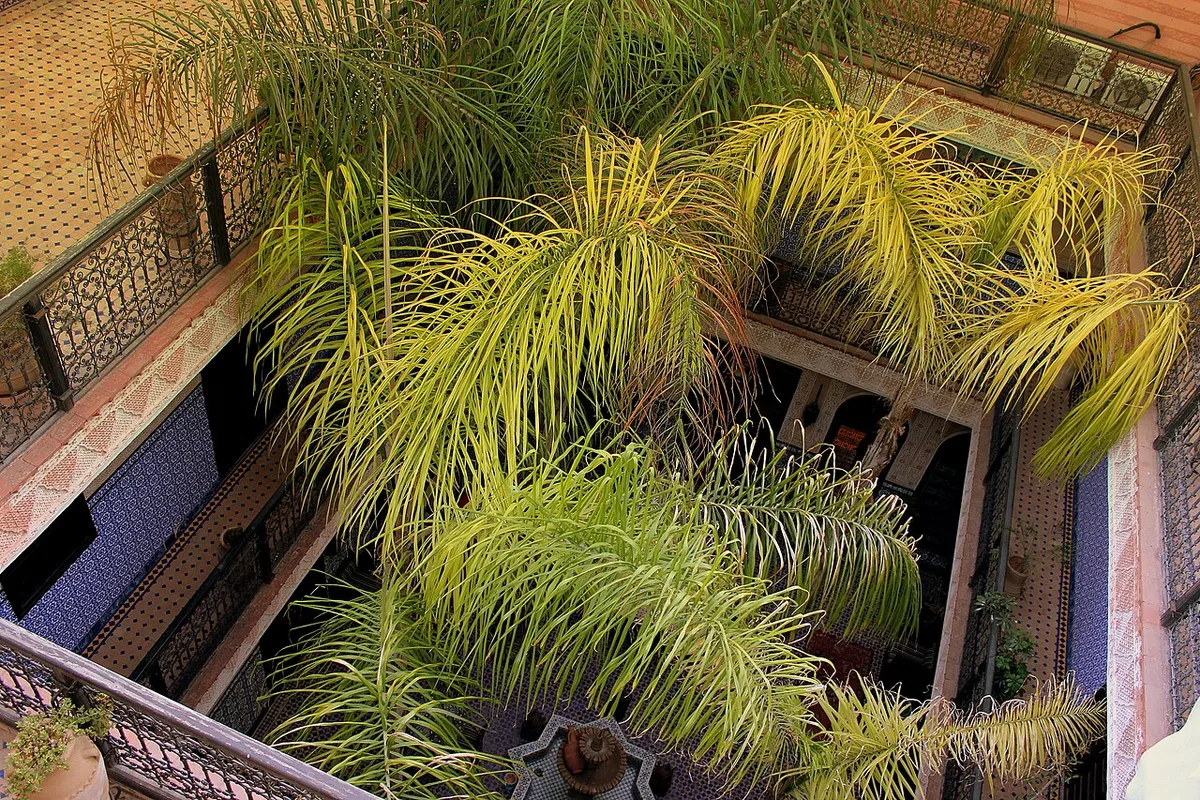
Medina cafes stack upward: mint tea and simple plates on rooftops above the square and the souks, priced by the view. At sunset, when the call to prayer and the stall smoke arrive together, the premium makes sense.
The riad kitchen
Riads run cooking classes that are the best food education in the city: shop the souk with the cook in the morning, make tagine and bread, eat what you made at midday. Book a day ahead.
The Gueliz cafe
The new town's French-Moroccan cafes and patisseries: coffee, croissants, and modern plates on avenue terraces, the daytime register of a city with two food cultures.
The rules that keep it safe and good
Choose stalls by their crowd: benches full of Moroccan families beat any tout's promise. Food cooked to order in front of you is the rule to keep.
Taxis: insist on the meter (compteur) or agree the fare before you get in. Medinas are walked; cars stop at the gates.
Bread is the utensil and is treated with respect: never waste it, and use your right hand for the shared dish.
Friday lunch is couscous, and the medina slows for prayers. Plan the big market morning for another day.
Mint tea is hospitality, not a transaction. Accept the first glass, drink it sweet unless you asked otherwise, and stay for the conversation.
The markets
Markets are where Marrakech actually shops and eats. Each one has a different job; go in the morning, when the food counters are at their busiest.
AJemaa el-Fnaa
The square itself: orange juice carts and dried fruit by day, then the full night market of grill stalls from dusk. It is a market, a theater, and a restaurant in one piece of ground, operating for close to a millennium.
Eat: Brochettes and harira at a busy stall, snail soup if you are brave, mint tea after.
BThe souks (Souk Semmarine and beyond)
The covered market arteries north of the square: textiles, metalwork, leather, and, threaded through them, olive stalls, spice pyramids, bakeries, and grill smoke. The shopping is the eating, in turns.
Eat: Olives and msemen as you go; the souk decides the menu.
CMellah spice market
The covered spice market in the old Jewish quarter: sacks and pyramids of cumin, paprika, ginger, and ras el hanout, plus olives, preserved lemons, and argan oil. The medina's pantry, and the best-smelling room in the city.
Eat: Taste the olives, buy ras el hanout and preserved lemons to take home.
DMarché Central, Gueliz
The new town's central market on Avenue Mohammed V: flowers at the front, then produce, fish, cheese, and meat, serving Gueliz's kitchens and cafes. Come in the morning.
Eat: Patisserie and coffee after a produce loop; this is the French-Moroccan pantry.
EBab El Khemis market
The Thursday flea market at the medina's north gate: antiques, junk, ceramics, and food stalls feeding the traders. The medina's least polished market and one of its most interesting mornings.
Eat: Whatever the traders are grilling; Thursday only, early.
Neighborhoods: 1 The Medina · 2 Gueliz · 3 Hivernage · 4 The Kasbah · 5 The Mellah · 6 The PalmeraieMarkets: A Jemaa el-Fnaa · B The souks (Souk Semmarine and beyond) · C Mellah spice market · D Marché Central, Gueliz · E Bab El Khemis marketPins mark neighborhood centers, so you can place each area against where you are staying. Taxi times under each neighborhood below are measured from Jemaa el-Fnaa.
1The Medina
The old city: the souks, the spice and olive stalls, riad restaurants hidden behind unmarked doors, and Jemaa el-Fnaa at its center. Almost everything traditional is here, and almost every alley hides a grill or a bakery oven.
From Jemaa el-Fnaa: Jemaa el-Fnaa is its heart; you are there
2Gueliz
The French new town west of the medina walls: wide avenues, cafes, patisseries, the Marché Central, and Marrakech's modern Moroccan and international dining rooms. Where the city eats when it is not eating traditionally.
From Jemaa el-Fnaa: 10 min by taxi
3Hivernage
The garden hotel district between the medina and Gueliz: grand hotels, upscale restaurants, and the city's polished night out. La Mamounia is its landmark.
From Jemaa el-Fnaa: 5 to 10 min by taxi
4The Kasbah
The medina's calmer south, around the Saadian Tombs and the royal palace quarter: mechoui spots, neighborhood bakeries, and riads on quieter lanes. The medina at half speed.
From Jemaa el-Fnaa: 10 min on foot
5The Mellah
The historic Jewish quarter beside the Kasbah, home to the spice market: pyramids of cumin, paprika, and ras el hanout, olive stalls, and some of the medina's best everyday food shopping.
From Jemaa el-Fnaa: 5 min on foot
6The Palmeraie
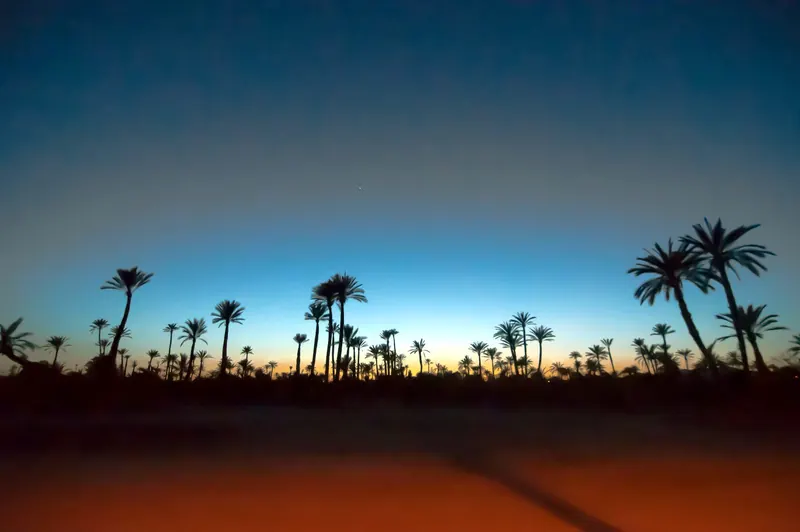
The palm grove northeast of the city: resort hotels and destination restaurants spread among the palms. A taxi ride and a different register, lawns and long lunches instead of lanes and stalls.
From Jemaa el-Fnaa: 15 min by taxi
The people behind the food
The names that explain how Marrakech cooks the way it does now.
Moha Fedal
Chef, Dar Moha
Chef Moha is Marrakech's television-famous interpreter of Moroccan gastronomy: at Dar Moha, in a riad by the medina, he re-plates the classics (pastilla, tanjia, couscous) with fine-dining precision while keeping their grammar intact.
Meryem Cherkaoui
Chef and teacher
Cherkaoui, long the executive chef at La Maison Arabe, is the city's great explainer of Moroccan technique: her cooking and teaching broke the cuisine's dishes down into learnable parts for a generation of visiting chefs and students.
The farnatchi
Keeper of the furnace
Every neighborhood hammam has its fire keeper, and into his ashes go the day's tanjia urns, dropped off in the morning and collected at dusk. He is the invisible chef of Marrakech's most local dish, timing other men's dinners by feel.
The mechoui masters of Mechoui Alley
Institution, the Medina
The roast-lamb shops by Jemaa el-Fnaa judge whole lambs by eye and sell them by the kilo through the day. Their craft is two decisions, when the lamb goes on and when it comes off, made perfectly for decades.
The stall keepers of Jemaa el-Fnaa
Institution, the square
Stall pitches on the square pass within families, and the keepers run a nightly theater of charcoal, speed, and memory for regulars' orders. The square's UNESCO-listed spectacle is, at its center, these benches and grills.
If you only eat ten things here
A tanjia ordered a day ahead, eaten with bread from the urn.
Brochettes and harira at a family-packed stall on Jemaa el-Fnaa at night.
Mechoui by weight in Mechoui Alley, skin first, with cumin salt.
A Friday couscous at midday.
Snail soup (babouche) from a square stall, sipped from the bowl.
Msemen with amlou and a pot of mint tea for breakfast.
A rooftop mint tea above the square at sunset.
A riad cooking class: souk in the morning, your own tagine at lunch.
Olives and spice tasting in the Mellah market.
Pastilla at a good riad restaurant, crisp shell, cinnamon sugar, no shortcuts.
Eating well here
tanjia
The clay urn and the beef dish cooked in it, in hammam ashes. Not a tagine; do not confuse the two in conversation.
tagine
The conical pot and everything cooked in it. Doubles as the word for the meal itself.
khobz
The round everyday bread: utensil, plate, and sauce vehicle in one.
atay
Mint tea, poured high. 'Atay bla sokkar' is tea without sugar.
bsaha
'To your health', said to anyone eating or drinking, and the reply to thanks for food. Use it constantly.
souk
The market, and by extension the whole commercial medina. Each trade has its own souk.
medina
The old walled city, as opposed to the ville nouvelle (Gueliz) outside the walls.
shukran
Thank you. With a hand on the heart it covers almost every social situation in the market.
Where should I stay to eat well in Marrakech?
A medina riad puts Jemaa el-Fnaa, the souks, and the spice market at walking distance, and riad kitchens are a cooking-class scene of their own. Gueliz is easier logistics with the modern dining rooms. Serious eaters stay in the medina and taxi to Gueliz.
Is the food at the Jemaa el-Fnaa stalls safe?
It is the city's most cooked-in-public food: choose stalls busy with Moroccan families, eat what is grilled or boiled in front of you, and skip pre-cooked items sitting out. Your riad can point at the storied stalls; stall keepers cook the same menu nightly for a local crowd.
What changes during Ramadan?
Daytime eating quiets down (cafes serve tourists, many local places close until sunset), and the city feasts after iftar: harira, dates, chebakia, and full tables late into the night. Visitors who eat discreetly by day and join the evening are well fed and well received.
How much should I tip?
Round up at stalls and small cafes; 5 to 10 percent at restaurants where service is not included. Small notes and coins matter more than percentages in the medina.
Can vegetarians eat well in Marrakech?
Yes: vegetable tagines, couscous with vegetables, harira made without meat on request, salads, olives, msemen, and the whole bread-and-dip repertoire. Say 'ana nabati' (I am vegetarian); kitchens understand the category even where menus do not list it.