Kingston waterfront, Jamaica. Photo via Wikimedia Commons.
How Kingston eats
Kingston is where Jamaica actually lives, and its food is the island's canon without the resort filter: jerk chicken and pork from the pan men and the Boston tradition behind them, ackee and saltfish at breakfast, curry goat, oxtail, and stew peas at the cookshops, patties from the bakery chains, and Blue Mountain coffee from the hills you can see from the table. The tourist Jamaica eats at the north coast; the city's own eats here.
The system is the cookshop and the corner: lunch is the main event, ordered by the box or the plate, the soup man and the porridge man hold the mornings, and Devon House's lawns hold the ice cream. Practical rule the locals give: use drivers and daylight for exploring, eat where the lunch queues form, and Kingston rewards the traveler who came for the culture with the food that built it.
Learn the foods
Start here, not with a restaurant. Learn what these foods are, where they come from, and how locals eat them, and the whole city opens up: every menu, every market, every street corner starts making sense.
Jerk chicken and pork
The canon: meat marinated in Scotch bonnet, allspice (pimento), thyme, and scallion, grilled slow over pimento wood in oil-drum pans, chopped with a cleaver, and served with festival (sweet fried dough) or bread, and sauce at your declared heat.
Where it comes from: Jerk was born in the mountains with the Maroons, who smoked wild pig with the island's spices to preserve and hide it, and the Arawak pit tradition beneath it. Boston Bay on the east coast claims the modern pan style; Kingston's pan men (the corner jerk pans at night) are its urban form, and the smoke is the city's evening perfume.
How to eat it: Quarter chicken or a half-pound of pork, chopped, with festival and extra sauce asked for at your level ('likkle' heat is still heat). Eat it at the pan or the shop's counter, with a cold Ting or Red Stripe.
Ackee and saltfish
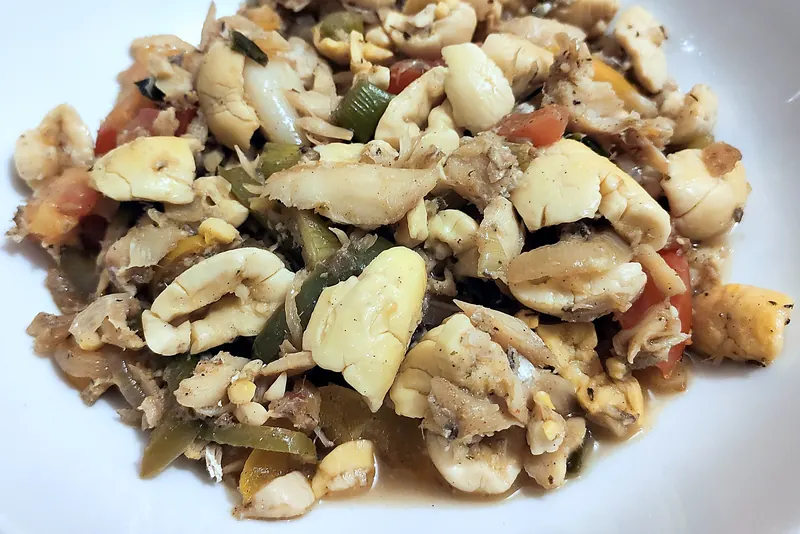
The national dish: ackee fruit (brought from West Africa) boiled and sautéed with flaked salt cod, onion, tomato, and Scotch bonnet until it looks, deceptively, like scrambled eggs. Breakfast's crown, with fried dumplings, callaloo, or breadfruit beside.
Where it comes from: The ackee is a beautiful paradox: a fruit that must open itself on the tree to be safe, cooked into the dish Jamaica chose as its emblem. Salt cod came as cheap trade food and stayed as luxury; together they are the island's history on a plate, eaten at Christmas and every ordinary morning alike.
How to eat it: For breakfast, with fried dumplings (Johnny cakes) and callaloo, or roast breadfruit in season. The pepper is present even when invisible; proceed with the respect the fruit's drama deserves.
Curry goat and oxtail
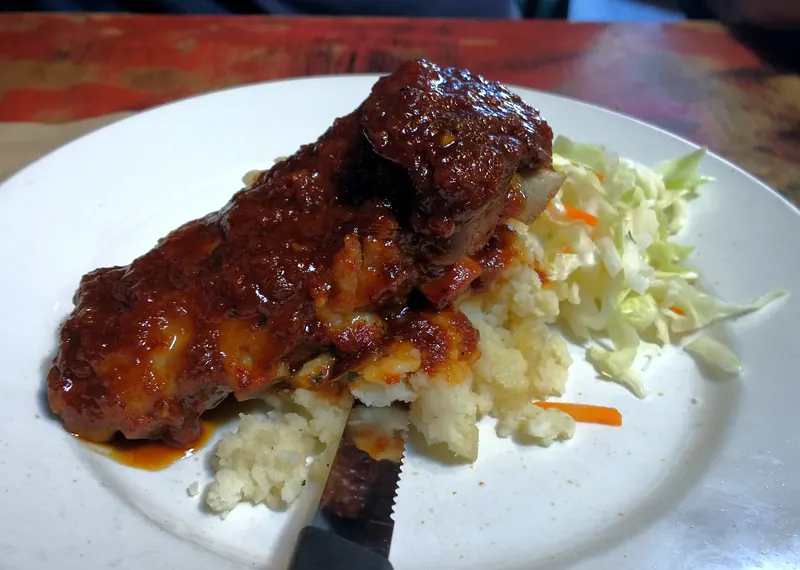
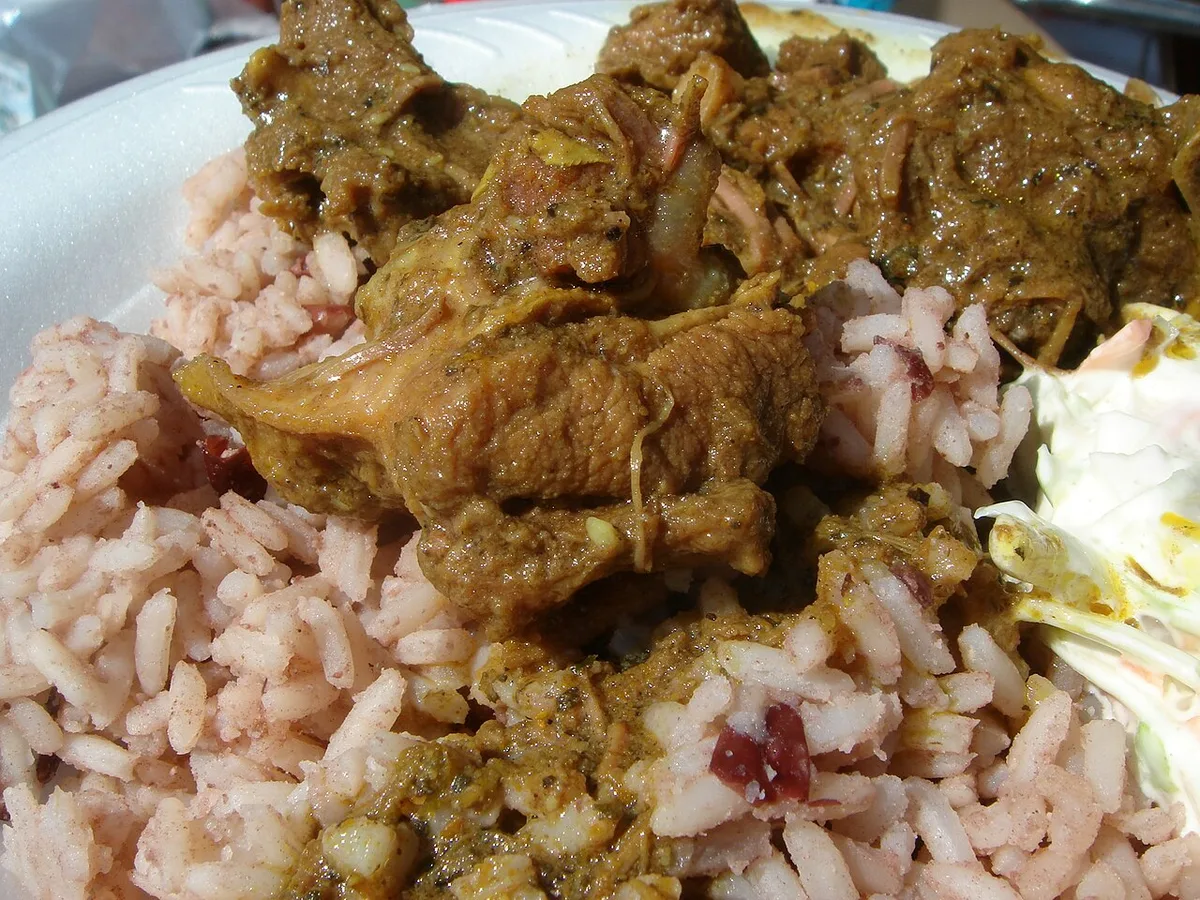
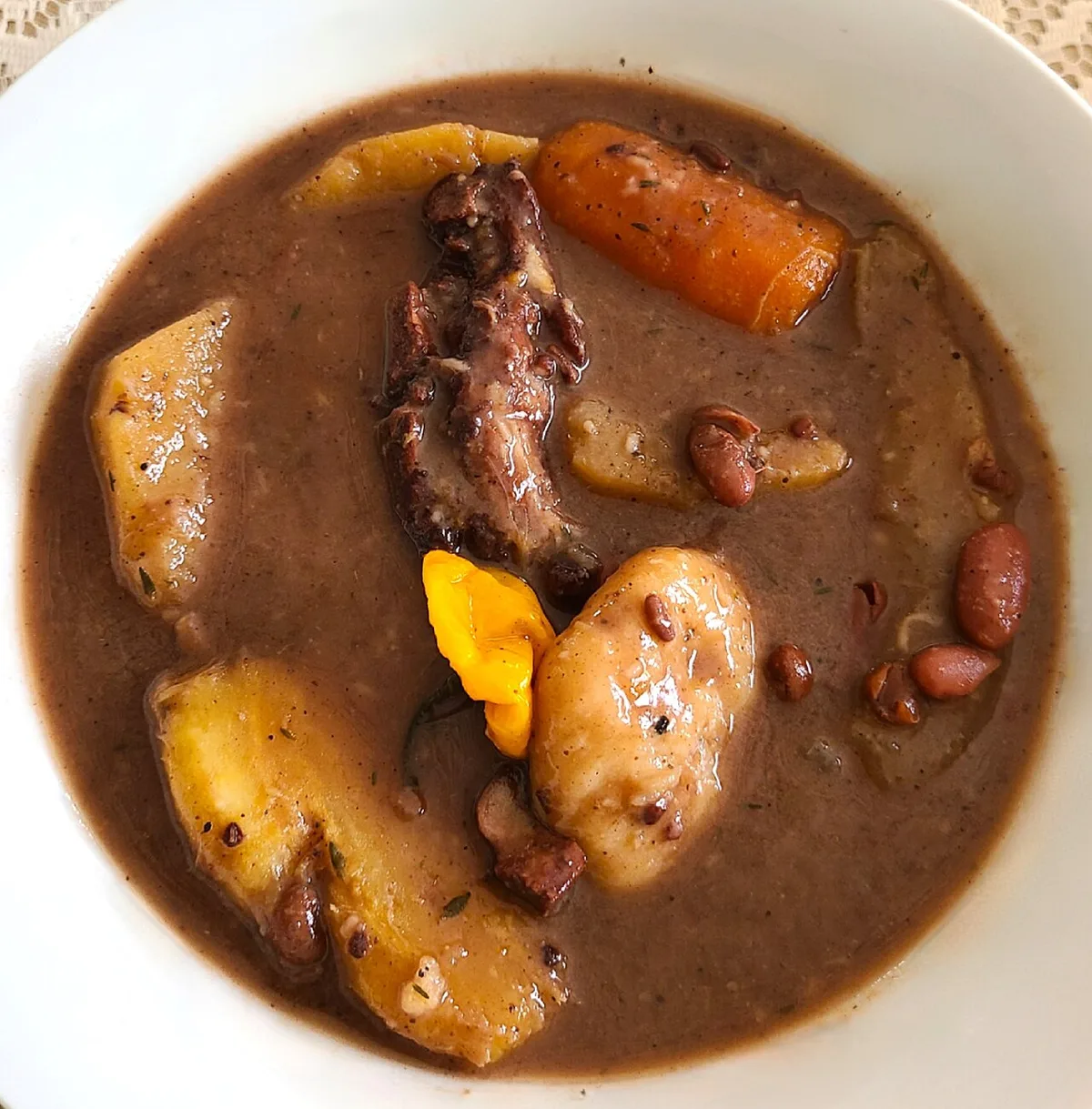
The cookshop's two glories: goat in Jamaican curry (turmeric-bright, Scotch bonnet-warm) cooked to surrender, and oxtail braised dark with butter beans. Both over rice and peas, both the measure of the kitchen.
Where it comes from: Indian Jamaicans brought the curry and the island made it its own (Jamaican curry powder, betapac curry the famous tin); goat became its festive meat. Oxtail is the Sunday and celebration plate, the braise coaxed for hours. A cookshop is reviewed by these two dishes and its gravy.
How to eat it: At lunch, 'small' or 'large' box, rice and peas under, gravy over everything. Goat on the bone is the point; the oxtail's richness wants the rice as its floor.
The patty and coco bread
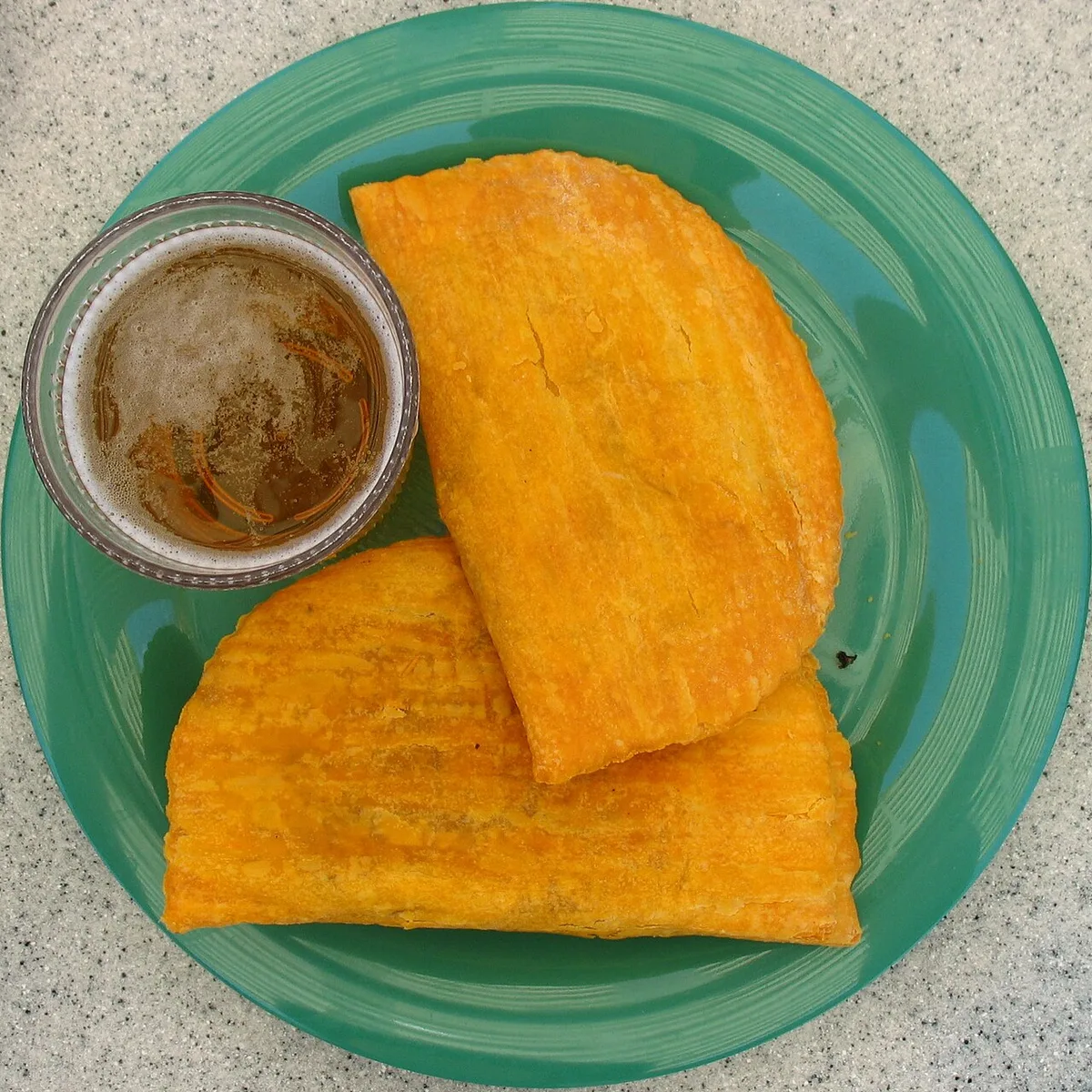
The golden, flaky, curry-tinted pastry around spiced beef (or chicken, veggie, shrimp), Jamaica's national snack; folded into coco bread it becomes a full lunch and a carb symphony nobody regrets.
Where it comes from: The patty marries the Cornish pasty's form to the island's spices, and the chains (Tastee, Juici) and independents serve it by the millions: school lunch, office lunch, bus lunch. The coco bread fold is Kingston's true sandwich, designed by hunger and perfected by habit.
How to eat it: Beef patty in coco bread, warm, with a box of sorrel or a Ting. The flake fall is significant; eat over the bag like a local.
Escovitch fish and festival
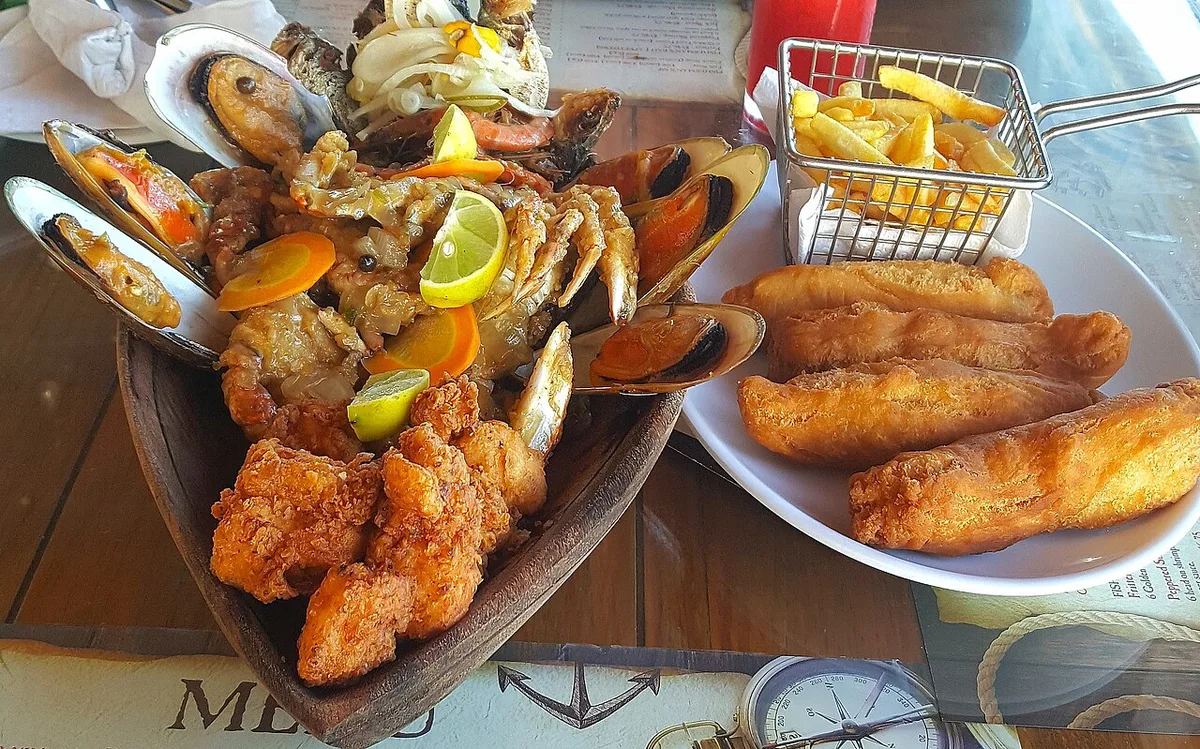
Whole fish fried crisp and dressed with pickled onions, carrots, and Scotch bonnet in vinegar, served at Port Royal and Hellshire's beach fry shops with festival and bammy (cassava cake). The harbor's great plate.
Where it comes from: Escovitch (from the Spanish escabeche, by way of the island's Jewish and Spanish layers) is frying plus pickling: the fish cooked hard, the pickle poured hot over it. Port Royal's restaurants (Gloria's the institution) serve it where the old wickedest city on earth stood, which seasons it further.
How to eat it: A whole snapper, the pickle spooned over at the table, festival for the sweetness against it. Hellshire's version comes with the beach; Port Royal's with the history. Both correct.
Mannish water, cow cod, and the soup men
The soups: mannish water (goat head soup, the celebration broth of peppers and green banana), cow cod soup, pepperpot, and red peas soup, sold by soup men and cookshops as tonics of legendary powers.
Where it comes from: Jamaica's soups are medicine, party fuel, and breakfast in one category: the soup man with his dutch pot is a Kingston institution, and the soups' reputations (aphrodisiac, hangover-curing, strength-giving) are testified to with the confidence of long experience. The green banana and spinners (dumplings) make them meals.
How to eat it: A cup from the soup man at lunch or the evening pan chicken corner; the heat and the Scotch bonnet clear the sinuses and the schedule.
Blue Mountain coffee and Devon House ice cream
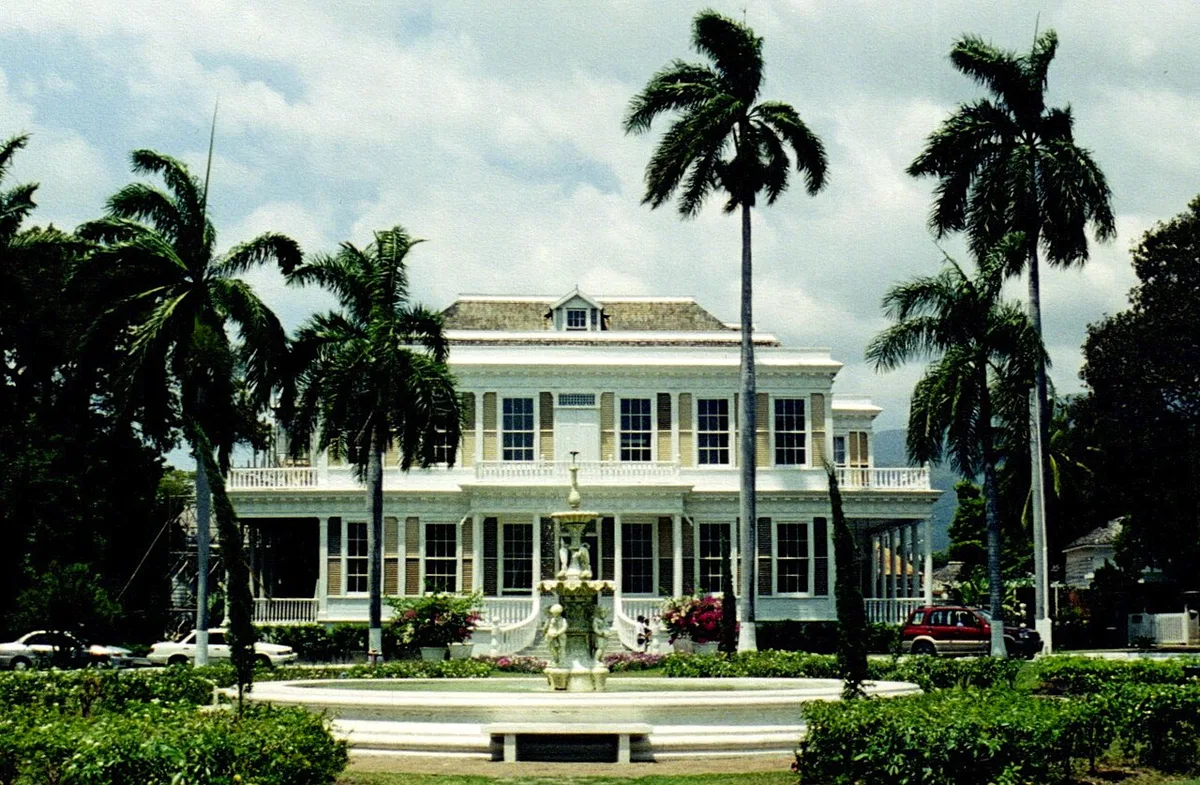
The two bookends: coffee from the misty peaks above the city (among the world's most prized beans, mild, sweet, and expensive because the mountain is small), and Devon House I-Scream, the mansion parlour whose rum-and-raisin and Devon stout flavors are the city's dessert canon.
Where it comes from: Blue Mountain coffee grows in the range that walls Kingston's north, its farms terraced at altitude, its harvest small and exported dearly; drinking it at source (the Irish Town cafes, the farm tours) is the connoisseur's pilgrimage. Devon House, the 1881 mansion of Jamaica's first Black millionaire, serves the ice cream as the cool end to the same city's day.
How to eat it: Coffee black at a mountain cafe above the heat, with the city spread below. Ice cream on the Devon House lawn in the afternoon, rum raisin first, like a Kingstonian.
Street food, decoded
Kingston's eating system is the cookshop, the pan man, and the patty shop: lunch boxes at noon, jerk smoke rising at the corners by evening, soup men and porridge men holding the mornings. It is a city's working food, priced for its people, and the traveler joins it by queueing where the queue is.
Use the daylight and the crowds: Coronation Market in the morning, the cookshops at lunch, Devon House in the afternoon, Port Royal for the fish, and a pan corner for the evening's jerk. Kingston does not hide its best food; it serves it at counters, and the directions are the smoke and the line.
The cookshop
The lunch institution: curry goat, oxtail, stew chicken, rice and peas by the box, soups by the cup. Chalked menu, fast line, gravy over. Kingston's true restaurant system.
The pan corner
The evening jerk pan: drum grill, cleaver work, smoke over the corner, chicken and pork chopped to order. Follow the smoke at dusk.
The patty shop
Tastee, Juici, and the independents: patties warm in the case, coco bread ready, the city's fastest honest lunch in your hand in a minute.
The beach fry shop
Hellshire and Port Royal: fish fried to order, escovitch pickle, festival and bammy, eaten at the water. The weekend format of the whole city.
Devon House
The mansion park: ice cream parlour, bakery, and restaurants in the gardens, the city's afternoon salon since the 1880s in spirit and now in fact.
The soup man
Dutch pot on the corner: mannish water, red peas, pepperpot by the cup, tonics of famous powers. The queue of believers is the review.
The rules that keep it safe and good
Heat is declared, not discovered: order sauce 'likkle' first. Scotch bonnet does not negotiate after the fact, and Ting is the extinguisher of choice.
Lunch is the main event and the cookshops sell out their stars by 2: oxtail waits for no meetings.
Explore by day with a known driver, and let the hotel or your host nominate the pan corner; the institution is citywide and the local pick is the point.
At the market, walk with the crowd and the porters' flow; Coronation is generous and vast, and a guide from the gate is money well placed.
Patty etiquette is minimal and sacred: warm, in coco bread if it is lunch, eaten over the bag. The last rule has saved many shirts.
The markets
Markets are where Kingston actually shops and eats. Each one has a different job; go in the morning, when the food counters are at their busiest.
ACoronation Market
The island's great produce market downtown ('Curonation' to its people): acres of stalls of yams, ackee, callaloo, Scotch bonnets, and the countryside's whole harvest, arriving by truck all night.
Eat: Fruit and juice as you walk; the market's own cookshops at its edges by noon.
BPapine Market
The eastern gateway market at the Blue Mountains' foot: produce, herbs, and the country buses' terminus, serving the university and the mountain road alike.
Eat: Porridge and soup from the market men; stock the mountain trip here.
CDevon House
The heritage mansion and its food park: the I-Scream parlour, a bakery, and restaurants in the gardens, Kingston's genteel afternoon inside the city's rush.
Eat: Rum raisin or Devon stout ice cream on the lawn; the bakery's patties for the road.
DPort Royal's Fish Restaurants
The old port's waterfront row (Gloria's the famous tables): escovitch fish, lobster in season, and festival, at the harbor mouth where the pirate city lies under the water.
Eat: A whole fish escovitch, pickle poured hot, the harbor for a view.
EHellshire Beach Fry Shops
The city's beach canteen across the harbor in Portmore: a row of fry shops serving fish, festival, and bammy to Kingston's weekend, music and sea included.
Eat: Fish fried to order at a shop with a queue, eaten at the water's edge.
Neighborhoods: 1 Downtown and the Waterfront · 2 New Kingston · 3 Half Way Tree and Constant Spring · 4 Port Royal · 5 Papine and the Road to the Blue MountainsMarkets: A Coronation Market · B Papine Market · C Devon House · D Port Royal's Fish Restaurants · E Hellshire Beach Fry ShopsPins mark neighborhood centers, so you can place each area against where you are staying. Taxi times under each neighborhood below are measured from the waterfront.
1Downtown and the Waterfront
The old commercial heart: Coronation Market's vast produce halls, the waterfront's promenade, and the cookshops feeding the city's offices and markets. Raw, busy, and best by day with the crowds.
From the waterfront: The waterfront is the reference point; you are there
2New Kingston
The business district of hotels and offices on Knutsford Boulevard: the city's lunch canteens, cafes, and evening restaurants, with Emancipation Park's green at its center. Kingston's polished table.
From the waterfront: 15 min by taxi
3Half Way Tree and Constant Spring
The transport hub and the road north: patty shops, cookshops, and the Devon House heritage park with its famous ice cream, in the middle of the city's daily flow.
From the waterfront: 10 min by taxi
4Port Royal
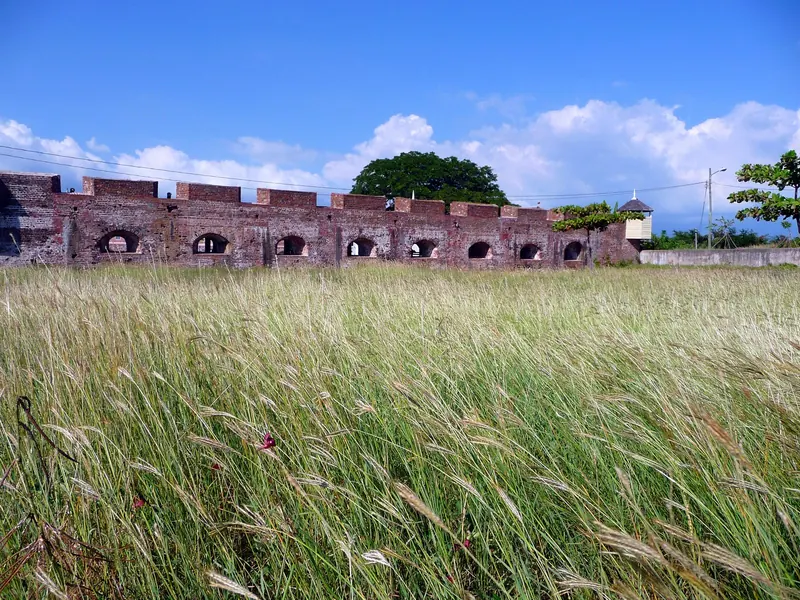
The old pirate port at the harbor's mouth: a quiet fishing village of seafood restaurants (Gloria's the famous name) serving escovitch fish and festival bread where Henry Morgan's city sank in 1692.
From the waterfront: 30 min by taxi along the Palisadoes
5Papine and the Road to the Blue Mountains
The market town at the city's east edge, gateway to the coffee country: Papine market's produce, the Irish Town and Newcastle road's cafes above the heat, and the mountains' cool at the end of the climb.
From the waterfront: 20 min by taxi
The people behind the food
The names that explain how Kingston cooks the way it does now.
Gloria's
Institution, Port Royal
The fish restaurant the city drives to: escovitch snapper and steamed fish at the old port since the 1970s, tables over the water, the drowned pirate city for a floor show. Kingston's seafood address, argued by no one.
Scotchies
Institution, jerk
The jerk house that carried the Boston Bay style to the cities (its Kingston garden on Chelsea Avenue): pimento-wood pits, festival, and the canon served under trees. The standard every other jerk is measured against in the capital.
Tastee and Juici
Institutions, the patty chains
The rival patty empires whose golden cases anchor every lunch hour: their beef patty (and the coco bread fold) is the city's common denominator, eaten by ministers and schoolchildren from the same warm case.
Devon House I-Scream
Institution, since 1983
The parlour in the mansion's park, ranked among the world's great ice cream shops by those who rank such things, on flavors (rum raisin, Devon stout, soursop) that taste of the island itself.
The Blue Mountain growers
Craft, the hills above
The coffee families of the misty range (the estates around Mavis Bank and Irish Town), farming some of the world's dearest beans on steep small plots. Their cafes above the city pour the harvest at its source.
If you only eat ten things here
Jerk from a pan corner at dusk, festival and Ting, heat declared small.
Ackee and saltfish breakfast with dumplings and callaloo.
Curry goat at a cookshop at 12:30, gravy over the rice and peas.
A patty in coco bread from the warm case, eaten over the bag.
Escovitch fish at Gloria's, Port Royal, harbor glittering.
Hellshire on a Sunday: fish, festival, bammy, the whole city swimming.
Blue Mountain coffee at a cafe above the heat in Irish Town.
Devon House rum raisin on the lawn, mansion behind.
A cup of mannish water from the soup man, spinners and all.
Coronation Market in the morning: the island arriving by the truckload.
Eating well here
jerk
The marinade, the method, and the smoke. 'Pan jerk' is the corner version; pimento wood is the authentic fuel.
ackee
The national fruit: only eaten ripe and opened by the tree itself. Never freelance it; the cooks know.
festival
The sweet fried dumpling stick served with jerk and fish. The sweetness is the heat's counterweight.
callaloo
The leafy green (amaranth) of the breakfast plate and the pepperpot. Jamaica's spinach, with its own name and pride.
Ting
The grapefruit soda, jerk's official extinguisher. A 'fluffy' (its bigger bottle) serves the table.
ital
The Rastafari natural diet (salt-free, often vegetarian): its cookshops serve the island's best vegetable plates.
wah gwaan
'What's going on': the greeting. The cookshop counter returns it warmly.
di bill, please
'The bill, please' in the vernacular of the counter: boxes are paid as served, no ceremony wasted.
Is Kingston safe for a food trip?
With the ordinary big-city method, yes: use known drivers or hotel taxis, explore by day, eat where the crowds are, and take local advice on specific spots as it is given. The food institutions in this guide (Devon House, Port Royal, New Kingston, the pan corners with their queues) are the city's own, busy and welcoming. Kingston is not a resort town and does not pretend to be; it is a working capital with a great table.
Where does jerk come from?
Boston Bay, on the Portland coast east, claims the modern style and its jerk centre is the pilgrimage; Kingston's pan men and shops (Scotchies' Kingston outpost among them) serve the canon faithfully in the capital. Eat both and the argument becomes a pleasure instead of a question.
What is rice and peas?
Rice cooked with red kidney beans (the 'peas'), coconut milk, thyme, and Scotch bonnet, the Sunday and plate foundation. Despite the name there are no green peas, and despite its simplicity the coconut's hand decides the kitchen's rank.
Breakfast like a Jamaican?
Ackee and saltfish with dumplings and callaloo at a cookshop or hotel, porridge (cornmeal, peanut, or plantain) from the porridge man, and Blue Mountain coffee. It is a full morning's architecture; lunch will be the next decision, not a need.
What about the music with the food?
Kingston is UNESCO's City of Music as well as this table's home: the cookshops run sound systems, the pan corners have the radio up, and the city's studios (Tuff Gong among them) are daytime visits between meals. The food and the music are the same cultural engine; take both at full volume.