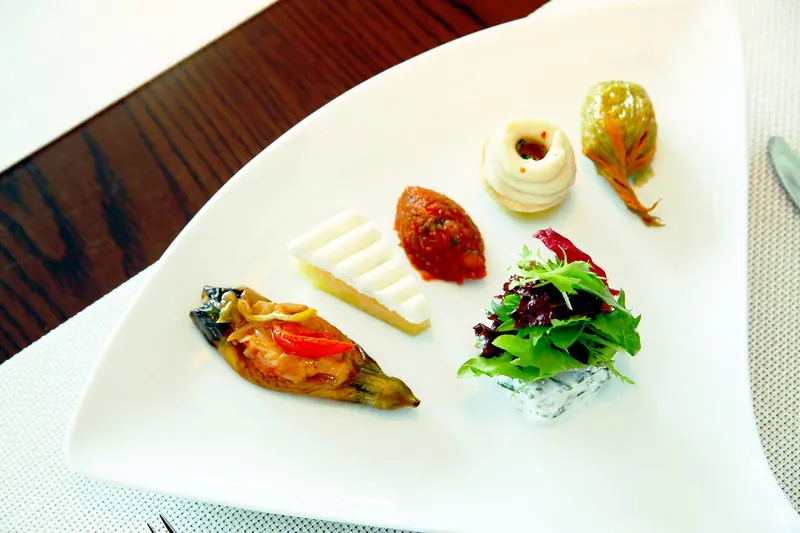
The Aegean table: olive oil, herbs, and the boyoz breakfast
The Izmir Clock Tower at Konak Square. Photo via Wikimedia Commons.
How Izmir eats
Izmir cooks the Aegean way: olive oil as a foundation, wild herbs (otlar) gathered and blanched by the plateful, seafood from the gulf, and a lightness the meat-heavy interior teases it for. This was Smyrna, the Levant's great port, and its kitchen keeps Greek, Jewish, and Turkish layers in plain sight: the boyoz is Sephardic, the söğüş is the bazaar's, and the evening belongs to the Kordon, the seafront promenade where the city takes its rakı and its sunset.
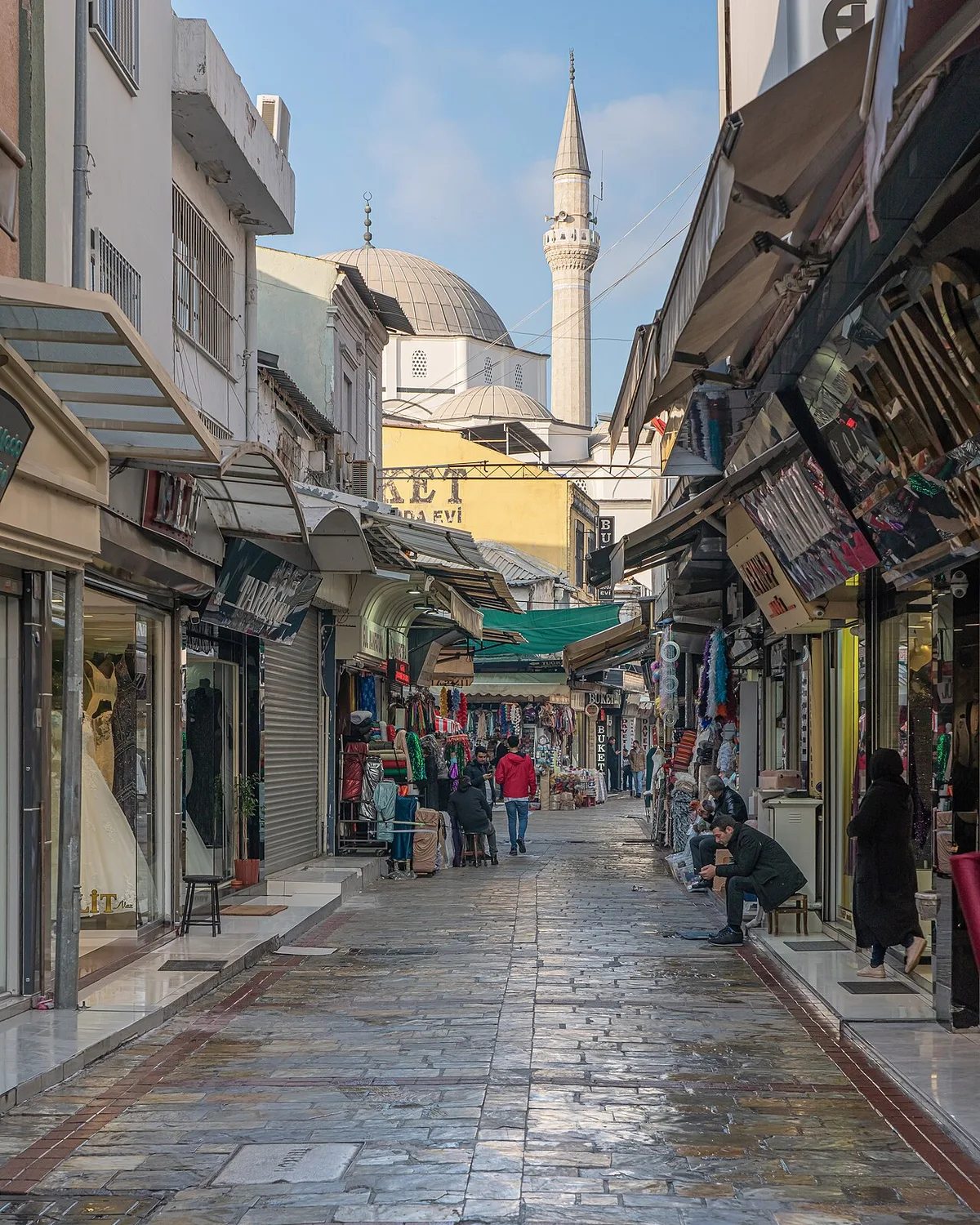
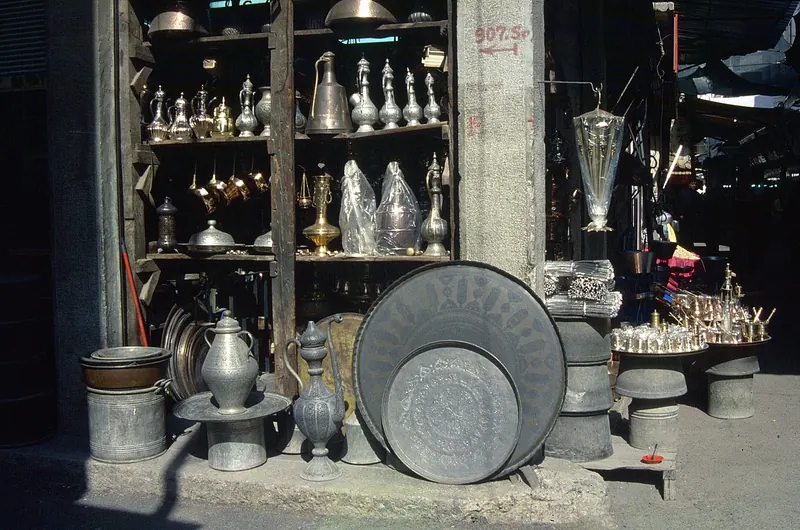
The bazaar, Kemeraltı, is the school: three centuries of lanes where the midye sellers, şambali makers, and coppersmiths all feed each other. Eat the boyoz at a tea garden in the morning, graze the bazaar at noon, and be on the Kordon when the light goes, and Izmir has made its whole argument.
Learn the foods
Start here, not with a restaurant. Learn what these foods are, where they come from, and how locals eat them, and the whole city opens up: every menu, every market, every street corner starts making sense.
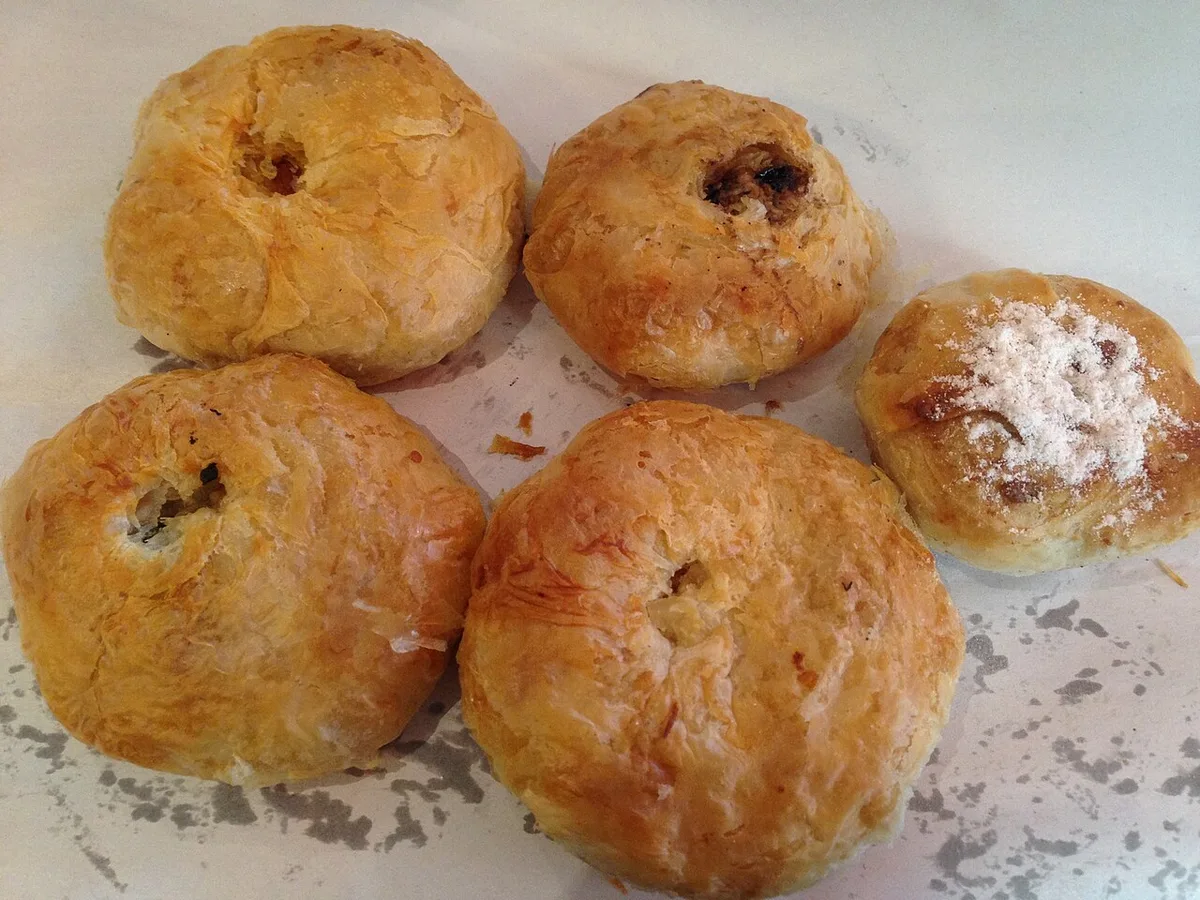
Boyoz
Izmir's Sephardic pastry: a round, oil-rich, flaky bun (plain, cheese, or spinach), eaten warm for breakfast with a boiled egg and çay. The city's edible emblem, baked since the community arrived in 1492.
Where it comes from: The Jews expelled from Spain brought the bollos that became boyoz, and Izmir's bakeries (the oil worked by hand, the dough rested just so) kept it as the city's own. An Izmirli abroad asks after two things: the Kordon, and whether the boyoz was warm.
How to eat it: At a tea garden or bakery counter in the morning, torn by hand, the egg peeled beside it. Two is breakfast; the third is homesickness insurance.
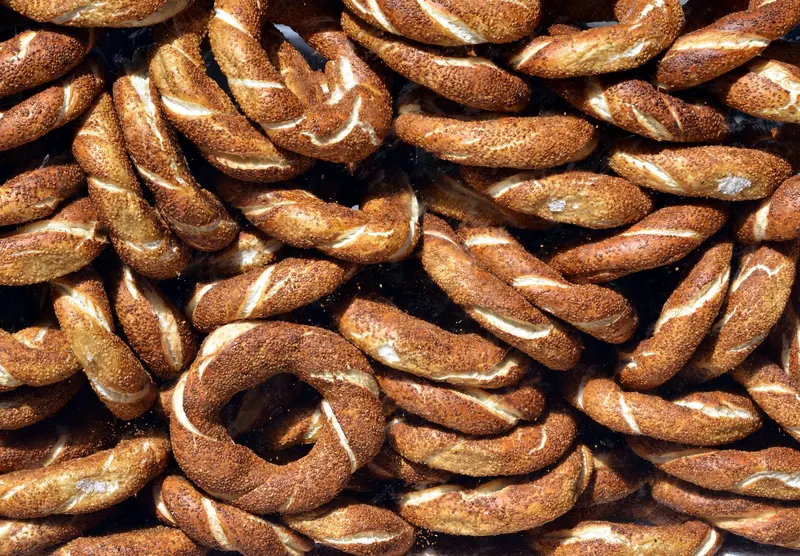
Gevrek
Izmir's simit, and do not call it simit here: the gevrek is dipped differently, baked crisper, and defended as a separate species. The word alone settles which city you are in.
Where it comes from: Istanbul boils its simit in pekmez water for a soft chew; Izmir's gevrek goes into the hot dip ('kızgın kazan') for a shattering crust. The two cities' ring war is older than the republic and entirely serious to both sides.
How to eat it: Warm from the cart or fırın, with Izmir tulum cheese. On the Karşıyaka ferry, feed the gulls the last piece as tribute.
Kumru
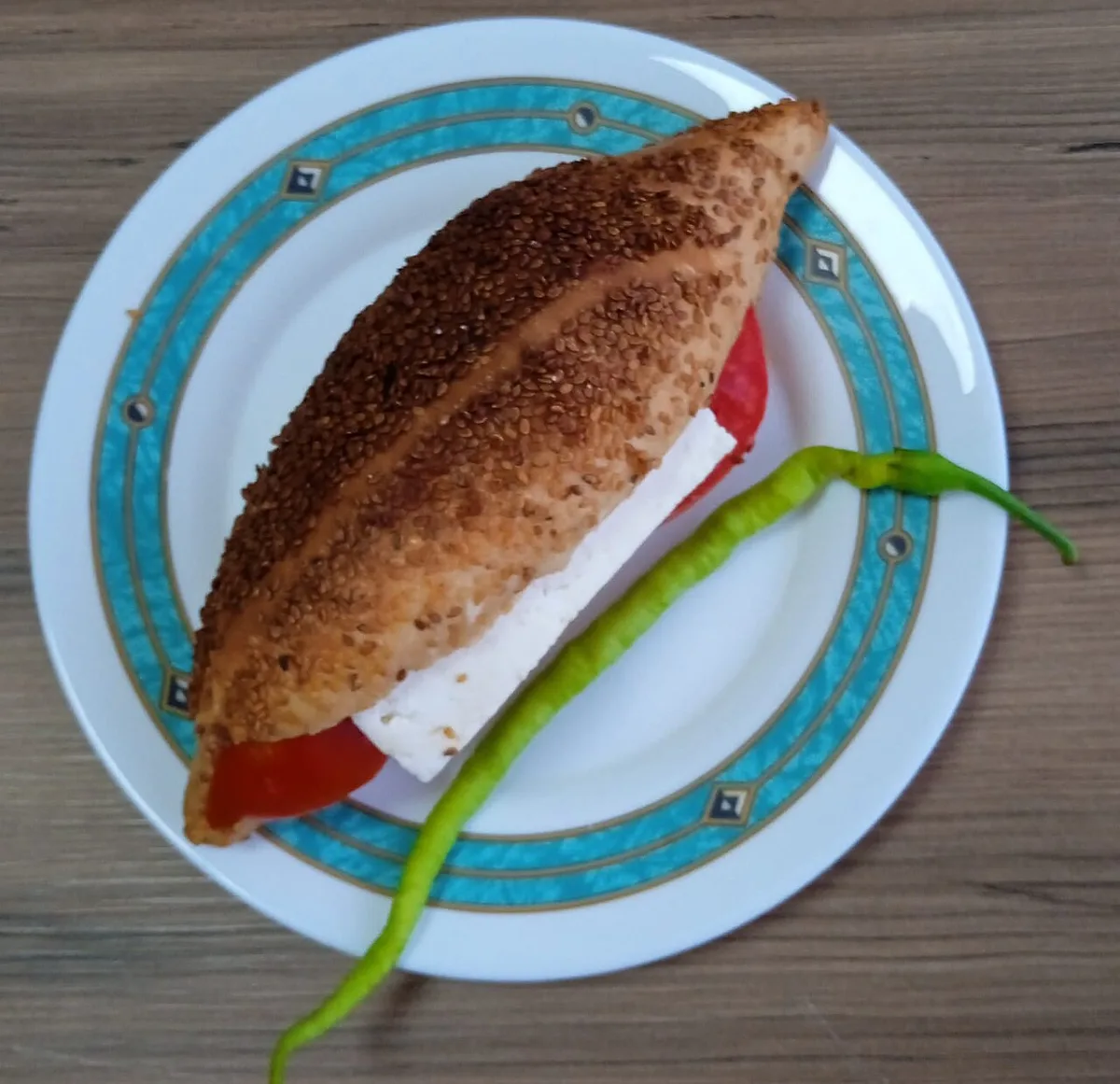
The Çeşme-born sandwich: a sesame loaf grilled with kaşar cheese, sucuk, salami, and tomato until the cheese runs, eaten at the beach towns and the city's kumru shops with pickles and ayran.
Where it comes from: Kumru ('dove', for the loaf's shape) was built in Çeşme as the beach day's lunch and conquered the Aegean: the grill-pressing is the craft, the cheese pull the review. Izmir city shops run the same presses all year.
How to eat it: Hot off the press, both hands, pickles mandatory. The 'yengen' (everything, doubled) is the local upgrade and a full meal.
Söğüş
Kemeraltı's famous wrap: cold sliced lamb's head meats and tongue with onion, parsley, tomato, and spices, rolled in lavash. The bazaar's breakfast of champions, eaten at the specialist's counter.
Where it comes from: Söğüş is offal craft raised to a named dish, and Izmir's söğüşçüs (Söğüşçü Aco the famous counter) slice to order with a surgeon's calm. Visitors hesitate; the queue of merchants does not.
How to eat it: At the counter, spicy ('acılı') if you dare, with ayran. It is a morning dish by tradition and a hangover's answer by reputation.
Izmir köfte
The city's meatballs: oval köfte baked or fried with potatoes, tomatoes, and peppers in their sauce, a home dish the lokantas serve with civic pride. Aegean comfort, unspiced and exact.
Where it comes from: Every Turkish region shapes its köfte; Izmir's, with its tomato-pepper bake and potato wedges in the same tray, is the Aegean's. It is the dish Izmirli grandmothers are judged by, which is the highest court in Turkish food.
How to eat it: At an esnaf lokantası with pilav, bread for the tray sauce. Lunch, again: Izmir's serious cooking is done by two.
The Aegean greens (otlar)
Wild and cultivated greens (radika, şevketibostan, deniz börülcesi the sea bean) blanched and dressed with olive oil and lemon, or cooked with lamb and egg-lemon. The table's green half, taken as seriously as the fish.
Where it comes from: Foraging is the Aegean's inheritance, Greek and Turkish at once: the hills and shores give dozens of edible plants, the markets sell them in bundles with names visitors cannot pronounce, and the oil (the region's own) does the rest.
How to eat it: Order whatever green the season names at a fish restaurant or meyhane, oil first, lemon over. Deniz börülcesi (salty, crunchy) is the beginner's delight.
Şambali
Kemeraltı's syrup cake: semolina and yogurt baked dense, soaked in syrup, sold in slabs from the famous bazaar shops, sometimes with kaymak or peanuts. The bazaar's sweet signature.
Where it comes from: Şambali (Şam tatlısı, the Damascus sweet) arrived with the Levant trade and settled in Hisarönü's lanes, where the şambalici has served it for generations. It is the taste Kemeraltı's shopkeepers take their breaks with.
How to eat it: A slab from the Hisarönü shop, warm if the tray is fresh, with çay from the han. Dense is correct; light şambali is a rumor.
Street food, decoded
Izmir grazes along a line: boyoz and gevrek at the morning bakeries, midye and söğüş inside Kemeraltı, and the Kordon's long evening where the food is the fish restaurants behind the grass and the çay in your hand on it. The city's street food is bazaar food: made for merchants, priced for repetition.
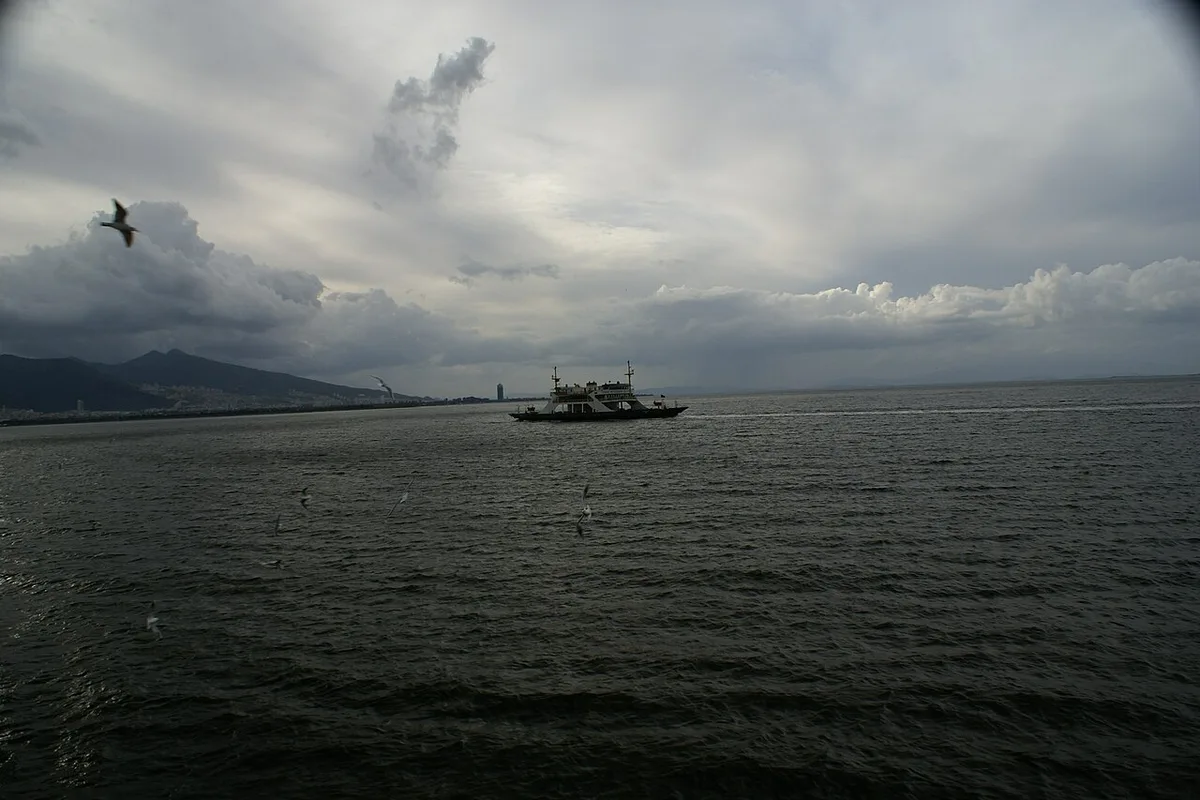
The ferry to Karşıyaka is the other institution, a floating tea break with the skyline as the menu's backdrop. Between the bazaar, the water, and the bay's far shore, Izmir's day of eating draws itself.
The boyoz breakfast
Bakery, warm boyoz, boiled egg, çay, a tea garden's plastic chair: the city's morning constitution, Sephardic pastry and all.
The Kemeraltı graze
Söğüş at the counter, midye at the corner, şambali in Hisarönü, tea in a han courtyard: the bazaar as a tasting menu with errands between courses.
The Kordon evening
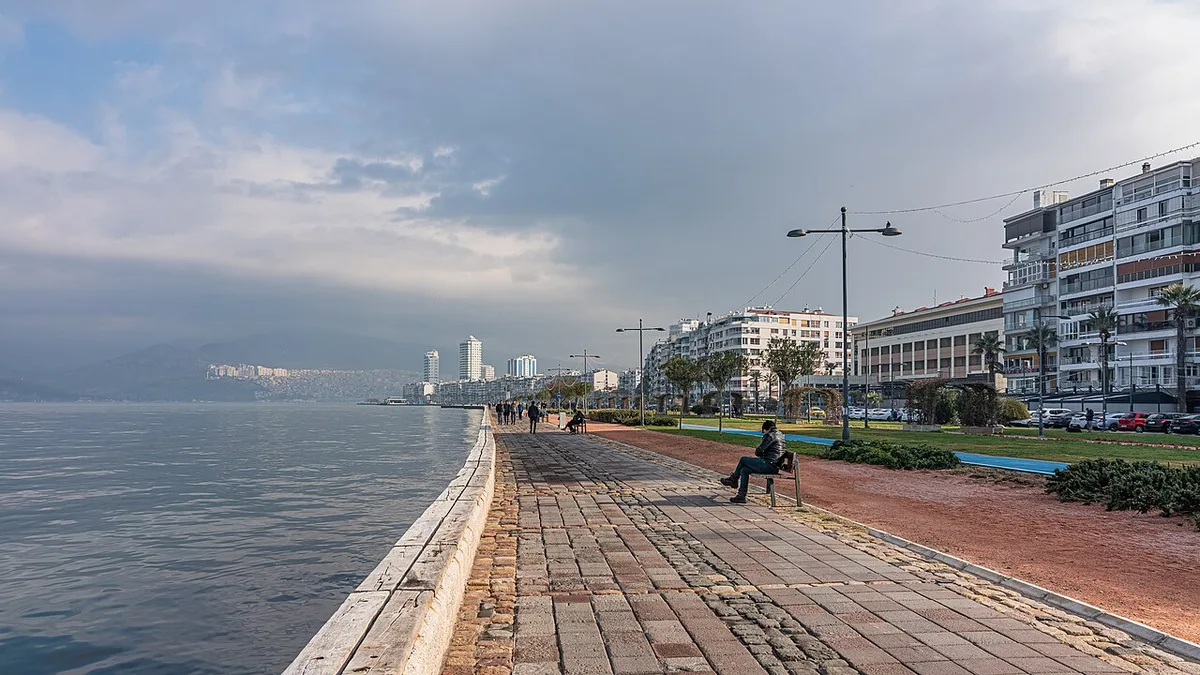
Sunset on the grass, then rakı-balık at the Alsancak fish houses behind it. The city's whole population attends; join at any point.
The meyhane of Alsancak
Aegean meze (the greens, the sea beans, the little fish) with rakı: the Levantine evening, lighter and greener than Istanbul's version.
The ferry tea
Karşıyaka crossing, çay and gevrek, gulls in attendance. Izmir's commute is a picnic with a destination.
The kumru press
Beach-town sandwich engineering at city shops: the press, the pull, the pickles. Lunch at full speed.
The rules that keep it safe and good
Say gevrek. The correction will be friendly and immediate, and the second offense is noted in the city's long memory.
Boyoz is a morning food from a bakery, not a cafe pastry: by noon the trays are a memory and the bakers are cleaning.
The bazaar's food lanes price honestly; the söğüş counter's queue is the review, and it moves faster than it looks.
On the Kordon at sunset you may sit on the grass with tea like everyone; the restaurants behind expect you when the light finishes.
Karşıyaka considers itself Izmir proper. Compliment its market and its shore while there; the ferry back forgives the rest.
The markets
Markets are where Izmir actually shops and eats. Each one has a different job; go in the morning, when the food counters are at their busiest.
AKemeraltı Bazaar
Three centuries of covered lanes, hans, and workshops: the city's pantry, tailor, and lunch in one. Havra Sokağı (Synagogue Street) runs its food heart: produce, pickles, and the counters the merchants use.
Eat: The full graze: söğüş, midye, şambali, han tea, in that order or its reverse.
BHavra Sokağı
The old Jewish quarter's market street inside Kemeraltı: fish, produce, and food shops under the synagogues' walls, the bazaar's most edible hundred meters.
Eat: Whatever the fishmongers shout about; snacks from the lane's counters.
CBostanlı Market
The famous Wednesday market across the bay: Aegean produce, herbs in spring, cheeses and olives, the whole of Karşıyaka shopping with intent.
Eat: Herb bundles and cheese as you go; lunch in Bostanlı's food streets after.
DKarşıyaka Çarşı
The far shore's shopping street down to the ferry: bakeries, fish restaurants, and the market lanes of the proudest district in Izmir.
Eat: A fish lunch by the water; boyoz if the morning allows a second.
EAlsancak's Fish Row
The restaurants along and behind the Kordon in Alsancak: the city's seafood showcase, rakı-balık at sunset since the Levantine years.
Eat: The day's gulf fish, greens first, rakı as the sun performs.
Neighborhoods: 1 Konak and Kemeraltı · 2 Alsancak and the Kordon · 3 Karşıyaka and Bostanlı · 4 Asansör and the Old Jewish Quarter · 5 BornovaMarkets: A Kemeraltı Bazaar · B Havra Sokağı · C Bostanlı Market · D Karşıyaka Çarşı · E Alsancak's Fish RowPins mark neighborhood centers, so you can place each area against where you are staying. Taxi times under each neighborhood below are measured from Konak Square.
1Konak and Kemeraltı
The Clock Tower's square and the great bazaar behind it: synagogues' street, hans, söğüş stalls, şambali sellers, and the city's working lunch. Izmir's heart and stomach in one district.
From Konak Square: Konak Square and its Clock Tower are the reference; you are there
2Alsancak and the Kordon
The grand seafront and the streets behind it: fish restaurants, meyhanes, the boyoz bakeries, and the grass where the whole city sits at sunset with tea and beer.
From Konak Square: 20 min on foot along the water
3Karşıyaka and Bostanlı
Across the bay (the ferry is the point): the local shore of markets, fish restaurants, and the famous Wednesday market at Bostanlı. Izmir eating for Izmir, with a view back at the city.
From Konak Square: 15 min by ferry
4Asansör and the Old Jewish Quarter
The historic elevator tower (1907) up to the Dario Moreno street cafes: old Smyrna's lanes, synagogue quarter nearby, and coffee with the bay spread below.
From Konak Square: 10 min on foot
5Bornova
The university district inland: student canteens, Levantine mansions turned cafes, and the everyday eating of the young city at young prices.
From Konak Square: 25 min by metro
The people behind the food
The names that explain how Izmir cooks the way it does now.
Alsancak Dostlar Fırını
Institution, the boyoz bakery
The bakery Izmir names when boyoz is mentioned: trays out of the oven all morning, the egg pot beside the register, a queue of the city's breakfast. The Sephardic craft in daily production.
Söğüşçü Aco
Institution, Kemeraltı
The bazaar's famous söğüş counter, slicing head meats to order with a surgeon's calm for the merchants' breakfast. The wrap that turns visitors into regulars in one sitting.
Meşhur Hisarönü Şambalicisi
Institution, Kemeraltı
The şambali shop of the Hisarönü lanes, serving the syrup slab to generations of bazaar breaks. Kemeraltı measures its afternoons in these trays.
The Çeşme kumru presses
Craft, Çeşme
The sandwich masters of the peninsula who built the kumru and shipped it across the Aegean: their beach-town presses are the original, and the city's shops are the colonies.
The Kordon's tea and simit sellers
Craft, the seafront
The vendors who provision the sunset: çay by the tray, gevrek by the ring, the whole promenade their dining room. Izmir's evening staff, unhurried and exact.
If you only eat ten things here
Boyoz and a boiled egg at a tea garden, 8 a.m., warm trays.
A gevrek on the Karşıyaka ferry, gulls paid, word said correctly.
Söğüş at the Kemeraltı counter, acılı, standing with the merchants.
Şambali in Hisarönü, slab and çay, bazaar roaring around.
The spring herb market: otlar in bundles, names learned by pointing.
Rakı-balık in Alsancak as the Kordon light goes.
A kumru pressed in Çeşme, pickles, ayran, beach after.
Asansör at dusk: coffee above the bay, Dario Moreno's street below.
Bostanlı on Wednesday: the market, then the fish lunch.
Izmir köfte at an esnaf lokantası, bread in the tray sauce.
Eating well here
gevrek
The ring. In Izmir there is no simit; there is gevrek, and the difference is the crust and the city.
boyoz
The Sephardic breakfast bun. 'Börek' is the mainland cousin; boyoz is Izmir's own word and pastry.
kumru
'Dove': the grilled cheese-and-sucuk sandwich, named for its loaf. Pressed is the only state.
söğüş
The cold-cut wrap of the bazaar. Order 'acılı' for the heat, ayran for the landing.
otlar
'The herbs': the wild greens of the Aegean table. In spring the word is a menu by itself.
deniz börülcesi
Sea beans: salty, crunchy samphire, the meyhane's green jewel. Begin here.
afiyet olsun
'May it be health': said at every Izmir table, usually by the person handing you more food.
hesap, lütfen
'The bill, please': on the Kordon it can wait until the sun finishes. It always does.
How is Izmir's food different from Istanbul's?
Lighter, greener, oil-based: the Aegean table runs on olive oil, herbs, and the sea, where Istanbul runs the full imperial range. Izmir also eats earlier and takes its evenings on the water. Both cities consider the comparison settled in their own favor.
What is the Çeşme and Alaçatı trip?
An hour west: Çeşme for the kumru at source and the castle town's fish, Alaçatı for the stone-house restaurant scene and herb festival in spring. Go for lunch, swim, and return for the Kordon sunset; the peninsula is Izmir's weekend self.
Gevrek or simit: what do I say?
In Izmir, gevrek, always. The word is a small loyalty test the city administers kindly, usually while handing you the crispest ring of your trip.
When is the herb season?
Spring: the markets fill with the wild greens, Alaçatı holds its herb festival (Ocak-Mart season into April), and the Aegean table is at its green best. Summer belongs to the sea beans, figs, and the gulf's fish.
Ephesus: eat in Selçuk or return to Izmir?
Selçuk eats well at lunch (çöp şiş is its own specialty, tiny skewers by the station), so graze there after the ruins and dine back on the Kordon. The train makes the decision painless.