Two continents, one table: kebab, meze, and the Bosphorus
The Blue Mosque (Sultanahmet Mosque), Istanbul. Photo via Wikimedia Commons.
How Istanbul eats
Istanbul is not one food city but a summit of them: the seat of Ottoman palace cuisine, the home of the meyhane (the rakı-and-meze tavern), and the place every Turkish region sends its best kebab house as an embassy. Add the street layer (fish sandwiches under the bridge, mussels on every corner, simit and tea on the ferries) and a breakfast culture that treats the morning meal as a banquet, and the city out-eats capitals twice its fame.
The geography is the menu. Europe holds the bazaars, the old city, and Beyoğlu's meyhane lanes; Asia holds Kadıköy, where Istanbul eats for itself. The ferry between them, tea in hand, is not transport; it is the city's favorite restaurant with a moving view.
Learn the foods
Start here, not with a restaurant. Learn what these foods are, where they come from, and how locals eat them, and the whole city opens up: every menu, every market, every street corner starts making sense.
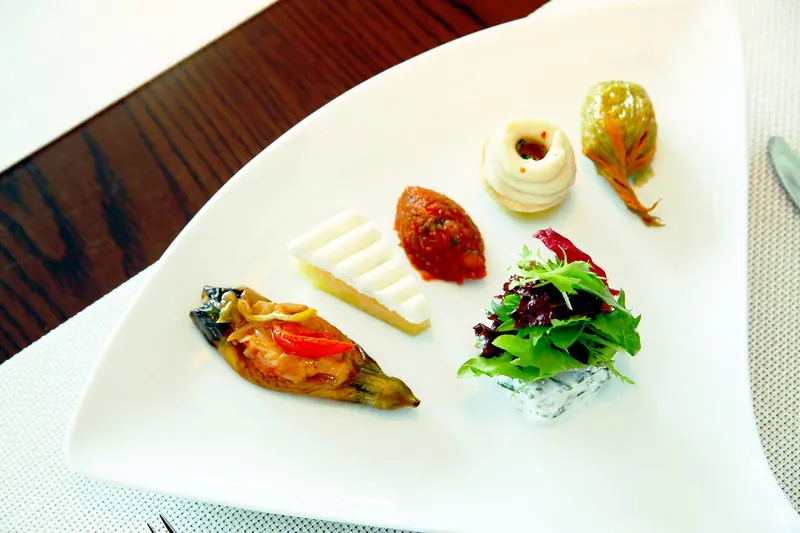
The meyhane meze spread
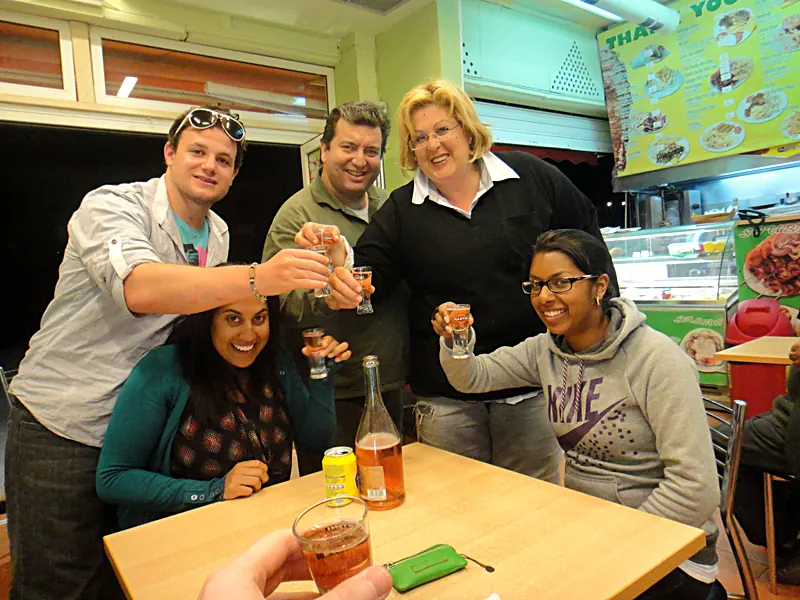
The rakı table's opening hour: white cheese and melon, haydari, stuffed vine leaves, calamari, and a dozen small plates arriving as the anise spirit turns cloudy with water and ice. Dinner in Istanbul starts here and often ends here too.
Where it comes from: The meyhane is Istanbul's gift to eating: a tavern format built by the city's Greek, Armenian, and Jewish hosts over centuries, where the food serves the rakı and the conversation, fasıl music in the old rooms, and the fish course comes when the table is ready, not before.
How to eat it: Order rakı by the glass or small bottle ('yirmilik'), meze in waves, and the hot starters (kalammar, karides) before any main. The melon-and-white-cheese pairing is not optional; it is the key signature.
Kebabs of the regions
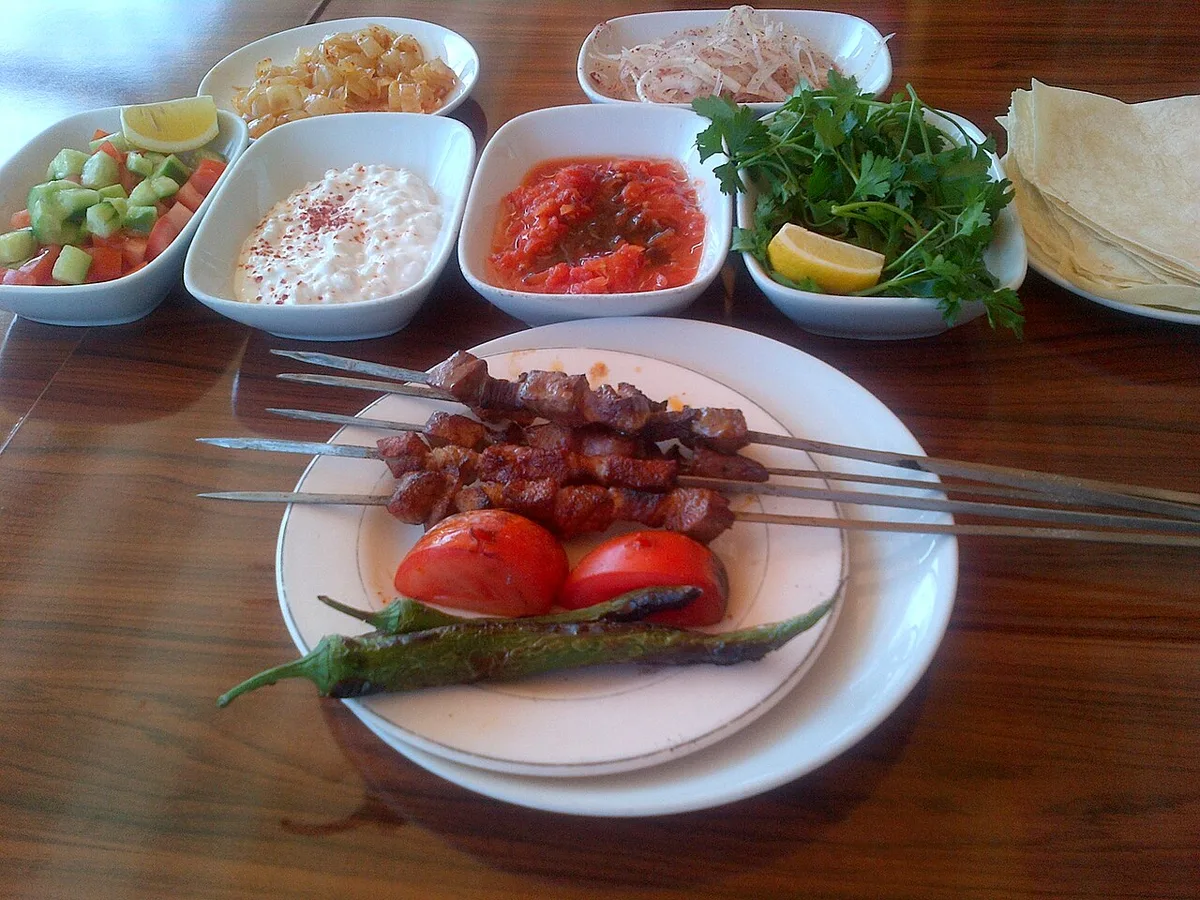
Istanbul hosts every region's fire: Adana's minced heat, Urfa's milder twin, Gaziantep's pistachio kebab, testi (pottery) kebab from Cappadocia, döner sliced to order. The city is the kebab's United Nations, and the embassies compete.
Where it comes from: Internal migration built these houses: masters moved to the capital and cooked home for homesick millions. The great kebab salons (in Fatih, Aksakal, and every district) are judged by their own region's expatriates, the harshest critics alive.
How to eat it: At a proper kebab salon, the lavash, ezme salad, and grilled tomatoes are part of the order, and ayran is the drink. Hands are correct equipment; the wrap fold is yours to master.
Pide and lahmacun
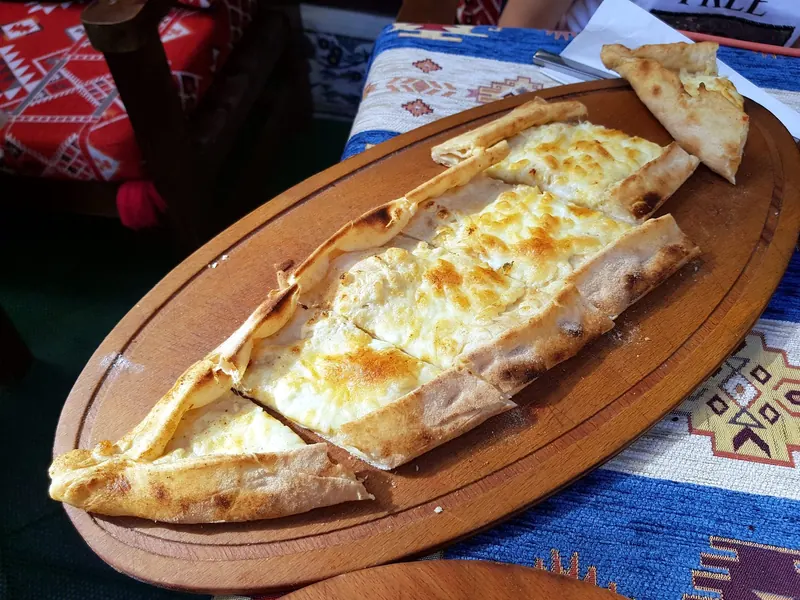
The Black Sea's boat-shaped pide (cheese, mince, or egg pooling in the middle) and lahmacun, the cracker-thin spiced flatbread you roll with parsley, onion, and lemon. Lunch, perfected.
Where it comes from: Pide belongs to the Black Sea towns (Bafra, Trabzon) whose bakers colonized Istanbul's lunch hours; lahmacun traveled from the southeast. Both are wood-oven food, eaten in minutes, at prices that keep them democratic.
How to eat it: Pide: tear the crust, drag it through the middle. Lahmacun: pile the greens, squeeze lemon, roll, eat by hand, order the second immediately.
Balık ekmek
The fish sandwich of Eminönü: mackerel grilled on the boats (or the stands beside them), stuffed in bread with onion and lettuce, eaten on the quay with pickles and şalgam from the carts.
Where it comes from: The rocking grill boats are Istanbul's postcard, and the sandwich survives its own fame because the formula is unkillable: hot fish, raw onion, bread, the Bosphorus. The stands on the Karaköy side serve the same fish with shorter queues.
How to eat it: On the waterfront, standing, with a cup of turşu suyu (pickle juice) from the cart. Any version plated indoors has missed the point.
Simit
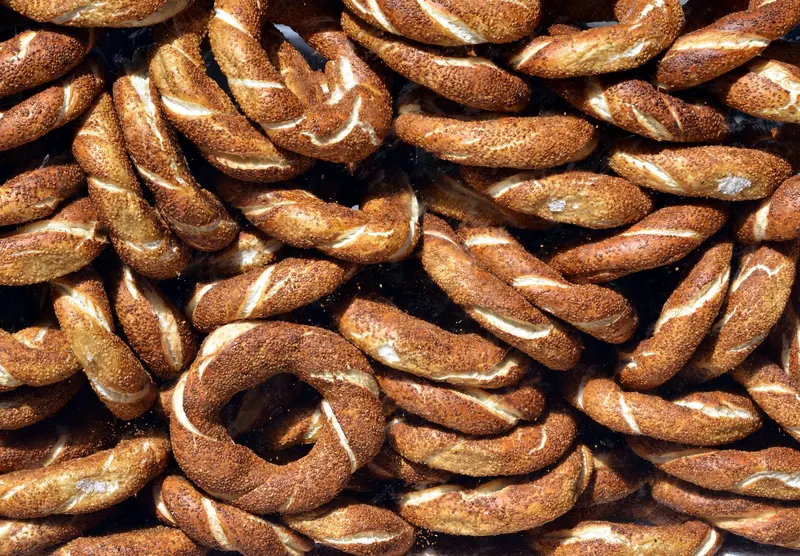
The sesame ring sold from red carts on every corner and ferry: Istanbul's simit is molasses-dipped and crusted thick, eaten plain, with cheese, or torn for the seagulls on the crossing.
Where it comes from: Four centuries of street breakfast: the simitçi's cart is the city's oldest franchise, and the gevrek-versus-simit wars with Izmir are fought over exactly this ring. On the ferry, a simit and a çay is Istanbul's smallest complete meal.
How to eat it: Warm if the cart allows, with a triangle of processed cheese ('üçgen peynir') like a schoolkid, tea in the other hand.
Baklava, the Güllüoğlu standard
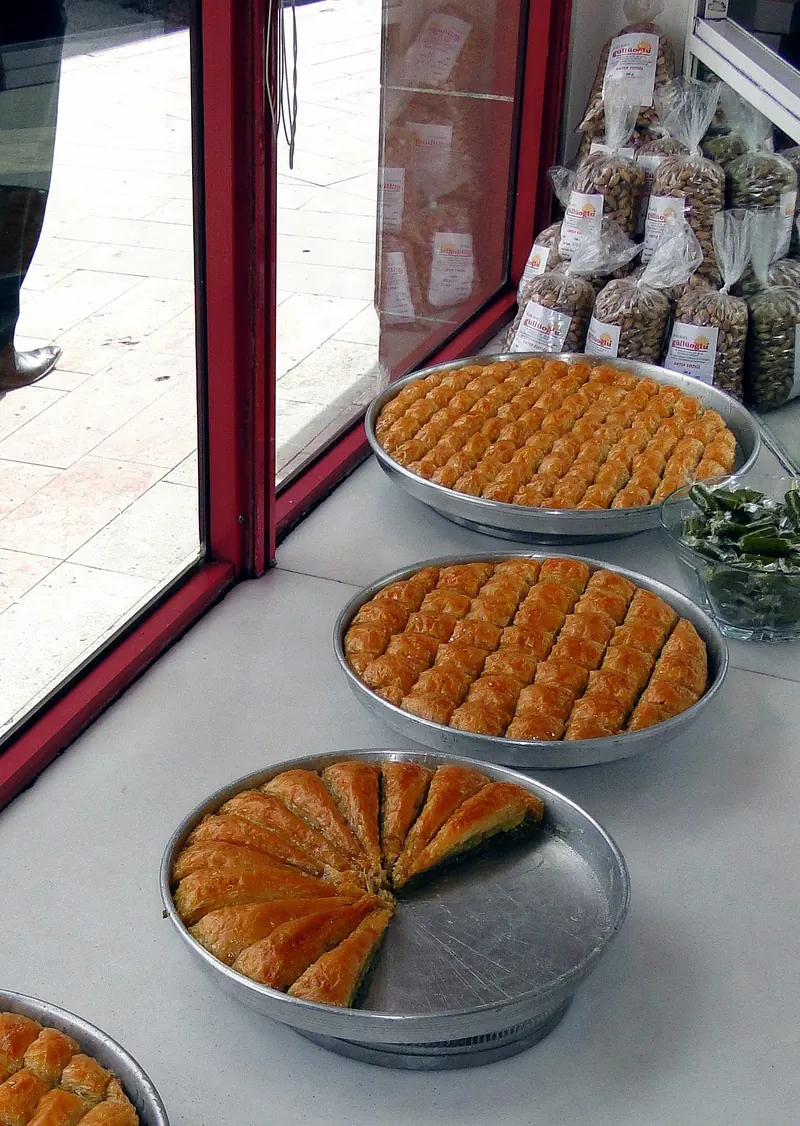
Forty layers of phyllo, Gaziantep pistachios, and syrup at the edge of too much: Istanbul's famous house, Karaköy Güllüoğlu, has set the city's baklava bar since 1949 (the family craft far older).
Where it comes from: Baklava's capital is Gaziantep, but its Istanbul throne room is Karaköy, where the Güllüoğlu family (making baklava since the 1820s) built the shop every other Istanbul baklavacı is measured against. The pistachios arrive from Antep; the standard is enforced daily.
How to eat it: Upside down on the fork (the crisp top stays crisp, the syrup meets the tongue first), with kaymak if offered, tea beside, never coffee. One piece is a taste; the order is by the portion.
Turkish coffee
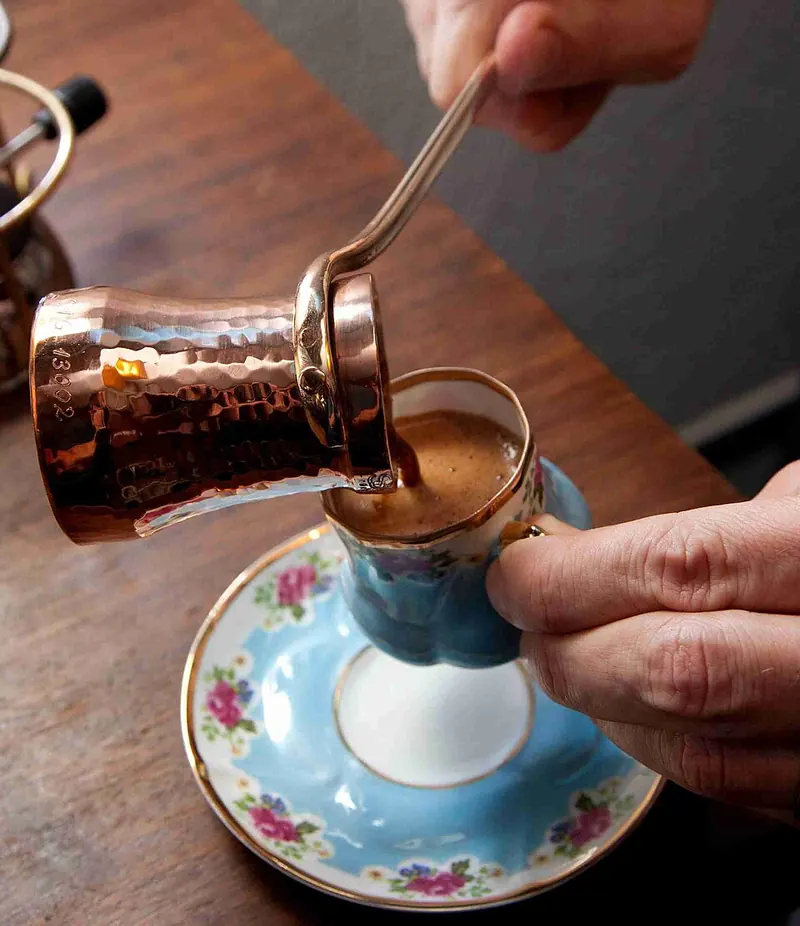
Slow coffee, foamed in a copper cezve, served with a lokum and a glass of water, the grounds left to settle and, traditionally, to tell fortunes. UNESCO lists the culture, not just the drink.
Where it comes from: Istanbul gave coffee to the world (the first coffeehouses opened here in the 1550s) and kept the ritual exact: order by sweetness ('sade' none, 'orta' medium, 'şekerli' sweet), because sugar cooks with it and cannot be added after.
How to eat it: Wait a minute for the grounds, sip from the foam side, and do not stir. The water is for before, the lokum for after, the fortune is your own business.
Street food, decoded
Istanbul's street food is an all-day system: simit carts at dawn, midye dolma (stuffed mussels) at every hour, fish sandwiches at the bridge, kokoreç and kebab wraps at midnight. The rule that organizes it is appetite without ceremony: the city eats standing, walking, and on ferries, and the formality budget is spent later, at the meyhane.
Two institutions teach the rest: the esnaf lokantası, the tradesman's lunch restaurant where the day's stews and grills are ready at noon and gone by three, and the kahvaltı spread, which turns breakfast into the day's longest social meal. Master lunch and breakfast, and Istanbul's dinners (meyhane or kebab salon) explain themselves.
The meyhane
Rakı, meze waves, hot starters, fish: Nevizade and Çiçek Pasajı in Beyoğlu, Kadıköy's lanes, and the Bosphorus villages run the classic rooms. Book Friday and Saturday; the table is the evening.
The esnaf lokantası
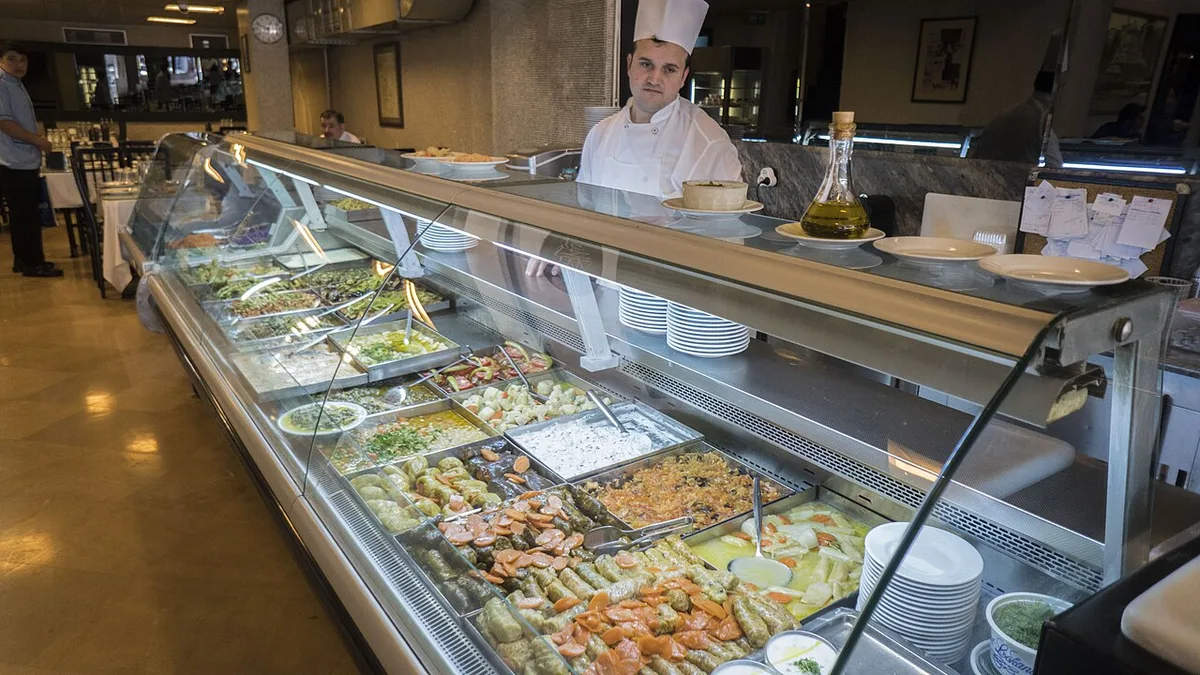
The tradesman's canteen: trays of the day's dishes, soup first, prices from the neighborhood, lunch only. The old city and every market district keep great ones; point at what the workers point at.
The ferry ritual
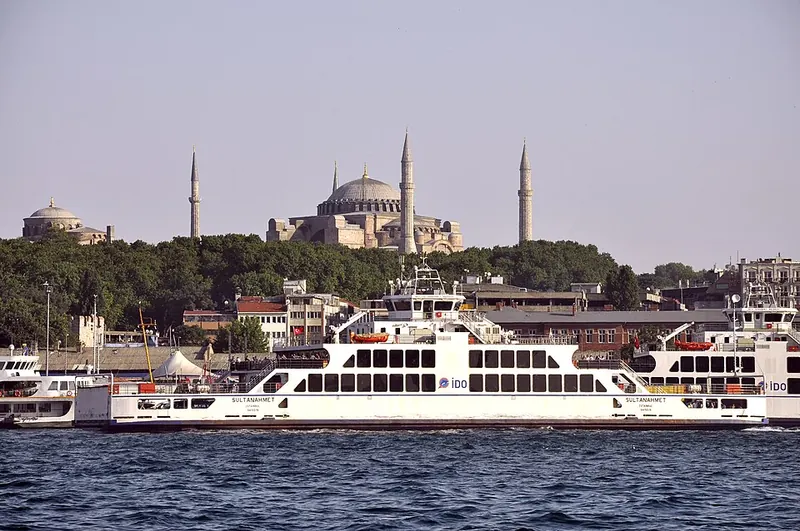
Kadıköy to Karaköy, 20 minutes: çay from the tea man, a simit, the gulls taking their share off the stern. The cheapest Bosphorus cruise and the city's daily sacrament.
The kebab salon
Regional embassies with marble tables and serious fire: order the house kebab, accept everything that lands around it, finish with künefe if the region allows.
The breakfast spread
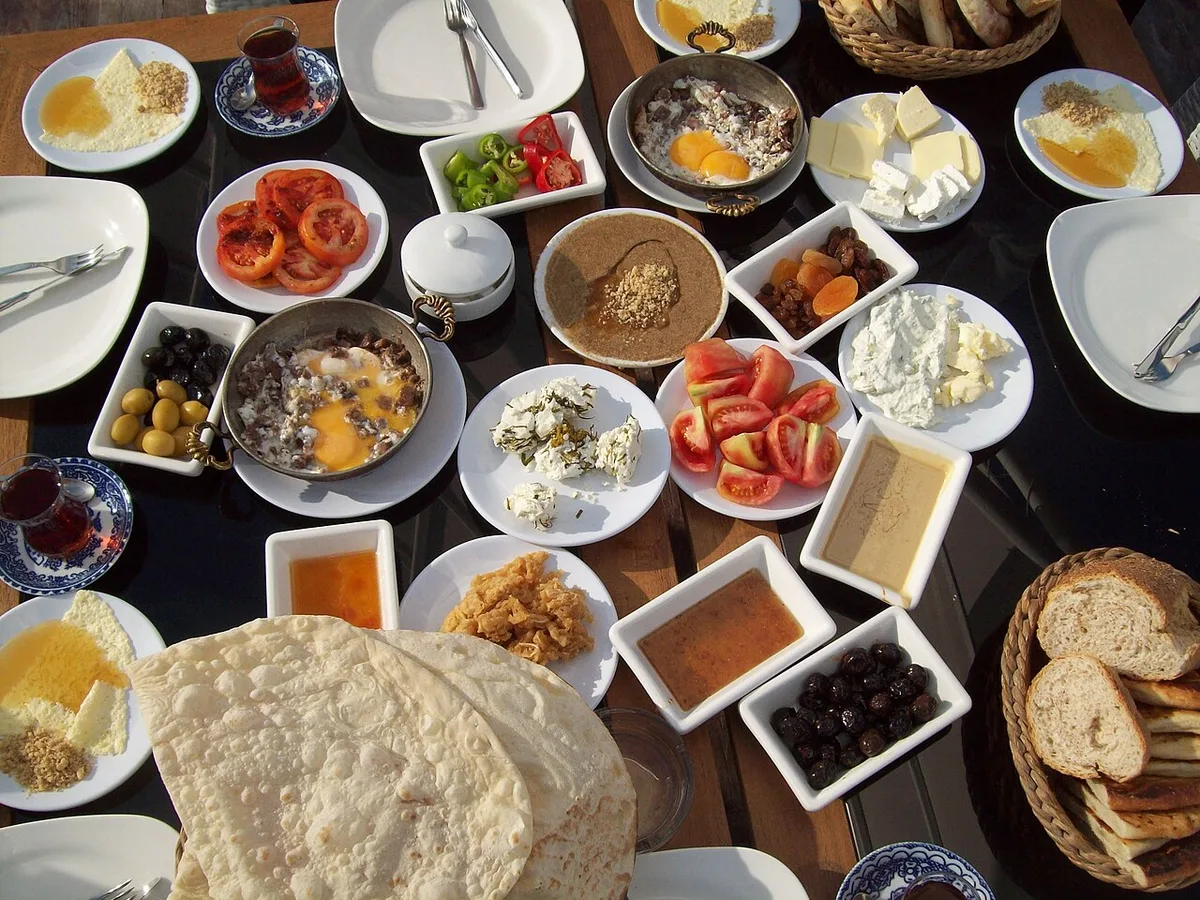
Serpme kahvaltı for the table on a Bosphorus morning (Van breakfast houses are the famous specialists) or on Beşiktaş's breakfast street. Two hours, four teas minimum.
The street cart circuit
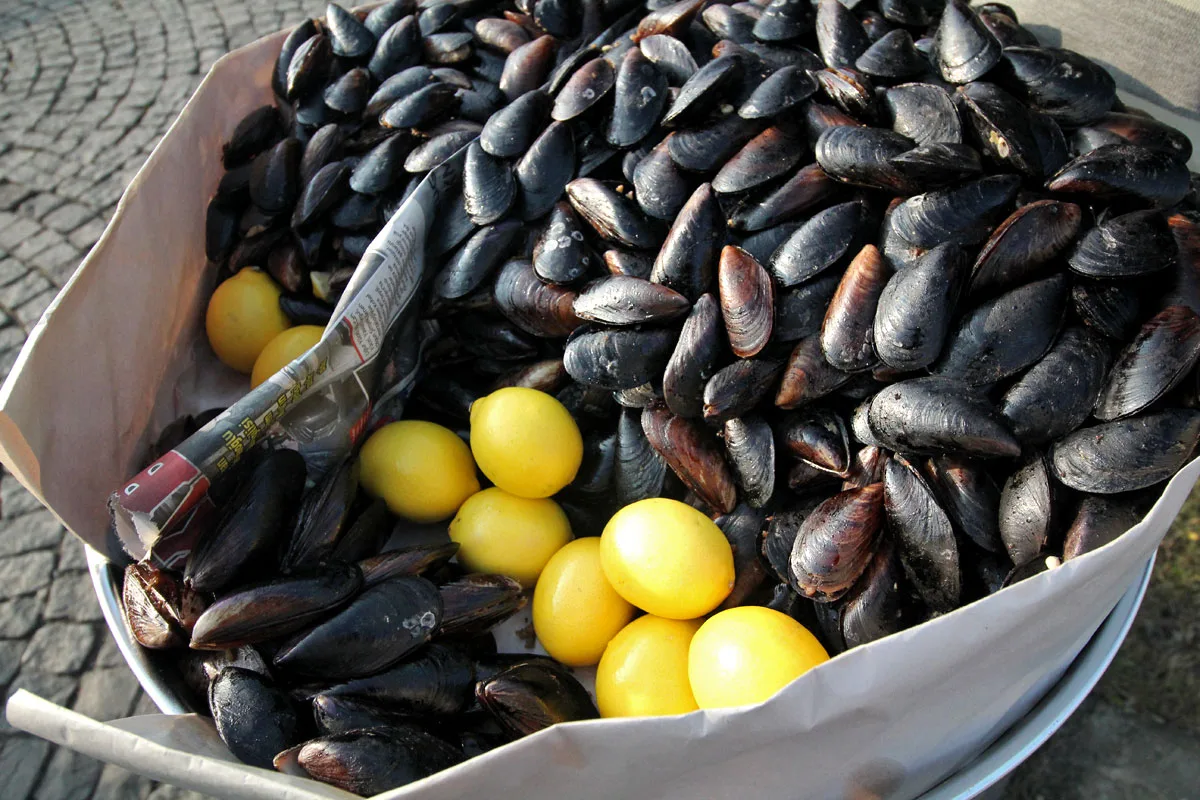
Midye with a squeeze of lemon eaten at the cart, roasted chestnuts and corn in season, kokoreç wraps at the night stands: the city's punctuation, taken standing.
The rules that keep it safe and good
Çay is the city's clock: it arrives when you sit, when you shop, when you wait. Refusing is allowed once; the second glass is friendship and arrives anyway.
At the meyhane, the rakı is diluted to milkiness ('aslan sütü', lion's milk) and sipped, never shot; the meze pace is set by the bottle, not the kitchen.
Bazaars haggle for goods, not for food: lokanta and cart prices are posted or standard, and the food lanes of the markets are the honest prices of the city.
The esnaf lokantası day ends early: the famous dishes sell out by 2, and arriving at 3 gets you the explanation, not the stew.
On ferries, feed the gulls from the open stern deck only, with your own simit, in small pieces. The whole boat is watching and approving.
The markets
Markets are where Istanbul actually shops and eats. Each one has a different job; go in the morning, when the food counters are at their busiest.
AThe Spice Bazaar (Mısır Çarşısı)
Eminönü's L-shaped bazaar of 1664: spices, lokum, dried fruits, and cheeses under the vaults, with Pandeli restaurant above the entrance and the fish-and-pickle lanes outside. Istanbul's most edible building.
Eat: Lokum and spice shopping inside; balık ekmek and turşu on the quay after.
BThe Grand Bazaar (Kapalıçarşı)
The world's old covered market, 61 streets since 1461: gold, carpets, and ceramics in front, but eat in its hans and edge lokantaları where the merchants have lunched for centuries.
Eat: The merchants' lunch in the bazaar's own small restaurants; tea in a han courtyard.
CKadıköy Market
The Asian side's open food market: pickle shops, olive and cheese counters, fish restaurants in the lanes, baklava and Turkish delight from the old makers. The market Istanbul shops for itself.
Eat: Graze the lanes, lunch at Çiya, buy pickles and olives like a resident.
DThe Women's Market (Kadınlar Pazarı), Fatih
Under the Valens Aqueduct: the southeast's Istanbul market, büryan kebab pits, Kurdish and Siirt food shops, honey and cheese from the east. The connoisseurs' market.
Eat: Büryan kebab at the pit houses; perde pilavı if the day is kind.
EArasta Bazaar
The small, calm bazaar behind the Blue Mosque: quality shops and a garden cafe, the old city's exhale after the Grand Bazaar's volume.
Eat: Tea and a slow hour in the garden cafe; shopping without the sport.
Neighborhoods: 1 Sultanahmet and Eminönü · 2 Beyoğlu and Galata · 3 Kadıköy · 4 Balat and Fener · 5 BeşiktaşMarkets: A The Spice Bazaar (Mısır Çarşısı) · B The Grand Bazaar (Kapalıçarşı) · C Kadıköy Market · D The Women's Market (Kadınlar Pazarı), Fatih · E Arasta BazaarPins mark neighborhood centers, so you can place each area against where you are staying. Taxi times under each neighborhood below are measured from Sultanahmet.
1Sultanahmet and Eminönü
The old city and the ferry piers: the bazaars, the fish-sandwich boats, spice shops, and a century of esnaf lokantaları feeding the crowds between the mosques. Tourist-dense and still genuinely fed.
From Sultanahmet: Sultanahmet is the reference point; you are there
2Beyoğlu and Galata
Across the Golden Horn: İstiklal's bustle, the meyhane lanes of Nevizade and Çiçek Pasajı, Karaköy's new kitchens and old baklava, and the city's drinking-and-eating evening at full strength.
From Sultanahmet: 15 min on foot over the Galata Bridge
3Kadıköy
The Asian side's great food market and the city's own dining room: pickles, olives, fish, meze shops, and Çiya's Anatolian canon. Take the ferry, eat all day, ferry back at golden hour.
From Sultanahmet: 20 min by ferry from Eminönü
4Balat and Fener
The Golden Horn's old Jewish and Greek quarters: colorful lanes, new cafes, old esnaf grills, and the city's most photogenic slow mornings, breakfast first.
From Sultanahmet: 15 min by tram or bus
5Beşiktaş
The Bosphorus-side local hub: a famous breakfast street (Kahvaltıcılar Sokağı), fish market restaurants, and student-priced everything between the palace and the stadium.
From Sultanahmet: 20 min by bus or ferry
The people behind the food
The names that explain how Istanbul cooks the way it does now.
Musa Dağdeviren and Çiya
Chef and food anthropologist, Kadıköy
Turkey's most important food documenter: at his three Çiya restaurants in Kadıköy market, Dağdeviren cooks the disappearing regional dishes of Anatolia (kebabs, stews, and lahmacuns from a hundred towns) from decades of field research. Eating there is a delicious archive visit.
Karaköy Güllüoğlu
Institution, Karaköy, baklava since the 1820s (this shop 1949)
The baklava standard of Istanbul: one shop only, no branches, the family's rule for generations. The queue of locals buying boxes for holidays is the city's sweetest line.
Hacı Bekir
Institution, lokum since 1777
The inventor's house of Turkish delight, still family-run from the Bahçekapı shop where lokum was refined into its modern form. The boxes are edible history, stamped with the founder's name.
Pandeli
Institution, above the Spice Bazaar, since 1901
The blue-tiled dining room over the bazaar entrance, lunch only, serving its Ottoman-Istanbul classics (the eggplant dishes are the legend) to a century of merchants, stars, and knowing visitors.
The ferry çaycıları
Craft, the Bosphorus crossings
The tea men of the city ferries, balancing tulip glasses across a moving deck in all weather, delivering Istanbul's smallest ceremony a thousand times a day. Their round cannot be hurried and never spills.
If you only eat ten things here
The Kadıköy ferry at golden hour: çay, simit, gulls paid in crust.
Lunch at Çiya, ordered across the regions, the archive eaten.
A meyhane night in Nevizade: meze waves, lion's milk, fish at the end.
Balık ekmek on the Eminönü quay with pickle juice, standing.
Serpme kahvaltı above the Bosphorus, two hours, no apologies.
Güllüoğlu baklava upside-down, with kaymak, in Karaköy.
An esnaf lokantası lunch in the old city at 12:30 sharp.
The Spice Bazaar at opening, then Pandeli's lunch above it.
Büryan kebab at the Women's Market under the aqueduct.
Turkish coffee in a 300-year-old coffeehouse, fortune optional.
Eating well here
afiyet olsun
'May it be health': said before, during, and after eating, by everyone, to everyone. Turkey's table blessing.
çay
Tea, in the tulip glass, from the double pot (çaydanlık). It is offered constantly and costs almost nothing; it is the country's social medium.
serpme kahvaltı
The 'spread' breakfast: the full table of cheeses, honey, kaymak, eggs, and breads. Order it for the table, not the person.
aslan sütü
'Lion's milk': rakı turned milky with water and ice. Sipped slowly, with meze, never rushed.
midye dolma
Stuffed mussels, spiced rice inside, lemon over, eaten at the cart one-handed. Count your shells; that is the bill.
hesap, lütfen
'The bill, please.' At a lokanta it arrives with a tea you did not order.
lütfen
'Please': the word that oils every transaction, from bazaars to ferries.
fal
The coffee fortune read in the grounds. Let it be read once; it is always, somehow, about a journey.
European or Asian side: where should I eat?
Both, by design: the bazaars and old city on the European side for the classics, Kadıköy on the Asian side for the city's own market eating. The ferry between them is 20 minutes and part of the meal. Base in Beyoğlu or Sultanahmet; feast in Kadıköy.
What is Turkish breakfast, and where?
A spread, not a dish: cheeses, olives, honey with kaymak, eggs (menemen or sucuklu), tomatoes, breads, and endless çay, ordered as 'serpme kahvaltı' (spread breakfast) for the table. Beşiktaş's breakfast street and the Bosphorus-side villages run the famous versions; allow two hours.
Is alcohol part of Istanbul eating?
In the meyhane districts (Beyoğlu, Kadıköy, the Bosphorus villages) rakı is the table's engine and wine and beer flow in most restaurants; the old city's lokantalar are dry. The city accommodates both Istanbuls without friction.
How do I avoid the tourist-trap meals in Sultanahmet?
Eat where the esnaf (tradesmen) eat: the lokantalar in the lanes behind the bazaars at noon, Eminönü's stands, and Hocapaşa's restaurant street. Menus with photos in six languages near the mosques are priced for the view of them.
Does Ramadan change the food scene?
Yes, gracefully: many lokantalar run quieter days, iftar (the sunset fast-breaking) becomes the city's great shared meal, and special Ramadan pides and güllaç dessert appear. Visitors eat as usual in tourist and modern districts; joining an iftar tent feast is a privilege if invited.