Lantern boats on the Thu Bon River, Hoi An, at night. Photo via Wikimedia Commons.
How Hoi An eats
Hoi An was Southeast Asia's great trading port in the 1600s, when Japanese, Chinese, and Dutch ships wintered here, and its kitchen kept the receipts. Cao lầu noodles exist only in this town; white rose dumplings are made by one family for every restaurant; the wontons are Cantonese, the chicken rice is Hainanese by ancestry, and it all sits inside a lantern-lit old town that closes to traffic and fills with food stalls at dusk.
The rules here are hyperlocal. Cao lầu, locals will tell you, needs water from the ancient Ba Le well and ash from the Cham Islands to be itself; whether or not chemistry agrees, the dish has never successfully emigrated. Eat the things that cannot leave, walk the old town early before the crowds, and let the night market feed you after dark.
Learn the foods
Start here, not with a restaurant. Learn what these foods are, where they come from, and how locals eat them, and the whole city opens up: every menu, every market, every street corner starts making sense.
Cao lầu
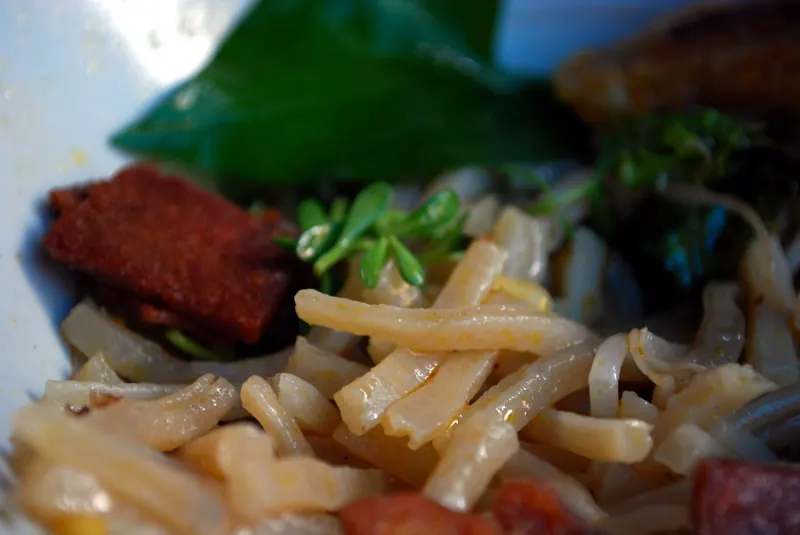
Hoi An's noodle and no one else's: thick, chewy, udon-like rice noodles (traditionally made with Ba Le well water), a few spoonfuls of rich pork broth, char siu pork, herbs, bean sprouts, and crisp noodle crackers. Dry-ish, dense, unmistakable.
Where it comes from: The port's merchants ate a noodle that was not quite Chinese, not quite Japanese, and wholly local: the story says the water must come from the thousand-year-old Ba Le well and the lye from Cham Island ash, which is why cao lầu in Da Nang, 30 km away, is considered a rumor. Trading-port food, guarded like a trade secret.
How to eat it: Mix from the bottom (the broth hides there), cracker pieces in every bite. Breakfast and lunch are its hours; the famous shops (Ba Le, Trung Bac) close when they close.
White rose (bánh bao bánh vạc)
Translucent shrimp dumplings pleated to look like roses, topped with crispy garlic, served with a sweet-sour dip. Every restaurant in town serves them; one family makes them all.
Where it comes from: For three generations the Tran family (Bong Hong Trang, White Rose) has supplied the town from one kitchen, the recipe unshared. The dumplings are named for the French colonial era's compliment: a rose, made of rice and river shrimp.
How to eat it: Whole, in one bite, dip first. Order them wherever you sit down for a first Hoi An meal; they are the town's handshake.
Hoành thánh (wontons)
Cantonese wontons, Hoi An edition: served in broth, or fried crisp and topped with a sweet tomato-prawn sauce, or both on one plate. The port's Chinese layer, still steaming.
Where it comes from: Hoi An's Chinese assembly halls fed merchants for centuries, and the wonton stayed when the ships left. The fried version with its tomato sauce is the local invention, sweet in the central-coast way.
How to eat it: Get the combination plate (soup and fried) at a market or old-town shop. The fried ones go first; crisp waits for no one.
Cơm gà
Chicken rice: turmeric-yellow rice cooked in chicken fat and broth, shredded free-range chicken with onion and Vietnamese mint, pickles, and a bowl of broth. Simple, exact, and argued over.
Where it comes from: Hainanese chicken rice traveled the same sea roads as the merchants and settled here, going yellower and more herbal on the way. The famous shops (Ba Buoi's lineage) measure the chicken by its chew: free-range, firm, fragrant.
How to eat it: Mix the chicken through the rice with the pickles, broth in sips. Lunch; the great shops sell out of birds by early afternoon.
Bánh mì
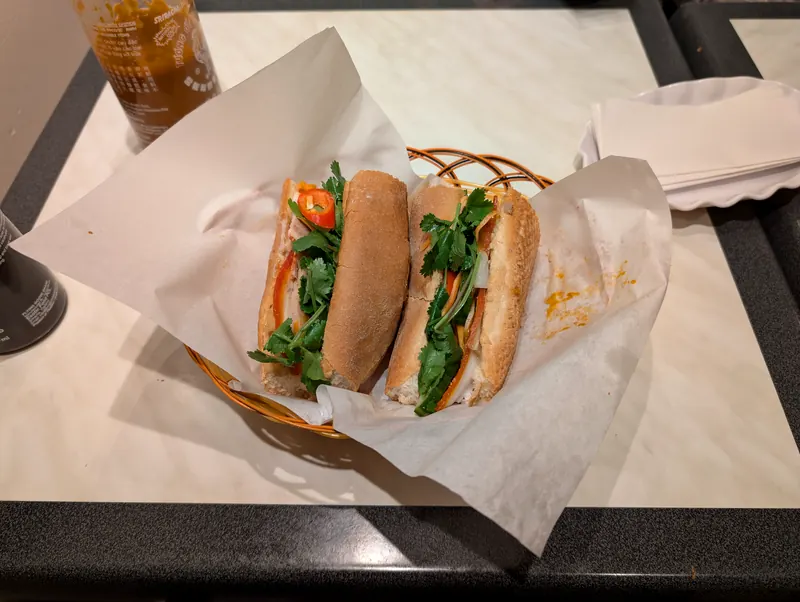
Two legends, one town: Bánh Mì Phượng, which Anthony Bourdain put on television, and Madam Khánh, the 'Banh Mi Queen', whose loaded loaves locals defend. Both are excellent; the line is the difference.
Where it comes from: Hoi An's baguettes ride the town's old French-era baking and its herb gardens: the Phượng loaf, with its house sauce and grill-warmed fill, became world famous after Bourdain's 2009 visit. Madam Khánh (Nguyen Thi Loc) has baked her answer since the 1980s, a few lanes away.
How to eat it: Eat one of each, back to back, and take a side. This is Hoi An's favorite argument and now it is yours.
Bánh đập
'Smashed cake': a crisp grilled rice cracker smashed onto a wet rice sheet, spread with scallion oil and shrimp floss, broken and dipped in mắm nêm or fish sauce. Cam Nam island's gift, eaten with your hands and ears.
Where it comes from: Cam Nam grows the corn and makes the crackers; the dish is village engineering, two textures of rice becoming a third thing at the moment of smashing. It is served where it is made, in family houses on the island.
How to eat it: Smash, tear, dip, crunch. Order chè bắp after, from the same house if you have any sense.
Chè bắp
Corn pudding: sweet soup of Cam Nam corn, sticky rice, and coconut, served warm or iced. The island's corn is famous for a sweetness the town's desserts are built on.
Where it comes from: Cam Nam's corn, grown in the Thu Bon's silt, is a named delicacy in the region; the chè sellers on the island and in the old town's market guard their corn supply like the white rose family guards its recipe.
How to eat it: Warm in the morning on the island, iced at the night market. It is dessert and breakfast with equal papers.
Street food, decoded
Hoi An eats in two shifts divided by the heat: a golden morning of markets, cao lầu, and coffee, then a lantern-lit night of markets, stalls, and river air. The old town's fame brought restaurants with menus in six languages, but the specialist system survived inside it: the cao lầu shops still close at sellout, the white rose still comes from one family, and the market food hall still feeds the town first.
The bicycle is the local instrument: Tra Que's herbs, Cam Nam's corn, and An Bang's fish are all ten minutes from the bridge. A day here is a loop of small distances and specific dishes, which is exactly how the town was built to be eaten.
The cao lầu shop
A pot, a pile of noodles, no menu to speak of: the morning specialists around the market and on Tran Phu. When the noodles are gone, the day is done.
The night market on An Hoi
Nguyen Hoang street after dark: skewers, bánh, desserts, and lantern light, across the river from the glowing old town. Snack dinner, then a boat if the mood takes you.
The cooking class circuit
Market, garden, stove, feast: Hoi An's schools (Vy Trinh's and others) run the format daily. The Tra Que classes, in the herb village itself, are the pick.
The beach shack lunch
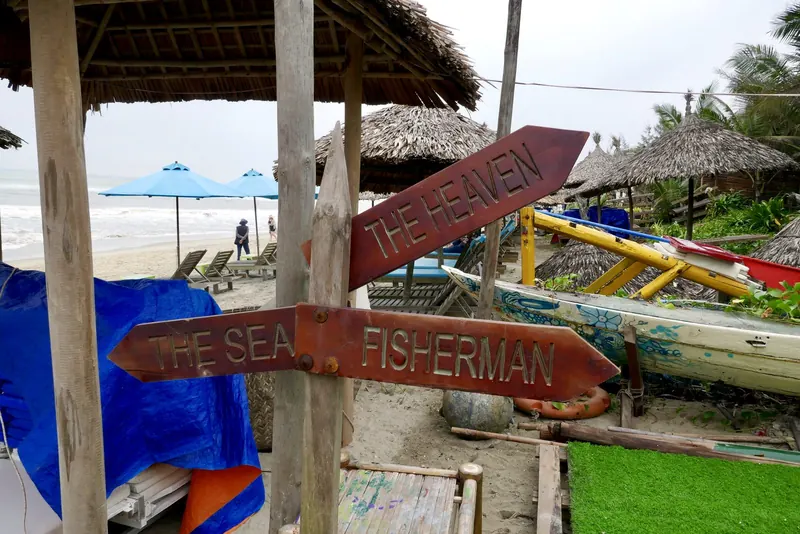
An Bang's seafood shacks: grilled fish, clams with peanuts and herbs, a hammock after. The town's Sunday register, all week.
The market food hall
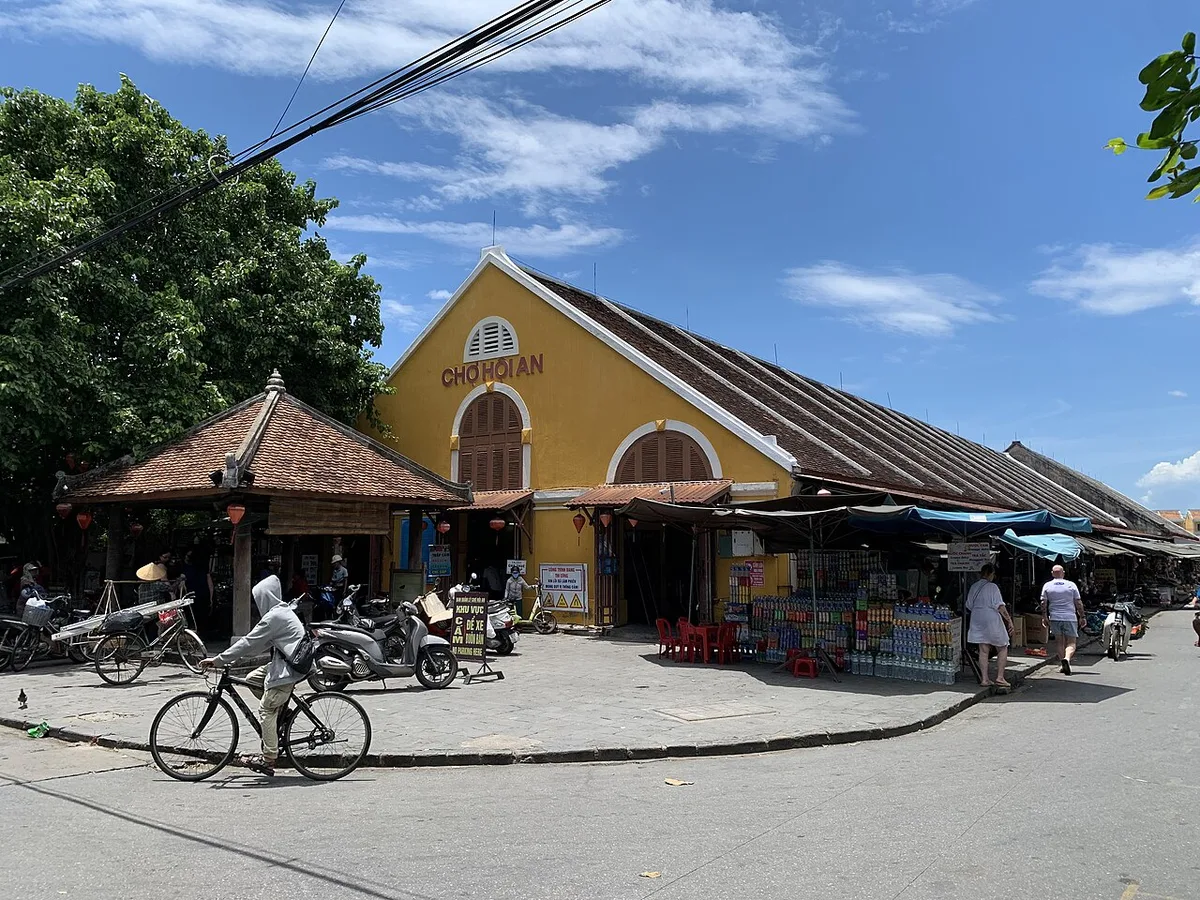
Inside Hoi An Central Market, stalls serve cao lầu, white rose, and cơm gà to shoppers at local prices. The old town's canteen, hiding in plain sight.
The riverside cafe
Coffee above the Thu Bon at golden hour, lanterns coming on across the water: the pause the whole town is scheduled around.
The rules that keep it safe and good
Morning is for the famous food: cao lầu shops and market stalls peak before 10 and sell out by early afternoon.
The old town is ticketed for sights but not for eating: restaurants and stalls are open to all, and nobody should charge you to sit down.
Bicycle distances lie: Tra Que and Cam Nam are close, but the midday heat is no joke. Ride early, eat late, siesta between.
On full-moon night (14th lunar), the town is at maximum: eat before 6 or after 9, and book the boat ride never.
Flood season (October to November) puts the old town's ground floors underwater some years; the town feeds itself anyway, and upper floors carry on. Check before you book those weeks.
The markets
Markets are where Hoi An actually shops and eats. Each one has a different job; go in the morning, when the food counters are at their busiest.
AHoi An Central Market
The market hall by the river at the old town's east end: produce and fish outside, a famous food court inside where the town eats cao lầu and white rose at local prices.
Eat: The full canon in one lap: cao lầu, white rose, chè for the finish.
BAn Hoi Night Market
Nguyen Hoang street on the island: the nightly food market, lantern-lit, aimed at visitors and fed by the town. Skewers, sweets, and the river beside you.
Eat: Graze in small portions; the boat ride after is optional, dessert is not.
CTra Que Herb Village
The working herb village: garden plots, algae ponds, and farmhouse cooking classes. You can buy the herbs that flavor the whole town, from the families who grow them.
Eat: A farmhouse lunch or class: the herbs were in the ground an hour ago.
DCam Nam Island
Over the bridge south: the corn village, where houses sell chè bắp and bánh đập from their front rooms. A bicycle loop with two courses built in.
Eat: Bánh đập first (crunch), chè bắp after (sweet), both at a family house.
EBa Le Market
The local morning market near the famous well: produce, noodles, and the breakfast stalls of the residential town, away from the old-town ticket gates.
Eat: Whatever the nearest stall steams; this is the neighbors' breakfast.
Neighborhoods: 1 The Ancient Town · 2 An Hoi · 3 Cam Chau · 4 Tra Que · 5 Cam Nam · 6 An Bang BeachMarkets: A Hoi An Central Market · B An Hoi Night Market · C Tra Que Herb Village · D Cam Nam Island · E Ba Le MarketPins mark neighborhood centers, so you can place each area against where you are staying. Taxi times under each neighborhood below are measured from the Japanese Covered Bridge.
1The Ancient Town
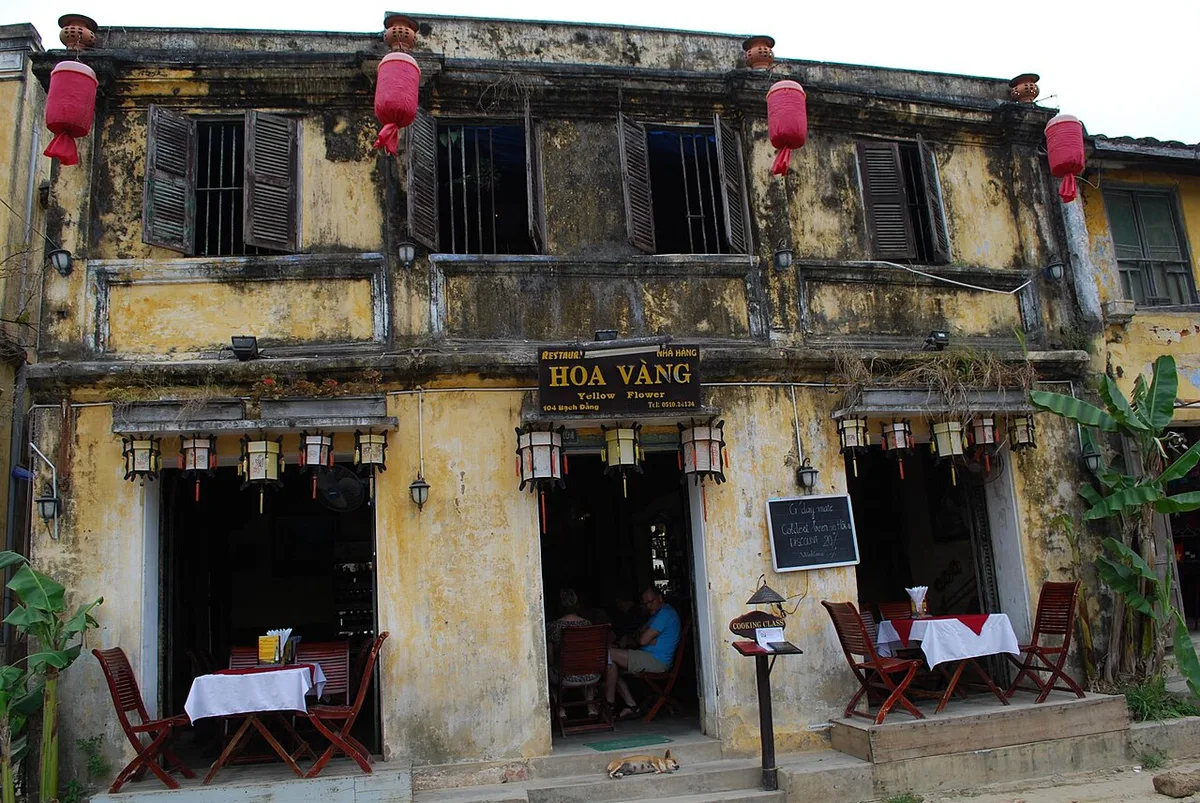
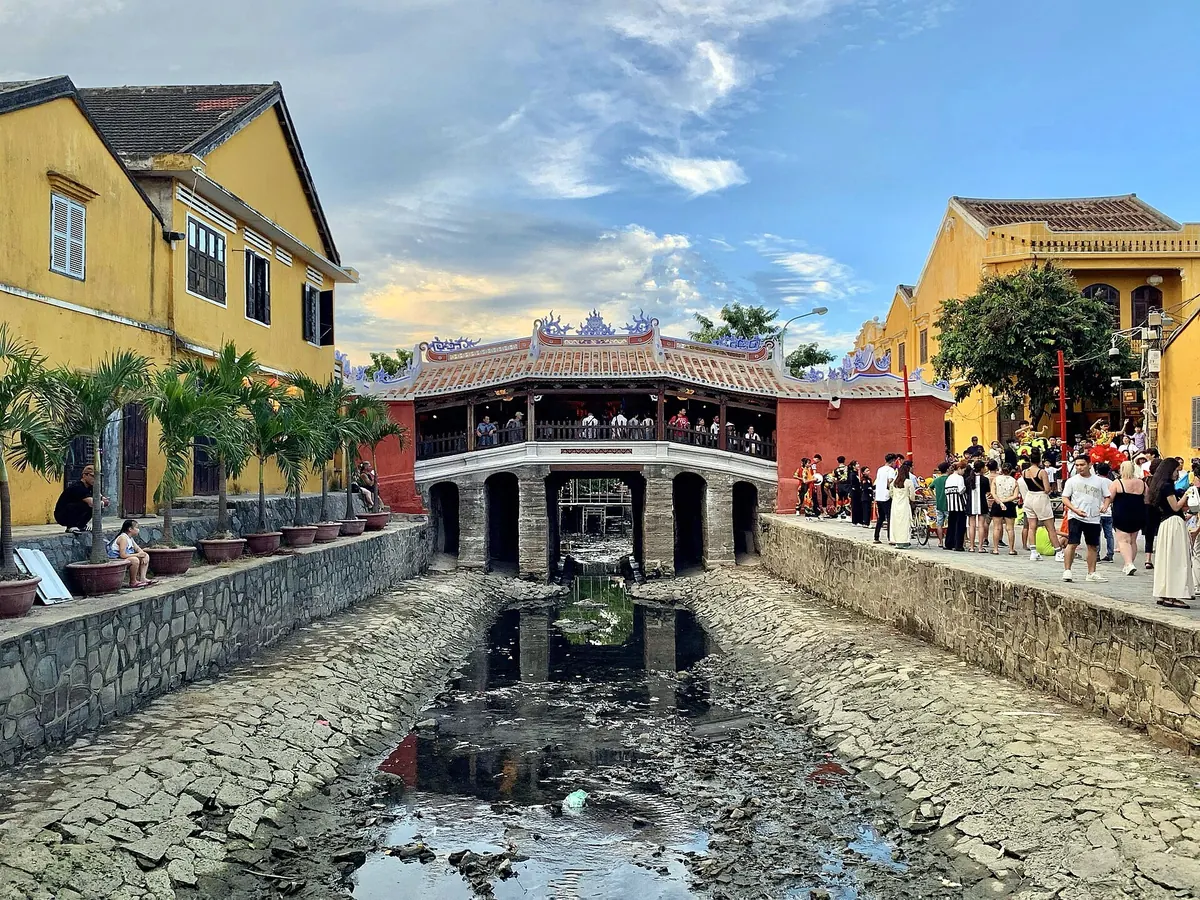
The UNESCO-listed grid of yellow shophouses, assembly halls, and the Japanese Covered Bridge: cao lầu shops, white rose restaurants, and a hundred years of other people's nostalgia, functioning as a working food town underneath.
From the Japanese Covered Bridge: The bridge is its heart; you are there
2An Hoi
The island across the Thu Bon, facing the old town: the night market's food stalls, riverside bars, and the lantern-boat landing. Hoi An after dark happens here.
From the Japanese Covered Bridge: 3 min on foot across the bridge
3Cam Chau
Between the old town and the beach: rice fields, garden cafes, cooking schools, and the residential Hoi An that hosts the visitors. The calm base with the best everyday eating.
From the Japanese Covered Bridge: 10 min by bicycle
4Tra Que
The herb village north of town: 400 years of vegetables grown in algae-fertilized beds, supplying the old town's kitchens and its cooking classes. The basil and mint on your cao lầu were cut here this morning.
From the Japanese Covered Bridge: 10 min by bicycle
5Cam Nam
Corn island, over the bridge south of town: chè bắp (corn pudding) and bánh đập (smashed rice crackers) from the houses that make them, in a village that grows the corn. A bicycle snack pilgrimage.
From the Japanese Covered Bridge: 10 min by bicycle
6An Bang Beach
The town's beach, 4 km east: seafood shacks, beach cafes, and the expat morning scene. Hoi An's other register, sand between courses.
From the Japanese Covered Bridge: 15 min by bicycle or taxi
The people behind the food
The names that explain how Hoi An cooks the way it does now.
Trinh Diem Vy (Ms Vy)
Restaurateur and teacher, Morning Glory
Vy built the modern Hoi An table: her Morning Glory restaurant codified the town's street dishes for visitors, her cookbooks documented them, and her cooking school in a Cam Chau garden has taught the market-to-stove circuit to a generation. Hoi An's food fame runs substantially through her work.
The White Rose family
Institution, Bong Hong Trang
Three generations making every white rose dumpling in Hoi An from one kitchen, the recipe unshared and the supply total. Restaurants plate them; the family is the dish.
Madam Khánh, the Banh Mi Queen
Institution, Tran Cao Van
Nguyen Thi Loc has loaded baguettes since the 1980s, crowned by travelers who found her small shop out-punching the famous one. Her loaf is the locals' counter-argument in Hoi An's best food debate.
Bánh Mì Phượng
Institution, Phan Chu Trinh
The shop Bourdain's camera made world-famous in 2009: grill-warmed, sauce-rich, and still selling to a queue that mixes the town and the world. Fame did not ruin it, which in Hoi An is the highest available praise.
The Tra Que gardeners
Craft, Tra Que village
The families who have grown the town's herbs for 400 years, fertilizing with river algae and watering with twin shoulder cans. Every cook in Hoi An starts their morning with what these gardens did yesterday.
If you only eat ten things here
Cao lầu at 8 a.m. in the market food hall, mixed from the bottom.
White rose wherever you first sit down; it is the town's handshake.
Both bánh mì legends, back to back, verdict delivered.
Cơm gà at lunch before the birds run out.
A Cam Nam loop: bánh đập smashed, chè bắp after, by bicycle.
A Tra Que cooking class, market first, herbs in hand.
Night market grazing on An Hoi, lanterns overhead.
Fried wontons with the tomato-prawn top, combination plate.
An Bang seafood lunch and a hammock to answer for it.
Full-moon night, if the calendar loves you: dinner early, river after.
Eating well here
cao lầu
Say 'gow lau': the noodle that refuses to emigrate. Order it before 10 a.m. for the local shops.
bánh bao bánh vạc
The white rose's full name: 'cakes of rose and cauldron', from their shapes. One family, three generations.
giếng Bá Lễ
The Ba Le well: the ancient Cham-era well whose water the cao lầu story requires.
chè bắp
Corn pudding, Cam Nam's sweetness. Warm in the morning, iced at night.
đèn lồng
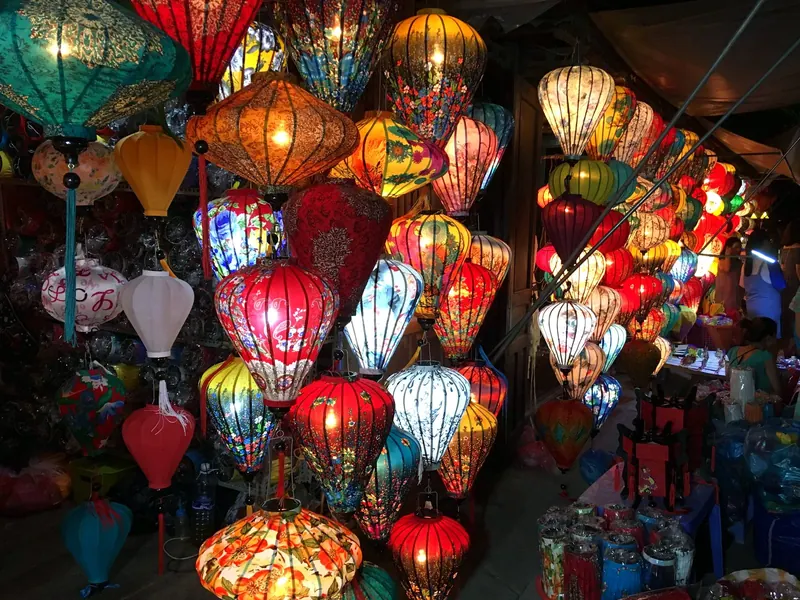
Lanterns. On the 14th lunar night, they are the only lights allowed to matter.
ngon
Delicious. At a market stall, 'ngon quá trời' (unbelievably good) ends negotiations happily.
tính tiền
The bill. In the old town, ask before the lantern-boat man asks you anything.
mì Quảng
The neighbor's noodle, 30 km north in Da Nang. Eat it there too; Hoi An forgives the comparison.
Can cao lầu really only be eaten in Hoi An?
The dish is served elsewhere, but Hoi An's claim is specific: Ba Le well water for the noodles, local herbs from Tra Que, and ash-lye in the traditional make. Plenty of locals will tell you a Da Nang cao lầu is a tribute act. Eat it here first, then judge the copies.
How do I beat the old town crowds?
Eat on local time: cao lầu and the market before 9 a.m., when the town is golden and empty; siesta like everyone in the heat; return for the night market after 6. The crowds peak exactly when the food is at its least characteristic.
What is the lantern festival?
On the 14th day of each lunar month, the old town turns off its electric lights, the river fills with lantern boats, and the food stalls do their best business of the month. Book rooms early and dinner earlier.
Town or beach?
Town for food, beach for mornings: An Bang is 15 minutes by bicycle, and the serious eating is in the old town and Cam Chau. Stay in Cam Chau and have both, quietly.
Is a cooking class worth it here?
Hoi An is Vietnam's cooking-class capital, and the format is genuinely good: market tour, a boat or bicycle to Tra Que, and four dishes cooked by you. Choose a class that starts at the market, not at the stove.