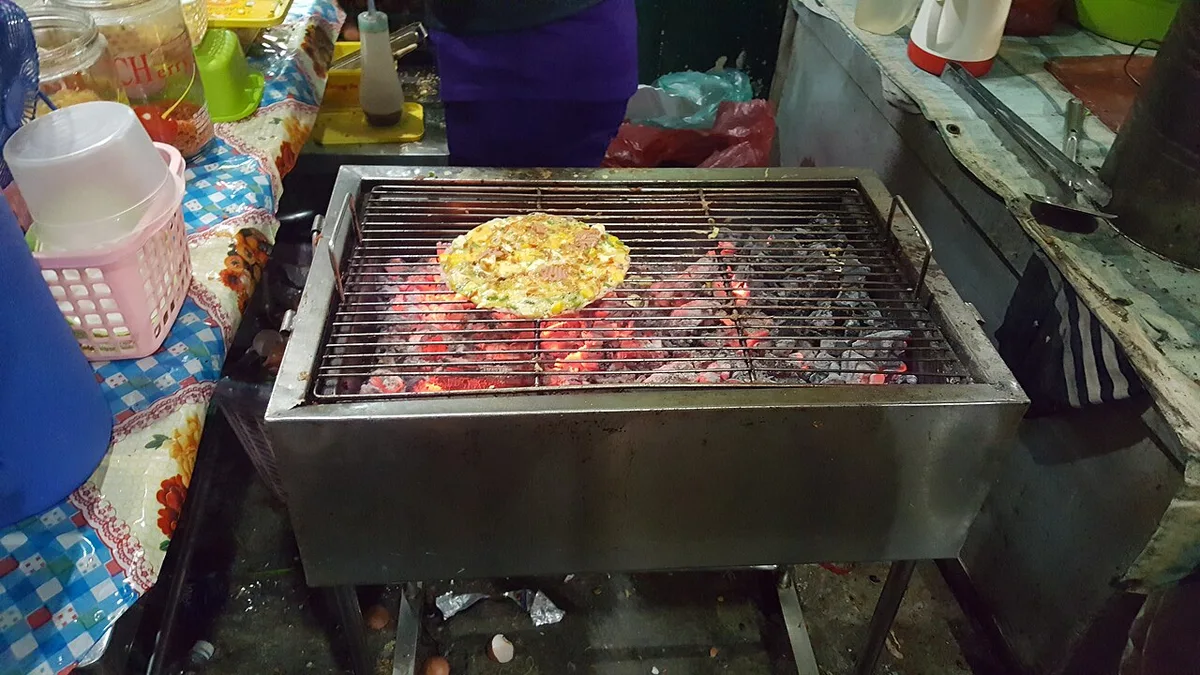
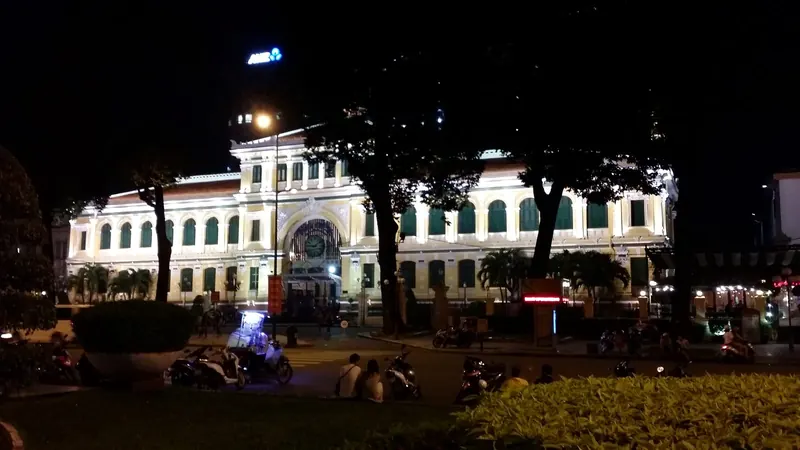
Inside Ben Thanh Market, Ho Chi Minh City. Photo via Wikimedia Commons.
How Ho Chi Minh City eats
Everyone still calls it Saigon, and Saigon's food runs on southern rules: bigger flavors, more sugar, more herbs, later hours. Where Hanoi specializes, Saigon piles on: phở arrives sweet with a garden of herbs and hoisin, cơm tấm (broken rice) feeds the city from dawn carts, hủ tiếu carries Khmer and Chinese ancestry in one bowl, and whole streets in District 4 exist only to serve snails and beer after dark.
The districts are the menu. District 1 and 3 for the classics and the cafes, District 4 for ốc (snails) on Vinh Khanh, District 5's Cho Lon for a Chinatown older than the city itself, and Binh Thanh's Van Kiep street for a nightly food market that needs no occasion. Dinner is at eight, snacks at midnight, and coffee is a civic institution at every hour between.
Learn the foods
Start here, not with a restaurant. Learn what these foods are, where they come from, and how locals eat them, and the whole city opens up: every menu, every market, every street corner starts making sense.
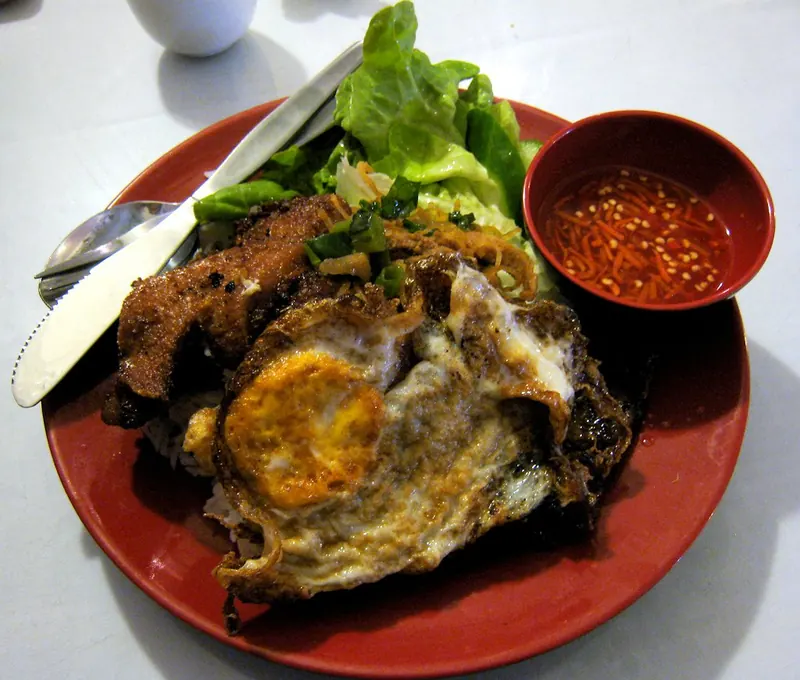
Cơm tấm
Broken rice with a grilled pork chop, shredded pork skin (bì), a steamed egg-pork loaf (chả trứng), a fried egg, and sweet fish sauce over everything. Saigon's working plate, served from dawn to midnight.
Where it comes from: Cơm tấm began as the rice nobody wanted: grains broken in milling, sold cheap to workers, until Saigon built its favorite dish on them. The broken grains cook softer and drink up the mỡ hành (scallion oil) and nước chấm better than whole rice ever did.
How to eat it: Spoon and fork (the fork pushes, the spoon carries), chop broken up and mixed through. 'Sườn bì chả' orders the full trio; add 'ốp la' for the fried egg.
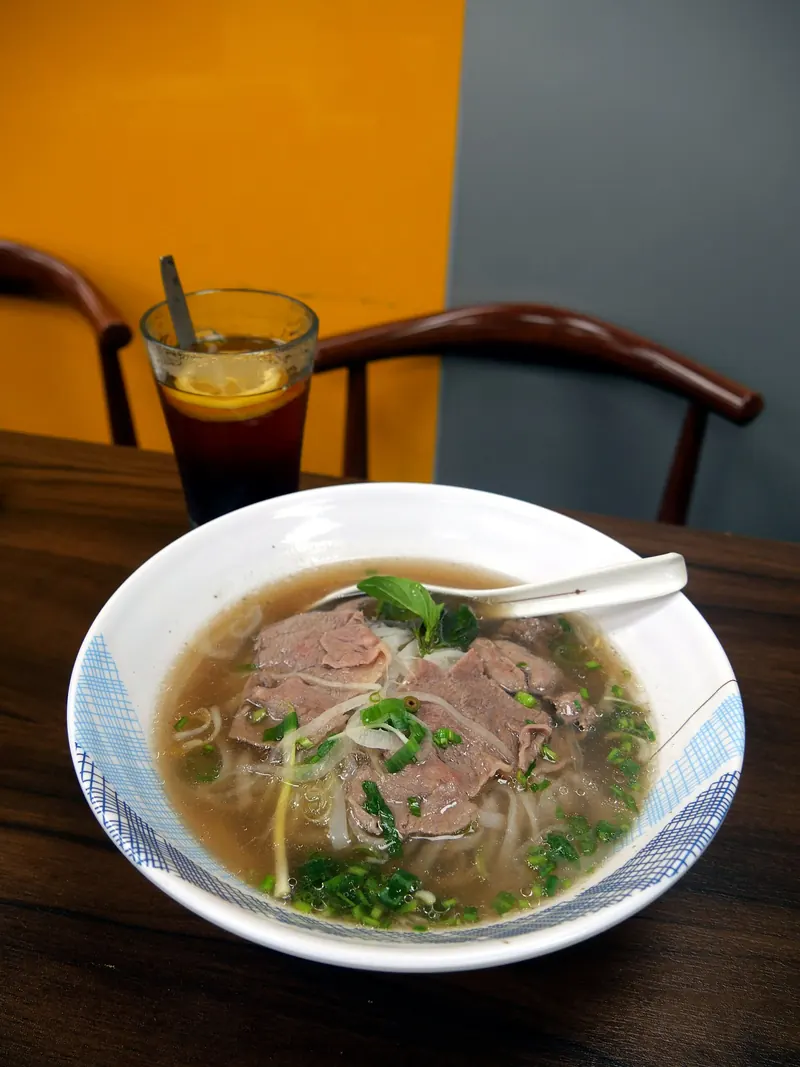
Phở, southern style
The same soup, the southern edit: sweeter broth, a plate of basil, sprouts, and sawtooth herb, hoisin and chili sauce on the table, and the bowl arriving already dressed. Hanoi purists object; Saigon does not care.
Where it comes from: Phở traveled south with northern migrants after 1954 and adapted to a sweeter palate and a hotter climate's herbs. The result is a genuinely different dish wearing the same name, and the argument between the two cities is Vietnam's favorite food fight.
How to eat it: Any hour: Saigon phở shops run all day, unlike Hanoi's dawn patrol. Tear the herbs in, add hoisin by the spoonful, and never apologize to a Hanoian.
Hủ tiếu Nam Vang
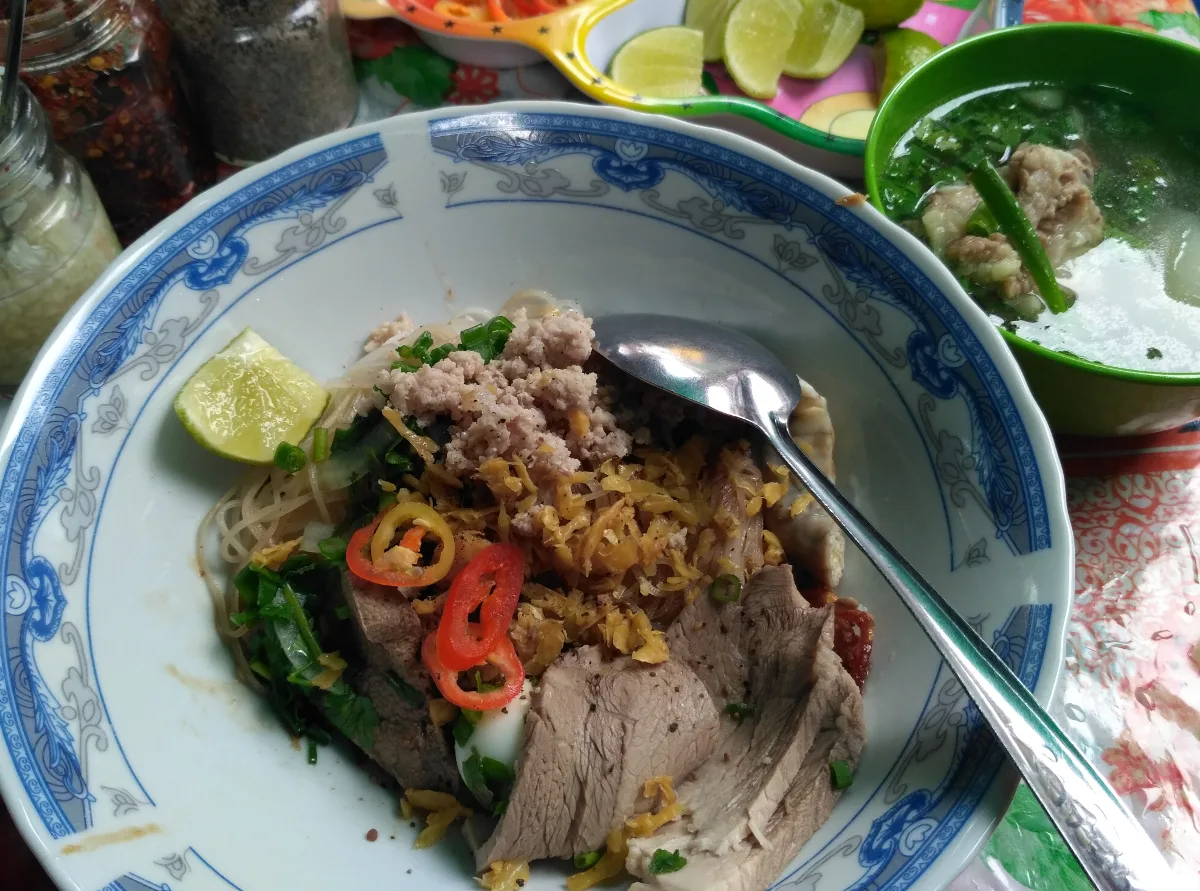
Phnom Penh kuy teav, Saigon edition: chewy rice noodle in a pork-and-seafood broth with sliced pork, prawns, quail egg, and garlic chives, dry or soup. Cho Lon's signature bowl.
Where it comes from: The dish crossed from Cambodia with the Khmer Krom and Chinese communities and was rebuilt in Cho Lon: 'Nam Vang' is the old Vietnamese name for Phnom Penh. The dry version, sauce-tossed with the broth beside it, is the connoisseur's order.
How to eat it: Try it 'khô' (dry) at least once, with extra chives and a squeeze of lime. Breakfast and lunch are its hours.
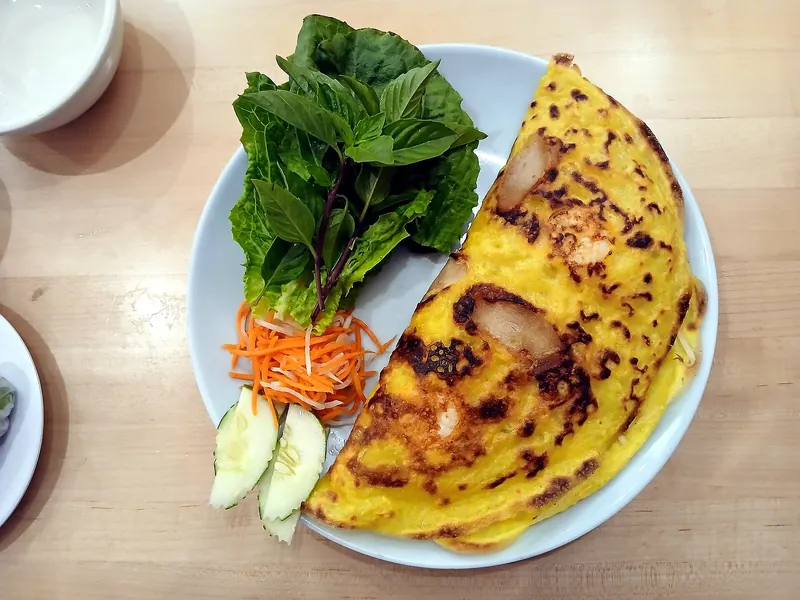
Bánh xèo
The sizzling turmeric crepe: rice batter in a ripping-hot pan (the 'xèo' is the sound), filled with pork, prawns, and bean sprouts, folded, cut, wrapped in mustard leaves and herbs, dunked in nước chấm.
Where it comes from: Bánh xèo belongs to the south and center: in Saigon the crepes run large and lacy-edged from cast-iron pans, cooked to order in open kitchens where you hear your dinner before you see it. Mien Tay (Mekong) cooks get the credit for the crispest.
How to eat it: Scissors come with it: cut, wrap in greens with herbs, roll tight, dunk fully. Eat with hands; a fork is a confession.
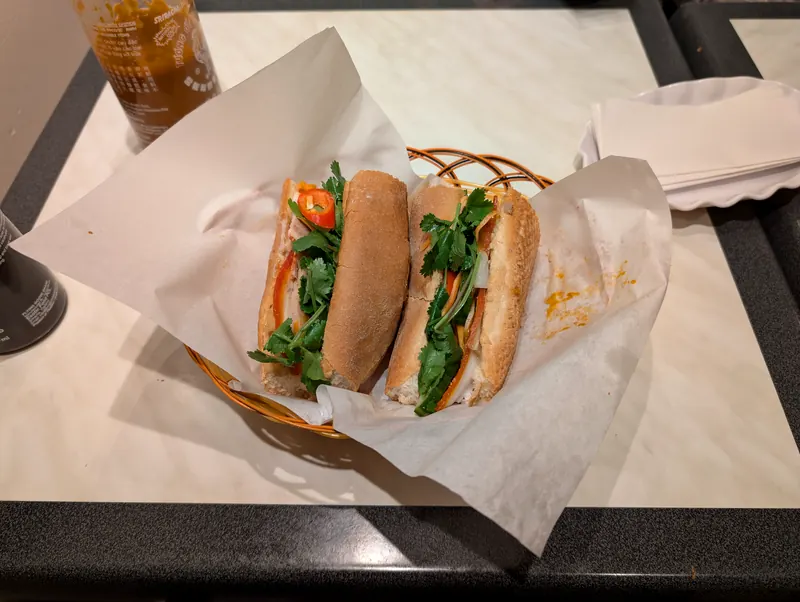
Bánh mì
Saigon is the bánh mì's spiritual capital: shattering baguette, pâté, mayonnaise, cold cuts, pickles, cucumber, cilantro, chili. The loaded Huỳnh Hoa version is the city's most famous sandwich, deservedly.
Where it comes from: The sandwich took its modern form here, where the baguette met Vietnamese fillings and southern generosity. Carts time their bakes to the commuter waves, and the great shops sell thousands a day without a seat in the house.
How to eat it: From a cart or Huỳnh Hoa's counter, eaten within minutes over the paper. 'Một ổ đầy đủ': one, with everything.
Ốc (snails and shellfish)
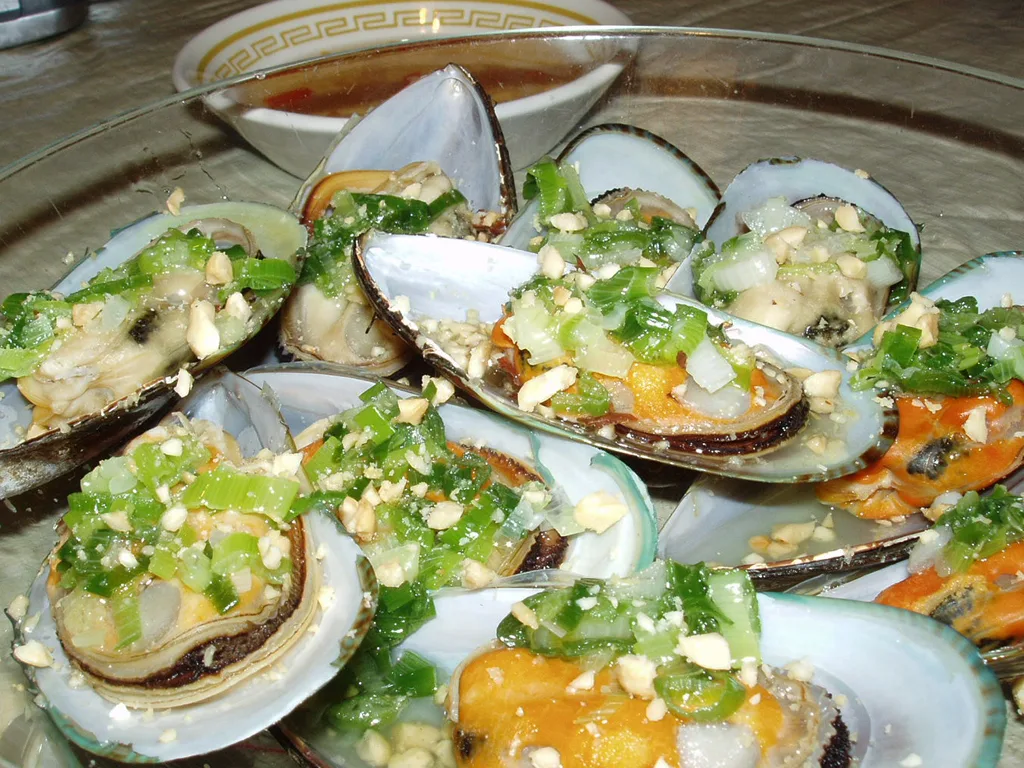
The District 4 religion: dozens of snails, clams, and crab cooked a dozen ways (coconut milk, tamarind, butter garlic, salted egg yolk), ordered in waves with beer, until the table is a shell midden.
Where it comes from: Vinh Khanh street's ốc joints turned Saigon's snail habit into a nightly festival: the food is cheap because the labor is yours (pins, picks, and patience), and the point is not dinner but the hours around it.
How to eat it: Order four or five small plates per round, not one big one: ốc len xào dừa (sea snails in coconut milk, sucked from the shell) is the rite of passage. Bread mops the sauces.
Cà phê sữa đá
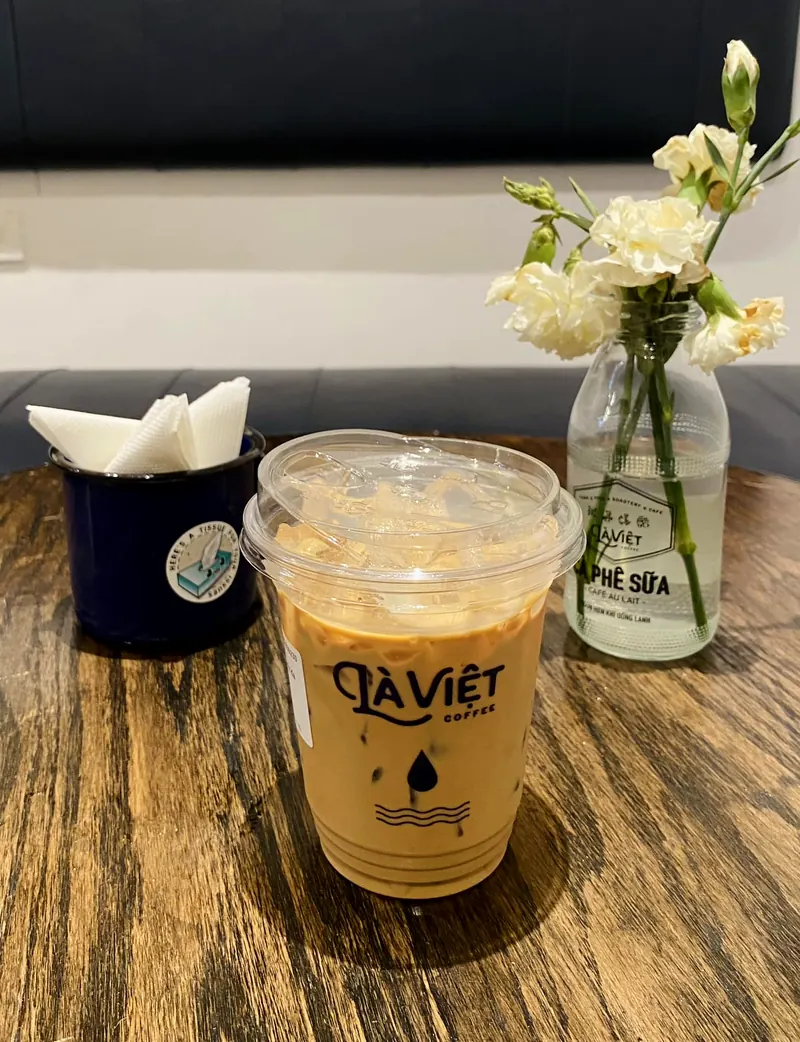
Iced coffee as strong as anywhere on earth: dark robusta dripped through a phin filter onto condensed milk, stirred over ice. Saigon runs on it, from sidewalk stools to the cafe apartments.
Where it comes from: Vietnam is the world's second coffee exporter and its own best customer. Saigon's contribution is cafe culture itself: French-era cafes, sidewalk stools, and the 'cà phê bệt' habit of sitting on cardboard in the park by the cathedral with a plastic cup.
How to eat it: Order 'cà phê sữa đá', wait for the drip (do not rush a phin), stir, pour over ice. One is a drink; two is a personality change.
Street food, decoded
Saigon's street food is a night economy. The carts come out for the commuter waves, the cơm tấm grills smoke from dawn, and after dark whole streets convert: Vinh Khanh into a snail festival, Van Kiep into a food market, the sidewalks of District 3 into dining rooms. The food is built for a city that works hard, earns, and spends on eating out like nowhere else in the country.
Cho Lon runs in parallel: a Chinese-Vietnamese food civilization with its own breakfast (dim sum and hủ tiếu), its own sweets, and its own market at Binh Tay. A complete Saigon eater needs both cities. That is the work of about four days, and it is the best four days of eating in Vietnam.
The ốc joint
Plastic tables down a District 4 street, a menu of shellfish longer than most restaurants', beer by the tower. Order in waves, work for your food, stay for hours. Vinh Khanh is the famous street; every district has one.
The cơm tấm stall
A grill, a rice pot, a glass case of pork chops: Saigon's fuel stations, serving the full sườn bì chả plate in five minutes at any hour the city is awake.
The cafe apartment
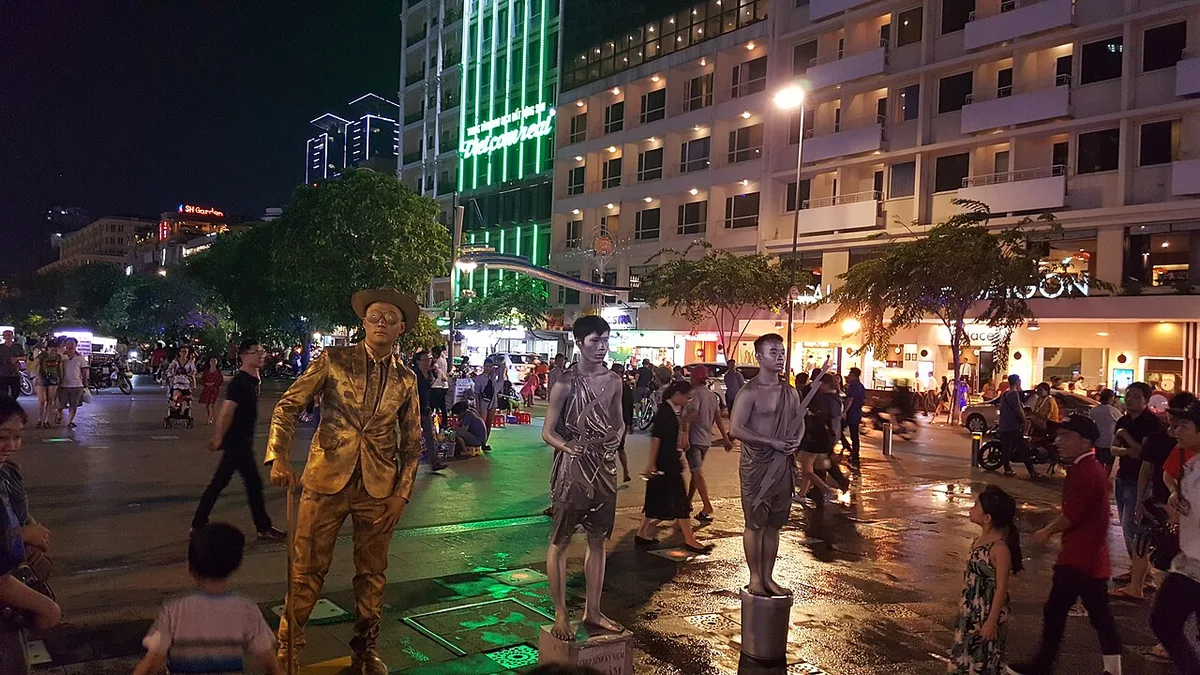
Old apartment blocks on Dong Khoi and the Walking Street hide cafes up unmarked stairwells (42 Nguyen Hue is the famous stack): pay the elevator fee, pick a balcony, watch the city over cà phê sữa đá.
The Cho Lon breakfast
Dim sum houses and hủ tiếu carts in District 5 from 6 a.m.: the Chinatown morning, steamed, rolled, and noodled, with chè sellers for the sweet finish.
The night street market
Van Kiep in Binh Thanh and Ho Thi Ky in District 10: hundreds of stalls after dark, skewers, snails, desserts, and the whole neighborhood out eating. Saigon's street food at full volume.
Cà phê bệt
Coffee 'on the flat': a plastic cup from a cart, a piece of cardboard on the grass by the cathedral or in Tao Dan Park, and the city's youth at leisure. The cheapest seat in Saigon and one of the best.
The rules that keep it safe and good
Saigon's clock runs late: judging a stall by its 6 p.m. emptiness is a mistake; the city eats at 8.
At ốc joints, order in rounds and keep the shells: the table is the scoreboard, and bread is ordered for the sauces, not the snails.
Ben Thanh and the tourist seams haggle; street stalls elsewhere post honest prices. Ask once, smile, and do not make a sport of small money.
The phin filter drips at its own speed. Coffee in Saigon is a pause, not a pickup; plan the day in cafes, not between them.
Traffic is crossed slowly and steadily, as in Hanoi, but the distances are bigger: use Grab bikes like the city does, helmet on, phone away.
The markets
Markets are where Ho Chi Minh City actually shops and eats. Each one has a different job; go in the morning, when the food counters are at their busiest.
ABen Thanh Market
The city's symbol since 1914: fabric and souvenirs in the hall, a food court of stalls at its heart, and a night market of food and goods around it after dark. Start here, then graduate outward.
Eat: Graze the food stalls at lunch; the night market for skewers and chè.
BBinh Tay Market, Cho Lon
Chinatown's great wholesale market: dried goods, medicines, spices, and a food court of hủ tiếu, dim sum, and sweets. The pantry of District 5, at wholesale scale.
Eat: Hủ tiếu for breakfast, chè for the road, like the traders.
CHo Thi Ky Market
A flower market by day that becomes one of Saigon's great food streets at night: Cambodian-influenced snacks, skewers, snails, and desserts down lantern-lit lanes. Local, loud, delicious.
Eat: Everything, in small portions, twice. Arrive at 7 p.m. hungry.
DTan Dinh Market
By the pink church at District 1's north edge: a local market famous for its food stalls, especially cháo and rice dishes, serving the neighborhood for generations.
Eat: The food stalls at the market's edge, where the aunties point you.
EAn Dong Market
District 5's big covered market: fabric and wholesale above, a food basement of Cho Lon sweets, snacks, and noodle stalls below. The Chinatown pantry, indoors.
Eat: Desserts and snacks in the basement food court, trader-style.
Neighborhoods: 1 District 1 · 2 District 3 · 3 District 4 · 4 Cho Lon, District 5 · 5 Binh ThanhMarkets: A Ben Thanh Market · B Binh Tay Market, Cho Lon · C Ho Thi Ky Market · D Tan Dinh Market · E An Dong MarketPins mark neighborhood centers, so you can place each area against where you are staying. Taxi times under each neighborhood below are measured from Ben Thanh Market.
1District 1
Downtown: Ben Thanh Market, the Dong Khoi boulevards, the cafe apartments of Nguyen Hue, and the city's formal dining rooms. Touristy at the seams, but the classics (Phở Hòa is up in District 3, Huỳnh Hoa in District 1) hold their own.
From Ben Thanh Market: Ben Thanh Market is its heart; you are there
2District 3
Leafy, local, and full of institutions: Phở Hòa on Pasteur, villa cafes, and neighborhood stalls. Where Saigon's middle class eats its own food, one district north of the tourist core.
From Ben Thanh Market: 10 min by taxi
3District 4
The smallest, densest district, famous for one thing: ốc. Vinh Khanh street is a nightly open-air row of snail and seafood joints, plastic tables to the curb, beer towers, and half the city eating shellfish.
From Ben Thanh Market: 10 min by taxi
4Cho Lon, District 5
Saigon's Chinatown, among the world's oldest: Binh Tay Market, dim sum houses, hủ tiếu carts, medicine shops, and chè dessert sellers. A second food civilization inside the first, three centuries deep.
From Ben Thanh Market: 20 min by taxi
5Binh Thanh
Across the canal from District 1: Van Kiep street's nightly food strip, market lanes, and the local Saigon of students and families. The street-food district visitors graduate to.
From Ben Thanh Market: 15 min by taxi
The people behind the food
The names that explain how Ho Chi Minh City cooks the way it does now.
Bánh Mì Huỳnh Hoa
Institution, District 1, since 1989
The most famous bánh mì in Vietnam: a two-handed loaf loaded with pâté, mayonnaise, and a deli counter of cold cuts, sold from a Le Thi Rieng storefront to a permanent queue. Saigon's sandwich standard, weighed in grams and arguments.
Phở Hòa Pasteur
Institution, District 3, since 1968
The grand old phở house on Pasteur: cavernous, fast, and unchanged in approach for over fifty years, serving the southern bowl with the full herb plate. If you eat one phở in Saigon, the city sends you here.
Cơm Tấm Ba Ghiền
Institution, Phu Nhuan, since 1995
Famous for a pork chop the size of the plate, grilled over charcoal and lacquered sweet: Ba Ghiền turned cơm tấm into a destination and earned a Michelin Bib Gourmand doing it. The queue forgives everything once the chop lands.
The ốc keepers of Vinh Khanh
Institution, District 4
The snail-street families who run the nightly shellfish festival: tanks of live stock, a dozen sauces, and a whole district's evening economy. Their tables taught Saigon that dinner can be a contact sport.
The chè sellers of Cho Lon
Craft, District 5
Dessert specialists of the Chinatown lanes, serving Chinese-Vietnamese sweet soups, đậu hũ, and jellies from carts their families have pushed for decades. The correct ending to a Cho Lon morning.
If you only eat ten things here
Cơm tấm sườn bì chả at Ba Ghiền or a dawn cart, pork chop first.
Phở at Hòa Pasteur with the full southern herb plate.
A Huỳnh Hoa bánh mì, eaten over the paper within minutes.
An ốc night on Vinh Khanh: three rounds, coconut snails mandatory.
Hủ tiếu khô for breakfast in Cho Lon.
Bánh xèo wrapped and dunked at a sizzling open kitchen.
A cafe-apartment balcony coffee above Nguyen Hue.
Ho Thi Ky at 7 p.m., grazing until the lanes close.
Chè in Cho Lon to finish the morning properly.
Cà phê bệt by the cathedral, cardboard seat, no agenda.
Eating well here
cơm tấm
'Broken rice': the plate is 'cơm tấm sườn bì chả' for the full works. Say it at any hour.
ốc
Snails, and by extension the whole shellfish-night-out culture. 'Đi ăn ốc' means 'let's go out', full stop.
hủ tiếu
The chewy noodle of the south, Khmer-born. 'Hủ tiếu khô' is the dry, sauce-tossed version.
cà phê bệt
Coffee 'on the flat': a cup, a cardboard seat, a park lawn. Saigon's youth culture in two words.
ngon quá
'So delicious': the review every stall wants. Use it and mean it.
một ổ đầy đủ
'One loaf, the works': how to order a bánh mì that holds nothing back.
tính tiền
'The bill': mime writing on your palm and the city understands.
đá
Ice. It goes in the coffee, the tea, and the beer, and nobody asks first.
Do people really call it Saigon?
Yes: the city was renamed in 1976, but Saigon remains the name of the center, the river, the beer, and everyday speech. Using it marks you as a person, not a form. Both names will get your taxi where it is going.
How late does the food run?
Later than anywhere else in Vietnam: dinner peaks at 8, ốc joints run to midnight and beyond, cơm tấm and phở stalls serve the night city, and some districts barely close. Eat a second dinner; Saigon expects it.
Ben Thanh Market: eat there or not?
Yes, with eyes open: the food stalls inside and the night market outside are worth it, but prices near the tourist core need a friendly haggle and the best stalls serve locals at local hours. For a first cơm tấm or phở, the institutions beat the market; for grazing, the night market is fun.
Where should I stay to eat well?
District 1 for the classics at walking distance, District 3 for the local version of the same city, or near Vinh Khanh if snails are a priority (they should be). Cho Lon deserves a full day, not a base.
Is the street food safe here?
Same system as everywhere in Vietnam: busy stalls, fast turnover, food cooked to order over fierce heat. Ốc joints cook shellfish to order; the risk calculus favors the crowded places, which are also the delicious ones.