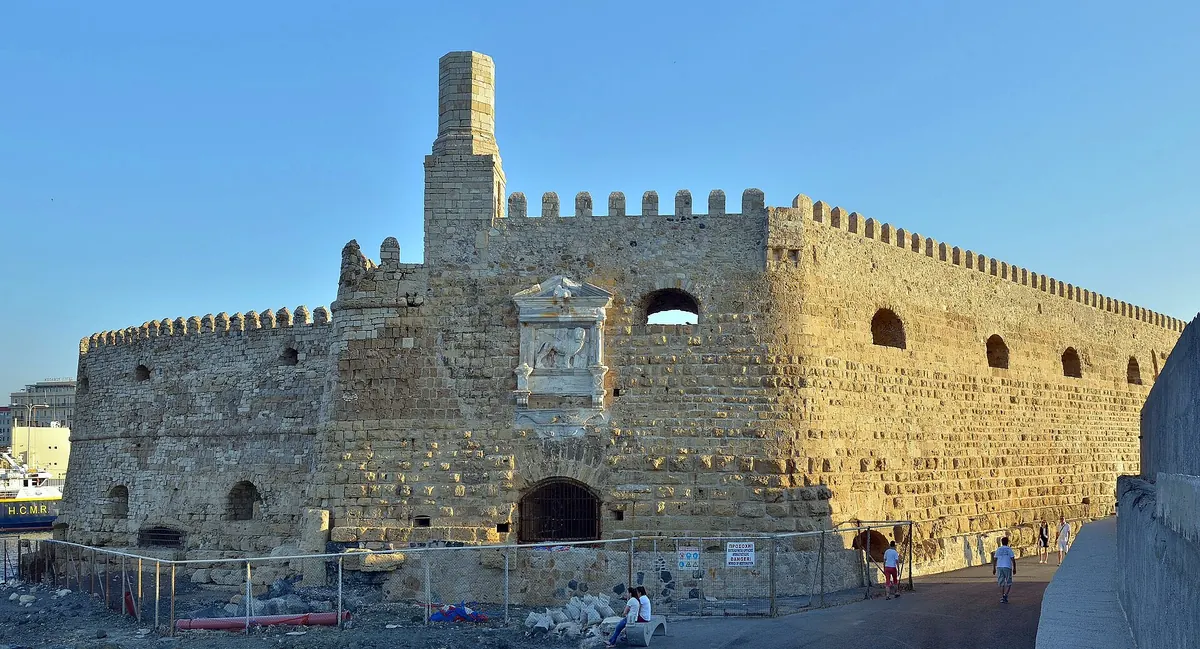
The Venetian fortress of Koules, Heraklion. Photo via Wikimedia Commons.
How Heraklion eats
Heraklion is a working capital, and Crete's food is working food raised to art: barley rusks soaked and loaded as dakos, wild greens gathered from the hills, snails after the rain, lamb roasted standing around the fire (antikristo), and olive oil poured like a sauce because here it is one. Portions assume you have been in a field, and the island's hospitality assumes you are family until proven otherwise.
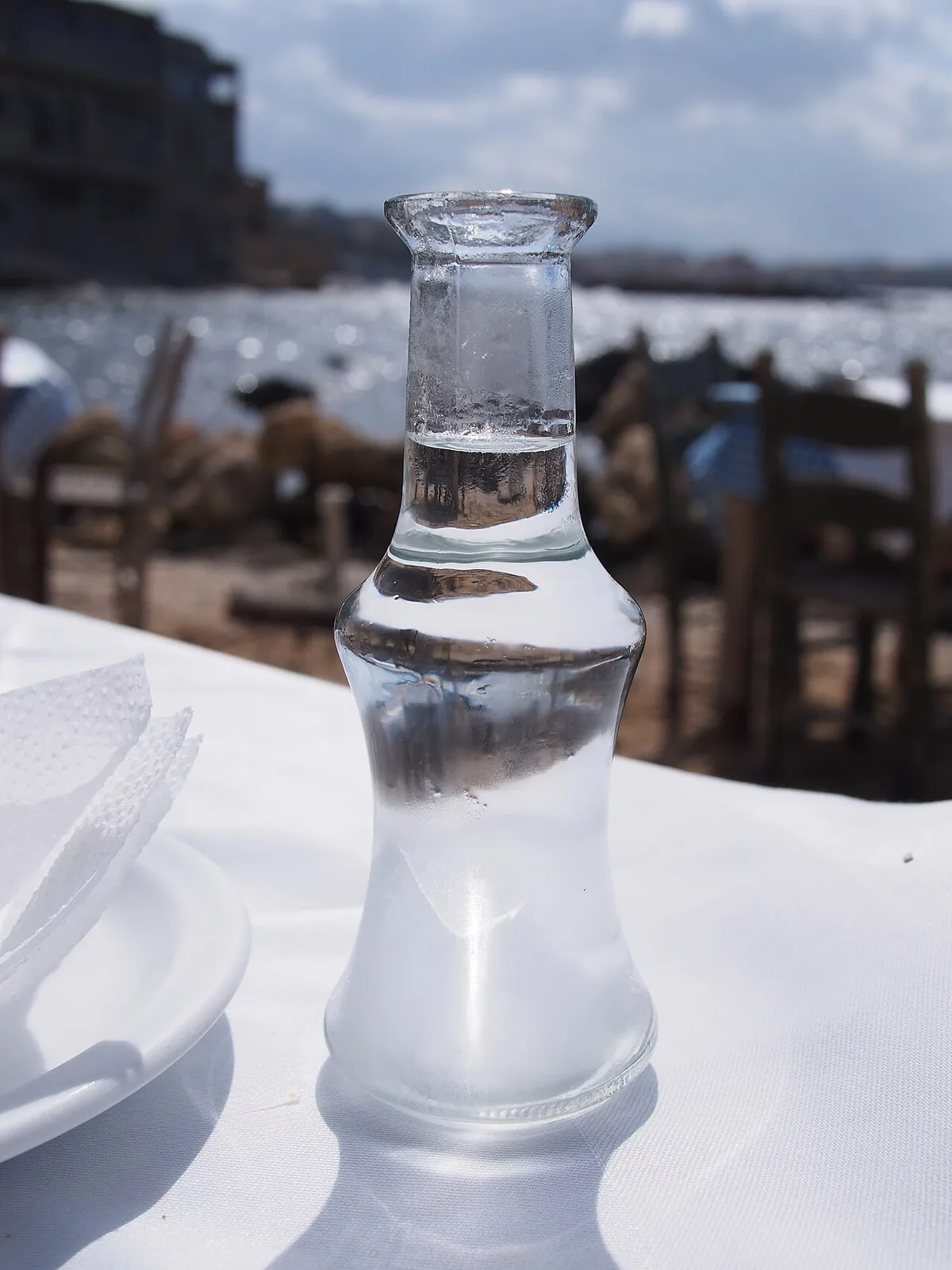
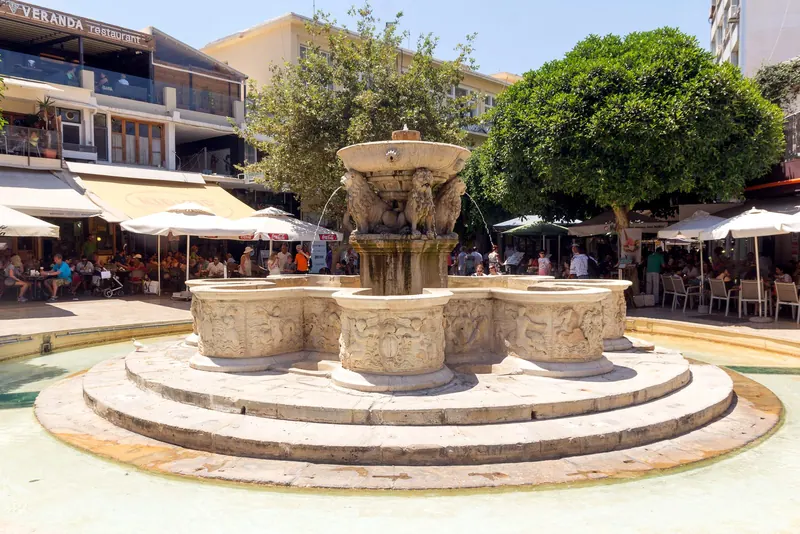
The institution to learn is the rakadiko: order tsikoudia (the island's grape spirit, called raki in the east) and the food arrives in courses, small plates timed to the bottle, until the table is full and the bill is somehow small. Add a bougatsa at Lions Square in the morning and the market street at noon, and Heraklion has explained Crete to you.
Learn the foods
Start here, not with a restaurant. Learn what these foods are, where they come from, and how locals eat them, and the whole city opens up: every menu, every market, every street corner starts making sense.
Dakos
The Cretan rusk salad: a barley paximadi softened with water and oil, loaded with grated tomato, mizithra cheese, olives, oregano, and a flood of olive oil. Crete's emblem, breakfast to midnight.
Where it comes from: The rusk exists because Cretan bread was baked rarely and kept forever; soaked back to life, it became the island's defining texture. Dakos is the dish every Cretan abroad describes first, and the oil is not a dressing but a serving.
How to eat it: Let it sit two minutes so the rusk drinks the tomato, then break it with the fork's edge. If the plate is not shining with oil, ask for more; this is Crete.
Chochlioi boubouristi
Snails fried in olive oil with rosemary and a splash of vinegar or wine, eaten with picks and bread. The island's beloved snail, gathered after rain and cooked a dozen ways; boubouristi (crackling in the pan) is the classic.
Where it comes from: Snail-gathering is a Cretan grandmother's sport, and the island eats more snails, more proudly, than anywhere in Greece. They are Lenten food, feast food, and rakadiko food at once, which covers most occasions.
How to eat it: Pick, dip in the pan oil with bread, repeat. The rosemary branch in the pan is not garnish; it perfumes the oil you are mopping.
Antikristo lamb
Lamb salted and roasted in pieces standing around, not over, the fire: 'facing' the heat for hours until the skin crisps and the meat stays soft. The shepherd's method, now the taverna spectacle of the mountains and the good city houses.
Where it comes from: Antikristo ('opposite Christ', facing) is the mountain shepherds' engineering: no spit, no turning mechanism, just geometry and patience. In the villages it is feast cooking; Heraklion's best tavernas keep a fire corner for it on weekends.
How to eat it: Eaten with hands, lemon, and bread, with dakos and greens around it. Order it when you see the fire; it is not an every-day dish.
Gamopilafo
The wedding pilaf: rice cooked in rich goat-and-chicken broth, finished with lemon and sometimes staka butter, served at celebrations with the boiled meats. Crete's festive rice, spooned in quantity.
Where it comes from: Gamopilafo ('wedding rice') is cooked in cauldrons for village weddings by the men's cooking teams, and its richness is the measure of the feast. Tavernas serve a scaled version; the broth is the whole secret and no one scales that.
How to eat it: When a menu lists it, order it: it means the kitchen is cooking seriously that day. Lemon over, meat beside, greens after.
Sfakiani pita
A thin griddled pie from Sfakia in the west: soft cheese inside a delicate crust, served hot with thyme honey poured over. Sweet, salty, and gone in four bites.
Where it comes from: Sfakia, the mountainous southwest, guards its pie like its history: the crust is rolled to transparency and the honey must be the island's thyme honey. It travels across Crete as the rakadiko's sweet ending.
How to eat it: Hot, honey first, cut in quarters for the table. It is dessert and cheese course in one gesture.
Kalitsounia
Little folded cheese pastries, sweet with cinnamon or savory with wild greens, baked or fried, varying by village and grandmother. Crete's Easter pastry, now an all-year bakery staple.
Where it comes from: Every region of Crete folds its kalitsounia differently (the shape tells the village), and the herb-filled ones carry the island's foraging culture in a crust. Bakeries in Heraklion sell the map by the tray.
How to eat it: Warm from the bakery, one sweet and one green, as the market morning's second breakfast.
Heraklion bougatsa
The city's own take: phyllo around tangy mizithra cheese, served with sugar and cinnamon if you ask sweet. Lions Square's Kirkor has made it since 1922, and the morning queue is the review.
Where it comes from: Kirkor's Armenian founders brought the craft in 1922, the same refugee wave that fed Thessaloniki; Heraklion's version kept the sour-cheese heart the northern custard style sweetened away. The two cities' bougatsa difference is a century-old argument in pastry.
How to eat it: At the fountain, morning, standing with the workers. Order it 'me zahari' (with sugar) or plain and take your side in the argument.
Street food, decoded
Heraklion's grazing runs on bakeries and the market street: bougatsa at the fountain, kalitsounia from the tray, dakos wherever oil is poured, and the rakadiko waiting at the day's end like a full stop. This is not a stall city; it is a table city, and the tables fill at lunch as much as dinner.
The rakadiko system is the lesson: you order the spirit (a small bottle of tsikoudia) and the kitchen sends courses: dakos and olives, then snails or greens, then meat, then fruit and a sweet, each timed to the bottle. The food is not a menu; it is a sequence, and the bill treats it as one modest sum.
The rakadiko
Order raki, receive dinner in courses: the island's great institution, loud, generous, and cheaper than the food math suggests. The center and the west walls keep the classic rooms.
The Lions Square bougatsa
Kirkor's counter at the fountain since 1922: mizithra bougatsa, sugar snow, the whole city passing. Heraklion's morning in one address.
The market lunch counter
In and around 1866 street: small kitchens cooking the market's goods for the market's people, stews and grills at local prices.
The village kafeneio
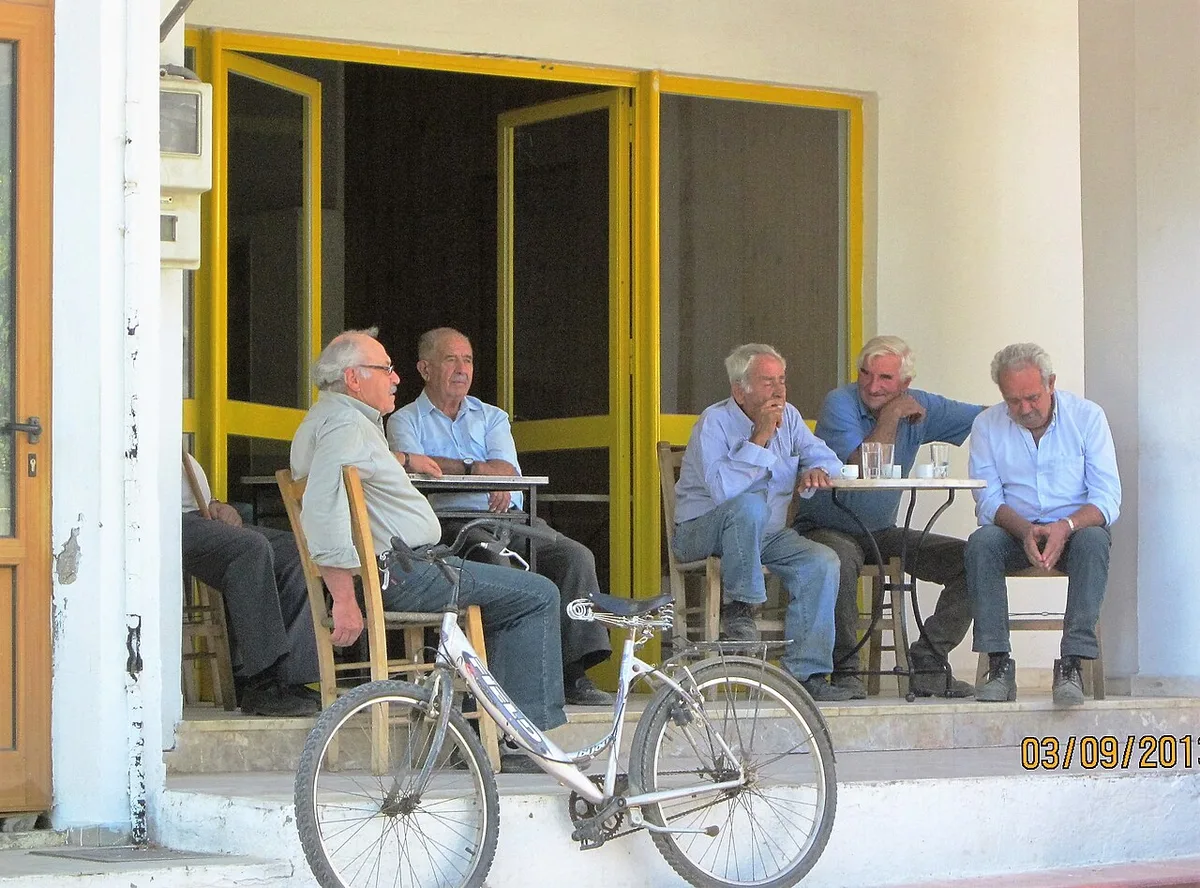
In Archanes and every village within reach: coffee, raki, whatever the house is eating, and the square as the room. The format Crete was built on.
The olive oil estate visit
Around Peza and Archanes: mills and estates pouring tastings of the new oil, rusks as the spoon. Book a morning; leave with a tin.
The harbor fish taverna
Along the old port: the day's catch, Cretan greens, and the evening volta outside the windows. The city's seafood register, unhurried.
The rules that keep it safe and good
Never refuse the first raki; nurse it if you must. The second is negotiable, the first is the welcome.
Order less than you think at every Cretan table: the kitchen adds dishes 'apo emas' (from us) as a matter of honor.
Dakos needs its two minutes: eating it crunchy-dry marks the visitor; the rusk must drink first.
The market street winds down by mid-afternoon and closes Sundays; Saturday's laiki is the week's food festival, go early.
In villages, the kafeneio is the information office, the bar, and the bus stop of gossip: sit, order coffee, and the island explains itself.
The markets
Markets are where Heraklion actually shops and eats. Each one has a different job; go in the morning, when the food counters are at their busiest.
A1866 Street Market
The central market run since the 19th century: produce, Cretan cheeses, herbs, honey, and rusks under one loud canopy, the city's pantry in a single street.
Eat: Dakos materials and kalitsounia from the stalls; lunch at the counters inside.
BThe Pateles Laiki
Heraklion's big weekly farmers market: Messara produce, oil, cheese, and greens at farm prices, the city shopping in bulk on market day.
Eat: Whatever the farmers are handing out; the herb bundles are the souvenir.
CThe Harbor Fish Stalls
The morning's catch at the old port, supplying the harbor tavernas and half the city. Small, early, and done by the time visitors wake.
Eat: Watch the auction rhythm; eat the results at lunch on the same quay.
DArchanes Village
The wine village's square, bakeries, and tavernas: Crete's model village, restored house by house, eating at full strength on Sundays.
Eat: The full village lunch; the local wine (vilana and kotsifali) by the jug.
EThe Old Town Herb and Spice Shops
Around the market lanes: dittany, mountain tea, and the island's gathered herbs in sacks, the foraging culture sold by the gram.
Eat: Dittany tea at a kafeneio after; buy a bundle for the suitcase.
Neighborhoods: 1 Lions Square and the Old Town · 2 The Harbor and Koules · 3 1866 Street and the Market Lanes · 4 Chanioporta and the West Walls · 5 ArchanesMarkets: A 1866 Street Market · B The Pateles Laiki · C The Harbor Fish Stalls · D Archanes Village · E The Old Town Herb and Spice ShopsPins mark neighborhood centers, so you can place each area against where you are staying. Taxi times under each neighborhood below are measured from Lions Square.
1Lions Square and the Old Town
The Morosini Fountain's square and the lanes around it: bougatsa shops, cafes, and the pedestrian heart of the city, Venetian stones under Cretan appetites.
From Lions Square: The fountain is the reference point; you are there
2The Harbor and Koules
The Venetian port and its fortress: fish tavernas along the water, the marina promenade, and the city's evening volta as the light drops.
From Lions Square: 10 min on foot
31866 Street and the Market Lanes
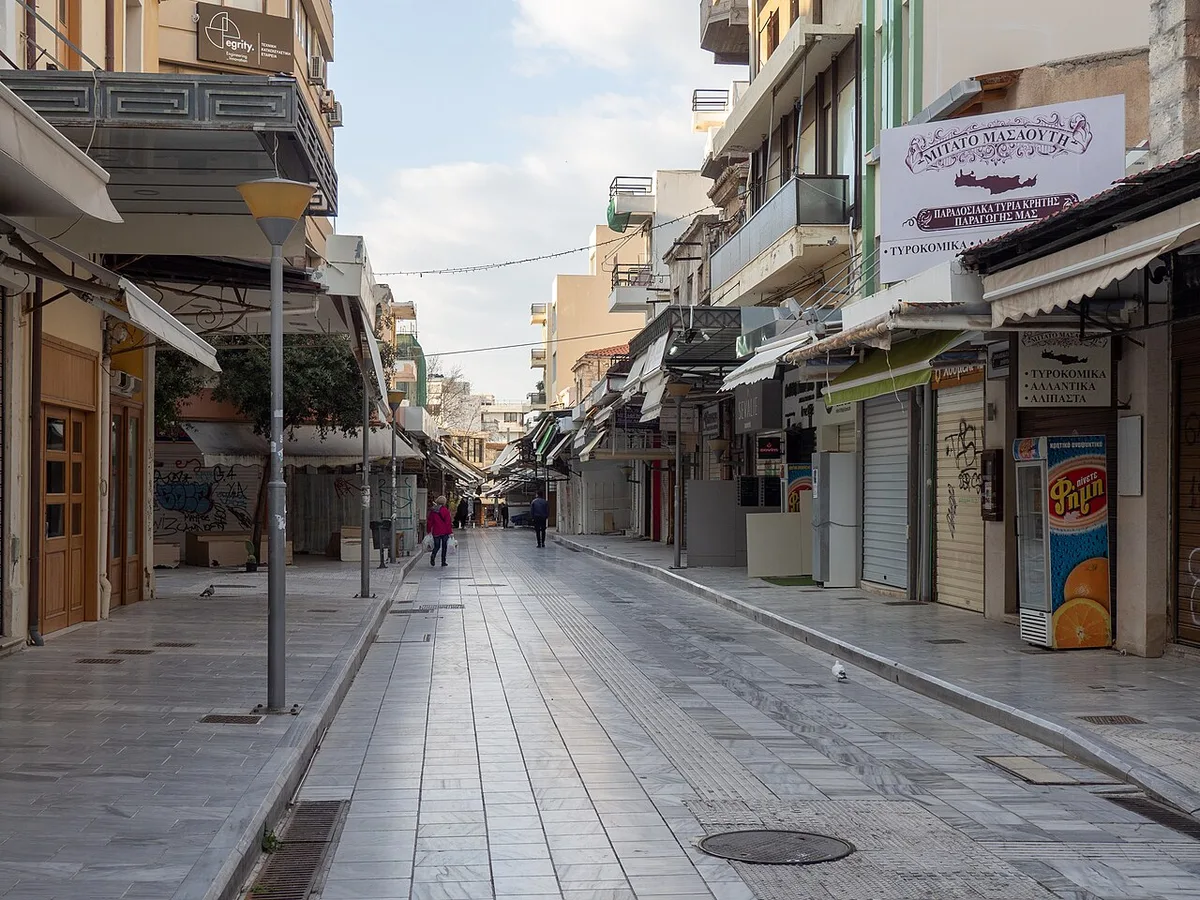
The central market street named for the revolt year: produce, cheese, herbs, and rusks in a loud covered run, with the city's lunch counters threaded through it.
From Lions Square: 5 min on foot
4Chanioporta and the West Walls
The old town's west gate quarter: neighborhood tavernas and kafenia under the Venetian walls, where Heraklion eats its own evenings away from the center's visitors.
From Lions Square: 10 min on foot
5Archanes
The wine village 15 km south, under Mount Juktas: tavernas in a restored old town, the island's oldest wine country around it, and Sunday lunch at full Cretan strength. A bus ride, a different world.
From Lions Square: 30 min by bus
The people behind the food
The names that explain how Heraklion cooks the way it does now.
Kirkor
Institution, Lions Square, since 1922
The bougatsa house at the fountain, Armenian-founded in the refugee year and still the city's morning standard: sour mizithra in phyllo, sugar on request, a century of Heraklion passing the counter.
The rakadiko keepers
Institution, citywide
The hosts of the raki-and-courses system, who read a table and pace the plates to the bottle: part cook, part conductor. Their rooms are where Heraklion celebrates everything, weekly.
The snail gatherers
Craft, the hills after rain
The grandmothers and farmers who collect chochlioi from the hillsides after the rains, a foraging economy older than the city. Every plate of boubouristi starts as their morning walk.
The Archanes vintners
Craft, Archanes and Peza
The winemakers of Crete's oldest wine country (presses there date to Minoan times), reviving vilana, kotsifali, and liatiko for the island's own table. The village lunch pours their work by the jug.
The Messara growers
Craft, the southern plain
The farmers of Crete's breadbasket, whose tomatoes, oil, and rusks (baked from their barley) stock the capital's markets. Heraklion's generosity is their harvest, delivered daily.
If you only eat ten things here
Kirkor bougatsa at the fountain, 9 a.m., sugar on.
A rakadiko full run: bottle ordered, courses surrendered to.
Dakos done right: two minutes' patience, oil without restraint.
Chochlioi boubouristi with bread for the pan oil.
1866 Street at noon: cheese, herbs, rusks, lunch at a counter.
Archanes on Sunday: village lunch, jug of the local red.
Antikristo when the fire is lit, hands, lemon, no cutlery theater.
An olive estate tasting near Peza, tin bought, standards ruined.
Sfakiani pita hot, thyme honey poured at the table.
The harbor volta at dusk, fish taverna after, raki accepted.
Eating well here
tsikoudia
The island's grape spirit ('raki' in the east). It will be offered; you will accept the first glass.
dakos
The rusk, tomato, and mizithra plate. In Crete it is a food group, not an appetizer.
paximadi
The twice-baked rusk that survives anything. The dakos is built on it.
chochlioi
Snails, plural, beloved. 'Boubouristi' is the fried way, with rosemary.
horta
Wild greens, gathered and boiled, oil and lemon over. The island's daily vegetable.
antikristo
'Facing' the fire: the lamb roasted beside, not over, the flame. A weekend sighting.
apo emas
'From us': the words that precede the free plate you did not order and must not refuse.
logariasmo, parakalo
'The bill, please': at a rakadiko it closes an evening longer than planned, happily.
What is raki, and what are the rules?
Tsikoudia (called raki in eastern Crete) is the island's clear grape spirit, offered free at the end of meals and throughout them at a rakadiko. The rule is acceptance: take the glass, sip at your pace, and never wave it off. Refusing a Cretan's raki refuses the welcome, not the alcohol.
How big are the portions, really?
Cretan big: salads are platters, meat comes by the kilo to share, and the rakadiko's courses keep arriving. Order a third less than instinct says; the table will still fill, and the house will add a plate 'from us' regardless.
Is Heraklion itself worth days, or just a Knossos stop?
Knossos and the Archaeological Museum are the famous hours, but the city's table (market street, Lions Square, the rakadika) is Crete's everyday best. Sleep here, eat here, day-trip the island from here: the capital is the experience, not the transit.
What olive oil should I buy?
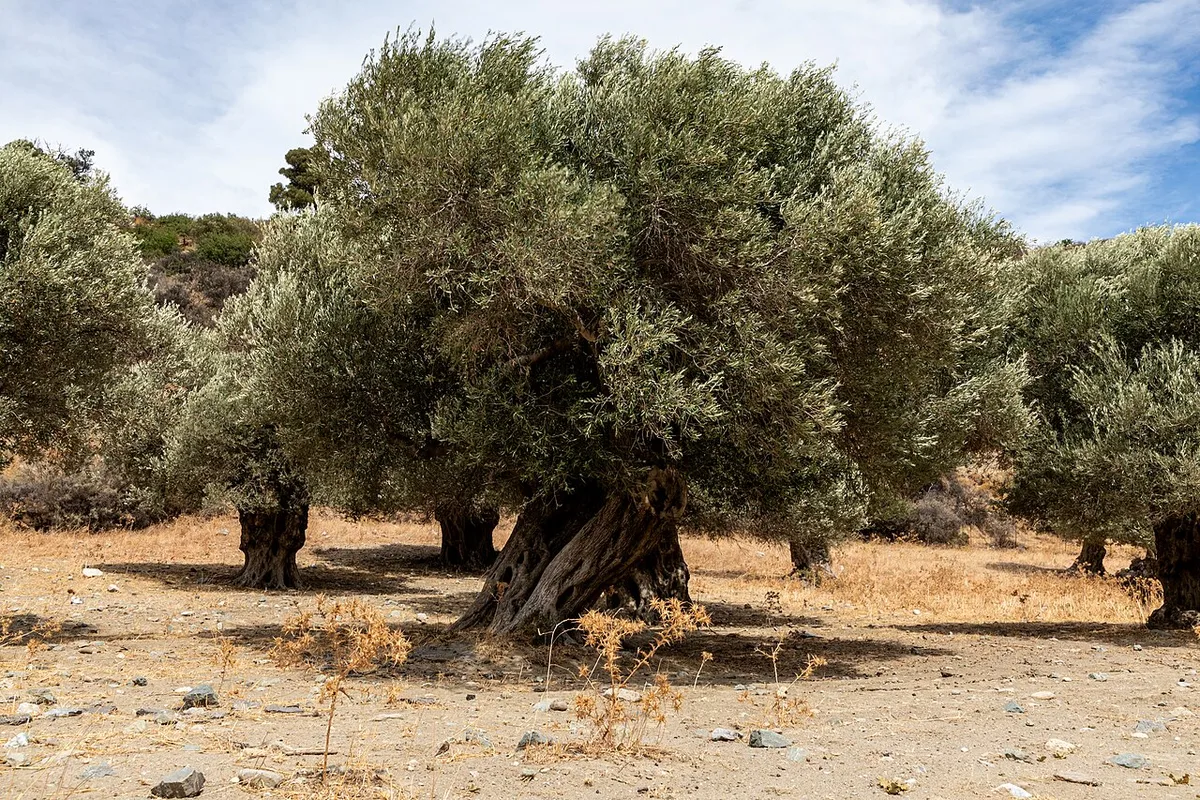
Single-estate or cooperative oil from the Messara or the Archanes-Peza country, early-harvest ('agoureleo') if the season offers it, in a tin from the market or the estate. Crete produces a fifth of Greece's oil; the good shops let you taste before the tin is sealed.
When do the snails appear?
After the autumn and winter rains, when the gatherers go out; dried and frozen stock keeps chochlioi on menus much of the year, but the fresh season is the islander's calendar mark. If a menu boasts fresh, order them.