The main gate of the Temple of Literature, Hanoi. Photo via Wikimedia Commons.
How Hanoi eats
Hanoi invented phở, perfected bún chả, and built a food culture on a simple rule: one shop, one dish, done properly for decades. The Old Quarter's 36 streets were named for the trades that sold on them, and the food trades never left: phở shops with no menu, chả cá pans arriving sizzling, bánh cuốn steamed to order behind a curtain of steam. Almost all of it happens on the sidewalk, on plastic stools, at hours set by the dish rather than the diner.
Phở is breakfast. Bún chả is lunch (Hanoians are firm on this). Egg coffee, invented here in 1946 when milk ran short, is the afternoon. Learn those three appointments and the city's day organizes itself around them. Everything else, the bia hơi corners, the West Lake shrimp cakes, the midnight markets, is enrichment.
Learn the foods
Start here, not with a restaurant. Learn what these foods are, where they come from, and how locals eat them, and the whole city opens up: every menu, every market, every street corner starts making sense.
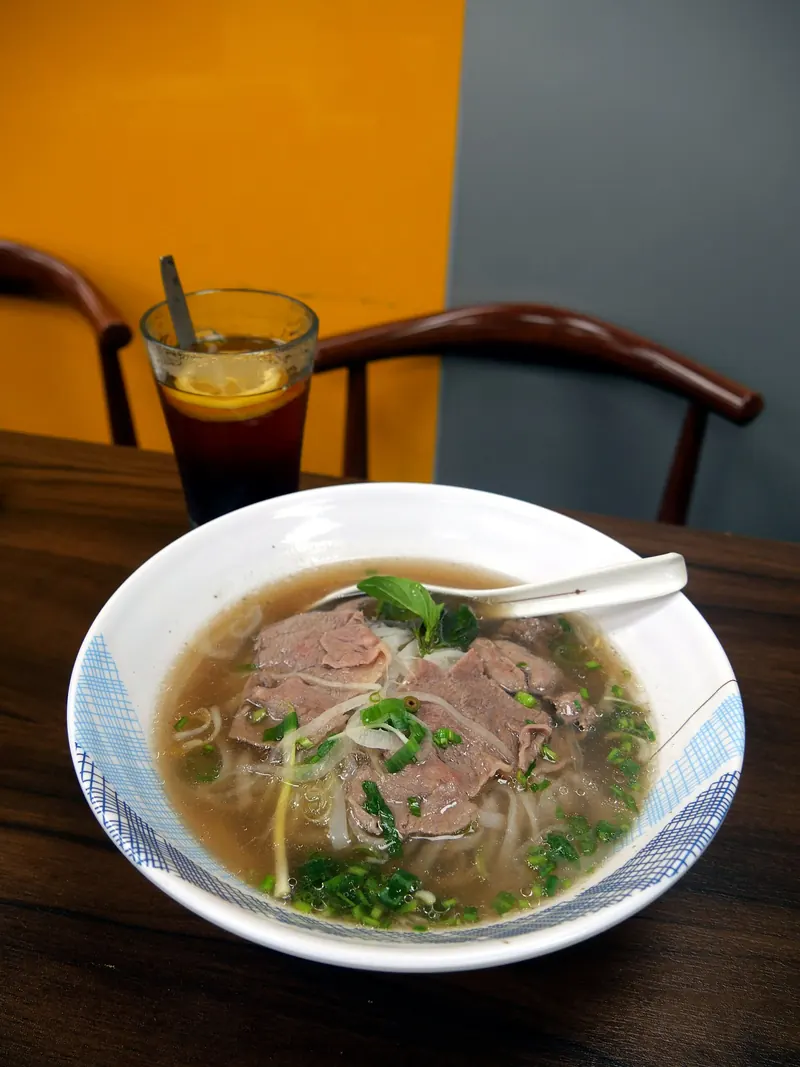
Phở bò
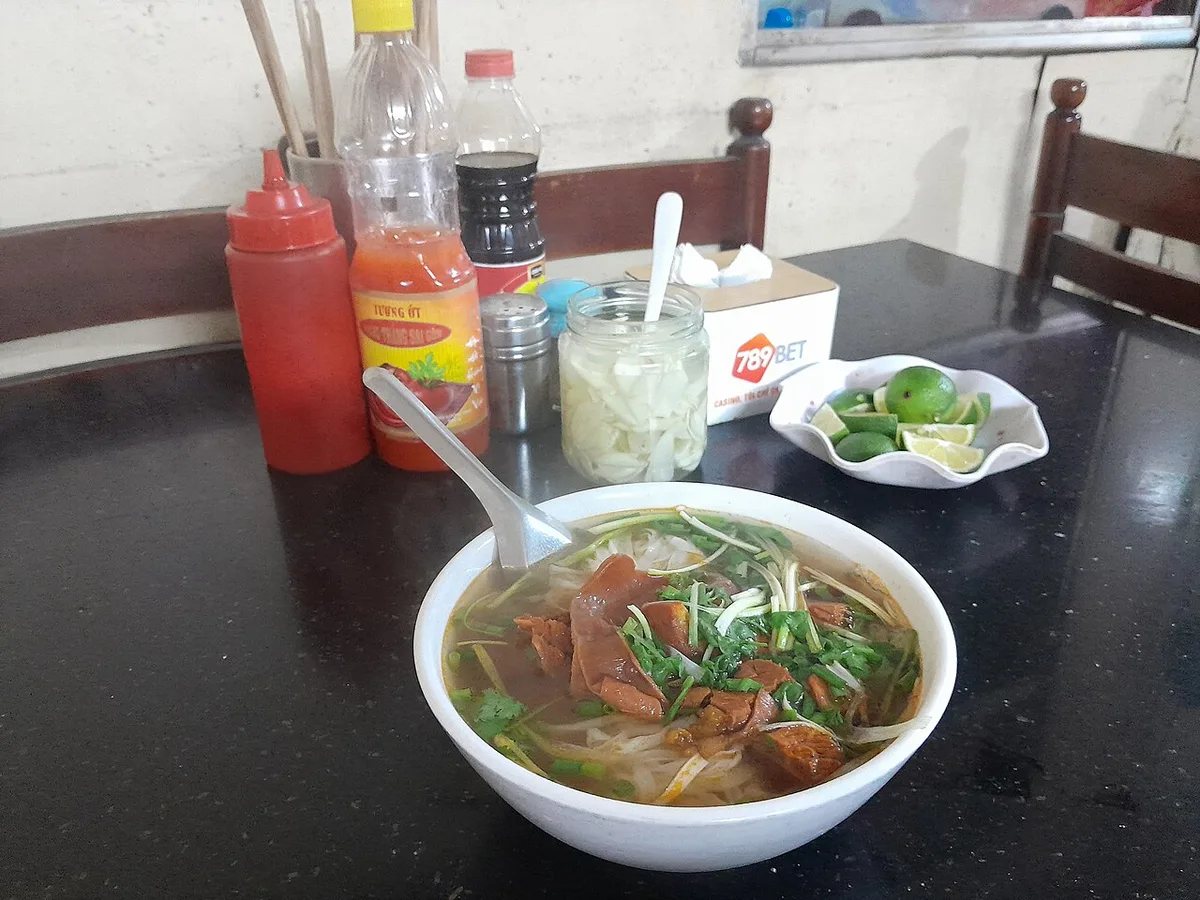
The beef noodle soup Hanoi gave the world: clear star-anise broth, rice noodles, rare beef cooking in the bowl, herbs and scallion. In Hanoi it is breakfast, unsweetened, with quẩy (fried dough sticks) for dunking.
Where it comes from: Phở appeared in Hanoi in the early 1900s, likely from Nam Dinh's noodle tradition meeting French beef demand, and the city made it canonical: broth clear and aromatic, never sweet (that is the southern edit), chili and garlic vinegar on the table, not in the pot.
How to eat it: Before 10 a.m., at a shop that serves nothing else. Squeeze lime, add chili, dunk a quẩy. Do not ask for a menu; say 'tái' (rare beef) or 'chín' (well-done) and sit.
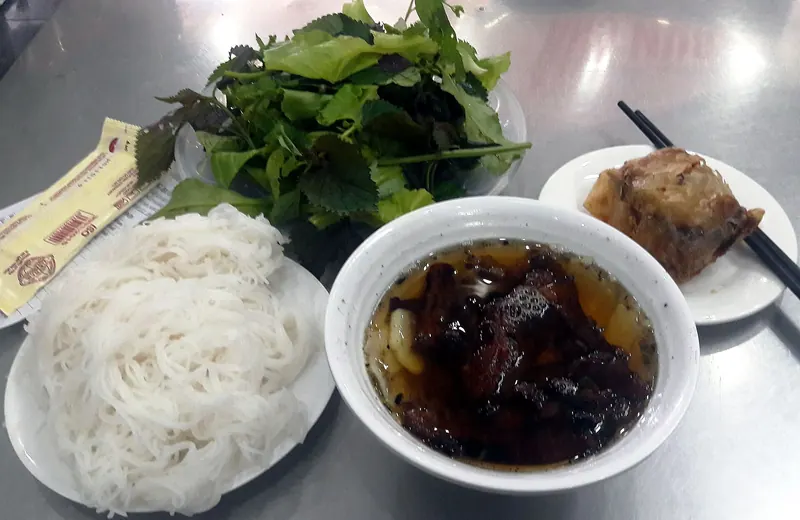
Bún chả
Hanoi's lunch: charcoal-grilled pork patties and slices in a warm fish-sauce broth with pickled papaya, a mountain of vermicelli and herbs beside it, nem cua bể (crab rolls) if you are serious.
Where it comes from: Bún chả is so Hanoian that the city treats phở places serving it at dinner as suspect. In May 2016 Anthony Bourdain took Barack Obama to Bún Chả Hương Liên, plastic stools and all; the 'Obama combo' is still on the menu, and the table is under glass.
How to eat it: Dunk noodles and herbs into the pork broth, piece by piece. Lunch only: the best shops sell out and close by early afternoon.
Chả cá
Turmeric-and-dill fish, fried at your table in a sizzling pan with spring onion, poured over vermicelli with peanuts and herbs. One dish, one famous street, a century of practice.
Where it comes from: Chả Cá Lã Vọng has served this single dish since 1871, when the Doan family fed resistance fighters from their house on what was then Hang Son street; the street is now named Chả Cá after the dish. The Lã Vọng name honors the fisherman-sage statue in the restaurant.
How to eat it: Let the staff work the pan: fish crisped, dill wilted, then build bowls of noodles, fish, peanuts, herbs, and a careful drop of mắm tôm (shrimp paste) if you are brave.
Bánh cuốn
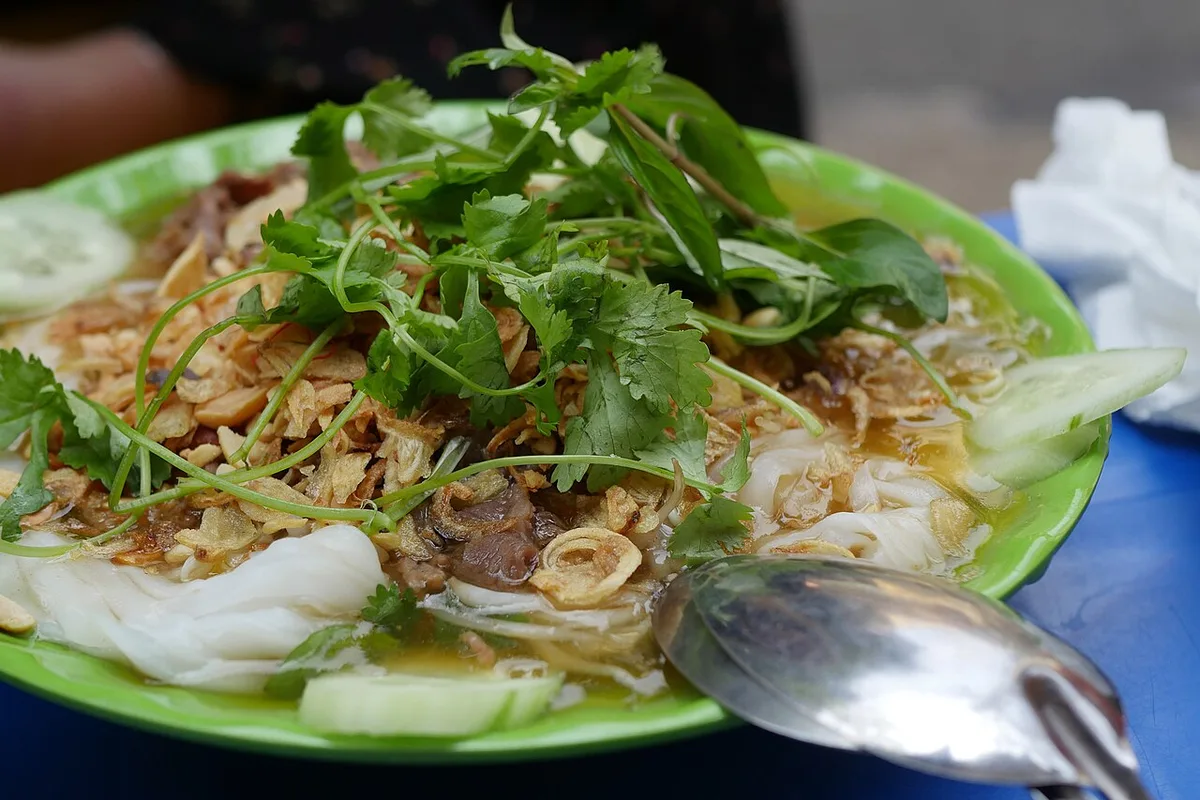
Silk-thin steamed rice sheets rolled around minced pork and wood-ear mushroom, showered with fried shallots, eaten with chả (cinnamon pork sausage) and a light fish-sauce dip. Breakfast, delicately.
Where it comes from: Bánh cuốn masters pour batter over a cloth steamer and lift the sheet with a bamboo stick in one motion, thousands of times a morning. Thanh Tri, a Hanoi village, gave its name to the thinnest style.
How to eat it: In the morning, where you can watch the steaming. Dip, do not soak; the sheet tears if you bully it.
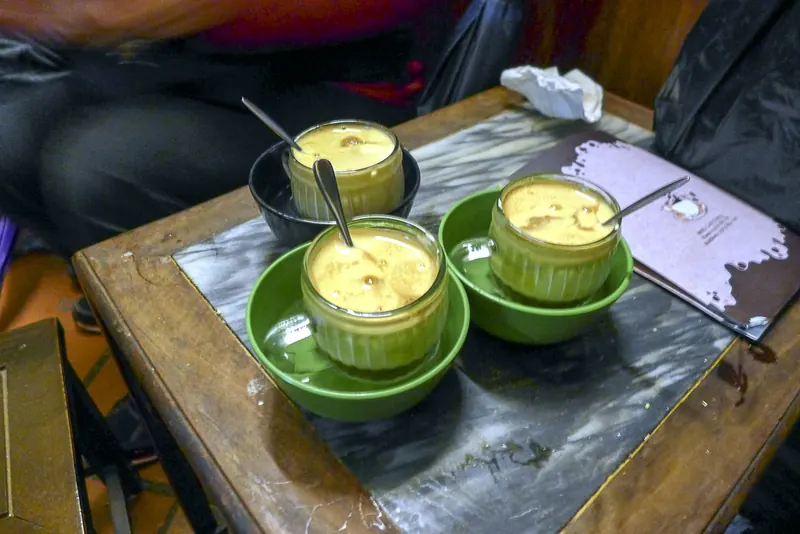
Egg coffee (cà phê trứng)
Espresso-strength coffee under a cloud of whipped egg yolk, sugar, and condensed milk: tiramisu's caffeinated ancestor, served hot in a cup set in warm water, or iced.
Where it comes from: Nguyen Van Giang invented it in 1946 at his Hanoi cafe when milk was scarce: yolks whipped with sugar stood in for it, and the substitute outlived the shortage. Café Giảng, down an alley off Nguyen Huu Huan, is still run by his family.
How to eat it: Stir the foam into the coffee, eat the first spoonful like custard, then drink. Take the hot version first; it is the original.
Bánh tôm Hồ Tây
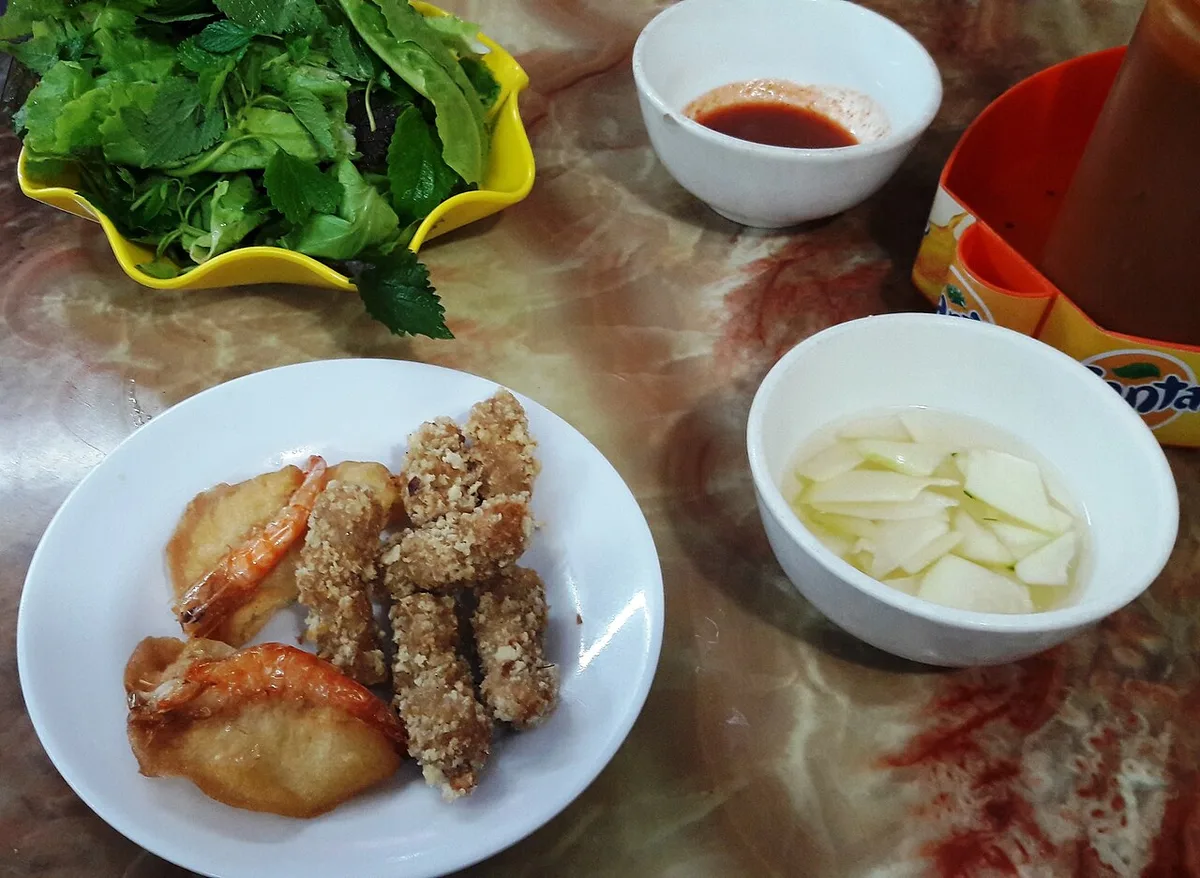
West Lake shrimp cakes: whole small shrimp from the lake in a crisp turmeric batter, fried to order, eaten with herbs and sweet-sour fish sauce. Hanoi's favorite sunset snack.
Where it comes from: The stalls on the Thanh Nien causeway between West Lake and Truc Bach Lake have fried these for generations of courting couples and evening strollers. The shrimp were once all from the lake itself; the ritual outlasted the supply.
How to eat it: Late afternoon on the causeway, cakes straight from the oil, wrapped with herbs, dipped. Order a second plate before the first is gone; everyone does.
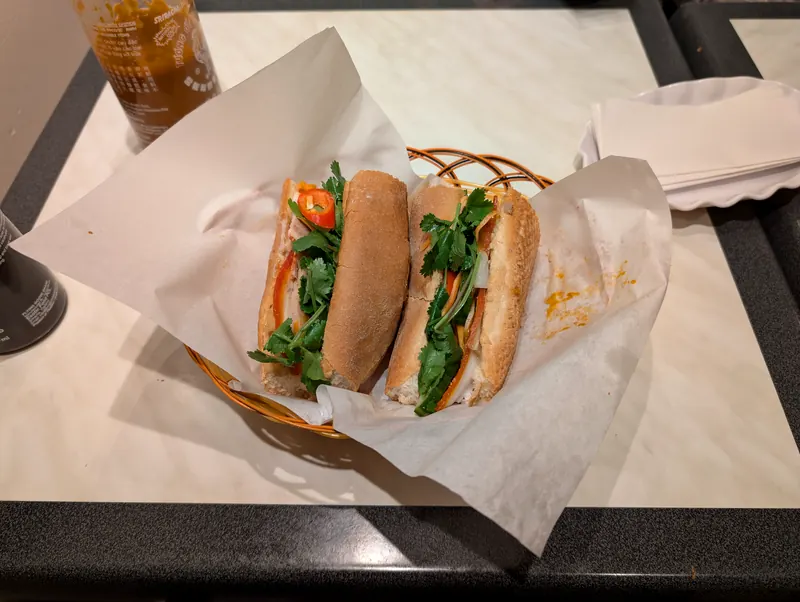
Bánh mì
The baguette sandwich, Hanoi style: crisp thin crust, pâté, cold cuts or grilled pork, pickled carrot and daikon, cucumber, cilantro, chili. Lighter and crisper than the southern version.
Where it comes from: The French brought the baguette; Vietnam made it a sandwich and improved both halves. Hanoi's loaves run especially crisp and airy, baked to be eaten within hours, which is why the carts sell out by mid-morning and again at dusk.
How to eat it: From a cart with a queue, 'đầy đủ' (the works) if you want everything. Eat it within minutes, over the paper, standing up.
Street food, decoded
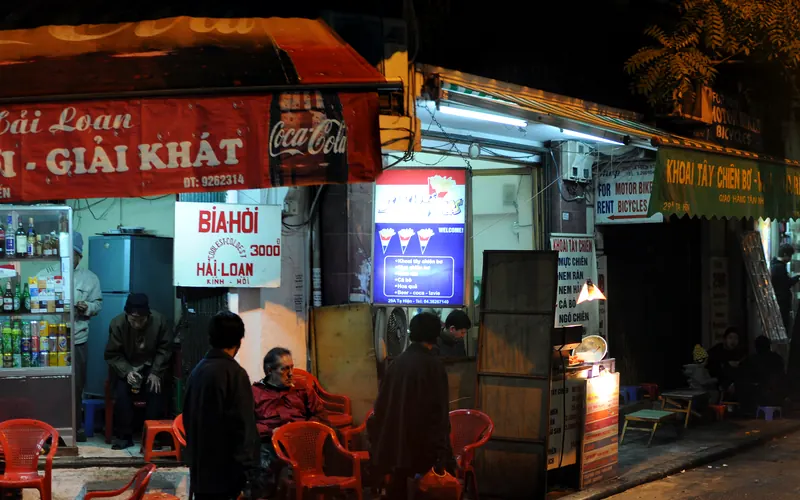
Hanoi's street food is organized as a city of specialists: this corner does phở, that lane does bánh cuốn, the woman by the market gate has sold chè (sweet soup) for forty years. Shops signal quality by refusal: no menu, no options, no English board, sold out by nine. The plastic stool is not a compromise; it is where the food is freshest, because the kitchen is the sidewalk and the dining room is the street.
The day runs in courses. Phở at dawn, bún chả at noon, coffee in the long afternoon, bia hơi at dusk on corners where a keg costs less than the stools it is served on. Join the schedule and Hanoi feeds you continuously; fight it and you will wonder where everyone went.
The single-dish shop
A family, one dish, decades: Phở Bát Đàn, Chả Cá Lã Vọng, a hundred unnamed bánh cuốn steamers. No menu because there is nothing to decide. Order by pointing, pay after, leave happy.
The bia hơi corner
Fresh keg beer brewed daily, poured foamy into thick glasses for a few thousand dong, with peanuts, nem chua, and grilled snacks on plastic tables. The Old Quarter's famous corner at Ta Hien and Luong Ngoc Quyen is the loud one; every neighborhood has a truer one.
The sidewalk noodle stall
A pot, a stack of bowls, ten stools: the mobile kitchen that feeds the city at all hours. If the broth pot is big and the queue is office workers, sit down.
The alley cafe
Hanoi's coffee hides: Café Giảng down a corridor, loading-dock-sized rooms, stools around a tray. Egg coffee hot, in a bowl of warm water, exactly as in 1946.
The market gate snack row
Around every market gate, a ring of specialists serves the shoppers: bánh tôm, chè, xôi (sticky rice), grilled corn. Shop, snack, repeat, in that order or the reverse.
The night dessert cart
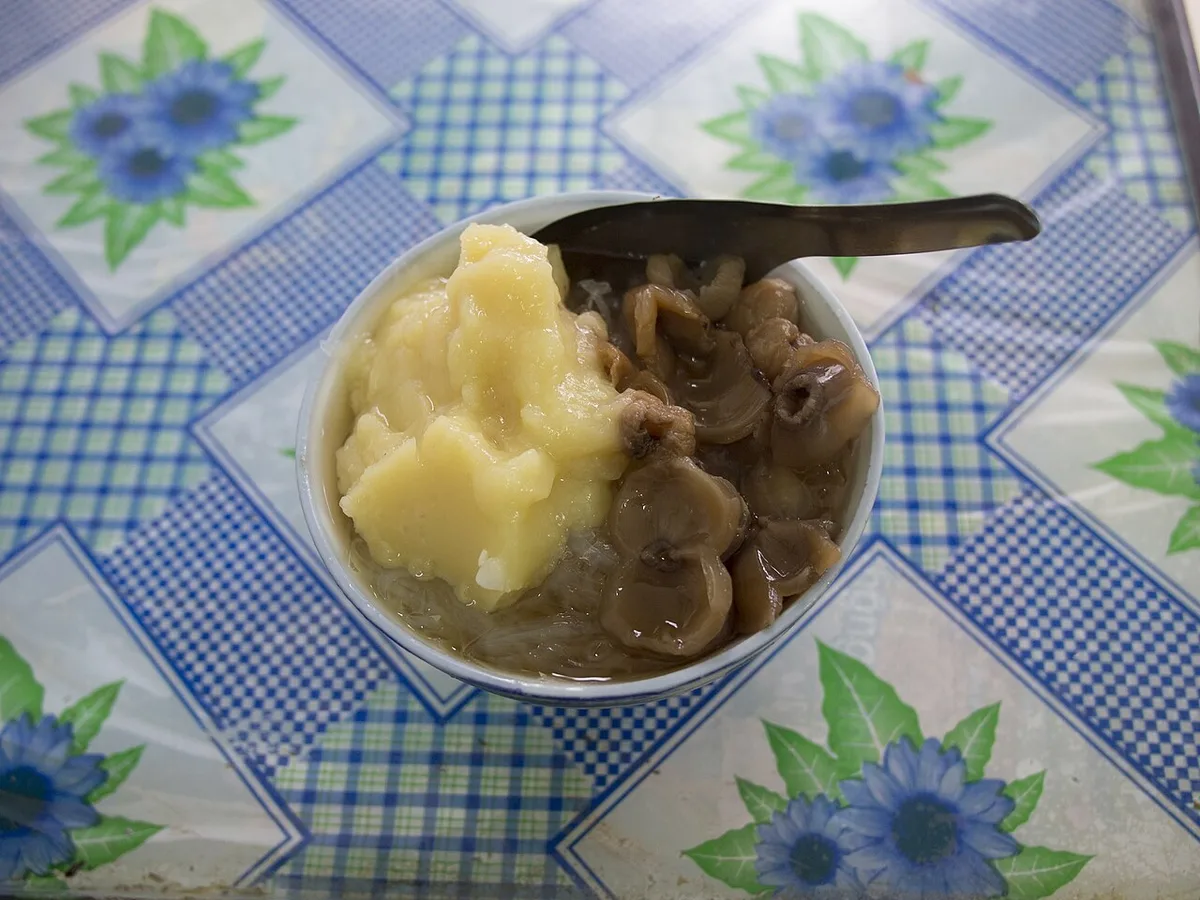
Chè carts after dark: sweet soups of bean, lotus seed, and jelly over ice, plus tào phớ (silken tofu in ginger syrup). Hanoi's gentle last course, eaten on the curb.
The rules that keep it safe and good
Respect the schedule: phở shops that open at 6 close when the pot is empty, often by 9:30. The city's best food is a morning game.
A queue of locals is the only review that matters. A tout, a laminated photo menu, and an empty room is the counter-signal.
Stools are seating, the curb is the restaurant, and the tray is the table. Commit fully; hovering marks the beginner.
Pay after eating at stalls; at bia hơi, the glasses are counted. Small notes only; nobody can change a 500,000 at a noodle cart.
Cross streets slowly and predictably, never backward. The traffic is a river, and you are a rock it already knows how to pass.
The markets
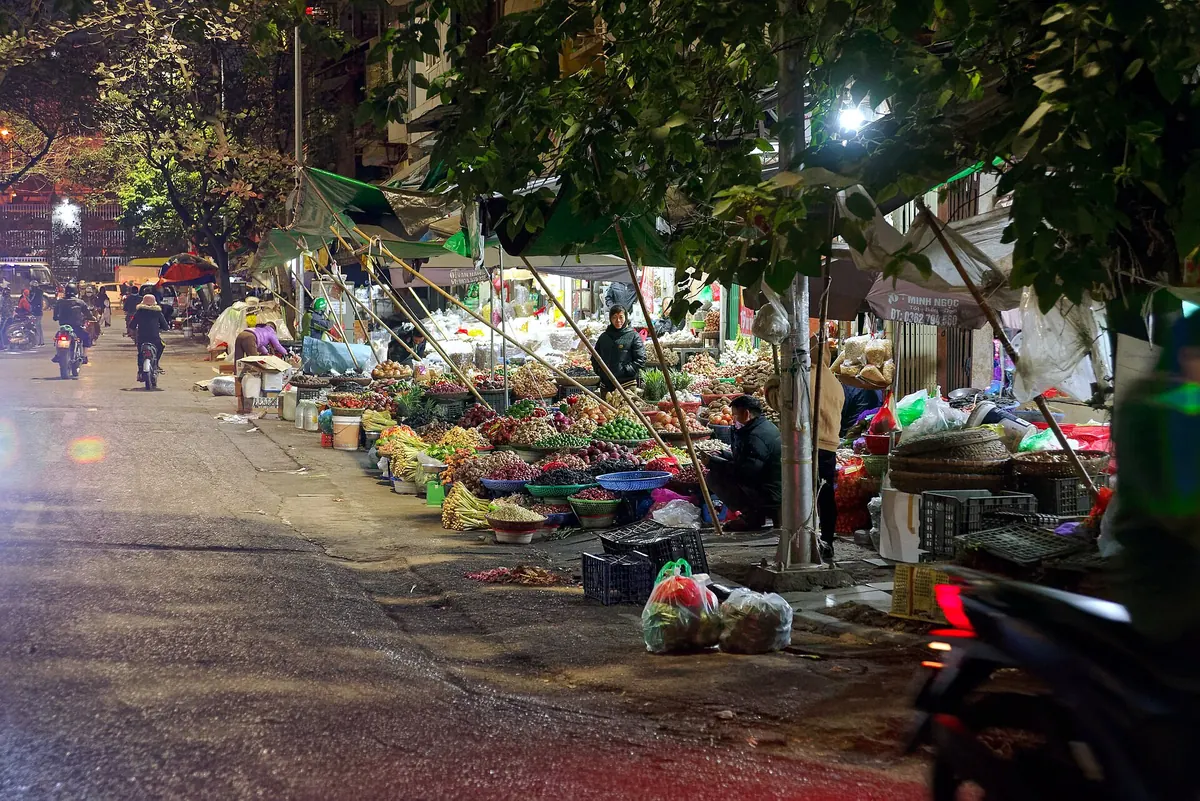
Markets are where Hanoi actually shops and eats. Each one has a different job; go in the morning, when the food counters are at their busiest.
ADong Xuan Market
The Old Quarter's great covered market, rebuilt after fires since 1889: wholesale downstairs bustle, fabric above, and a famous food alley on its east side (Ngo Dong Xuan) where the stalls serve shoppers from dawn.
Eat: Bánh cuốn and chè in the food alley; the market decides the rest.
BQuang Ba flower market
Hanoi's wholesale flower market by West Lake, trading from 2 a.m.: by the time the city wakes, the stalls around it are serving phở and bún to porters and florists. The most beautiful commute to breakfast in Vietnam.
Eat: A dawn phở with the flower sellers, then coffee as the sun hits the lake.
CLong Bien wholesale market
Under the old Long Bien Bridge, the city's stomach: trucks from every province unload produce from midnight. Not a tourist market; the food stalls at its edges feed the army that runs it.
Eat: Whatever the porters are eating at 5 a.m. Go with curiosity and small notes.
DHom Market
The locals' market at the Old Quarter's south: fabric inside, and one of the city's best-loved food floors and street snacks around it. Where Hanoi households actually shop.
Eat: Snacks at the gate stalls; bún and chè from the vendors the aunties use.
EChau Long Market
Truc Bach's neighborhood market: produce, herbs, and cooked-food stalls serving the lakeside quarter. Small, friendly, and ringed with good cheap eating.
Eat: Market snacks, then phở cuốn on Ngu Xa street around the corner.
Neighborhoods: 1 The Old Quarter · 2 The French Quarter · 3 Truc Bach · 4 West Lake (Tay Ho) · 5 Ba Dinh · 6 Dong DaMarkets: A Dong Xuan Market · B Quang Ba flower market · C Long Bien wholesale market · D Hom Market · E Chau Long MarketPins mark neighborhood centers, so you can place each area against where you are staying. Taxi times under each neighborhood below are measured from Hoan Kiem Lake.
1The Old Quarter
The 36 streets around Hoan Kiem Lake's north: a millennium of commerce compressed into lanes of phở shops, stalls, and single-dish institutions. Almost everything famous is here, and the sidewalks are the dining rooms.
From Hoan Kiem Lake: Hoan Kiem Lake is its front yard; you are there
2The French Quarter
South and east of the lake: the Opera House, the Metropole, wide boulevards, and Hanoi's formal dining rooms, old and new. The city's dressed-up register since 1900.
From Hoan Kiem Lake: 5 min on foot
3Truc Bach
The villagey island quarter between West Lake and Truc Bach Lake: phở cuốn on Ngu Xa street, lakeside cafes, and a slower, leafier Hanoi. The locals' evening out.
From Hoan Kiem Lake: 10 min by taxi
4West Lake (Tay Ho)
Around Hanoi's biggest lake: bánh tôm stalls on the causeway, lotus tea houses, and the expat cafes of Xuan Dieu. Come at sunset, when the lake does its show.
From Hoan Kiem Lake: 15 min by taxi
5Ba Dinh
The political quarter west of the Old City: the Mausoleum, ministries, and broad streets, with serious neighborhood eating along its edges (some of the city's best phở is out this way).
From Hoan Kiem Lake: 10 min by taxi
6Dong Da
The dense local southwest: student streets, market lanes, and the Train Street cafes at its edge. Few visitors, excellent cheap eating, zero performance.
From Hoan Kiem Lake: 15 min by taxi
The people behind the food
The names that explain how Hanoi cooks the way it does now.
Nguyen Van Giang and Café Giảng
Inventor of egg coffee, 1946
Giang was a bartender at the Metropole who opened his own cafe and, when fresh milk ran scarce in 1946, whipped egg yolks with sugar as a substitute. The invention outlived the shortage by 80 years; his family's cafe, hidden down an Old Quarter alley, still serves it his way.
Chả Cá Lã Vọng
Institution, Cha Ca street, since 1871
The Doan family's single-dish house gave its street a new name: turmeric fish fried at the table, unchanged across five generations and one very famous fisherman statue. Hanoi's oldest food argument is whether anywhere else may use the name.
Bún Chả Hương Liên
Institution, Hai Ba Trung
A neighborhood bún chả shop until May 2016, when Anthony Bourdain brought Barack Obama in for a $6 dinner on plastic stools. The shop kept its head: the combo is named for the president, the pork is still grilled over charcoal, and the queue is still mostly Hanoi.
Phở Gia Truyền Bát Đàn
Institution, the Old Quarter
The queue-and-pay-first phở shop on Bat Dan street: no table service, carry your own bowl, broth the color of strong tea. Generations of Hanoians measure every other phở against this one, usually aloud.
The bia hơi corner keepers
Institution, every neighborhood
The families who take the daily keg delivery, ice the glasses, and run the corner's tab in chalk and memory. Bia hơi is beer as a public utility, and they are its engineers.
If you only eat ten things here
Phở at Bát Đàn at 7 a.m., bowl carried to your own stool.
Bún chả at noon, Obama combo optional, nem cua bể not.
Chả cá on the street named after it, mắm tôm attempted.
Egg coffee at Café Giảng, hot, down the alley off Nguyen Huu Huan.
Bánh cuốn steamed in front of you at a market-gate stall.
A bia hơi at a neighborhood corner at 5 p.m., peanuts included.
Bánh tôm on the West Lake causeway at sunset.
Phở cuốn on Ngu Xa street in Truc Bach for dinner.
Chè from a night cart, lotus seed if they have it.
Dawn at Quang Ba flower market, phở with the florists.
Eating well here
phở
Pronounced 'fuh', with a rising shrug. The soup, the shop, and the morning, all in one word.
bún chả
Say it at noon, not dinner: grilled pork with vermicelli, Hanoi's lunch by definition.
bia hơi
'Air beer': fresh draft, brewed daily, gone by night. A glass costs less than the water beside it.
trà đá
Unsweetened iced tea, served free or nearly at every stall. The table's default drink.
em ơi
How you call staff ('younger sibling!'). Works everywhere, with a smile.
ngon
Delicious. 'Ngon lắm' (very delicious) makes a stall keeper's day.
tính tiền
'The bill, please': say it with the writing-in-the-air hand motion for full effect.
quẩy
The fried dough sticks dunked in phở. Order 'thêm quẩy' for more; you will.
How is Hanoi phở different from Saigon phở?
The north keeps it austere: clear broth, no added sugar, fewer herbs in the bowl (no bean sprouts or basil mountain), wider noodles, and garlic vinegar and chili on the table. Saigon phở is sweeter, herbed, and hoisin-friendly. Hanoians consider theirs the original and the argument is a century old.
Is the street food safe?
Use the system the city uses: eat where the queue is local and the turnover is fast, where ingredients sit in front of you and everything is cooked to order over serious heat. Phở, bún chả, and bánh cuốn are cooked at a rolling boil or on a grill; they are the safest delicious bet in Asia.
What are the eating hours I should plan around?
Phở from 6 a.m. (great shops sell out by 9:30), bún chả 11 to 2, egg coffee any afternoon, bia hơi from 4 p.m., and dinner early by southern standards: Hanoi kitchens wind down by 9 or 10. The day is front-loaded; be hungry in the morning.
Where should I stay to eat well?
The Old Quarter for the full immersion (stalls from dawn), the French Quarter for calm and the formal dining rooms, or Truc Bach and West Lake for lakeside local life with a taxi habit. First trip: Old Quarter.
How do I cross the street?
Slowly, steadily, without stopping or stepping back: the motorbikes route around a predictable walker. It is the first skill Hanoi teaches, and the bia hơi tastes better after you have learned it.