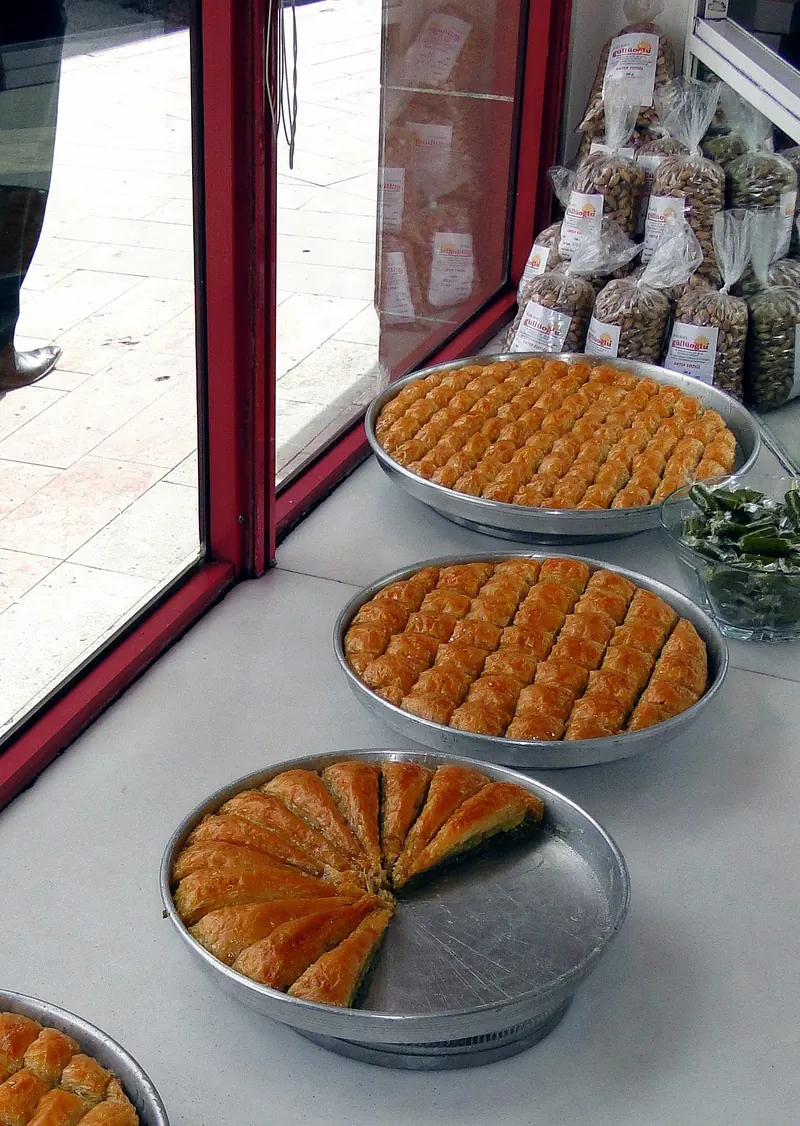
Pistachio baklava for sale in Gaziantep. Photo via Wikimedia Commons.
How Gaziantep eats
Gaziantep does not compete with Turkey's other food cities; it supplies them. The pistachios in Istanbul's baklava, the peppers on the nation's tables, and the kebab masters in its best salons trace back to this southeastern city, a UNESCO Creative City of Gastronomy whose bazaars sell the raw materials and whose restaurants cook the canon: baklava at its greenest, beyran at dawn, kebabs by the dozen kinds, and katmer for breakfast with kaymak and pistachio.
Antep eating is serious in a way that reorganizes a trip: breakfast is a soup or a pastry depending on the house, lunch is kebab, the afternoon is baklava and coffee in the coppersmiths' bazaar, and dinner is kebab again, differently. Come hungry in a way other cities do not require, and let the bazaars pace you.
Learn the foods
Start here, not with a restaurant. Learn what these foods are, where they come from, and how locals eat them, and the whole city opens up: every menu, every market, every street corner starts making sense.
Gaziantep baklava
The original: 40 layers of phyllo, early-harvest green pistachios from the city's own orchards, kaymak in the şöbiyet version, syrup at the exact edge. Registered, argued over, and shipped across Turkey daily from these shops.
Where it comes from: Baklava's geography is pistachio geography: Antep's nuts, harvested green in late summer, give the color and the perfume no other city's version matches. The masters (İmam Çağdaş since 1887, Koçak, Zümrüt and their rivals) roll phyllo to transparency and guard the syrup's temperature like a state secret.
How to eat it: Upside down, with a glass of water first to clear the palate, as the masters insist. A morning portion at the shop counter, warm from the tray, is the city's finest hour.
Beyran
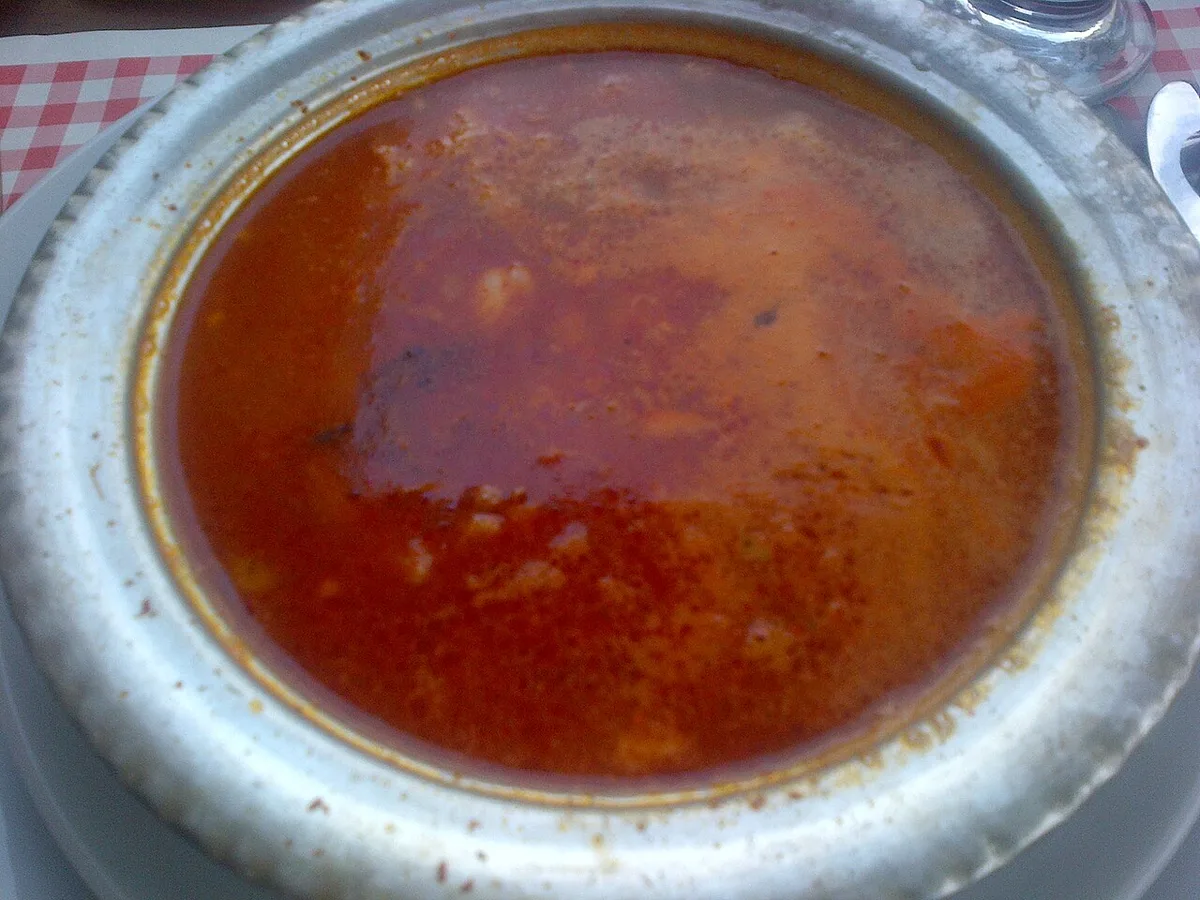
The dawn soup: lamb and rice in a fiery, garlicky broth, flamed in a copper pan with rendered tail fat and pepper, eaten with bread and raw onion before the day begins. Antep's breakfast of legends.
Where it comes from: Beyran is the esnaf's fuel: the old market's beyran houses (Metanet the famous name) have fired the pans since the bazaar was young. The dish is cooked to order in minutes, the fat and pepper bloomed in the pan's flame in front of you.
How to eat it: At 7 a.m. in the bazaar, spicy as served ('acılı' is the default, not an option), bread torn in, onion beside. It is a working breakfast; respect its hours.
Ali nazik
Charred eggplant puree with garlicky yogurt, topped with cubed lamb in butter and pepper: the kebab that eats like a meze, or the meze that eats like a kebab, and Antep's gift to every Turkish menu.
Where it comes from: The name ('gentle hand', in the folk telling, from a sultan's compliment or a mother's) belongs to Antep's eggplant mastery: the city's long purple eggplants, smoked over the grill, are the dish's foundation. Istanbul's versions are measured against the bazaar's.
How to eat it: With lavaş, the lamb and the puree in the same bite, the butter's pepper heat as the finish. Order it where the eggplants char in view.
Küşleme
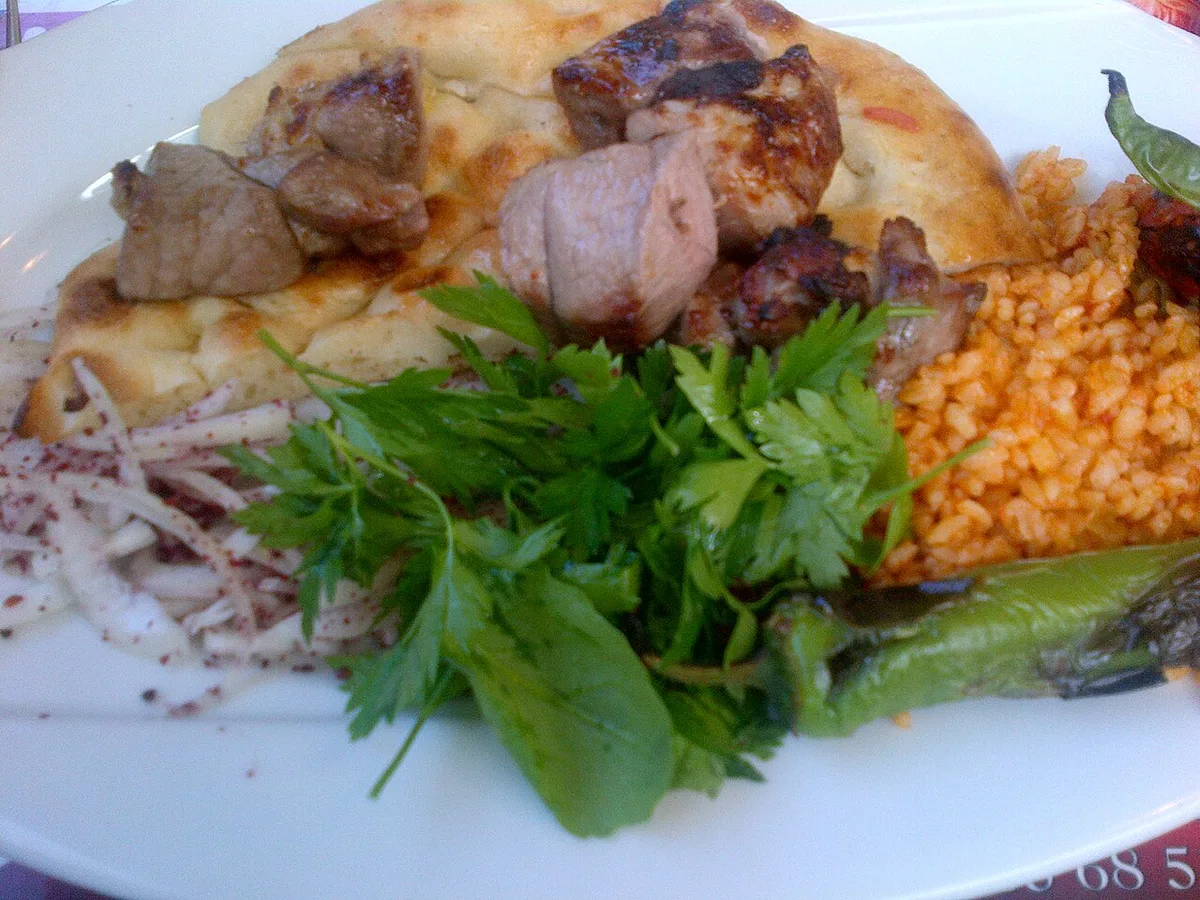
The tenderloin cut only Antep names: the lamb's prized inner fillet, marinated simply and grilled fast, the most expensive and most delicate kebab in the house. One animal gives two small pieces; the city's butchers are its gatekeepers.
Where it comes from: Küşleme is a cut before it is a dish: the small muscle under the lamb's ribs, unknown to most butchers outside the southeast, that Antep's grill masters built their reputations on. Its scarcity is the price and the point.
How to eat it: At a serious kebab house (the old bazaar salons), plain, with onion and lavaş. Do not bury it in sauce; the cut is the argument.
Katmer
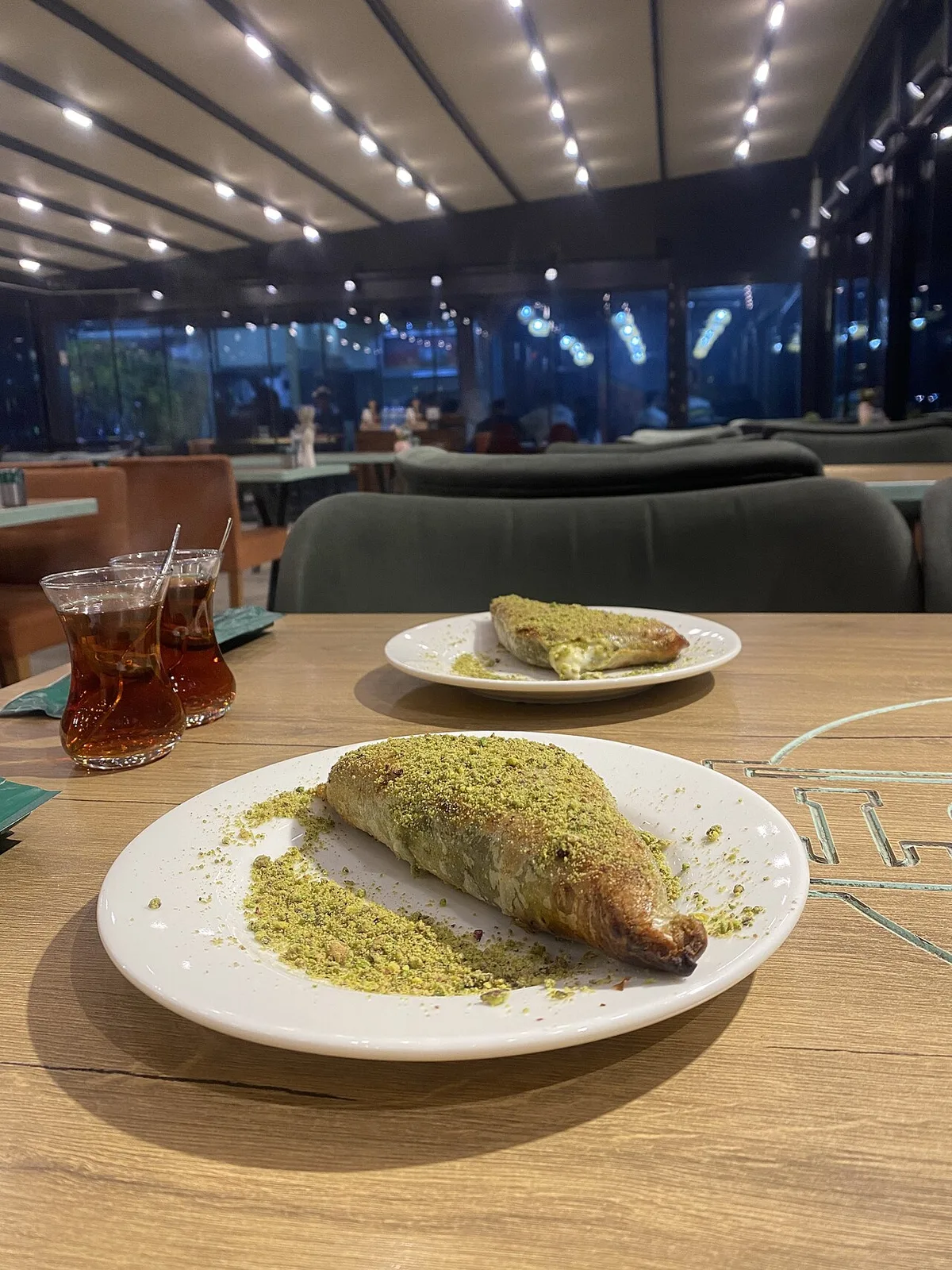
Breakfast pastry: a single sheet of dough stretched transparent, filled with kaymak, sugar, and green pistachio, folded and crisped, cut in squares and eaten hot with milk or tea. Antep's sweet morning, made to order in minutes.
Where it comes from: Katmer is the newlyweds' breakfast in Antep tradition (sent to the couple's house on the first morning) and the city's counters now fire it all day. The dough-stretching, a sheet you can read through, is the show and the standard.
How to eat it: At a katmer salon in the morning, watched as it is made, eaten with a spoon of extra kaymak if the house allows. It waits for no one; the crisp is the dish.
Antep lahmacun
The southeast's lahmacun: larger, with a spiced mince rich in tomato, pepper, and (in the city's way) a whisper of garlic, baked crisp in the stone oven and rolled with parsley and lemon.
Where it comes from: Lahmacun's homelands argue (Urfa, Antep, Aleppo behind them all), and Antep's version is the baker's city showing off: the dough cracker-thin, the topping generous. The fırıns serve it as lunch's first act, before the kebabs.
How to eat it: Rolled with the greens and onion, lemon squeezed, eaten by hand at the fırın's tables. Order two; the first is the rehearsal.
The kebab canon
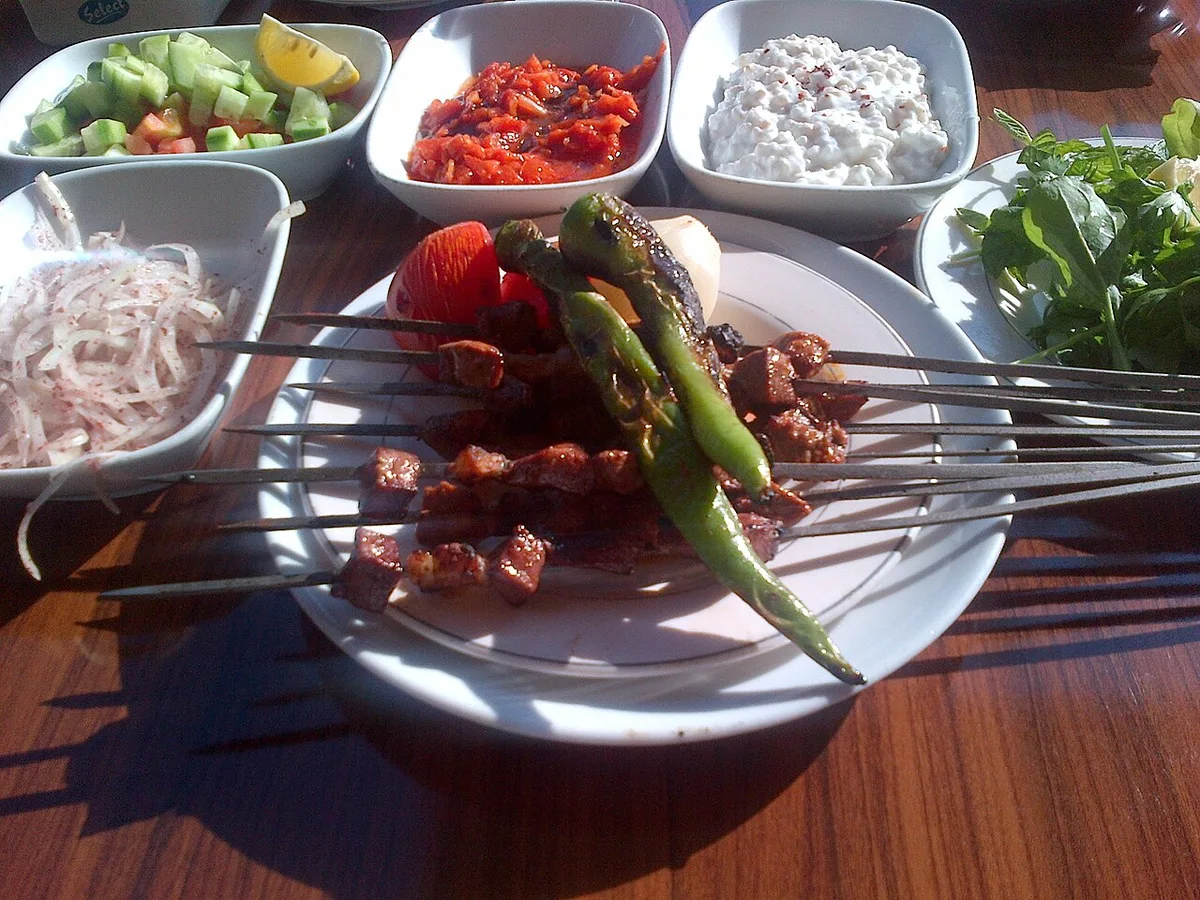
Patlıcan (eggplant) kebab in season, simit kebab (with fine bulgur), pistachio kebab, onion kebab in winter, liver (ciğer) at dawn in the bazaar: Antep's grill list is a curriculum, and the city expects you to work through it.
Where it comes from: No Turkish city grills like a syllabus: each kebab has its season (the eggplant's summer, the onion's winter), its master, and its house. The bazaar's kebab salons are the lecture halls, and the liver carts at dawn are the first class of the day.
How to eat it: Ask what the season's kebab is and order that first. In summer it is patlıcan; the answer is the education.
Street food, decoded
Antep's street food is its restaurant food, unseparated: the bazaars grill liver at dawn, fire beyran pans by seven, roll katmer all morning, and slice baklava until night. The city's eating has no off-duty hours, only courses, and the visitor's task is pacing, not finding.
Work the Almacı Pazarı (the food bazaar) as your map: pistachios, peppers, and spices in the sacks, the kebab salons at its edges, the hans for tea between rounds. Every famous name in this guide is within a few lanes of that market's noise.
The beyran house
Copper pans, flame, dawn: the bazaar's breakfast counters firing soup to order for the merchants. Arrive at seven and eat with the market.
The kebab salon
Marble tables, the grill in view, the kebab list by season: İmam Çağdaş is the famous room, and the bazaar's salons run the same curriculum at every price.
The baklava counter
Trays behind glass, portions cut to order, boxes stacked for the flights home. The counter tasting (two shops minimum) is the city's essential research.
The katmer salon
Dough stretched transparent at a marble slab, kaymak and pistachio, the pastry crisped on the sac: breakfast as a short performance with a hot ending.
The dawn liver cart
Ciğer (liver) kebab at the bazaar's edge from first light: the merchants' actual breakfast, wrapped with onion and pepper, eaten standing before the stalls open.
The han tea break
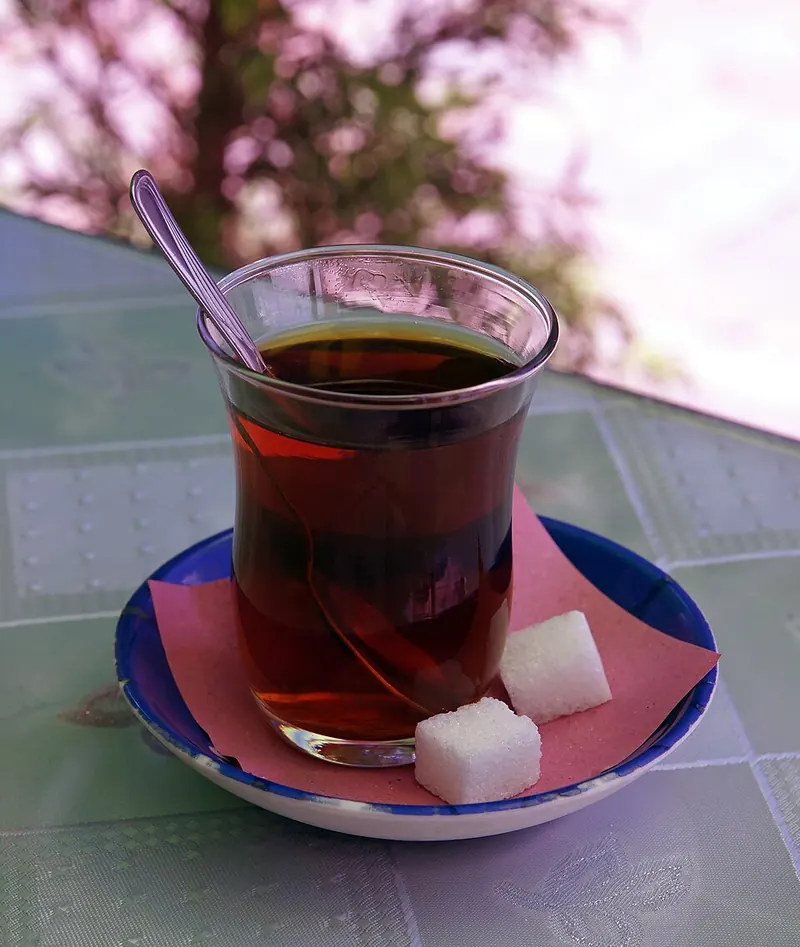
Zincirli Han and the bazaar courtyards: tea between courses, coppersmiths hammering the soundtrack, the pistachio sellers' samples as the interval snack.
The rules that keep it safe and good
Pacing is the whole skill: beyran at 7, katmer at 10, kebab at 1, baklava at 4, kebab again at 8. The city is a tasting menu with streets between courses.
Baklava is eaten upside down and preceded by water, and the portion at the counter beats the box in the bag for quality. Buy the box after the verdict.
Heat is assumed: say 'az acılı' early and clearly, or accept the full Antep setting with honor and ayran.
The bazaars close on Sunday in part (the old market rests); Saturday is the full-volume day, and weekday mornings are the connoisseur's hours.
Pistachios are bought by the grade: 'boz' (the green early harvest) is the baker's grade and the gift worth its price.
The markets
Markets are where Gaziantep actually shops and eats. Each one has a different job; go in the morning, when the food counters are at their busiest.
AAlmacı Pazarı
The food bazaar at the old city's heart: pistachios, peppers, spices, dried eggplants and peppers strung like lanterns, the pantry of the whole southeast in a few lanes.
Eat: Samples as you shop; the kebab and beyran houses are at its edges, by design.
BBakırcılar Çarşısı (Coppersmiths' Bazaar)
The hammering lanes of the copper workers: trays, pans, and cezves made as they were centuries ago, with tea and snacks threading the workshops.
Eat: Tea in the lanes; a copper cezve is the souvenir that earns its shelf.
CZincirli Han
The restored inn courtyard off the bazaars: craftsmen, a tea garden, and the city's pause button between courses.
Eat: Tea and a breath; the next course is two lanes away, always.
DElmacı and the Old Market Lanes
The wider old market: dried goods, soap (the city's olive-oil soap), spices, and the esnaf economy whole, spilling from the castle's foot.
Eat: Street snacks from the lanes' carts; liver at dawn if you kept the hour.
EThe Castle Quarter
Below Gaziantep Castle (the city's ancient hill): museums, the old kitchen culture houses, and the lanes where the food tours and the locals agree.
Eat: A kebab lunch with the castle above; the culinary museum after for the footnotes.
Neighborhoods: 1 The Old City and Bazaars · 2 Bey Mahallesi · 3 Gaziler Caddesi and the Center · 4 İbrahimliMarkets: A Almacı Pazarı · B Bakırcılar Çarşısı (Coppersmiths' Bazaar) · C Zincirli Han · D Elmacı and the Old Market Lanes · E The Castle QuarterPins mark neighborhood centers, so you can place each area against where you are staying. Taxi times under each neighborhood below are measured from the bazaars.
1The Old City and Bazaars
Almacı Pazarı, the coppersmiths' bazaar (Bakırcılar), Zincirli Han, and the kebab and baklava houses threaded through them: the city's edible core, loud with hammers and grills.
From the bazaars: The bazaars are the reference point; you are there
2Bey Mahallesi
The old Armenian and stone-house quarter west of the castle: restored konaks, cafes, and the city's museum houses, quiet lanes above the bazaar's volume.
From the bazaars: 10 min on foot
3Gaziler Caddesi and the Center
The modern shopping spine: kebab salons, baklava flagships, and the city's daily commerce, where Antep takes its guests and itself to lunch.
From the bazaars: 10 min on foot
4İbrahimli
The new city's avenues west: malls aside, the modern kebab houses and family restaurants of the growing districts, where Antep's families take their weekends.
From the bazaars: 15 min by taxi
The people behind the food
The names that explain how Gaziantep cooks the way it does now.
İmam Çağdaş
Institution, since 1887
The house Antep names first: kebabs and baklava from one family for five generations, its dining room the city's formal introduction to itself. If you eat one famous meal in the southeast, the queue here is the one to join.
Koçak Baklava
Institution, the modern masters
The baklava giant whose boxes fly out of the airport in stacks: industrial scale held to the masters' standard, and the other pole of the city's great baklava argument.
The beyran masters
Craft, the old market
The dawn pan-men of the bazaar (Metanet the famous house), flaming soup to order in copper since the market's youth. Their shift ends when yours begins; the soup is why.
The Almacı pistachio traders
Craft, Almacı Pazarı
The nut merchants who grade the harvest the nation's baklava depends on: their sacks of boz fıstık are the green at the heart of the whole cuisine.
The coppersmiths of Bakırcılar
Craft, the bazaar
The hammerers whose pans flame the beyran and whose cezves brew the coffee: Antep's food is cooked in its own metal, made two lanes from where it is eaten.
If you only eat ten things here
Beyran at 7 in the bazaar, full heat, bread torn in.
Katmer at 10, dough watched, kaymak spooned, crisp eaten standing.
The İmam Çağdaş lunch: ali nazik and the season's kebab.
Baklava at two counters, verdict delivered, box bought at the winner.
Dawn liver in the bazaar, wrapped, with the merchants.
Almacı Pazarı: boz pistachios tasted, peppers smelled, spices bagged.
Küşleme where the master has it, plain, with lavaş.
Tea in Zincirli Han between courses, hammers for music.
The Zeugma mosaics at noon, the Gypsy Girl's eyes, then kebab.
Patlıcan kebab in summer, onion kebab in winter: the season obeyed.
Eating well here
fıstık
Pistachio, but say 'Antep fıstığı' in full: the city's name is the grade. 'Boz' is the green early harvest.
beyran
The dawn fire soup. Ordering it after 10 a.m. marks the visitor; it is a morning sacrament.
katmer
The kaymak breakfast pastry. Watch the dough stretched; that transparency is the standard.
küşleme
The secret fillet, two pieces per lamb. If the house has it, the order is already decided.
az acılı
'Lightly spicy': the two words of self-preservation, spoken early and clearly.
ali nazik
The eggplant-yogurt kebab, 'gentle hand'. The puree should taste of the grill's smoke.
afiyet olsun
'May it be health': in Antep it is said by people handing you the city's best, often.
hesap, lütfen
'The bill, please': request it before the next course lands. It will land anyway.
Is Gaziantep worth a dedicated trip?
For food, it is Turkey's single best destination: two days of eating here out-teach a week elsewhere, the Zeugma Mosaic Museum holds the world's finest Roman mosaics for the hours between meals, and the bazaars are a working museum. Fly in hungry; the airport road's first billboards are for baklava.
Which baklava shop is the one?
The city runs on the argument: İmam Çağdaş (1887, the institution), Koçak (the modern giant), and a dozen masters besides. Eat a portion at two counters and take your side; buying boxes at the airport is the act of a person who chose too late.
How spicy is the food, honestly?
Antep heat is structural: the pepper (isot and the local red) is in the beyran, the kebabs' marinades, and the ezme. It is heat with flavor behind it, but the unacclimated should say 'az acılı' (lightly spicy) and accept the master's small smile.
What is the pistachio season?
The green harvest ('boz fıstık') comes in late July and August: the nuts at their most vivid, the baklava at its peak, and the city at its proudest. Any season eats well; that one eats best.
Is it safe and practical to visit?
Gaziantep is a large, prosperous provincial city with an airport, good hotels, and a famous welcome; standard city sense applies. It sits near the Syrian border region but the city itself runs on commerce and food, and its visitors come overwhelmingly to eat.