The Chouara tannery, Fès. Photo via Wikimedia Commons.
How Fès eats
Fès was founded in 789 and has been cooking at a high level for most of the time since. When Andalusian and Kairouan families settled here in the ninth century, they brought the sweet-savory, spice-layered cooking that became Fassi cuisine: pastilla, tfaya, dishes built for celebrations in merchant houses where a family's reputation rode on its table. Moroccans still say the country's finest cooking is Fassi cooking.
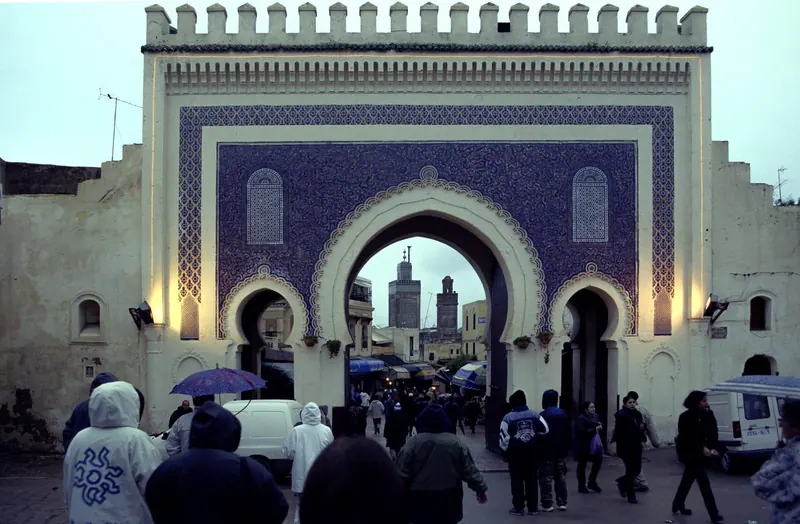
The stage is Fes el Bali, the world's largest car-free urban area: 9,000 lanes, no cars, everything moved by donkey and handcart, and food threaded through all of it. Bissara stalls at dawn, khlii shops, grill smoke along the Talaa, and behind unmarked doors, riad kitchens cooking the canon. Eat here slowly; this is a city that rewards the unhurried.
Learn the foods
Start here, not with a restaurant. Learn what these foods are, where they come from, and how locals eat them, and the whole city opens up: every menu, every market, every street corner starts making sense.
Pastilla
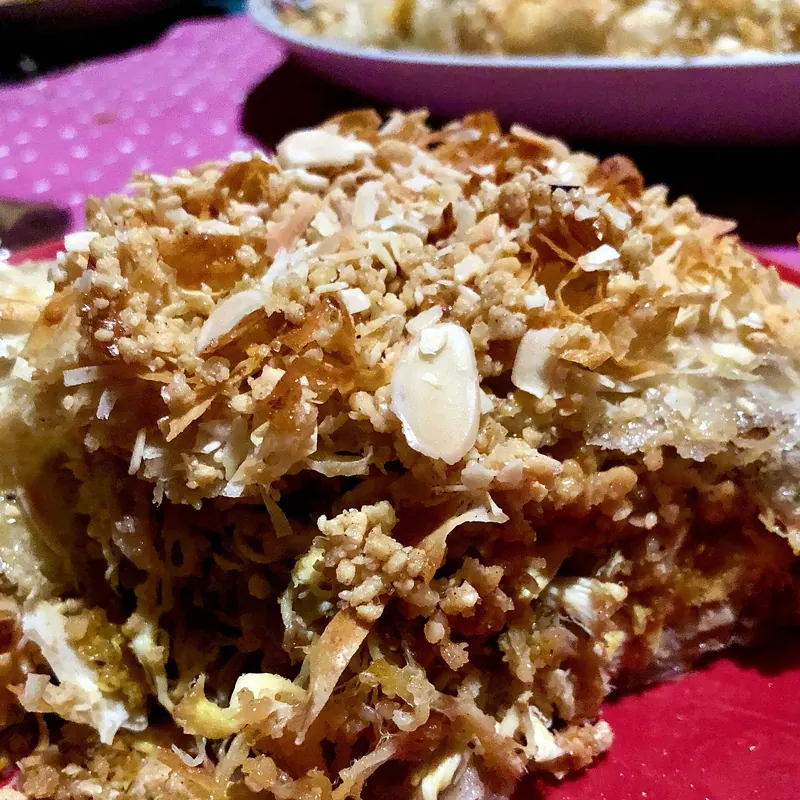
Fès's masterpiece and Morocco's most famous dish: warqa pastry like tissue around spiced pigeon or chicken, scrambled egg, and toasted almonds, dusted with cinnamon and sugar. Sweet and savory in the same bite, by design.
Where it comes from: Pastilla descends from Andalusian cooking carried to Fès by refugees in the fifteenth century, then perfected in Fassi houses until it became the test of a cook. The warqa leaves are still made one at a time, slapped onto a hot griddle and peeled off by specialists.
How to eat it: With your fingers, breaking the shell so the cinnamon sugar lands with the filling. It opens a celebration meal; in restaurants it opens yours too.
Rfissa
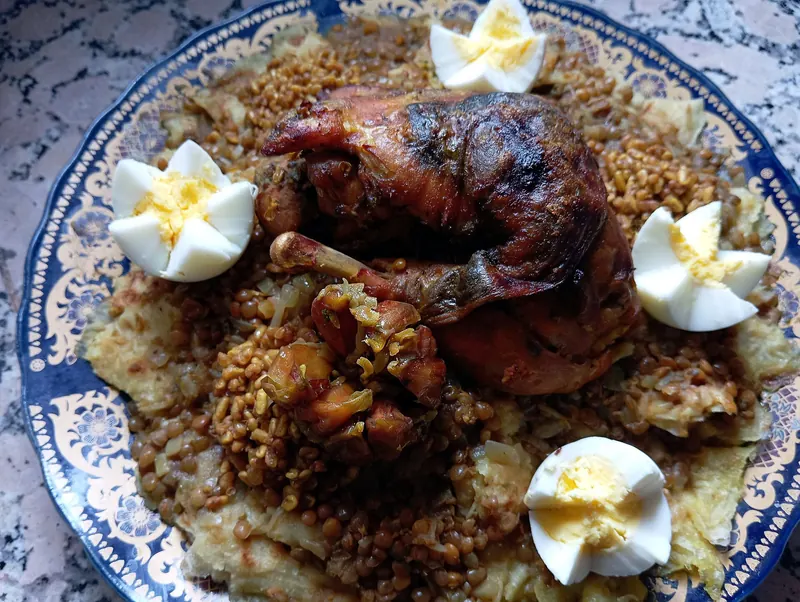
Shredded msemen soaked in a fenugreek-and-lentil broth, topped with chicken: the celebration dish of births and family gatherings, earthy and rich in a way no restaurant shortcut reproduces.
Where it comes from: Rfissa is tied to a tradition that it was served to women after childbirth, fenugreek and all, to restore strength. It remains the dish families commission for occasions, made in quantity, eaten communally.
How to eat it: From the shared platter, with a spoon for the broth-soaked bread. If a riad offers rfissa on a set day, reorder your plans around it.
Khlii
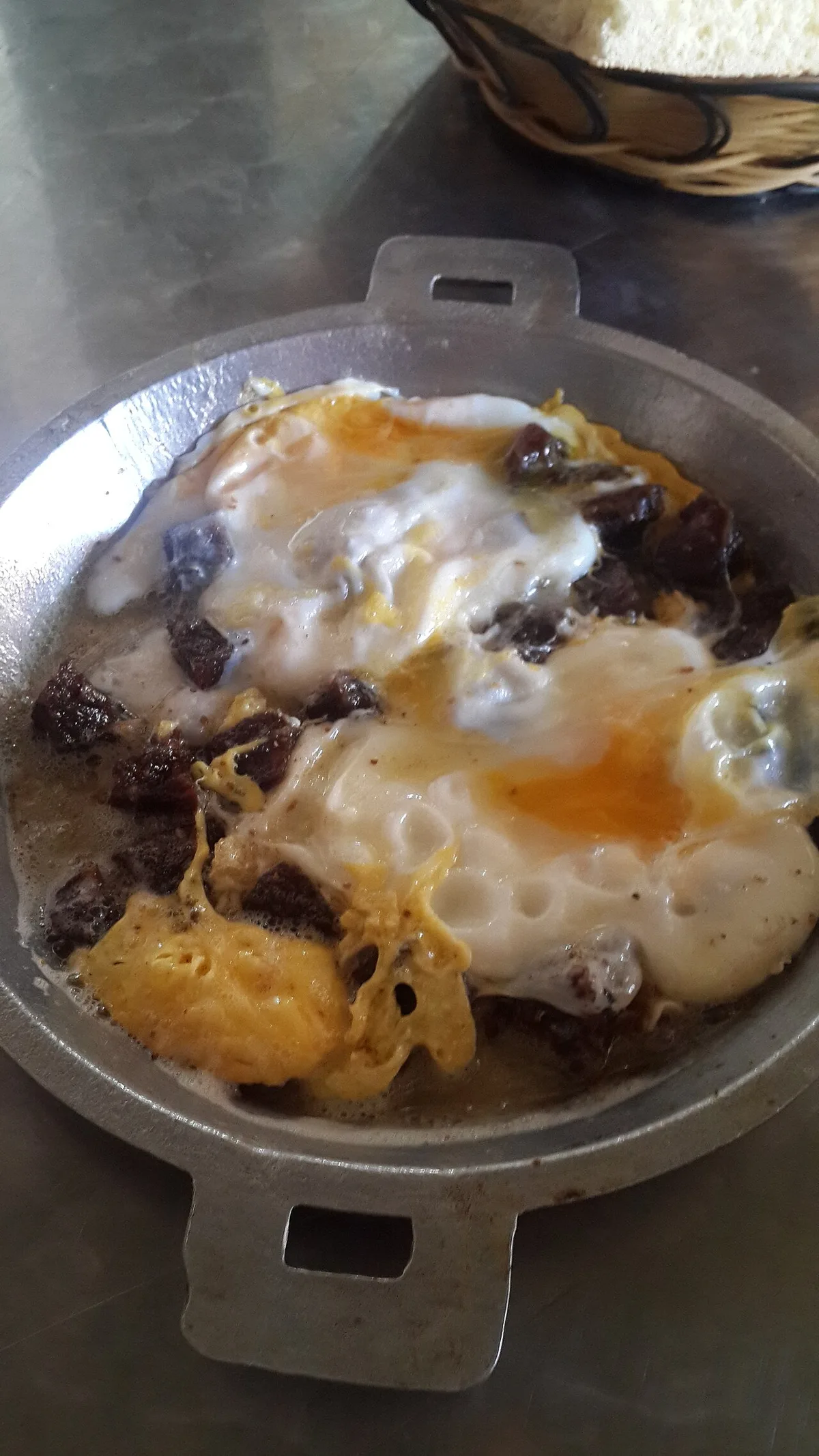
Fès's preserved meat: beef or lamb salted, spiced, sun-dried, then confited in its own fat and stored in clay jars. A few shreds fried with eggs is the Fassi working breakfast, intense and salty.
Where it comes from: Khlii predates refrigeration by centuries: meat preserved in fat keeps for months, and Fès made an industry of it, with families sending jars across Morocco and abroad. The khlii shops of the medina sell it by weight from great glazed jars.
How to eat it: Order khlii with eggs at a medina breakfast stall: the fat melts in the pan, the meat crisps, and bread does the rest. Small amounts; it is concentrated.
Tagine tfaya
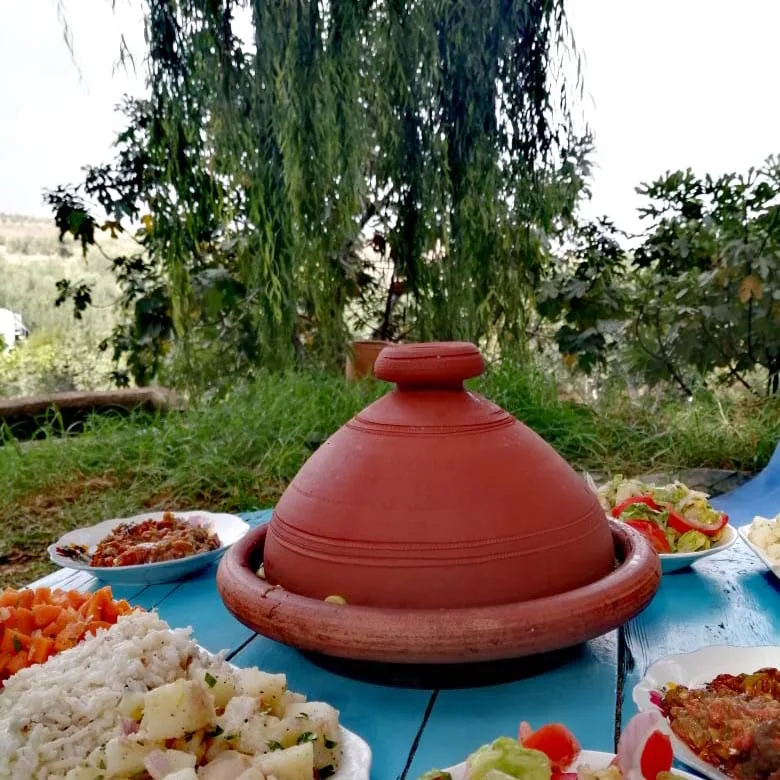
The Fassi signature tagine: meat or chicken under a tangle of caramelized onions, raisins, cinnamon, and almonds. The sweet garnish (tfaya) turns a stew into a celebration dish.
Where it comes from: Tfaya shows the Fassi method at its clearest: a savory base, a sweet finish, spices layered rather than mixed. Palace and merchant kitchens competed on exactly this kind of refinement, and the competition never really ended.
How to eat it: With bread from the shared pot, making sure each mouthful carries onion and raisin with the meat. It is the tagine to order when a menu offers several.
Bissara
The dawn soup of the medina: dried fava beans (or split peas) cooked down with garlic, served with olive oil, cumin, and paprika on top, and bread for dunking. Costs almost nothing; fuels the souks.
Where it comes from: Bissara is the working breakfast of northern Morocco, ladled out in the early lanes to porters, builders, and shopkeepers. In Fès the stalls set up where the day starts: near the gates and along the Talaa.
How to eat it: At a stall counter in the morning, oil and cumin added at the ladle, bread torn and dunked. Eat standing or on the little stools; this is breakfast at medina speed.
Chicken tagine with preserved lemon
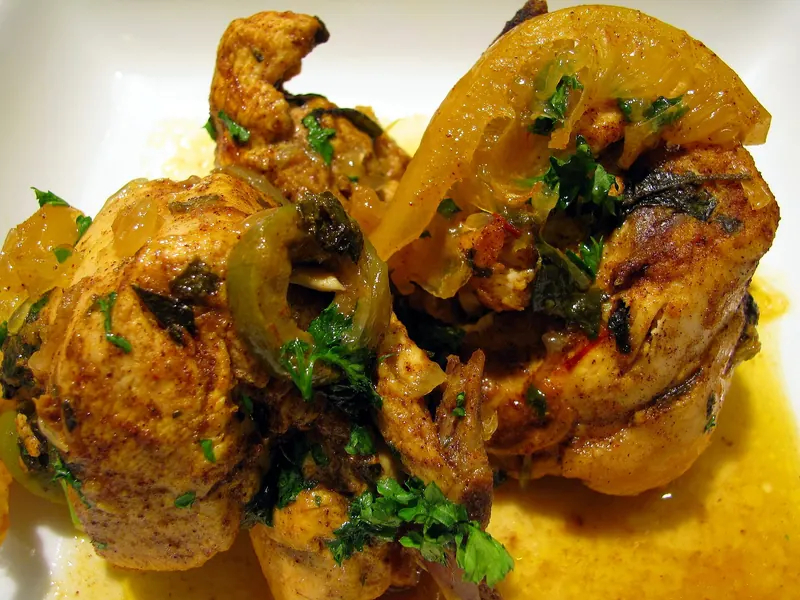
The classic in its home region: chicken braised with preserved lemon peel, green olives, ginger, and saffron, the sauce reduced until it coats. Every Fassi family guards a version.
Where it comes from: Preserved lemons are a Fassi pantry pillar, lemons packed in salt for a month until the peel turns silky and floral. The dish is the everyday proof of the Fassi larder: nothing exotic, everything exact.
How to eat it: From the shared pot with bread, lemon peel and all: the peel is the delicacy, not a garnish to push aside.
Msemen and mint tea
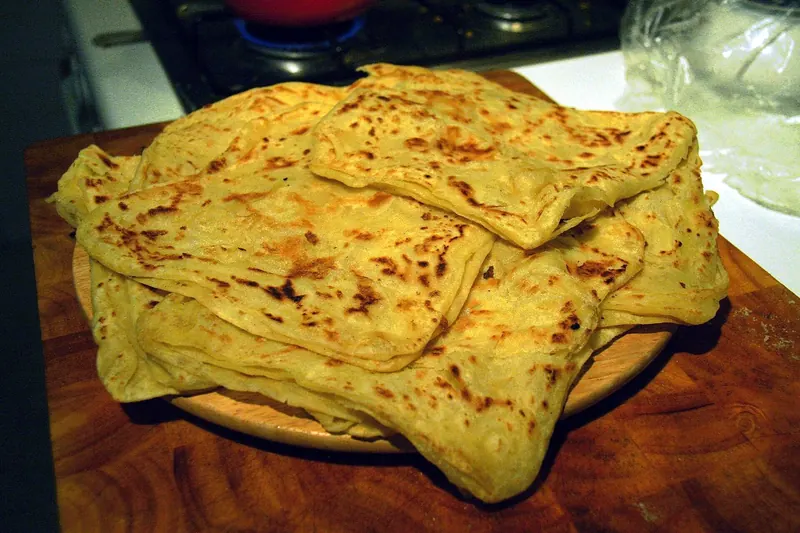
Flaky square msemen with soft cheese or amlou, and mint tea poured high: the medina's pause button, served in cafe doorways and riad courtyards at every hour.
Where it comes from: In Fès the tea ritual carries the city's courtesy culture: poured from a height for the foam, offered before business, refilled without asking. The msemen beside it is griddled to order on flat pans in shopfronts across the medina.
How to eat it: Tear, drag through amlou, sip the tea sweet. When a shopkeeper offers tea in the souk, sit: the conversation is part of the city, whether or not you buy.
Street food, decoded
Fès's street food keeps working hours. The day starts before the souks open, with bissara and sfenj at the gates, and the Talaa fills by mid-morning with grills, snail stalls, and juice carts serving the porters and shopkeepers who keep the medina moving. This is food for the city itself; visitors are welcome at the counter, but nobody is performing for them.
The counterpoint is the house kitchen. Fès's famous dishes were never street food: they belong to courtyards and celebrations, and the way in is the riad dinner and the cooking class, where the morning's souk run becomes pastilla by afternoon. Learn both registers and you have the city.
The dawn stall
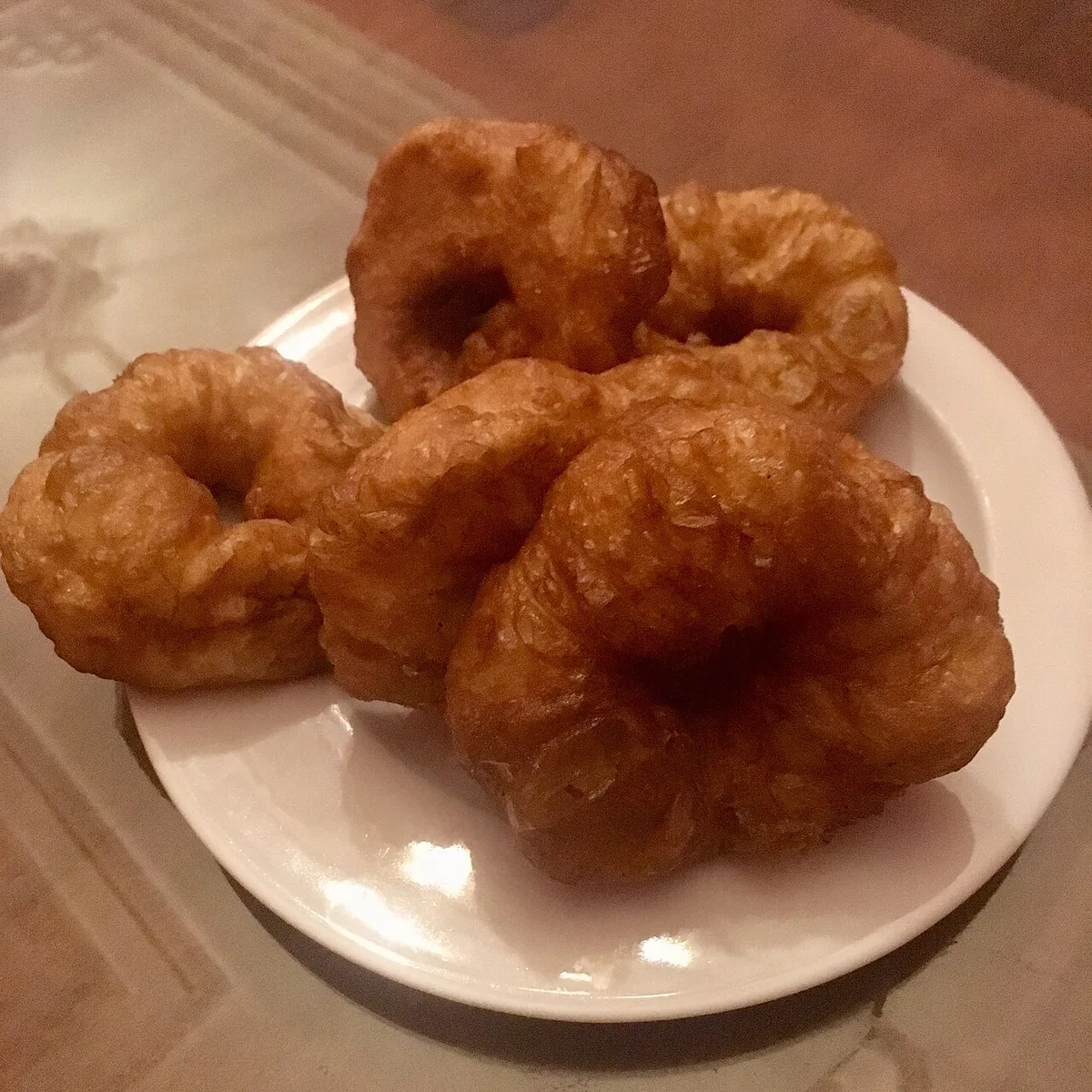
Bissara ladled into bowls, sfenj doughnuts fried in rings, harsha semolina cakes on the griddle: the medina's breakfast infrastructure, set up at gates and lane mouths from first light.
The Talaa grill
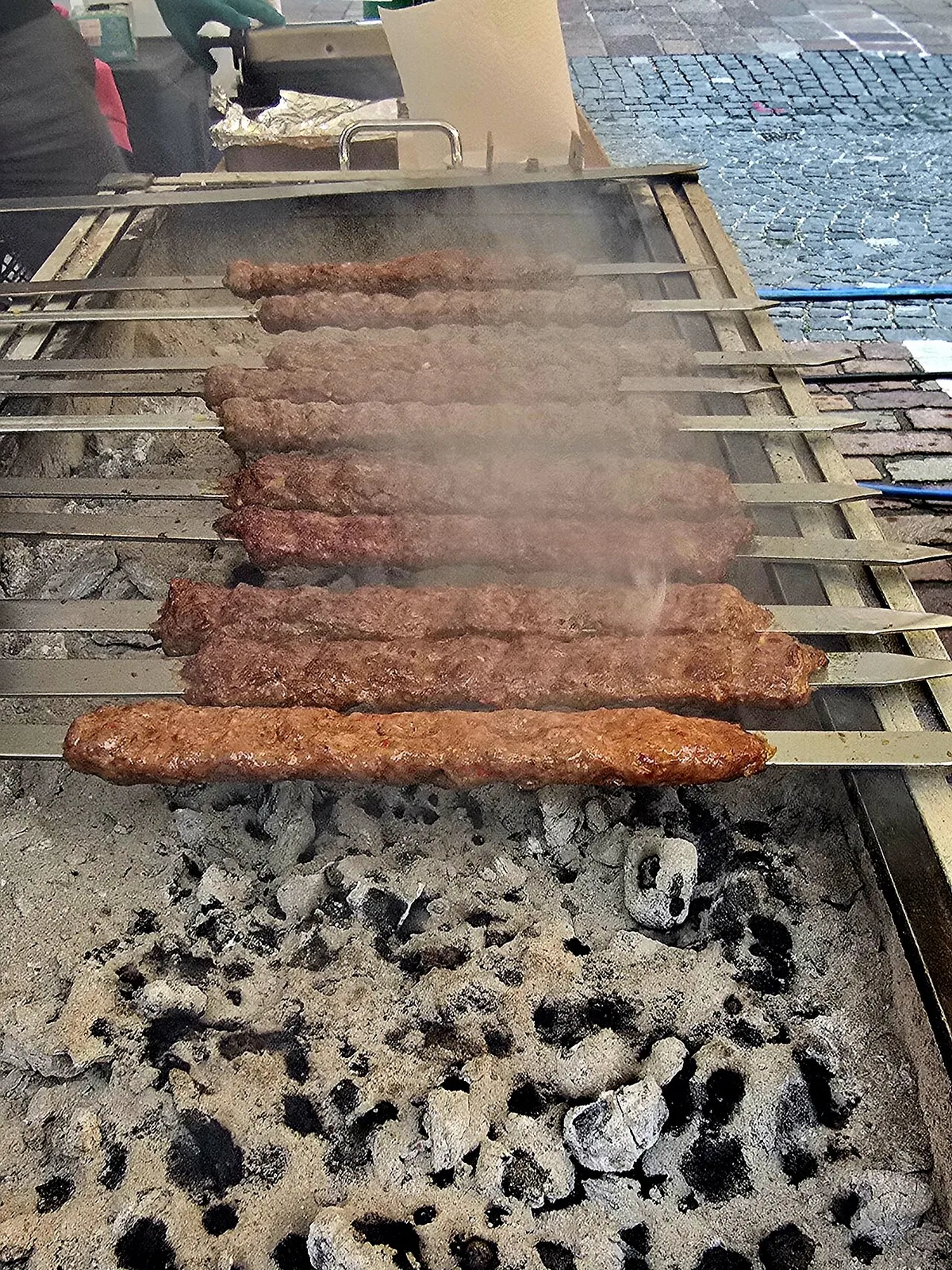
Along the medina's two main arteries, small grills fire brochettes, kefta, and liver for the lunch trade, with bread, olives, and harissa at the counter. Follow the porters; they eat first and best.
The khlii shop
Medina shops selling preserved khlii from great jars, with eggs fried to order: a Fès institution halfway between deli and diner. Buy a jar to take home and the shopkeeper will approve of you.
The riad table
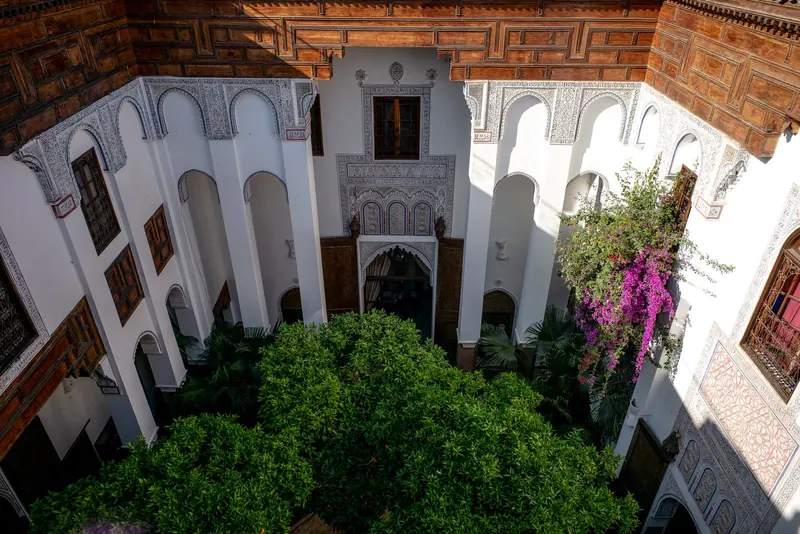
House kitchens opening by reservation: set Fassi menus in tiled courtyards, pastilla and tfaya cooked that day. Book through your riad a day ahead; this is the city's fine dining, domestic edition.
The cooking class
Fès is Morocco's cooking-class capital: shop the souks with the cook, learn warqa and tagines, eat the results. Several medina schools run daily; the market tour alone justifies it.
The medina cafe terrace
Café Clock and the rooftop cafes around Bab Bou Jeloud: mint tea, camel burgers (Café Clock's famous joke that became a classic), and sunset over 9,000 lanes. Priced by the view, fairly.
The rules that keep it safe and good
The medina runs downhill: both Talaa streets descend from Bab Bou Jeloud into the medina, so uphill is always the way back to the gate.
Lanes are workplaces: donkeys and handcarts have right of way, and 'balak' (watch out) means step aside now, not soon.
Eat where the medina eats: stalls serving porters and shopkeepers at working hours beat any place with a tout and a translated menu board.
Photography: ask before photographing people at stalls and in workshops; some say yes for a smile, some charge, all decide for themselves.
Friday reshapes the day: couscous at midday, closed shops during prayers, and a slower medina until afternoon.
The markets
Markets are where Fès actually shops and eats. Each one has a different job; go in the morning, when the food counters are at their busiest.
ATalaa Kebira
The medina's main street from Bab Bou Jeloud: food stalls, khlii shops, spice and olive sellers threaded through the general commerce. Your first hour in Fès should be a slow walk down it, eating.
Eat: Bissara near the top, brochettes at midday, olives and bread as you descend.
BSouk el Attarine
The spice and provisions souk by the Attarine madrasa, at the medina's heart: spice pyramids, preserved lemons, olives, and the pantry goods Fassi cooking runs on. Small, dense, and very fragrant.
Eat: Taste olives and preserved-lemon peel; buy ras el hanout from a blender who grinds his own.
CRcif market
Place R'cif, the great produce market at the medina's east gate: vegetables, fruit, meat, and fish for the whole old city, at working prices. The medina's working supermarket, centuries old.
Eat: Whatever the season piles highest; this is a shopping market, stalls at its edges do the snacking.
DMarché Central, Ville Nouvelle
The modern city's covered market on Avenue Hassan II: flowers, produce, cheese, and charcuterie for the brasseries and home cooks of the new town. The French-Moroccan pantry, neatly kept.
Eat: Patisserie after the loop; mornings are best.
EBab Ftouh market
The market at the medina's southern gate, serving the quarters tourists rarely reach: produce, bread ovens, and everyday stalls with zero performance. Go with your riad's cook if you can.
Eat: Bread straight from the neighborhood oven, and whatever is grilling for the stallholders themselves.
Neighborhoods: 1 Fes el Bali · 2 Batha · 3 Fes el Jadid · 4 The Mellah · 5 Ville Nouvelle · 6 AgdalMarkets: A Talaa Kebira · B Souk el Attarine · C Rcif market · D Marché Central, Ville Nouvelle · E Bab Ftouh marketPins mark neighborhood centers, so you can place each area against where you are staying. Taxi times under each neighborhood below are measured from Bab Bou Jeloud.
1Fes el Bali
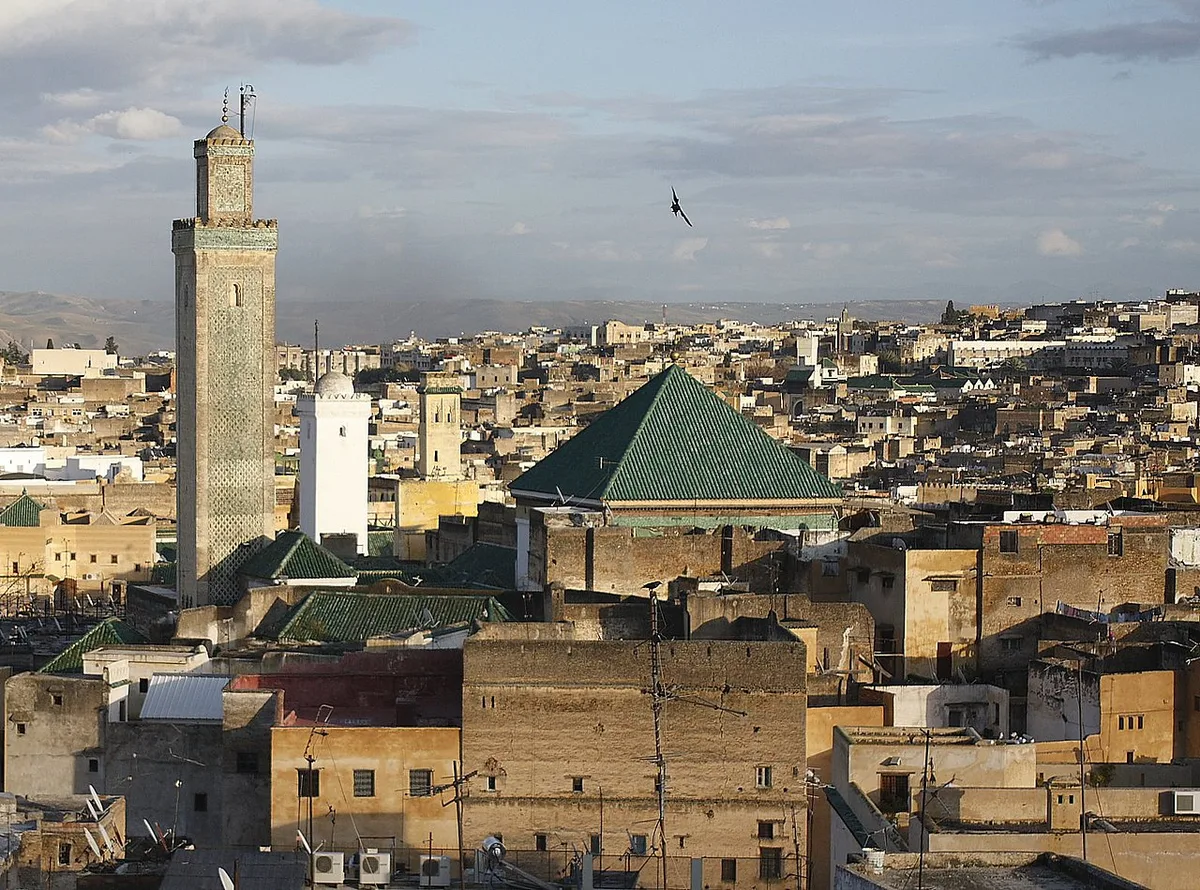
The medieval medina, a UNESCO-listed maze of some 9,000 lanes: the Talaa arteries, the souks by trade, the Qarawiyyin quarter, and nearly all of Fès's serious traditional eating. Cars cannot enter; neither can hurry.
From Bab Bou Jeloud: Bab Bou Jeloud opens into it; you are there
2Batha
The calmer quarter just outside Bab Bou Jeloud, around the Batha Museum: riad hotels, garden restaurants, and the medina's easiest first night. The gateway between the old city and everything else.
From Bab Bou Jeloud: 2 min on foot, outside the gate
3Fes el Jadid
The thirteenth-century 'new' Fès beside the royal palace: wider lanes, the old arsenal square, and neighborhood eating that serves Fassis rather than visitors. The bridge between medina and Mellah.
From Bab Bou Jeloud: 15 min on foot
4The Mellah
The historic Jewish quarter in Fes el Jadid, with its balconied houses and the Aben Danan synagogue: Jewish-Moroccan cooking shaped Fassi food for centuries, and its bakeries and food shops still mark the lanes.
From Bab Bou Jeloud: 15 min on foot
5Ville Nouvelle
The French-built modern city along Avenue Hassan II: brasseries, patisseries, the Marché Central, and business Fès at lunch. Handy, pleasant, and a different country from the medina 10 minutes away.
From Bab Bou Jeloud: 5 min by taxi
6Agdal
The modern residential grid south of the station: neighborhood cafes, rotisseries, and the everyday restaurants of middle-class Fès. Come for an ordinary good lunch, not a landmark.
From Bab Bou Jeloud: 10 min by taxi
The people behind the food
The names that explain how Fès cooks the way it does now.
Najat Kaanache
Chef, Nur
Kaanache, raised in Spain by Moroccan parents and trained at elBulli, Noma, and the French Laundry, came home to open Nur in the Fès medina: Moroccan ingredients read through the world's best kitchens, in a dining room deep in Fes el Bali. Her cooking is the argument that Fassi tradition and modern technique are the same conversation.
Mike Richardson
Founder, Café Clock
The British former chef who opened Café Clock by Bab Bou Jeloud in 2007 and made the medina cafe a cultural institution: camel burgers, storytelling nights, calligraphy and cooking classes. Café Clock proved a cafe could be a bridge between the medina and its visitors.
The warqa makers
Craft, the medina
Pastilla exists because specialists slap batter paper-thin onto hot griddles all day, one leaf at a time. Their warqa feeds every Fassi celebration; a ruined leaf ruins nothing, because they never send one out.
The khlii producers
Institution, Fès
Families who salt, dry, and confit meat into khlii by the old calendar, selling from jars that are refilled by the season. Fès's preserved-meat trade is a food industry older than the country's railways.
The Talaa stall keepers
Institution, Fes el Bali
The grill and soup stalls of the two Talaa streets feed the medina's workforce daily, at prices set by what a porter earns. Their consistency is the medina's quality control, applied every lunch hour.
If you only eat ten things here
Pastilla at a Fassi riad table, shell crisp, cinnamon sugar on your fingers.
Bissara at a dawn stall near the gate, oil and cumin on top.
Khlii with eggs for breakfast, bread mandatory.
A tfaya tagine, sweet onions over savory meat.
A cooking class: souk in the morning, your own pastilla by afternoon.
The camel burger at Café Clock, mint tea after, rooftop at sunset.
A slow eating walk down Talaa Kebira, olives to brochettes.
Rfissa when a riad serves it; reorder plans if needed.
Sfenj still warm from a morning fryer.
Spice buying at Souk el Attarine, from a blender who grinds his own.
Eating well here
bissara
The fava-bean dawn soup, with olive oil and cumin. Breakfast, not a starter.
khlii
Meat preserved in its own fat, the Fassi pantry in a jar. With eggs, it is breakfast.
warqa
The tissue-thin pastry leaf pastilla is built from, made fresh on a griddle.
tfaya
The caramelized onion, raisin, and cinnamon garnish that finishes a Fassi tagine.
talaa
'Slope': the medina's two main streets, Kebira (big) and Seghira (small), run downhill from Bab Bou Jeloud.
fondouk
A caravanserai: courtyard inn and workshop. Several medina fondouks now hold artisans; all once fed travelers.
balak
'Watch out': step aside for the donkey or handcart coming through. You will hear it hourly.
atay
Mint tea, the medina's handshake. 'Atay bla sokkar' asks for it without sugar.
How is eating in Fès different from Marrakech?
Marrakech is smoke and street theater; Fès is the dining room. Fassi cooking is the refined, celebration cuisine (pastilla, tfaya, khlii) cooked in houses and riads, while the street layer runs quieter and more workaday: bissara at dawn, grills on the Talaa. Do both cities; they are two halves of Moroccan food.
Where should I stay to eat well in Fès?
A riad in Fes el Bali or Batha puts the medina's kitchens and markets at your door and gives you access to riad cooking and classes. The Ville Nouvelle is easier with a car but a taxi ride from everything traditional. First-timers: Batha, at the medina's edge.
Do I need a guide for the medina?
For the first half-day, an official guide is money well spent: the medina has some 9,000 lanes, and a guide turns getting lost into learning the quarters. After that, the two Talaa streets (Kebira and Seghira) run downhill from Bab Bou Jeloud and are your compass back.
What is the one meal to book ahead in Fès?
A Fassi dinner or cooking class at a good riad: the medina's best cooking happens in house kitchens, several of which take outside guests by reservation. Pastilla made that morning, eaten in a courtyard, is the Fès meal to remember.
When is the medina at its best for food?
Morning for markets and breakfast stalls (bissara, sfenj, khlii shops), Friday for couscous, and late afternoon into evening for the souks and grills. Friday midday slows for prayers; plan the big lunch accordingly.