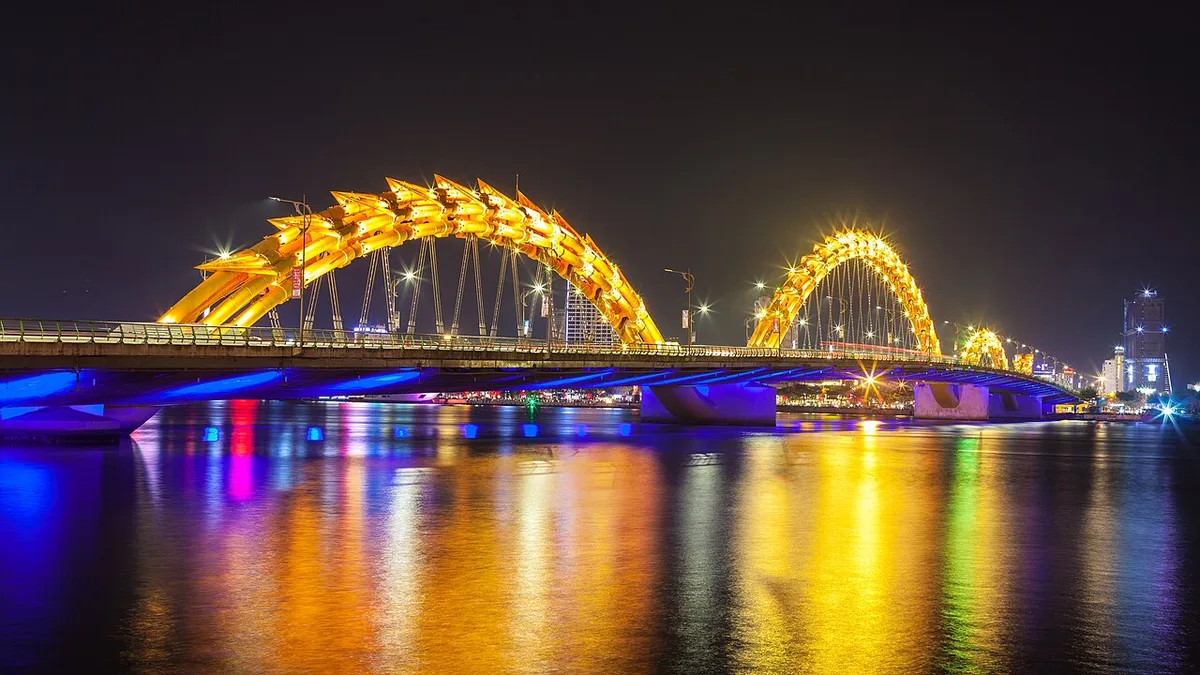
The Dragon Bridge over the Han River, Da Nang. Photo via Wikimedia Commons.
How Da Nang eats
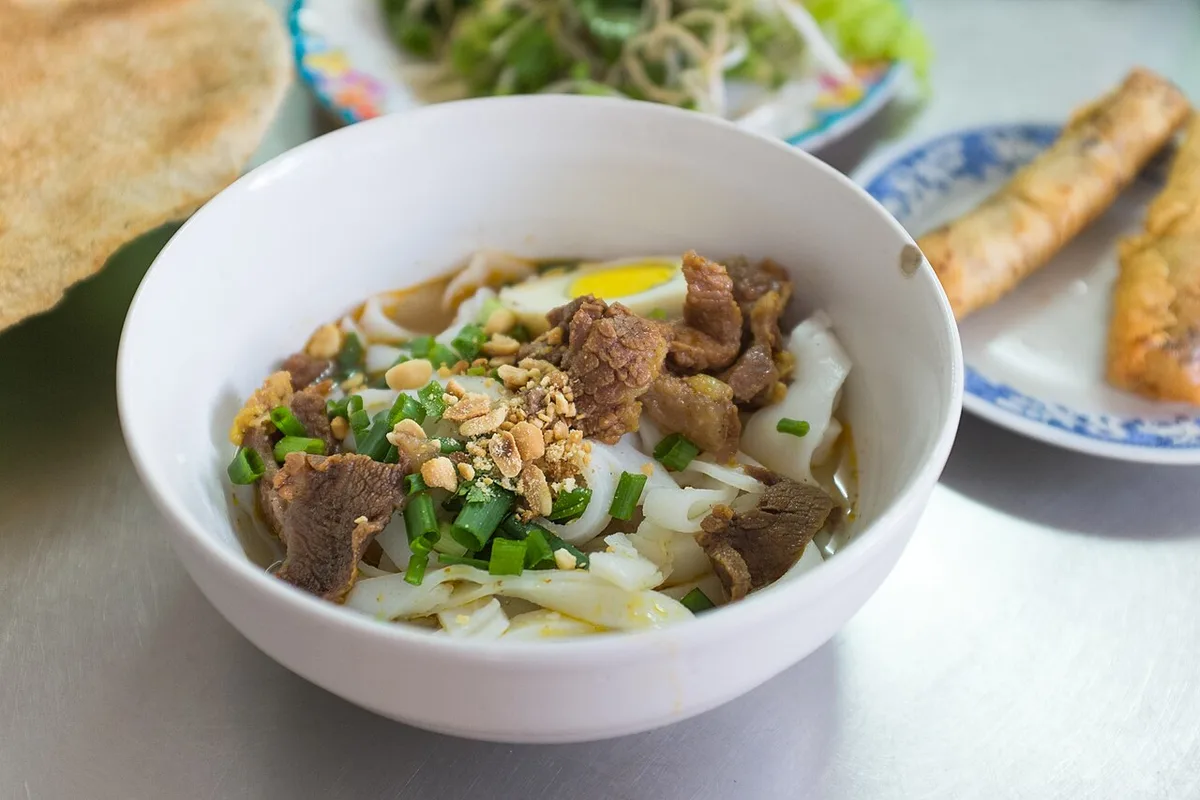
Da Nang is the central coast's working city: bridges, beaches, and a food scene priced for the people who live here. Its signature bowl, mì Quảng, is the opposite of phở: broad turmeric noodles with barely a ladle of rich broth, topped with pork, prawns, a quail egg, herbs, and a sesame rice cracker you crumble in yourself. Breakfast of champions, and there is no second act; the shops close when the pot empties.
Around it: bánh xèo fried small and crisp the central way, rice-paper pork rolls with the infamous mắm nêm, fish-cake noodle soup, and a seafront of seafood restaurants grilling what the boats landed that morning. Da Nang is also Hoi An's practical sibling: sleep and eat here at local prices, day-trip to the lanterns, and come back for dinner.
Learn the foods
Start here, not with a restaurant. Learn what these foods are, where they come from, and how locals eat them, and the whole city opens up: every menu, every market, every street corner starts making sense.
Mì Quảng
Quang Nam's noodle: broad turmeric-yellow rice noodles, a few spoonfuls of intense pork-and-prawn broth, pork, prawns, quail egg, peanuts, herbs, and a grilled sesame cracker crumbled over. More salad than soup.
Where it comes from: Mì Quảng is the dish of Quang Nam province, Da Nang's hinterland: farm food built on whatever the garden and the day offered, which is why no two shops top it alike. The scant broth is the point; it dresses the noodles rather than drowning them.
How to eat it: Mix everything hard, cracker last so it stays crisp. Breakfast or lunch; by 2 p.m. the good pots are empty and the argument is over.
Bánh tráng cuốn thịt heo
Boiled pork belly (and sometimes roasted pork), sliced thin, rolled at the table in rice paper with a thicket of herbs and vegetables, dunked in mắm nêm. Da Nang's great hands-on plate.
Where it comes from: The dish is a delivery system for mắm nêm, the central coast's fermented pineapple-and-anchovy sauce: pungent, sweet, and divisive. Locals judge a shop by its mắm nêm the way others judge a broth, and visitors convert or flee at first dip.
How to eat it: Wet the rice paper lightly, layer pork and greens, roll tight, dunk deep. Order both boiled and roast pork if the shop offers; the comparison is the meal.
Bún chả cá
Fish-cake noodle soup: a clear, sweet broth (pineapple and tomato in it), vermicelli, and springy fried and steamed fish cakes made from the morning's catch. Da Nang's other breakfast.
Where it comes from: A fishing city puts its catch into everything, including breakfast. The chả cá here is made from mackerel and lizardfish pounded to a bounce, and the shops near the harbor compete on freshness measured in hours.
How to eat it: Morning, with chili and garlic added at the table and a squeeze of lime. If the shop makes its own chả cá in-house (watch for the pounding), you chose right.
Bánh xèo, central style
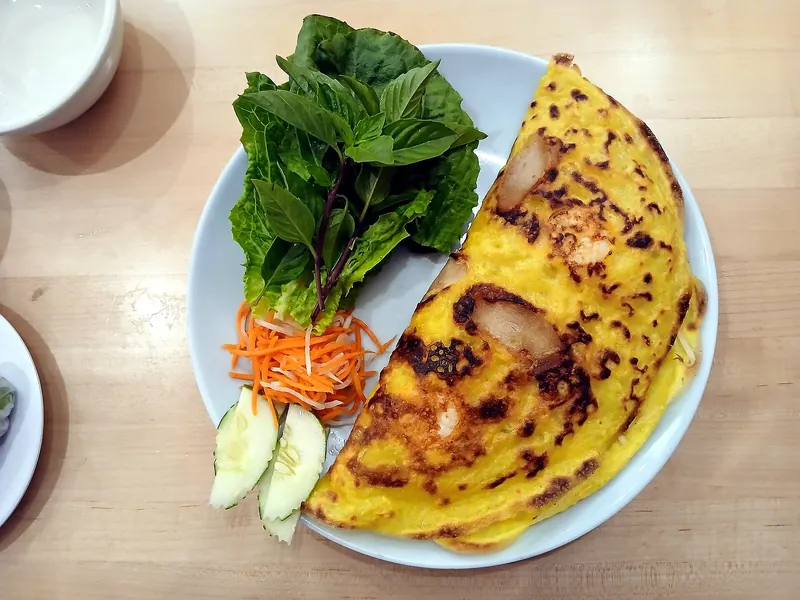
The crepe, central edition: smaller than Saigon's, fried crisper, rolled in mustard greens or rice paper with its own peanut-ish dipping sauce. The alley shops of Thanh Khe and Hai Chau fry them to order, audibly.
Where it comes from: Every region guards its bánh xèo: the south makes them huge and eggy, the center makes them small, lacy, and crackling. Da Nang's famous alley shop, Bà Dưỡng, has fried them in the same lane for decades, and the sauce recipe is a family position.
How to eat it: Cut, wrap in greens or a rice-paper sheet with herbs, roll, dunk. Eat the first one too hot, like everyone; the lesson never takes.
Gỏi cá Nam Ô
Nam O village's raw fish salad: fresh herring or sardine cured in lime and spices, or cooked in a marinade of its own, eaten with herbs and a sauce built from the fish's own juices. Not for the cautious; unforgettable for the rest.
Where it comes from: Nam O, at Da Nang's northwest edge, is a fishing village famous for two things: this salad and its fish sauce, made there for centuries. The gỏi cá comes in 'wet' and 'dry' styles, and the village argues both with conviction.
How to eat it: Go to Nam O itself, order the cooked version first if raw gives you pause, and let the herbs do their work. Weekend lunch is the occasion.
Grilled seafood on the beach road
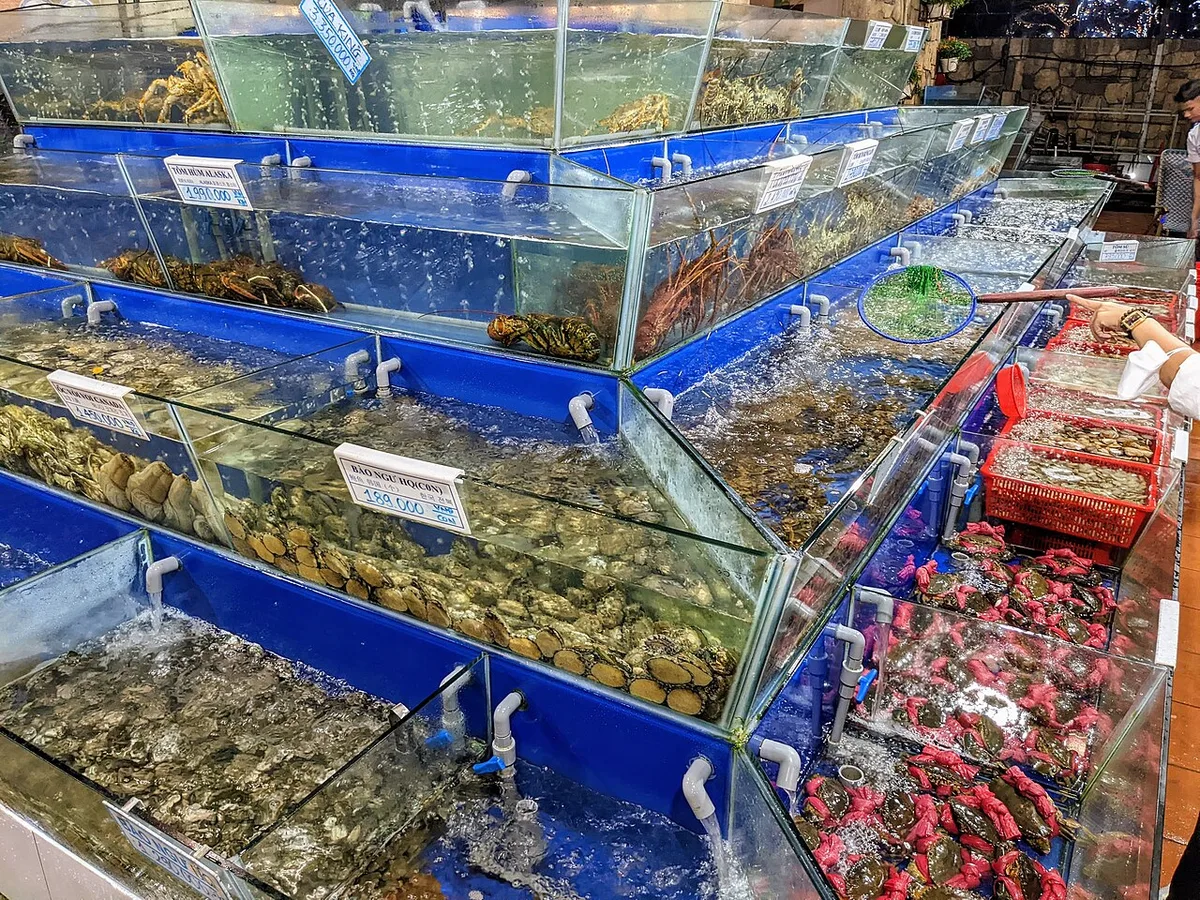
The My Khe system: tanks and trays of live fish, squid, clams, and crabs; you point, they weigh, the grill does the rest, with muối ớt xanh (green chili salt) and beer. Dinner as procurement.
Where it comes from: Da Nang's fleet lands along this coast, and the beach-road restaurants are its outlet stores. The famous names (Bé Mặn among them) industrialized the pointing; the food stayed honest because the supply does.
How to eat it: Agree the price per kilo before anything is weighed, grilled items first, and order rau muống xào tỏi (garlic morning glory) for the table. Sunset seating is the city's best reservation.
Chè
Sweet soups to finish: đậu xanh (mung bean), bắp (corn), and the central specialty of layered jellies and beans over ice. The market stalls and evening carts ladle them for pennies.
Where it comes from: Central Vietnam's chè runs less coconut-heavy than the south's and more various: every market keeps a chè lady, and her cart is where the shopping day officially ends.
How to eat it: At Con Market after lunch, point at the colors you like. Mixed ('thập cẩm') is the correct first answer.
Street food, decoded
Da Nang's street food works on market time: mì Quảng and bún chả cá at dawn, market food halls at noon, bánh xèo alleys in the afternoon, and the beach road at night. The city is orderly by Vietnamese standards (wide streets, actual sidewalks in the center), which makes it the easiest place in the country to learn the stall system.
The one local test is mắm nêm. The pork roll shops will know you are new, and the sauce will decide whether you are a Da Nang eater or a Da Nang visitor. Everything else is easy: point, sit, eat, repeat.
The Con Market food hall
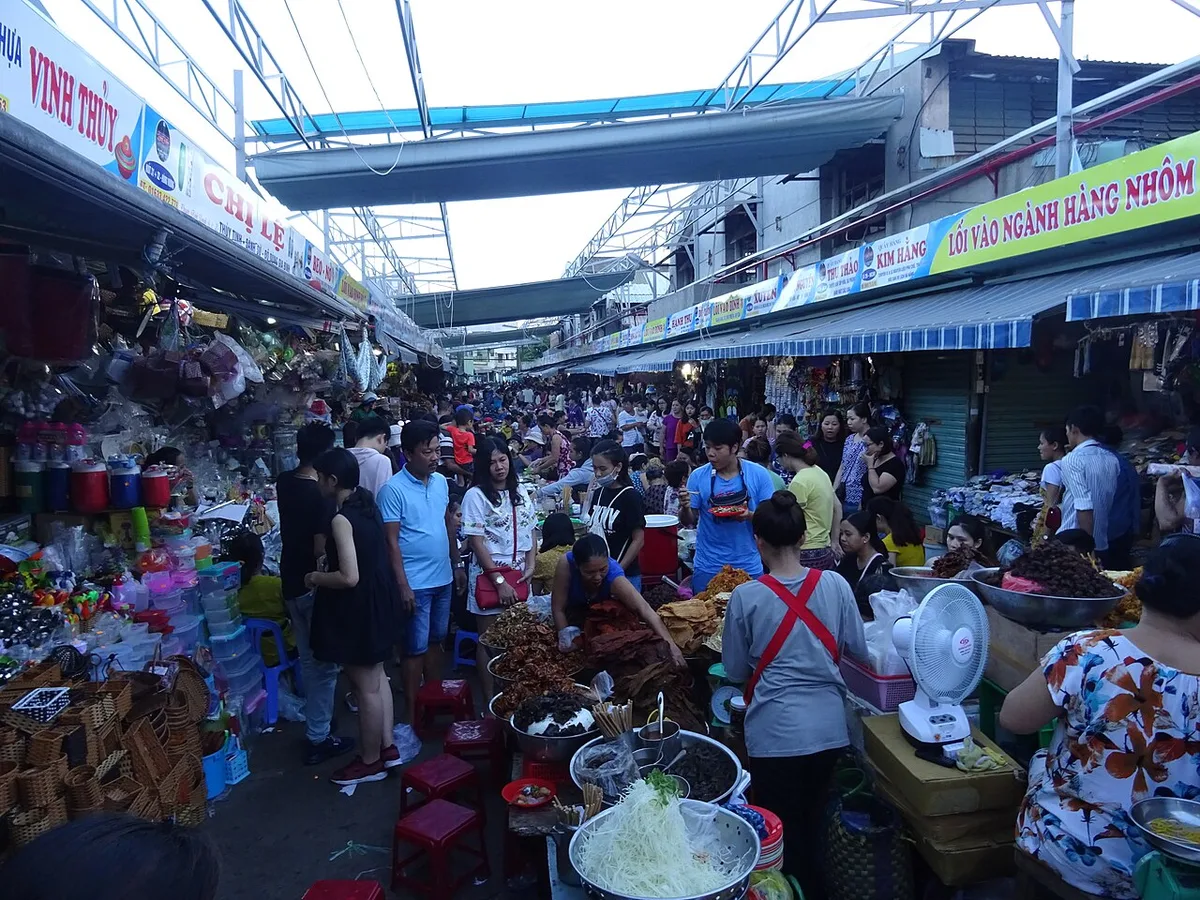
Inside the city's great market, a court of stalls serves the full central canon at plastic tables: mì Quảng, bánh bèo, chè, avocado ice cream. Da Nang's greatest hits in one loud room.
The beach seafood house
Point, weigh, grill: the My Khe road system. Big, loud, local at the good ones, and priced by the kilo with the menu written on the tanks.
The bánh xèo alley
A lane, a row of pans, and the smell of turmeric: Bà Dưỡng's alley on Hoang Dieu is the famous one, with imitators and rivals down every lane in Thanh Khe.
The mì Quảng shop
Morning-only specialists with a pot, a case of toppings, and no patience for indecision. Say gà (chicken), heo (pork), or ếch (frog, the delicacy) and sit.
The riverside cafe
Da Nang takes coffee seriously: Han River terraces, garden cafes, and the Dragon Bridge breathing fire at 9 p.m. on weekends as the city's free show.
The night market graze
The Son Tra night market by the bridge's east end: skewers, snails, desserts, and souvenirs, aimed at visitors but fed by locals too. Come after the seafood dinner for dessert.
The rules that keep it safe and good
Mì Quảng is a morning dish with a hard deadline: the famous shops sell out by early afternoon, and mì at dinner is a different, lesser product.
Seafood is priced before it is cooked, always: the pointing is the negotiation, the weighing is the contract.
The Dragon Bridge fires at 9 p.m. Saturday and Sunday; the riverside cafes and the bridge's east end are the seats, and dinner reservations near it should be early.
Central dialect is its own music: 'răng rứa' (why-so) and a faster clip. Smile, point, and let the pointing do the talking.
Rain season (October to December) floods Hoi An before Da Nang; if the lantern town is underwater, eat here and wait a day.
The markets
Markets are where Da Nang actually shops and eats. Each one has a different job; go in the morning, when the food counters are at their busiest.
ACon Market
Da Nang's central market and its beating food heart: the inside food court is the city's best one-stop tasting, and the surrounding lanes add bánh xèo and chè specialists. Go hungry at 11.
Eat: A mì Quảng, a bánh bèo set, and chè, without leaving the building.
BHan Market
The riverside market by the bridge: souvenirs and fabrics for visitors, dried seafood and specialties for everyone, food stalls at the edges. The gift-buying stop that also feeds you.
Eat: Dried squid and mực rim (candied squid) to carry home; snacks at the door stalls.
CBac My An Market
The beach side's local market: produce, noodle stalls, and the breakfast of the An Thuong quarter. Where the beach restaurants' cooks shop.
Eat: A market breakfast of whatever the nearest stall steams.
DSon Tra Night Market
By the Dragon Bridge's east end: Da Nang's visitor night market, skewers and seafood stalls under the dragon's tail. Touristy and cheerful, best as dessert after a proper dinner.
Eat: Grilled skewers and coconut ice cream, bridge lights overhead.
ENam O fishing village
The old village at the city's northwest edge: fish sauce cellars, the gỏi cá restaurants, and a working harbor. A half-day trip that explains where Da Nang's food comes from.
Eat: Gỏi cá at a village house, fish sauce from the makers to take home.
Neighborhoods: 1 Hai Chau · 2 My Khe Beach · 3 An Thuong · 4 Thanh Khe · 5 Ngu Hanh SonMarkets: A Con Market · B Han Market · C Bac My An Market · D Son Tra Night Market · E Nam O fishing villagePins mark neighborhood centers, so you can place each area against where you are staying. Taxi times under each neighborhood below are measured from the Dragon Bridge.
1Hai Chau
The city center on the Han River's west bank: Han and Con markets, the mì Quảng and bánh xèo institutions, government offices, and the dragon bridge's head. Downtown Da Nang, and its dining room.
From the Dragon Bridge: The Dragon Bridge lands here; you are there
2My Khe Beach
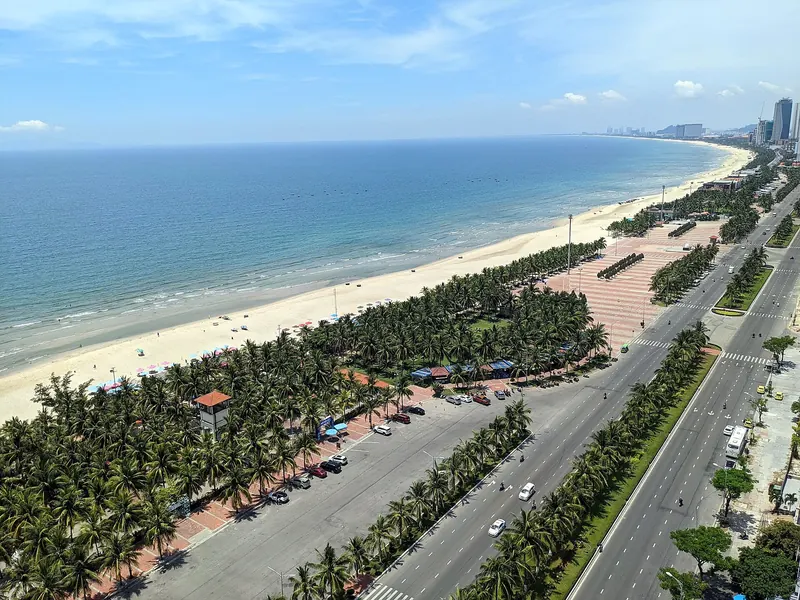
The east bank's long white beach: seafood restaurants along Vo Nguyen Giap road, beach cafes, and the city's evening promenade. Pick your fish live, watch it grilled, watch the sun drop behind the mountains.
From the Dragon Bridge: 5 min by taxi across the bridge
3An Thuong
The beach quarter's cafe-and-bar grid behind My Khe: bakeries, international kitchens, and Da Nang's young expat-local mix. Come for coffee and the city's most relaxed dinner scene.
From the Dragon Bridge: 10 min by taxi
4Thanh Khe
The local west: market streets, bánh xèo alleys, and neighborhood stalls with barely a visitor in sight. Da Nang eating for Da Nang people, at Da Nang prices.
From the Dragon Bridge: 10 min by taxi
5Ngu Hanh Son
The Marble Mountains district south of the beach: temple caves above, seafood and local restaurants below, and the road onward to Hoi An. A sightseeing morning that ends in lunch.
From the Dragon Bridge: 15 min by taxi
The people behind the food
The names that explain how Da Nang cooks the way it does now.
Bánh Xèo Bà Dưỡng
Institution, Hoang Dieu alley
The crepe shop in the alley that Da Nang defends like a title: small crisp bánh xèo, a dipping sauce nobody has successfully copied, and forty years of queues. The alley now hosts rivals; the original's line is the long one.
The Nam O fish sauce makers
Craft, Nam O village
Families who have fermented anchovies in wooden barrels for generations: nước mắm Nam Ô is a protected name and a village economy, and the gỏi cá restaurants next door are its showroom.
The Con Market stall keepers
Institution, Con Market
The women of the market food court, running stalls inherited from mothers and grandmothers, serving the central canon to shoppers and office workers. Their mì Quảng argument has no winner and no end.
Bé Mặn and the beach-road grillers
Institution, My Khe
The seafood houses of the beach road turned pointing-at-tanks into Da Nang's dinner theater. The famous ones run like factories and grill like grandmothers, which is the whole trick.
The morning mì Quảng masters
Craft, citywide
The shop families (Bà Mua, Bà Vị and a hundred unnamed) who start the broth before dawn and close when it is gone. Their discipline, one dish, one morning, is Da Nang's food philosophy in practice.
If you only eat ten things here
Mì Quảng at 8 a.m., cracker crumbled in, before the pot dies.
The full Con Market circuit: noodle, bánh bèo, chè, out.
Pork rolls with mắm nêm, third dunk minimum before judging.
Beach-road seafood at sunset: point, weigh, grill, green chili salt.
Bánh xèo in the Bà Dưỡng alley, first one too hot.
Bún chả cá for second breakfast, harbor-fresh fish cakes.
Nam O for gỏi cá and a bottle of the village fish sauce.
The Dragon Bridge fire show from a riverside cafe at 9 p.m.
A night-market dessert lap by the bridge's east end.
An Thuong cafe morning: Da Nang's slow register, done right.
Eating well here
mì Quảng
The turmeric noodle with barely any broth. If your bowl is swimming, you are in the wrong shop.
mắm nêm
Fermented pineapple-anchovy sauce: the central coast's handshake. First dunk decides your fate.
bánh tráng
Rice paper, the edible wrapper. Wet it less than you think.
răng rứa
Quang dialect for 'why is it so': the phrase that tells you the central accent has begun.
chả cá
Fish cake, pounded springy. In the soup at breakfast, it should bounce, politely.
ngon
Delicious. 'Ngon dữ' (properly delicious) is the Da Nang upgrade.
tính tiền
The bill. At market stalls, the writing-on-palm gesture still works best.
ếch
Frog. On a mì Quảng menu it is not a warning; it is the delicacy topping.
Should I base in Da Nang or Hoi An?
Da Nang for value, beach, and local eating; Hoi An for atmosphere. They are 40 minutes apart, so the serious answer is Da Nang's prices and mì Quảng by day, Hoi An's lanterns by night, and Da Nang's seafood when you get back.
What is mắm nêm and should I fear it?
A fermented sauce of anchovy and pineapple: funkier than fish sauce, sweeter than you expect, and the soul of the pork roll. Fear is optional; the first dunk tastes strong, the third makes sense, the fifth is why people come back.
When should I avoid Da Nang?
The central coast's rain peaks October to December, with storms and rough seas; the eating survives (markets and shops barely pause) but the beach does not. February to August is the city's season.
Is the seafood fairly priced?
At the beach-road restaurants, prices are by weight and posted at the famous places; agree before grilling and you will eat very well for the money. The harbor-side local spots run cheaper than the beach strip.
How many days does Da Nang need?
Two for the city itself (markets, mì Quảng, a seafood night, the Marble Mountains), as a base for Hoi An and Ba Na Hills, a week disappears easily.