The interior of the Grand Mosque (Ulu Camii), Bursa. Photo via Wikimedia Commons.
How Bursa eats
Bursa was the Ottomans' first capital, and Turkish food keeps two of its founding documents here: İskender kebap, invented in this city in 1867 when İskender Efendi stood the döner upright, and the silk bazaar, Koza Han, where the trade that fed the court still pours tea under the plane trees. Add İnegöl's köfte, candied chestnuts, and an intact Ottoman village serving breakfast ten minutes away, and Bursa is a pilgrimage with lunch built in.
The order of the day writes itself: İskender at the blue shop (butter poured at the table, grape şıra beside), tea in the Koza Han courtyard, chestnut sweets for the bag, and Cumalıkızık's village breakfast if you came on a weekend. Bursa does not have a food scene; it has a food inheritance, administered daily.
Learn the foods
Start here, not with a restaurant. Learn what these foods are, where they come from, and how locals eat them, and the whole city opens up: every menu, every market, every street corner starts making sense.
İskender kebap
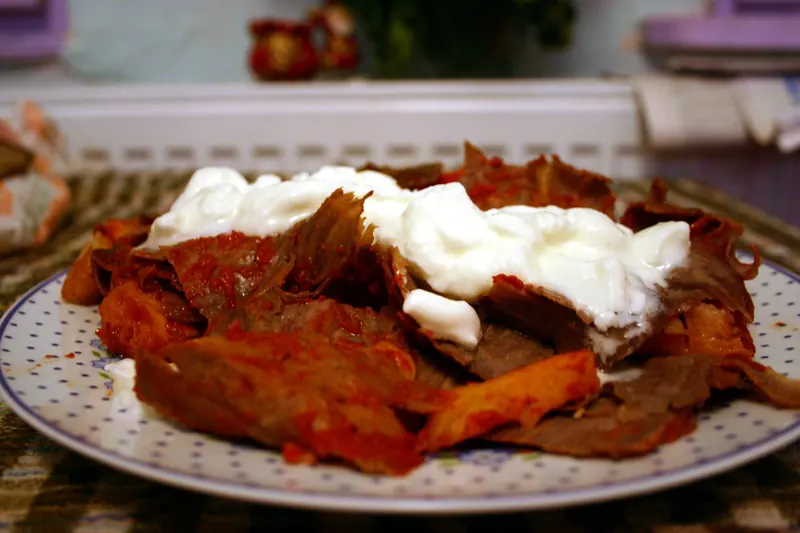
The founding plate: döner sliced over buttered pide cubes, tomato sauce over, browned butter poured at the table from a copper pan, yogurt at the side, a grilled tomato and pepper on top. Eaten with grape şıra, in the city that invented it, at the family's blue shop.
Where it comes from: Mehmedoğlu İskender Efendi's 1867 idea (roast the meat vertically, serve it as a composed plate with sauce and butter) created the modern döner and its grandest form at once. The family still runs the original house (the 'Mavi Dükkân', blue shop), and the butter pour remains a table-side ceremony with the pan held high.
How to eat it: With şıra (the unfermented grape drink the house pairs), ayran as backup. Mix the yogurt in or keep it pure at the side; both schools sit in the same dining room, at peace.
Pideli köfte
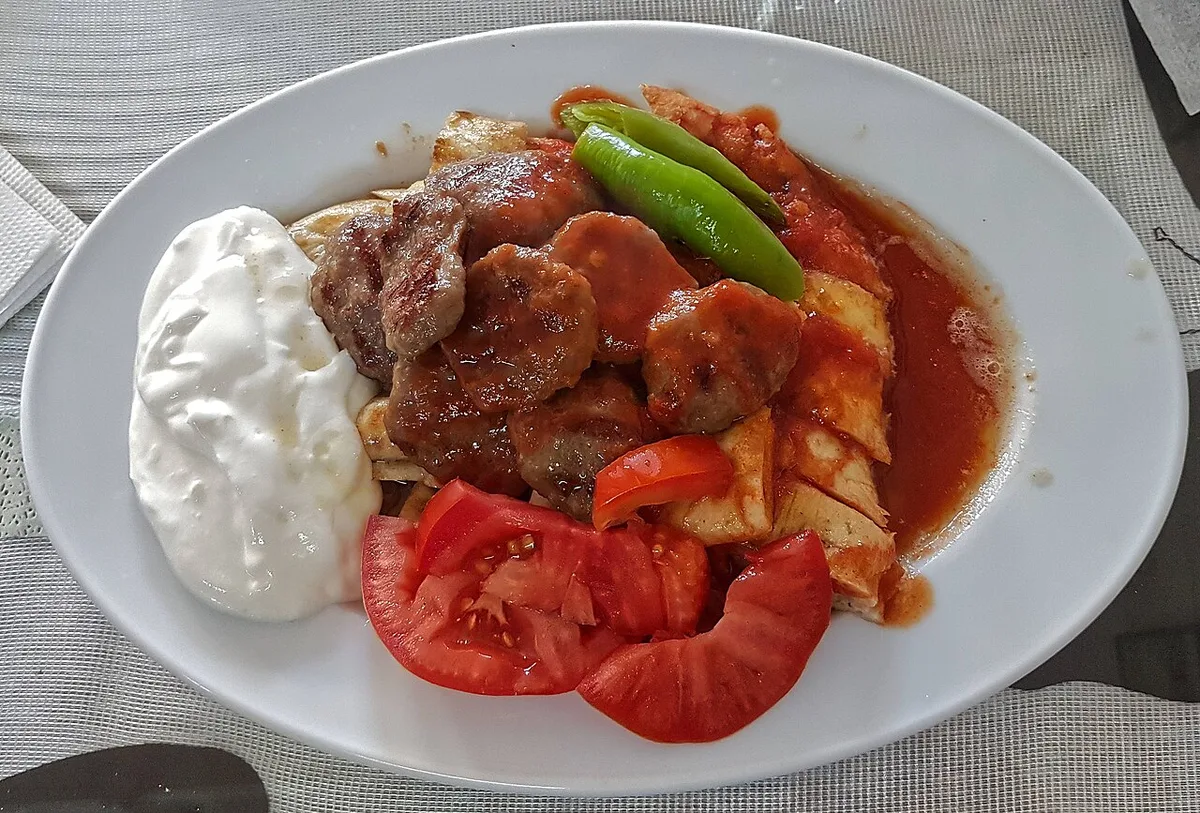
Bursa's other kebab: İnegöl-style köfte served İskender-fashion over pide with tomato sauce and butter. The local's alternative when the döner queue defeats the day.
Where it comes from: Where İskender is the ceremony, pideli köfte is the everyday crown: the same architecture (pide, sauce, butter, yogurt) with köfte in the döner's place, born in the bazaar's own eateries (the Tarihi Kayhan Çarşısı houses are the famous addresses).
How to eat it: At a Kayhan bazaar köfteci, with şıra, the butter watched as it lands. It is not a substitute; it is the second pillar.
İnegöl köfte
The meatballs of İnegöl, the town east of Bursa: beef (with a little lamb), onion, and almost nothing else, rested and grilled to a springy bite, served with piyaz and grilled peppers since the 19th century.
Where it comes from: İnegöl köfte was carried by Balkan migrants and codified by the town's masters (the recipe's restraint is the point: no spice cabinet, just meat, onion, salt, and time). The town's köfteci rows serve it as a regional rite, and Bursa claims it as family.
How to eat it: In İnegöl if the road allows, in Bursa's köftecis if not: with piyaz (bean salad, the plain kind here), ayran, and bread for the grill juices.
Cantık
Bursa's little pide: a round, soft flatbread with a minced-meat center, baked in the bazaar's fırıns and eaten as the market's snack. The city's handheld, older than its fame.
Where it comes from: Cantık belongs to the bazaar economy: small, cheap, and eaten between errands, its name carried by the Crimean Tatar bakers who settled Bursa. The Kayhan and bazaar fırıns keep the trays moving all morning.
How to eat it: Warm from the fırın, folded once, eaten walking the bazaar. One is a snack; the bazaar will provide the rest of lunch.
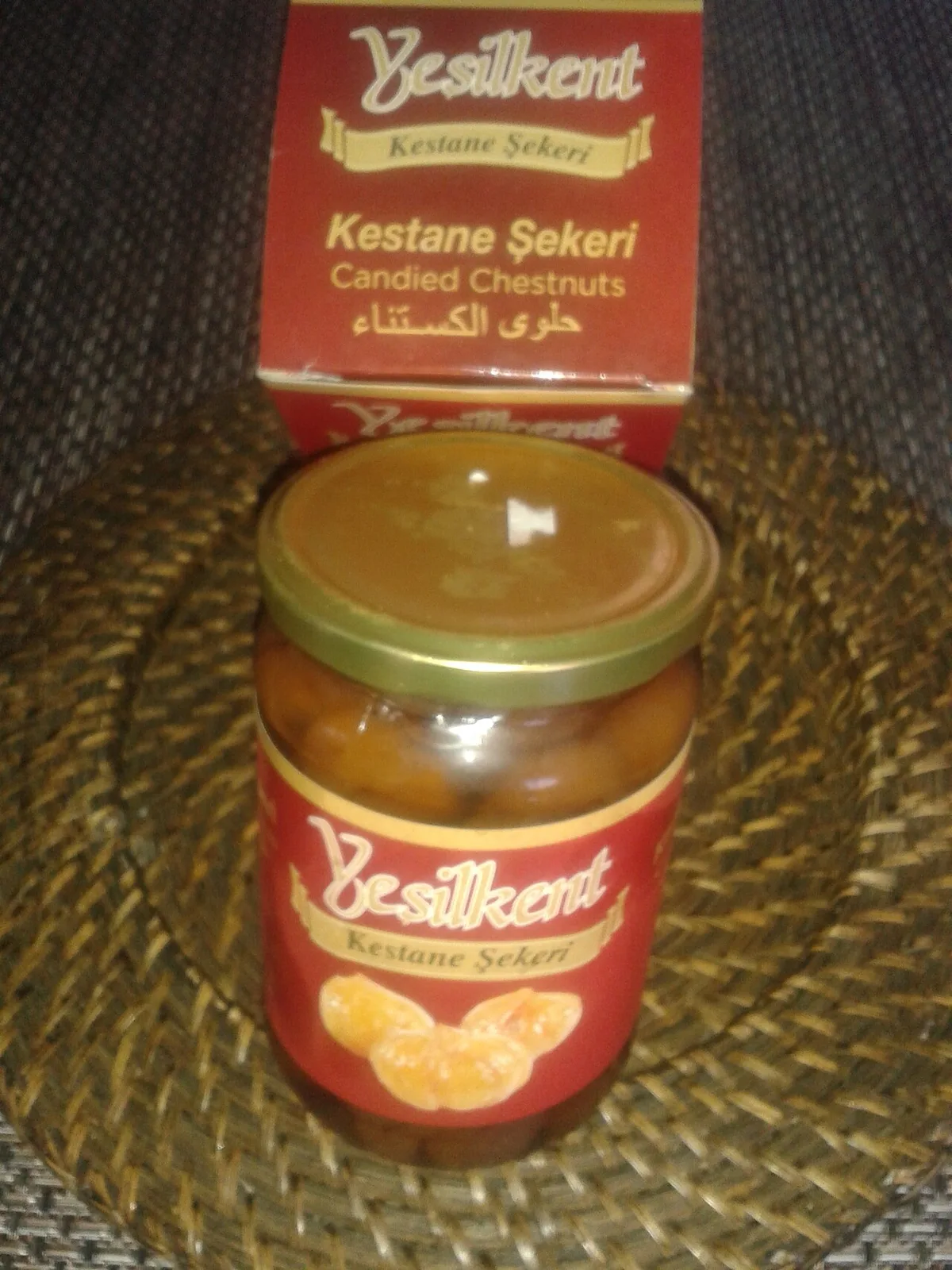
Kestane şekeri
Candied chestnuts: Uludağ's chestnuts peeled and glazed in syrup, sold in elegant boxes by Bursa's confectioners (Kafkas the famous house, since 1930). The city's edible souvenir and its sweetest claim.
Where it comes from: The chestnut woods of Uludağ fed a confection industry: the whole, glossy, syrup-kept chestnut became Bursa's gift economy, boxed for every visit and holiday. The makers guard the syrup's clarity the way Antep guards its pistachio green.
How to eat it: One with a Turkish coffee, the box for people at home. The syrup is part of the sweet; the spoon is not optional.
Kemalpaşa tatlısı
The cheese dessert of Mustafakemalpaşa, the district west: fresh cheese dough balls baked and soaked in syrup, served with kaymak or tahini. Bursa province's second sweet, softer and milkier than the chestnut.
Where it comes from: The district's shepherds made a dessert from their unsalted cheese and the town took the credit and the name. In Bursa it closes the köfte lunch the way höşmerim closes Ankara's tava: the region's cheese, sweetened.
How to eat it: Warm with kaymak, after köfte, with çay. Order it where the menu lists the district's name in full; the short version invites imitation.
The Cumalıkızık breakfast
The village serpme: gözleme from the courtyard sac, village butter, cheeses, olives, honey, menemen, and the house's own jams, served in 700-year-old houses at Uludağ's foot. Bursa's weekend institution.
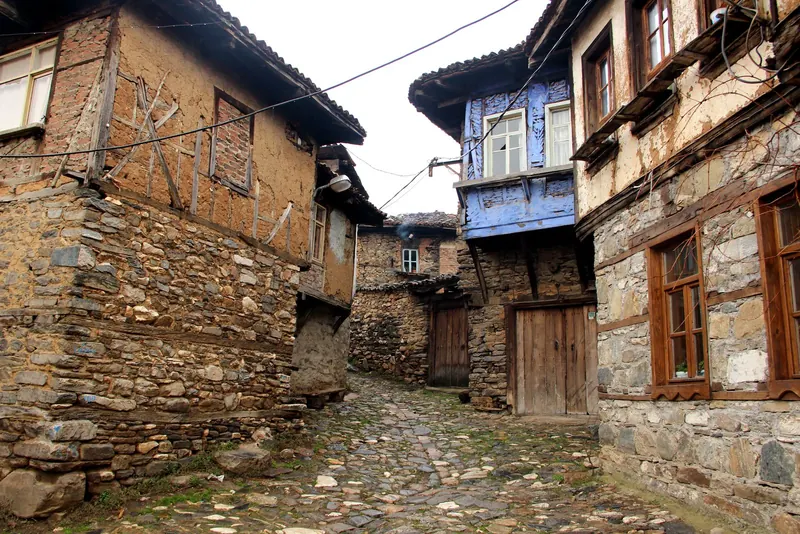
Where it comes from: Cumalıkızık survived as an Ottoman village because the city grew the other way; its families turned their courtyards into breakfast houses and saved the village by feeding it. The raspberries and chestnuts in the lanes are the same economy, sold at the door.
How to eat it: Go early on a weekend (the lanes fill by 11), take the full spread in a courtyard, and walk the village after. Weekdays are the quiet version of the same feast.
Street food, decoded
Bursa's street food is a bazaar economy: cantık from the fırın, köfte in the Kayhan lanes, chestnut sweets at the confectioners, and tea in a 15th-century silk han. The city does not do food trends; it administers classics, and the standard is set by institutions older than most countries.
The day has a shape the city insists on: market morning, İskender at noon with the butter ceremony, Koza Han tea as the afternoon's pause, and the sweets bought before the shops close. Weekends add Cumalıkızık's breakfast at the front, and nobody argues with the order.
The İskender salon
The blue shop's theater: döner carved, sauce ladled, butter poured high at the table, şıra poured beside. A ceremony disguised as lunch, since 1867.
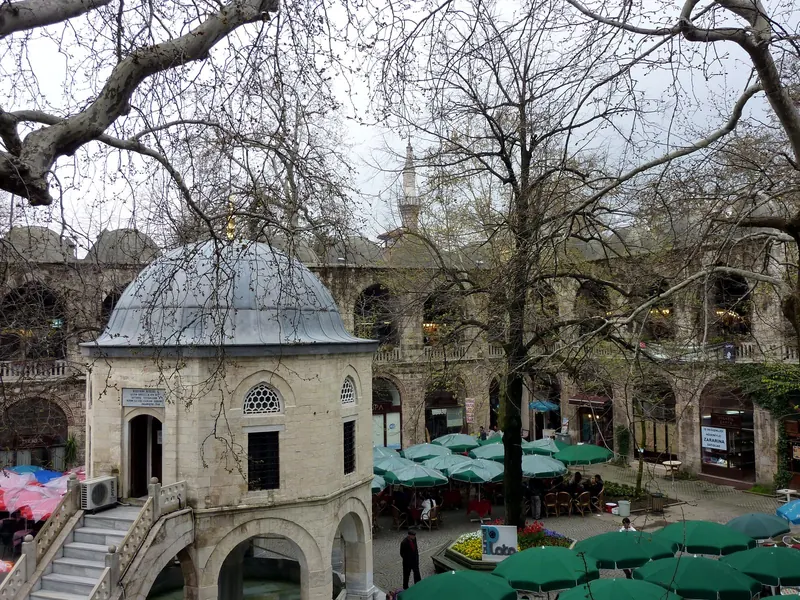
The Koza Han tea garden
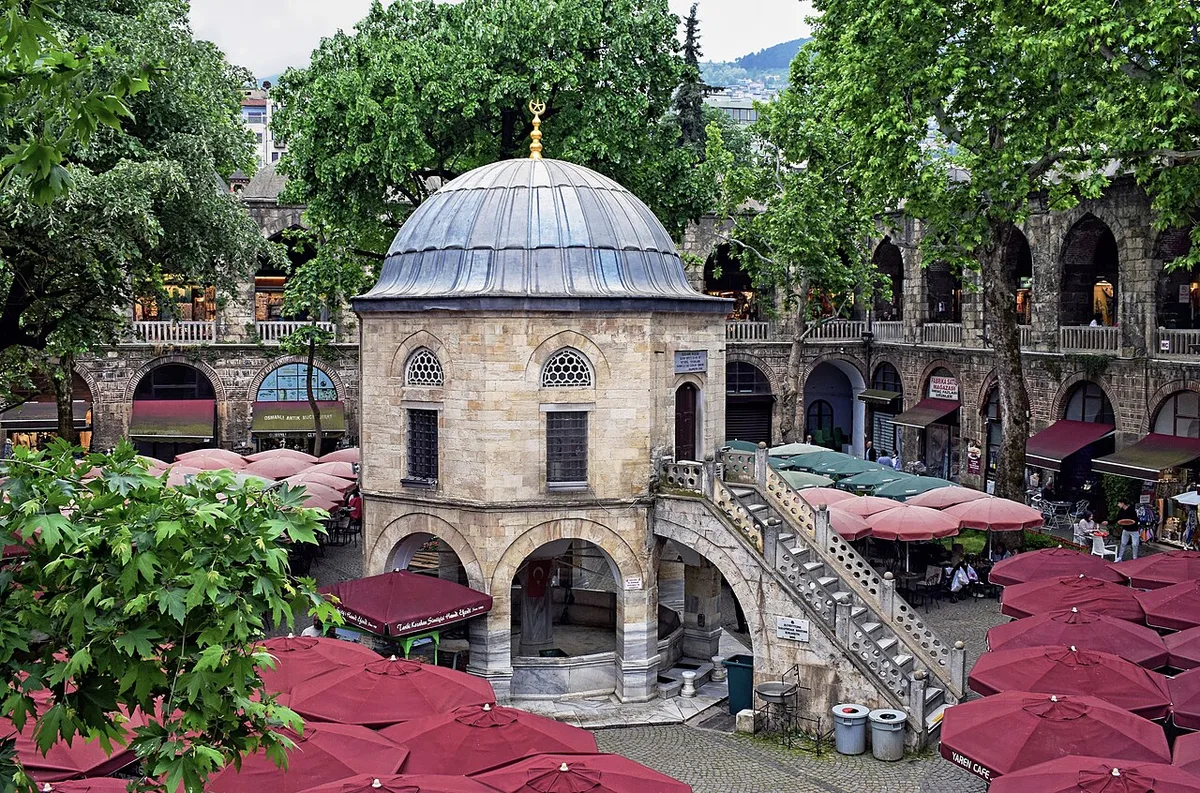
Çay under the plane trees in the silk han's courtyard, the little mosque at its center: Bursa's afternoon institution since the silk caravans.
The Kayhan köfteci
The old bazaar's grill houses for pideli köfte and İnegöl style: marble counters, piyaz, şıra, and the market eating at full voice.
The village breakfast house
Cumalıkızık's courtyards: the serpme in a 700-year-old house, gözleme from the sac, the village waking around your table.
The confectioner's counter
Kafkas and its rivals: chestnuts in syrup behind glass, Kemalpaşa in trays, the boxes wrapped for the journey like small luggage.
The cantık fırını
The bazaar's little pide ovens: trays out, a queue of errands paused, the snack that fuels the market's morning.
The rules that keep it safe and good
İskender at the flagship is a queue-managed pilgrimage: arrive before noon or accept the wait as the price of the butter.
Şıra is the house pairing, not a soft drink substitute: drink it with the kebab the way the shop intends.
Koza Han's tea is ordered from the garden's own service and carried to your table under the trees; the silk shops around it close earlier than the tea runs.
Cumalıkızık fills by late morning on weekends: the first dolmuş is the wise one, and the breakfast is the village's whole industry, so book ahead where the house allows.
Chestnut sweets travel perfectly and are priced by the box: buy them on the last day and resist the train's temptation bravely.
The markets
Markets are where Bursa actually shops and eats. Each one has a different job; go in the morning, when the food counters are at their busiest.
AKoza Han
The silk caravanserai of 1491: two floors of silk shops around a courtyard of plane trees and tea tables, with its little octagonal mosque at the center. Bursa's most beautiful room is a market.
Eat: Tea in the courtyard, a simit or cantık from the lanes beside, the silk for after.
BThe Covered Bazaar (Kapalıçarşı)
Bursa's grand bazaar run beside the Grand Mosque: gold, textiles, and towels (the city's other weave) in vaulted lanes continuous with the hans.
Eat: Graze at the edges: cantık, köfte in Kayhan, sweets at the confectioners.
CKayhan Çarşısı
The old market quarter east of the bazaar, now the city's open-air food street: köftecis and pideli houses under the trees, the market lunch at its best.
Eat: Pideli köfte at a marble counter, şıra beside, chestnuts after.
DReyhan Market
The food market of the center: produce, cheeses, olives, and the plateau's goods, where Bursa's households shop and its lokantas source.
Eat: Cheese and olives as you shop; the market's own snack counters at noon.
ECumalıkızık Village
The Ottoman village itself as the market: breakfast houses, jam and raspberry sellers in the cobbled lanes, and bread from the village oven.
Eat: The full courtyard breakfast; buy the jams and chestnut honey in the lanes.
Neighborhoods: 1 The Bazaar Quarter · 2 Tophane and Hisar · 3 Çekirge · 4 Nilüfer · 5 CumalıkızıkMarkets: A Koza Han · B The Covered Bazaar (Kapalıçarşı) · C Kayhan Çarşısı · D Reyhan Market · E Cumalıkızık VillagePins mark neighborhood centers, so you can place each area against where you are staying. Taxi times under each neighborhood below are measured from the Grand Mosque.
1The Bazaar Quarter
Around the Grand Mosque: the covered bazaar, Koza Han's courtyard, the long market street, and the İskender shops. Bursa's commercial heart since the silk road paid for it.
From the Grand Mosque: The Grand Mosque is the reference point; you are there
2Tophane and Hisar
The citadel hill of the first sultans: the clock tower, the tombs, and tea gardens over the whole plain. The old city's quiet crown and its sunset seat.
From the Grand Mosque: 10 min uphill on foot
3Çekirge
The thermal quarter west: Roman-to-Ottoman baths, old hotels, and neighborhood lokantas serving the cure-takers. Bursa at its most Ottoman and unhurried.
From the Grand Mosque: 15 min by bus
4Nilüfer
The modern west: malls aside, the new city's own lokantas, kebab houses, and cafe streets, where Bursa's young population eats its inheritance updated.
From the Grand Mosque: 25 min by metro
5Cumalıkızık
The 700-year-old Ottoman village at Uludağ's foot: cobbled lanes, village houses serving the famous serpme breakfasts in their courtyards, and raspberry sellers at the door. Bursa's weekend morning, preserved.
From the Grand Mosque: 25 min by bus or dolmuş
The people behind the food
The names that explain how Bursa cooks the way it does now.
The İskender family
Institution, since 1867
Five generations of the house that invented the plate: the blue shop's dining room, the butter poured as the founder poured it, and a trademark the family defends like the recipe. Bursa's first food name, and Turkey's most famous kebab surname.
Kafkas
Institution, confectioner since 1930
The chestnut house: three generations glazing Uludağ's chestnuts into the city's emblematic sweet, their shops the departure lounge of every Bursa visit. The box in your bag is probably theirs.
The Koza Han silk merchants
Craft, the silk han
The traders who kept Bursa's silk (and its cocoon market's memory) alive in the han's upper rooms, while the courtyard below pours tea for the city. The bazaar's oldest economy, still at its desk.
The Cumalıkızık breakfast families
Institution, the village
The households whose courtyard breakfasts saved a 700-year-old village: their gözleme sacs and jam pots are the preservation strategy, and it works deliciously.
The İnegöl köfte masters
Craft, İnegöl
The meatball guild of the neighboring town, keepers of the recipe's restraint since the Balkan migrations: their standard (meat, onion, rest, grill) is the region's köfte constitution.
If you only eat ten things here
İskender at the blue shop, butter poured high, şıra beside.
Tea in Koza Han's courtyard under the plane trees.
Pideli köfte in Kayhan, marble counter, market roaring.
A Kafkas box bought on the last day and defended on the train.
Cumalıkızık breakfast in a courtyard, first dolmuş in.
Cantık warm from a bazaar fırın, eaten mid-errand.
Tophane tea gardens at sunset over the plain.
İnegöl köfte with piyaz, the recipe's restraint respected.
Kemalpaşa with kaymak after the köfte, district name in full.
Çekirge's baths after lunch: the Ottoman full stop.
Eating well here
İskender
Say it with respect: the plate, the family, and the 1867 invention. In Bursa it needs no surname.
şıra
The unfermented grape drink poured with the kebab. It is the pairing, not a placeholder.
kestane şekeri
'Chestnut sugar': the candied chestnuts in syrup. The box is the souvenir; the spoon is mandatory.
cantık
The bazaar's little meat pide. Warm, folded, eaten between errands.
pideli köfte
Köfte in İskender's architecture. The second pillar of the Bursa table.
han
The caravanserai: Koza Han is the silk one, and its courtyard is the city's living room.
afiyet olsun
'May it be health': in Bursa it is said by the man pouring your butter.
hesap, lütfen
'The bill, please': after İskender it arrives with the offer of tea, which is correct.
Which İskender is the original one?
The İskender family runs several Bursa houses under its name (the blue shop on Atatürk Caddesi is the flagship experience); other old kebab houses serve their own honorable versions. The family's trademark is protected, the butter pour is the ritual, and the queue at the blue shop is part of the pilgrimage. Book or arrive before noon.
How do I eat İskender correctly?
Let the butter land, take döner, pide, and sauce in each bite, yogurt as the cool counterpoint, and drink şıra if the house pours it (theirs is the pairing). It is a rich plate by design; a salad after, not before, is the local order.
Is Cumalıkızık worth the trip?
Yes, for the breakfast and the village itself: go early, eat in a courtyard, and buy the village's jams and raspberries in the lanes. It is the best-preserved Ottoman village in the region and it feeds you for coming.
What about Uludağ?
The mountain above the city (ski resort in winter, picnic highland in summer) pairs with a Bursa lunch below, not a meal above: eat İskender in the city, take the cable car for the view and the mountain air, and let the chestnuts travel home with you.
How many days?
One full day covers the bazaar, İskender, Koza Han, and the sweets; a second morning adds Cumalıkızık's breakfast and Çekirge's baths. Bursa is also the natural stop between Istanbul and the Aegean or Ankara.