The Chamberlain Bridge over the Careenage, Bridgetown, Barbados. Photo via Wikimedia Commons.
How Bridgetown eats
Bridgetown is the capital of the island that gave the world rum and the flying fish its flag: the national dish (cou-cou and flying fish) is Bajan cornmeal and okra under a steamed fish in creole sauce, the rum shop is its parliament and canteen in one room, and Friday night belongs to Oistins, the fishing town down the coast where the whole island eats grilled fish under the stars.
The system is gloriously local: cutters (salt-bread sandwiches) from the rum shops and bakeries, pudding and souse on Saturdays by appointment with tradition, macaroni pie at every Sunday lunch, and Mount Gay's stills (rum since 1703) an hour's story from any table. Eat the fish at Oistins, take the cutter standing, and let a rum shop set your afternoon's pace.
Learn the foods
Start here, not with a restaurant. Learn what these foods are, where they come from, and how locals eat them, and the whole city opens up: every menu, every market, every street corner starts making sense.
Cou-cou and flying fish
The national dish: cou-cou (cornmeal stirred smooth with okra, butter on top) under steamed flying fish in a creole gravy of tomato, onion, and herbs. The fish that flies on the island's coins, cooked with a patience the stirring demands.
Where it comes from: Cou-cou is West African fufu's Bajan form (the cou-cou stick and the endless stir are the craft), the flying fish the island's emblem and industry for centuries. The pairing became the national plate by acclamation: mild, slippery-smooth, and sauced, it tastes like nothing else in this sea and Bajans abroad dream of it by name.
How to eat it: At a Bajan restaurant or a rum shop lunch, the fish's gravy over the cou-cou, pickled cucumber beside. A knife is wrong; the spoon and fork work the mound as the island does.
The Friday fish fry at Oistins
Grilled and fried fish (mahi-mahi/dolphin, swordfish, flying fish, snapper) from the market stalls' grills, with macaroni pie, rice and peas, and coleslaw, at picnic tables under music. Friday's institution; the stalls run other nights too, quieter.
Where it comes from: Oistins was a fishing town with a market; the fry grew from the fisherfolk selling the catch cooked, into the island's weekly festival where locals outnumber visitors and the grills' smoke is the invitation. Bay Gardens and Pat's Place are famous stalls; the right stall is the one whose grill master has your fish's name ready.
How to eat it: Friday, early evening (grills fire by 6, the peak is 8), fish with the full plate and a Banks beer, eaten at the shared tables. Order the dolphin (mahi, not the mammal) like a local.
Pudding and souse
Saturday's sacred plate: souse (pickled pork, lime, onion, cucumber, pepper) with steamed sweet-potato pudding, a black, dense, spiced pudding nothing like its name suggests to a Briton. Eaten cold-hot together, sold from rum shops and specialists by midday.
Where it comes from: Pudding and souse is the island's Saturday constitution: the souse from the pig's economical parts pickled sharp, the pudding from grated sweet potato, coconut, and spice. Every district has its legendary maker (the 'pudding and souse lady' is a title of honor), and Saturday lunch elsewhere is a lesser country.
How to eat it: Saturday before 1 (it sells out), with the souse's broth spooned over the pudding, pepper at your declared level. A rum shop or a specialist's yard is the correct room.
The cutter
Barbados's sandwich: a salt bread roll (crisp shell, soft inside) stuffed with fried flying fish, ham, cheese, egg, or liver, with Bajan pepper sauce and salad. The island's working lunch, eaten standing at rum shops and bakeries.
Where it comes from: The salt bread is the island's own roll, and the cutter its purpose: the ham cutter is the classic, the fish cutter the glory, the 'everything' cutter the full sentence. Rum shops cut them to order all day; the pepper sauce (the island's fiery bottled gold) is not optional in spirit.
How to eat it: A fish cutter at a rum shop counter, pepper sauce with respect, a mauby or a Banks beside. Seating is the domino table's edge; conversation is included.
Macaroni pie
The Bajan baked mac and cheese: long macaroni in a sharp cheddar sauce with mustard, ketchup, and onion, baked to a firm, sliceable square. Not a side but a pillar: Sunday lunch and the fish fry both require it.
Where it comes from: Macaroni pie is the island's Sunday signature, descended from the British macaroni cheese and sharpened into something sliceable, spicy-edged, and served beside the roast chicken or the fish with equal rights. A Bajan plate without it is read as unfinished by everyone at the table.
How to eat it: A hot square beside the flying fish at Oistins or the Sunday chicken, the crust corner if the tray allows. Cold leftovers are a Monday delicacy the island keeps quiet about.
Rum, at the source
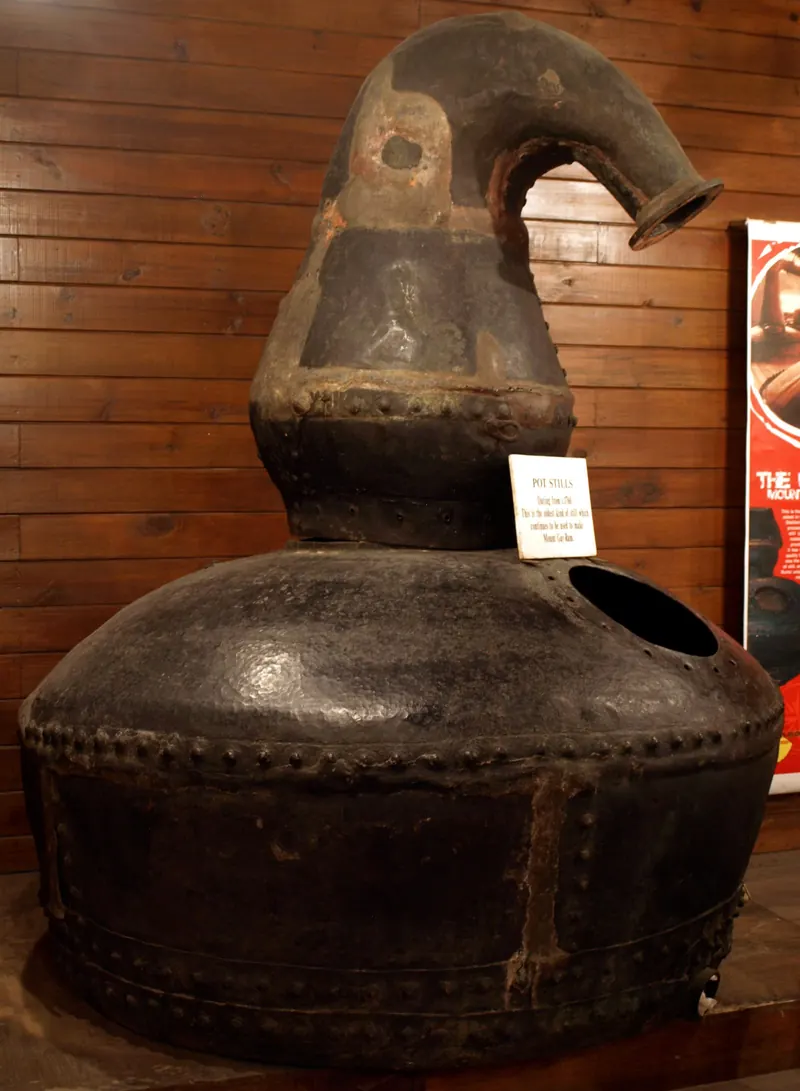
Barbados invented commercial rum (Mount Gay's deed dates to 1703): the island's rums (Mount Gay, Foursquare, St Nicholas Abbey) run from the rum shop's white pour to some of the world's most prized aged bottles. The rum shop pour and the distillery tour are the two ends of one education.
Where it comes from: Sugar built the island and rum is its spirit in both senses: the rum shop (part bar, part store, part parliament) is where Barbados talks, plays dominoes, and eats its cutters, and the distilleries' pot stills have run for three centuries. Foursquare's modern masterpieces win the world's awards; the shop's unlabelled pour wins the afternoon.
How to eat it: A distillery tasting (Mount Gay's visitor centre sits in Bridgetown itself) for the education, then a rum shop for the application: one pour, a cutter, dominoes observed respectfully.
Mauby and sorrel
The island's drinks of bark and flower: mauby (bitter-sweet bark brew, anise-edged, the rum shop's refreshment) and sorrel (the hibiscus Christmas drink, spiced and ruby). The non-rum half of the table, with their own followings.
Where it comes from: Mauby divides the island (its bitterness is an acquired love), and sorrel rules December alongside ham and great cake (the rum-soaked fruit cake of Bajan Christmas). Both come from the yard's plants by way of the African and creole kitchen gardens: the island drinks its garden in every season.
How to eat it: Mauby ice-cold with a cutter, first taste forgiven its surprise. Sorrel at Christmas with great cake, the full ceremony.
Street food, decoded
Bridgetown's food system is the rum shop, the market, and the fry: cutters and plates at the shop counters all day, Cheapside's produce in the morning, pudding and souse on Saturday, and the whole island decamping to Oistins on Friday night. It is the most local food system in this guide relative to the island's fame, and the friendliest to join.
The rhythm is weekly and learnable: market mornings, rum shop lunches, the Gap's strip for an evening, Friday at Oistins by 7, Saturday pudding before it sells out, and Sunday lunch (macaroni pie, no exceptions) wherever a Bajan family or its restaurant equivalent adopts you.
The rum shop
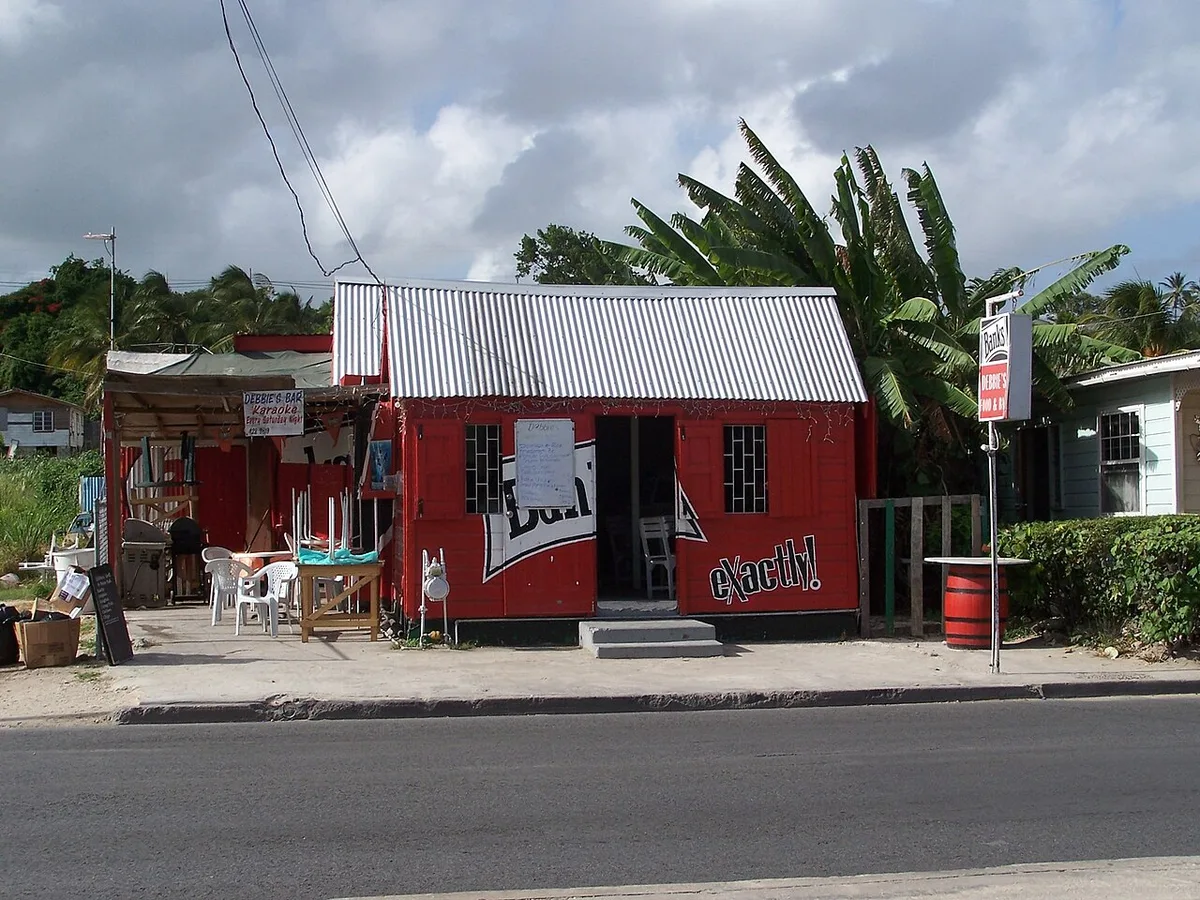
A thousand across the island: rum by the pour, cutters at the counter, dominoes on the table, the district at its ease. Enter as a guest; leave as a regular in training.
The Oistins stall
Grill smoke, picnic tables, fish by the plate: Friday's great hall without walls, stalls competing by their grill masters' reputations.
The bakery counter
Salt breads out of the oven, cutters built to order, sweet breads and turnovers for the bag: the island's mornings run from these counters.
Cheapside Market
The capital's produce hall by the Careenage: the island's vegetables, fruits, and herbs, with the vendors' calls as the music and lunch counters inside.
The Saturday pudding spot
A yard, a rum shop, a specialist's kitchen window: pudding and souse from mid-morning until the pot's end, the queue its calendar notice.
The distillery tasting room
Mount Gay in Bridgetown, Foursquare and St Nicholas Abbey in the country parishes: three centuries of rum in a flight of glasses, the island's history distilled.
The rules that keep it safe and good
Pepper sauce is calibrated socially: ask for 'a little' first. Bajan pepper sauce carries Scotch bonnet conviction and the rum shop respects a declared level.
Pudding and souse is a Saturday appointment with a sell-out: before 1, or the week was misspent.
At Oistins on Friday, order at the stall, take the number, and hold your table: the system is cheerful chaos that has fed thousands a night for decades.
The rum shop pour is by the miniature bottle for your table, mixed as you go: pace it with a cutter, and let the dominoes set the afternoon's tempo.
Dolphin is mahi-mahi. The explanation is given once, kindly, to every visitor since forever; be the one who already knows.
The markets
Markets are where Bridgetown actually shops and eats. Each one has a different job; go in the morning, when the food counters are at their busiest.
AOistins Fish Market and Fry
The fishing town's market (fish landed and sold by day) and its famous stalls' grills by night: the island's seafood heart, beating loudest on Fridays.
Eat: Grilled dolphin or flying fish with macaroni pie, at the shared tables, Banks in hand.
BCheapside Market
Bridgetown's central produce market by the Careenage: two floors of the island's vegetables, fruits, ground provisions, and herbs, vendors calling since morning.
Eat: Fruit as you shop; a cutter from the counters when the salt bread lands.
CFairchild Street Market
The bus terminal's market at the old town's south edge: produce and food stalls serving the commuting city, the capital's workaday pantry.
Eat: A rum shop lunch on the streets behind it, with the market's shoppers.
DMount Gay Visitor Centre
Rum's oldest house at its Bridgetown home: the pot stills, the blending halls, and the tastings, an hour from the port in Spring Garden. The spirit's cathedral, distillery attached.
Eat: The tasting flight, then a cutter at the nearest rum shop to complete the degree.
ESpeightstown's Main Street
The old sugar port's street of eateries, fish market, and rum shops in the island's north: the quiet coast's own table, worth the bus ride's scenery.
Eat: Fish at the market-side tables; a rum shop cutter for the ride back.
Neighborhoods: 1 The Careenage and Old Bridgetown · 2 The Garrison and the South Coast · 3 Oistins · 4 Holetown and the West Coast · 5 SpeightstownMarkets: A Oistins Fish Market and Fry · B Cheapside Market · C Fairchild Street Market · D Mount Gay Visitor Centre · E Speightstown's Main StreetPins mark neighborhood centers, so you can place each area against where you are staying. Taxi times under each neighborhood below are measured from the Careenage.
1The Careenage and Old Bridgetown
The harbor inlet and the UNESCO-listed old town around it: the Chamberlain Bridge, Broad Street's shops, Cheapside Market, and the lunch counters feeding the capital's workforce. Barbados's front room.
From the Careenage: The Careenage is the reference point; you are there
2The Garrison and the South Coast
The historic garrison district southeast: the Savannah racetrack, St Lawrence Gap's restaurant strip, and the boardwalk's evening tables along the locals' favorite shore.
From the Careenage: 10 min by taxi or ZR van
3Oistins
The fishing town in Christ Church: the fish market by day and the Friday Night Fish Fry, the island's great open-air dinner, with grills, music, and every Bajan family tradition on a plate.
From the Careenage: 20 min along the coast
4Holetown and the West Coast
The 'Platinum Coast' north: the old landing town with its fine restaurants (the Cliff's fame) and, in its side streets, the rum shops and cookshops the west coast keeps for itself.
From the Careenage: 20 min by bus up the coast road
5Speightstown
The second town, up the west coast: the old sugar port's main street of local eateries, fish market, and rum shops, quieter and more Bajan than the coast's resort rows. The island's north window.
From the Careenage: 35 min by bus
The people behind the food
The names that explain how Bridgetown cooks the way it does now.
The Oistins grill masters
Craft, Oistins
The stall keepers of the fry (Bay Gardens, Pat's Place, and their rivals), grilling the day's catch for the island's Friday parliament. Their fires have run for decades; their queues keep the minutes.
Mount Gay and the rum masters
Institution, since 1703
The world's oldest commercial rum house, still blending in Bridgetown, alongside Foursquare's award-hoarding modern masters: the island that invented rum keeps its crown polished at both ends of the tradition.
The rum shop keepers
Craft, every district
The keepers of the island's thousand parliaments: pourers, cutter makers, domino referees, and news editors in one person. A good rum shop keeper knows the whole district's business and serves it discreetly, with ice.
The pudding and souse ladies
Craft, island-wide
The Saturday specialists whose pudding (grated, spiced, steamed just so) draws lines by 11: their names are passed between Bajans like heirlooms, and their pots' emptiness is the week's small tragedy.
Chefette and the local chains
Institution, since 1972
Barbados's own fast-food house (famous roti and chicken) that famously out-faces the global chains on home ground: the island's everyday eating, at island prices, with a playground's diplomacy.
If you only eat ten things here
Oistins on Friday by 7: grilled dolphin, macaroni pie, Banks, music.
Cou-cou and flying fish at a Bajan table, gravy over, spoon working.
Pudding and souse on Saturday before 1, pepper declared.
A fish cutter standing at a rum shop, dominoes in view.
Mount Gay's tasting in Bridgetown: 1703 to the present in a flight.
Cheapside in the morning: the island's garden on the stalls.
Speightstown by bus: fish market lunch, the quiet coast.
A weeknight return to Oistins, the regulars' edition.
Mauby ice-cold with the cutter, second sip judged fairly.
Sunday lunch with macaroni pie as a pillar, not a side.
Eating well here
cutter
The salt-bread sandwich. 'Fish cutter' is the glory; 'ham cutter' the classic; pepper sauce the punctuation.
cou-cou
The cornmeal-okra mound of the national dish. The stirring is the skill; the stick is its tool.
souse
The pickled pork of Saturday, with its pudding. 'Pudding and souse' is spoken as one word and one plan.
mauby
The bitter bark drink, ice-cold. First sip is a question; second is the answer.
lime
As a verb: to hang out, rum shop rules apply. 'We liming at Oistins Friday' is a complete social plan.
Banks
The island's lager, the fry's table beer. 'A cold Banks' is an order and a temperature specification.
wunna
'You all', in Bajan: heard across every market and rum shop, the sound of the island talking to itself.
the bill, please
At the rum shop you settle at the counter; the dominoes game you leave mid-play at your social peril.
What is a rum shop, really?
The Bajan institution: a small shop-bar (there are over a thousand on the island) selling rum by the pour or the miniature bottle, cutters and plates at lunch, dominoes always, and the district's news. It is the island's true social network; visitors who behave like guests (order, sit, listen) are welcomed into it warmly.
Oistins: only Friday?
Friday is the festival (all stalls, bands, the whole island), and the grills also fire other evenings on a smaller scale, which regulars swear is the better eating. Go Friday for the event and a weeknight for the encore if the island gives you both.
Is the dolphin on the menu a dolphin?
No: 'dolphin' here is mahi-mahi (dolphinfish), a firm, sweet game fish, no relation to the mammal. It is the fry's most popular plate; order it without a single pang.
How do I get around the south coast?
The ZR vans and buses run the coast road constantly for a few Barbados dollars: Bridgetown to Oistins to the Gap is one easy ride, reggae included in the ZRs. Taxis do the distilleries and Speightstown comfortably; the west coast bus is a scenic institution of its own.
When is the great cake season?
Christmas: great cake (fruit steeped in rum for months, baked dense and dark) joins ham, sorrel, and jug-jug (the pigeon-pea dish of the season) on the Bajan table. The island's December is a full food season; the bakeries take orders like jewelers.