Souvlaki, market halls, and the original taverna city
The Parthenon on the Acropolis, Athens. Photo via Wikimedia Commons.
How Athens eats
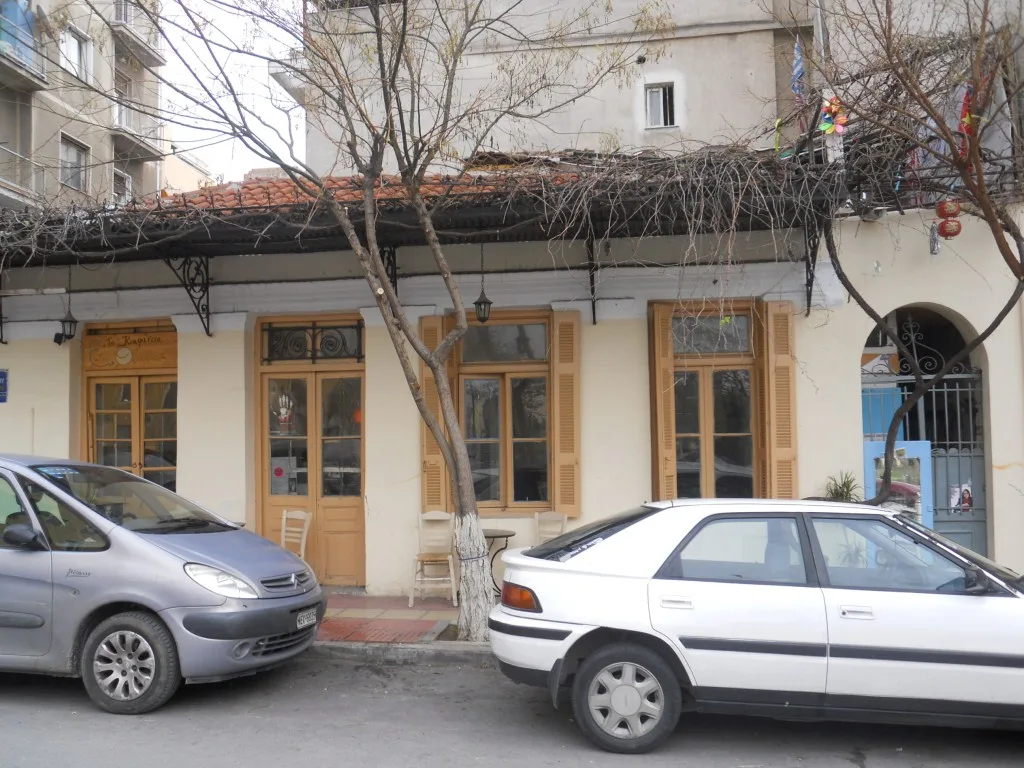
Athens eats like a very large village that happens to be a capital: souvlaki stands on every third corner, a central market that still feeds the city rather than performing for it, lunch canteens (mageiria) dishing the day's trays to workers, and tavernas where dinner starts at nine and the house wine comes by the kilo. The tourist seams around the Acropolis are there, but one street beyond them the city eats entirely for itself.
Learn three institutions and you understand Athens: the souvlaki joint (order, wrap, go), the mageirio (home cooking at canteen prices, lunch only), and the taverna (shared plates, grilled meats, retsina, no hurry). Add the coffee, freddo in summer and a slow Greek coffee when an old kafeneio offers it, and you have the Athenian day.
Learn the foods
Start here, not with a restaurant. Learn what these foods are, where they come from, and how locals eat them, and the whole city opens up: every menu, every market, every street corner starts making sense.
Souvlaki and gyros
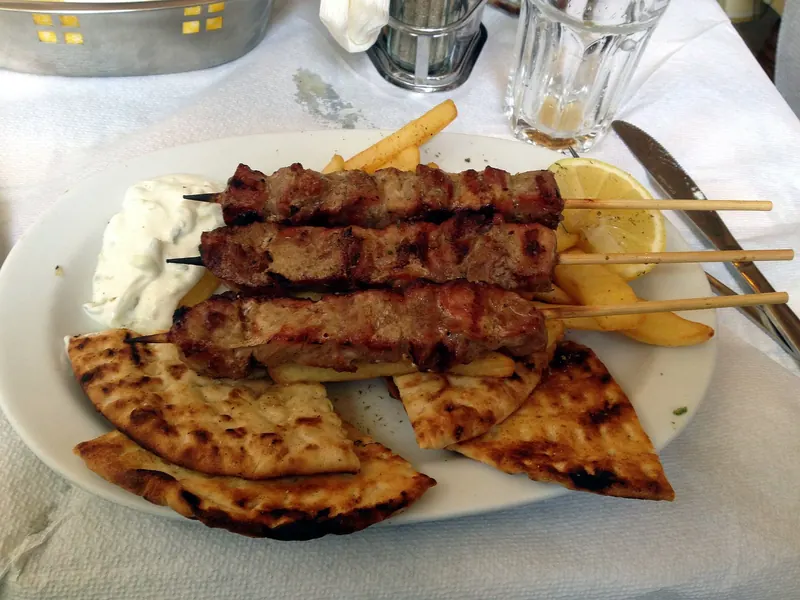
The Athenian unit of food: pork or chicken from the skewer (kalamaki) or shaved off the gyros spit, wrapped in grilled pita with tomato, onion, fries, and tzatziki or sauce. 'Me ap' ola': with everything.
Where it comes from: Athens and Thessaloniki fight Greece's pettiest war over this word: in Athens, souvlaki is the skewer and the wrap is a 'tylikto'; in Thessaloniki the wrap is the souvlaki and the skewer is 'kalamaki'. Order by pointing and both cities forgive you.
How to eat it: Standing at the counter, wrapped in paper, within minutes. One is a snack; two is lunch; the fries inside are not negotiable.
Moussaka
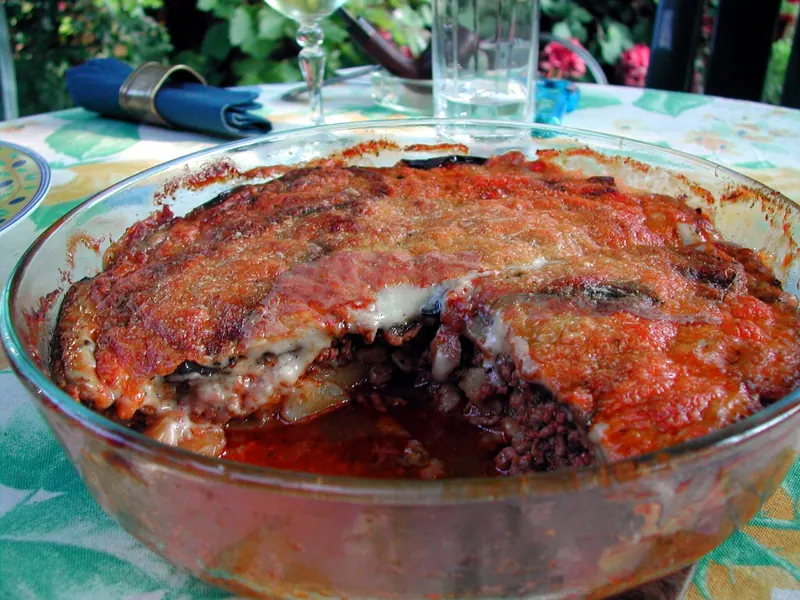
The layered bake: eggplant, spiced minced meat, and a thick béchamel cap, served in a square at a taverna or mageirio. Greece's Sunday dish, available all week.
Where it comes from: The béchamel top is a 20th-century refinement, credited to chef Nikolaos Tselementes, who codified Greek cooking for the modern table. Purists argue about potato layers; everyone agrees it should rest before cutting, and arrive warm, not molten.
How to eat it: At a mageirio at lunch, where it was baked that morning. A horiatiki beside it is the canonical pairing.
Horiatiki (village salad)
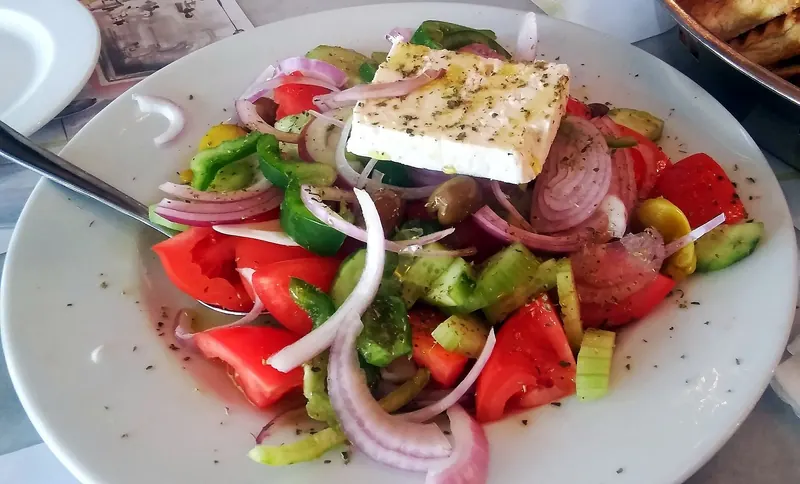
Tomatoes, cucumber, green pepper, red onion, olives, and a slab of feta under oregano and olive oil. No lettuce, ever, and the feta arrives as a slab, not crumbs.
Where it comes from: The 'salad' of every Greek table is a shared plate, not a side: it lands first, stays through the meal, and ends with bread dragged through the tomato-oil-feta liquor at the bottom, the bite Athenians call 'papara'.
How to eat it: Share it, break the feta yourself, and save bread for the bowl's end. Ordering one per person marks the table as new.
Tzatziki and the meze spread
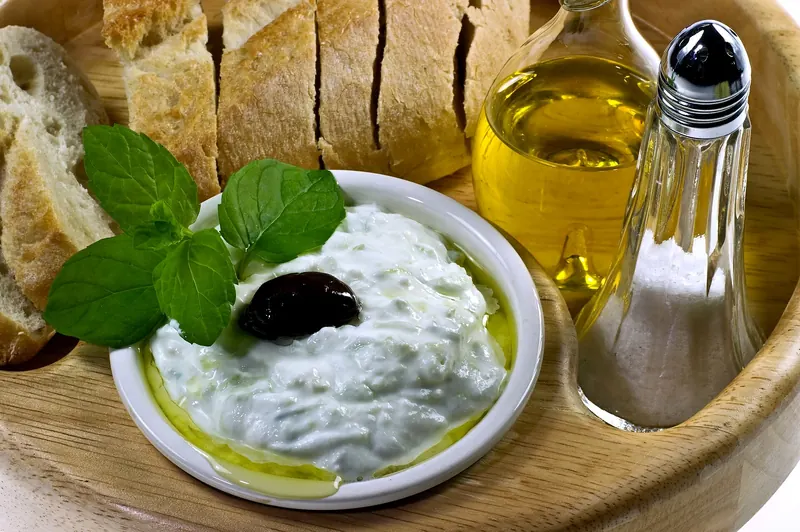
Strained yogurt, cucumber, garlic, and dill, served with warm bread as the anchor of a meze table: add olives, dolmades, fried zucchini, and ouzo, and a snack becomes an evening.
Where it comes from: The meze table is Greece's social technology: small plates ordered in waves, drinks by the small bottle, conversation doing the rest. Tzatziki's garlic strength is a house signature; the brave houses announce themselves from the doorway.
How to eat it: Order in rounds, never all at once. Bread is the vehicle; the last piece is fought over by custom.
Spanakopita and the pites
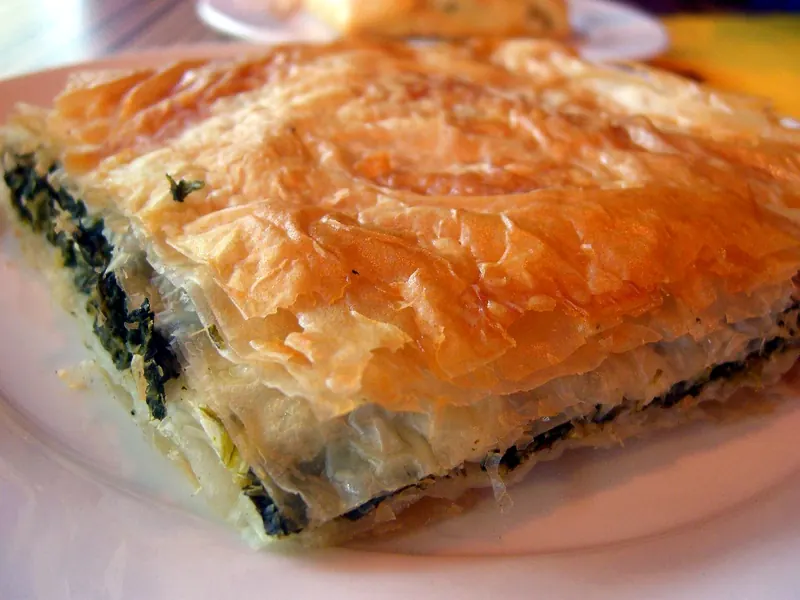
Phyllo pies, spinach-and-feta first among them, sold by the piece in every bakery for breakfast and bought warm. Tyropita (cheese) and bougatsa walk beside it.
Where it comes from: The pie is Greece's portable breakfast: bakery windows across Athens steam with trays from 7 a.m., and the piece is cut to order, weighed, and wrapped in paper. Villages guard their phyllo thickness like dialects.
How to eat it: Warm, from the bakery, eaten on the move or on the shop's step. Coffee in the other hand is the full Athenian breakfast.
Dolmades
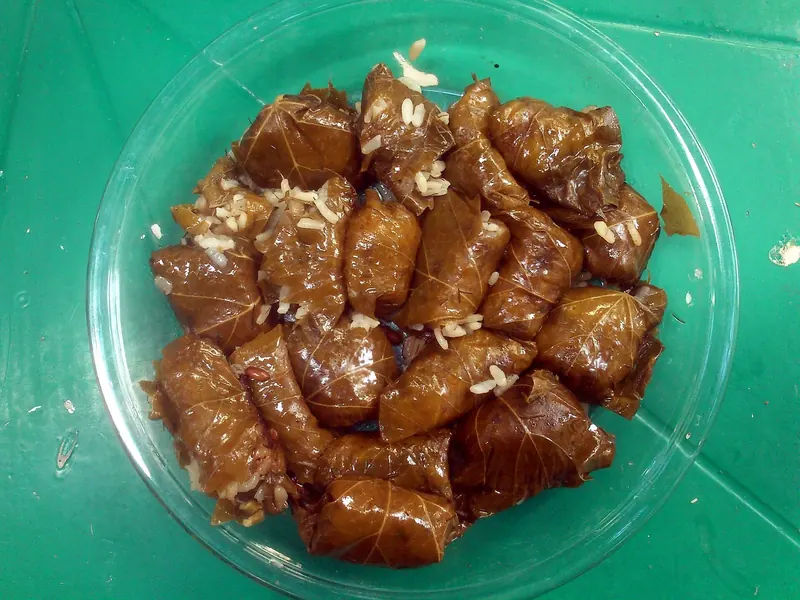
Vine leaves rolled around herbed rice (or rice and mince), lemony and olive-oiled, served with yogurt or avgolemono. The meze plate that tests a kitchen's patience.
Where it comes from: Every Greek grandmother's rolling speed is a family statistic. The meatless Lenten version (with currants and pine nuts in the Asia Minor style) is the connoisseur's, a refugee recipe that became national.
How to eat it: Room temperature or warm, lemon squeezed over, yogurt beside. Two bites each; they are built for the hand.
Loukoumades
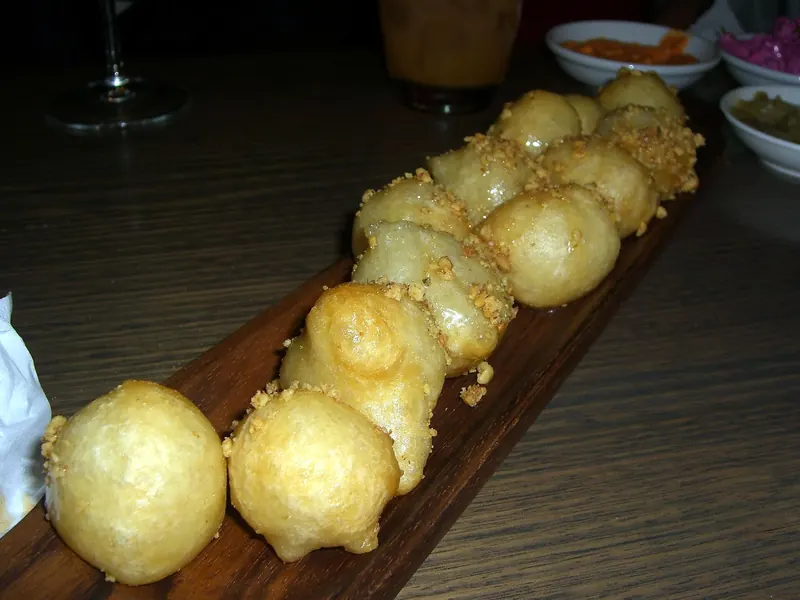
Fried dough puffs, soaked in honey syrup, dusted with cinnamon and walnuts, eaten with a fork the moment they land. Athens' oldest sweet shops fry them to order.
Where it comes from: Fried dough in honey is among Greece's oldest sweets, mentioned as prizes for ancient Olympians. Aiolou street's Krinos has served them since 1923, and the queue of office workers at 11 a.m. is a century old and counting.
How to eat it: Immediately: loukoumades have a five-minute half-life. Order the classic honey version before any modern remix.
Street food, decoded
Athens' fast food is the souvlaki wrap, and its slow food is everything else: the city grazes. Bakeries hand you a warm pie at 8, the market feeds you at noon, a loukoumades lands at 5, and dinner, when it comes at 9, is a table of shared plates that was never really about hunger. The visitor's error is scheduling meals; the Athenian way is to keep eating small things until the taverna hour arrives.
The Varvakios Central Market on Athinas street is the system's heart: butchers and fishmongers shouting over the aisles, spice shops, and mageiria in the surrounding lanes cooking what the stalls sell. Go in the morning, eat in the lanes, and you have done Athens properly.
The souvlaki joint
Counter, spit, skewers, paper wrap: Kostas near Syntagma (since 1950) and Thanasis in Monastiraki are the famous names; every neighborhood defends its own. Eat standing, order 'me ap' ola'.
The mageirio
The lunch canteen of trays: Diporto's signless basement near the market (chickpeas, whatever the day gives) and Ipiros in the market (patsa tripe soup since 1890) are the legends. Lunch only, cash-era prices.
The taverna
Shared plates, grilled meats, house wine by the kilo in metal jugs, bread charged by the cover. The evening institution; arrive at nine, order in waves, refuse nothing offered at the end.
The kafeneio
The old coffee house: Greek coffee in a demitasse, a glass of water, time priced at zero. The survivors in the center and every village square keep the ritual exact.
The ouzeri
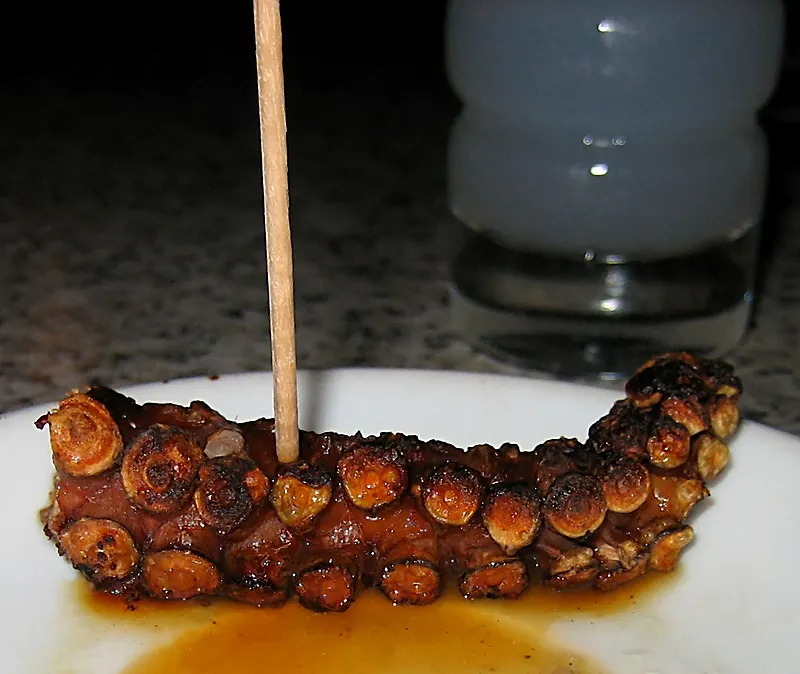
Ouzo by the small bottle, meze by the wave, seafood small plates in the good ones. Psyrri and Piraeus run the famous rooms; the rule is that the ouzo turns cloudy and the evening turns long.
The loukoumades shop
Krinos on Aiolou (since 1923) and its modern rivals: dough fried to order, honey, cinnamon, a fork, five minutes of silence. Athens' sweet punctuation mark.
The rules that keep it safe and good
Dinner before 8 marks a visitor; the taverna's serious seating starts at 9, and kitchens keep serving past midnight in summer.
Bread and water arrive unasked and bread is charged (the 'cover'): the jug of tap water is free and the papara at the salad's end is its purpose.
House wine is ordered by weight ('ena kilo kokkino', a kilo of red) and arrives in a metal jug; judging it against bottled wine misses the institution.
The Varvakios market closes Sundays and winds down by mid-afternoon; the fish hall's last hour is the bargain hour.
Tipping is rounding up and small notes, not a percentage negotiation; the offered dessert or fruit at the end is on the house and refusing is the only wrong move.
The markets
Markets are where Athens actually shops and eats. Each one has a different job; go in the morning, when the food counters are at their busiest.
AVarvakios Central Market
Athens' great food market since 1886, on Athinas street: a fish hall that shouts, meat aisles, spice and olive shops, and mageiria in every surrounding lane. The city's pantry and its best morning.
Eat: Patsa at Ipiros if you are brave, Diporto's chickpeas after, olives and feta to carry home.
BMonastiraki Flea Market
The Sunday-swollen bazaar under the Acropolis: antiques, junk, records, and the souvlaki institutions of the square feeding the hunt. Athens' weekend ritual market.
Eat: A Thanasis kebab plate or a wrap from the square, eaten among the stalls.
CKallidromiou Laiki, Exarcheia
The Saturday farmers market climbing Exarcheia's hill: produce from Attica's farms, honey, herbs, and the quarter out shopping. The laiki (people's market) system feeds every neighborhood on its own weekday.
Eat: Whatever the farmers hand you to taste; lunch in the quarter after.
DKypseli Municipal Market
The revived 1930s market hall in Kypseli: small food shops, social enterprises, and events in one of Athens' densest, most local quarters. The market as community center, rebuilt.
Eat: Graze the small kitchens; coffee in the hall's court after.
EPiraeus Central Market
The port's market streets behind the harbor: fish, produce, and the tavernas of the ferry crowd. Combine with Mikrolimano's fish tavernas for the full Piraeus day.
Eat: Market snacks in the morning; the fish taverna lunch at Mikrolimano after.
Neighborhoods: 1 Plaka and Anafiotika · 2 Monastiraki and Psyrri · 3 Exarcheia · 4 Koukaki and Makrygianni · 5 Kolonaki · 6 Piraeus and MikrolimanoMarkets: A Varvakios Central Market · B Monastiraki Flea Market · C Kallidromiou Laiki, Exarcheia · D Kypseli Municipal Market · E Piraeus Central MarketPins mark neighborhood centers, so you can place each area against where you are staying. Taxi times under each neighborhood below are measured from the Acropolis.
1Plaka and Anafiotika
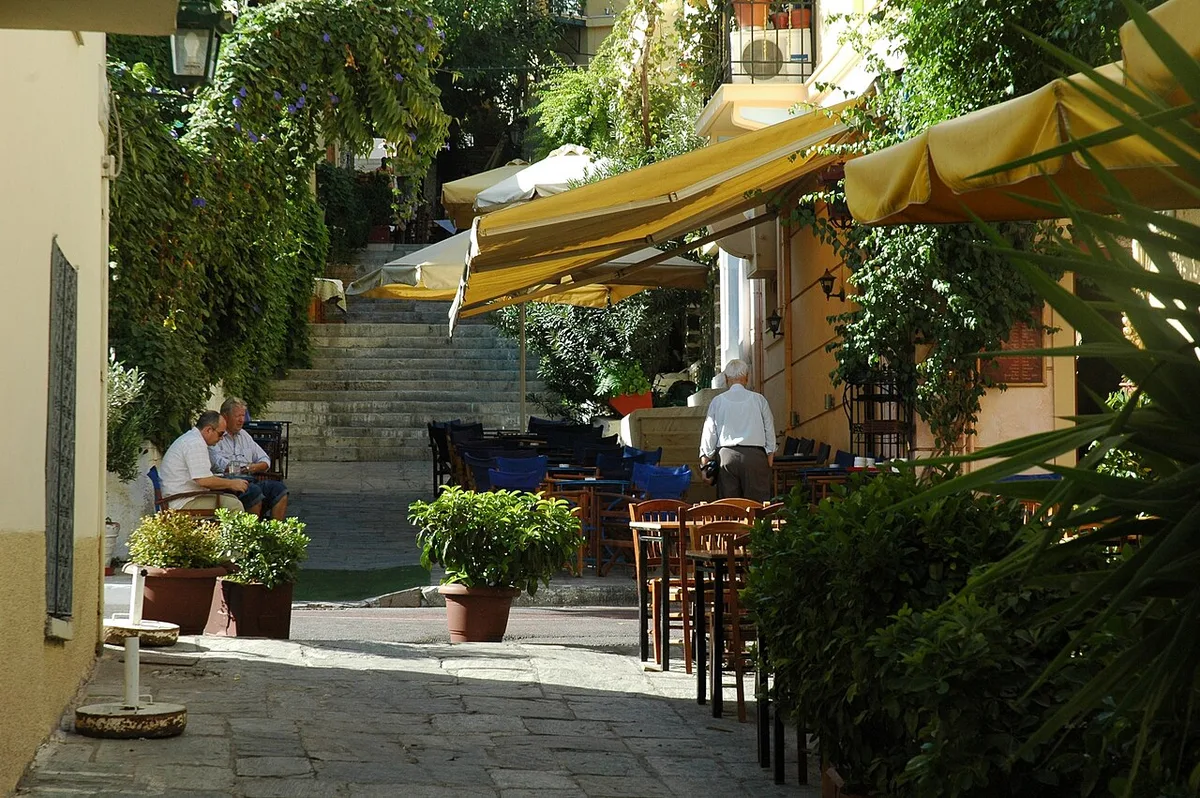
The old town under the Acropolis: tourist tavernas on the squares, but also family places in the lanes that predate the crowds, and the island-white lanes of Anafiotika above. Eat off the main steps, drink on them.
From the Acropolis: The Acropolis is its skyline; you are there
2Monastiraki and Psyrri
The flea market quarter and its rougher sibling: kebab institutions on the square, meze houses and old workshops in Psyrri's lanes, and the city's best people-watching over a souvlaki eaten standing.
From the Acropolis: 10 min on foot
3Exarcheia
The anarchist-student quarter: the Saturday farmers market on Kallidromiou, cheap tavernas, meze houses, and Athens' intellectual table. The city's living room, unpolished and well fed.
From the Acropolis: 15 min on foot
4Koukaki and Makrygianni
South of the Acropolis: the residential quarter Athenians actually recommend, cafe streets, bakeries, and neighborhood tavernas at local prices under the rock's quieter face.
From the Acropolis: 10 min on foot
5Kolonaki
The smart quarter on Lycabettus' slope: expense-account tavernas, modern Greek kitchens, and cafe society. Where Athens dresses for lunch.
From the Acropolis: 15 min on foot
6Piraeus and Mikrolimano
The port, its own city: fish tavernas around the Mikrolimano marina, market streets, and the ferry-departure feast culture. Athens' seafood address, 30 minutes by metro and worth every one.
From the Acropolis: 30 min by metro (Line 1)
The people behind the food
The names that explain how Athens cooks the way it does now.
Diporto
Institution, Sokratous street
The basement taverna with no sign, two barrels of wine, and a day's pot (the chickpeas are the legend): Athens' most famous 'secret' for fifty years, hidden exactly where the market workers always knew it was. No menu, no choice, no mistake possible.
Ipiros (Epirus)
Institution, Varvakios Market
In the market since 1890, serving patsa (tripe soup with garlic and chili vinegar) to butchers at dawn and the knowing ever since. The dish that divides visitors and defines market Athens, served in the hall where the tripe is sold.
Krinos
Institution, Aiolou street, since 1923
A century of loukoumades from one Aiolou storefront: honey, cinnamon, paper trays, and a mid-morning queue of the whole center. Athens' sweetest continuity.
Kostas
Institution, near Syntagma, since 1950
The grandfather's souvlaki shop: pork skewers, hand-cut fries, the soft pita, and a lunch line of lawyers and couriers. The wrap against which Athens measures all others.
The Varvakios butchers and fishmongers
Craft, Athinas street
The shouting dynasties of the central market, third and fourth generations at the same stalls, who supply half the tavernas in this guide and argue cuts with the other half. Their hall is the city's true parliament.
If you only eat ten things here
A Kostas wrap, standing, 'me ap' ola', before noon.
The Varvakios morning: fish hall, spice shops, Diporto's chickpeas.
Patsa at Ipiros, or the honest attempt at it.
Horiatiki with the feta slab, papara at the end, in a Koukaki taverna.
Krinos loukoumades at 11, hot, with the office queue.
A mageirio lunch: moussaka and whatever tray the day made best.
Freddo cappuccino on a Kolonaki corner, people-watching as sport.
Mikrolimano fish lunch in Piraeus, ferries for a view.
An ouzeri evening in Psyrri: meze in waves, ouzo turning cloudy.
Spanakopita from an Exarcheia bakery after the Saturday laiki.
Eating well here
me ap' ola
'With everything': tomato, onion, fries, sauce. The only souvlaki decision that matters.
kalamaki
The skewer itself, in Athenian. In Thessaloniki this word starts arguments; see the souvlaki war.
freddo
Greece's shaken iced coffee: 'freddo cappuccino, metrio' (medium sweet) is the national order.
papara
Bread dragged through the salad's juices at the bowl's end. The best bite, by law.
mageirio
The lunch cookshop of trays. Point, sit, eat like a worker, pay like it is 1995.
retsina
The pine-resined white wine, tavernas' house pour for a century. Cold, cheap, and better with grilled food than its reputation.
ena kilo
'One kilo': how house wine is ordered, by weight, in a metal jug. Half is 'miso kilo'.
logariasmo, parakalo
'The bill, please': the phrase that ends a taverna night, slowly.
When do Athenians actually eat dinner?
At nine, or ten in summer. Restaurants open earlier for visitors, but the taverna fills when the city sits down, and lunch (the day's serious cooked meal for many) runs 1 to 3. The mageirio lunch is the value play of the whole city.
Where do locals eat near the Acropolis?
Koukaki, two streets south, is the standing answer: cafes, bakeries, and tavernas priced for the neighborhood. In Plaka itself, eat in the lanes off the main steps and check whether the next table is speaking Greek.
What is a mageirio?
A cookshop: trays of the day's home-style dishes (moussaka, stuffed tomatoes, bean stews, roasts) behind glass, ordered by pointing, lunch only, prices from another era. Athens runs on them; the Varvakios market area has the famous ones.
Is the tap water safe, and what about ice?
Athens' tap water is good and locals drink it; tavernas serve it free by the jug. Ice in the freddo is part of the design.
How do I order coffee like an Athenian?
Summer: 'freddo espresso' or 'freddo cappuccino', the shaken iced coffees Greece invented for itself, sweetness specified ('sketo' none, 'metrio' medium, 'glyko' sweet). Winter in an old kafeneio, a Greek coffee, same vocabulary.