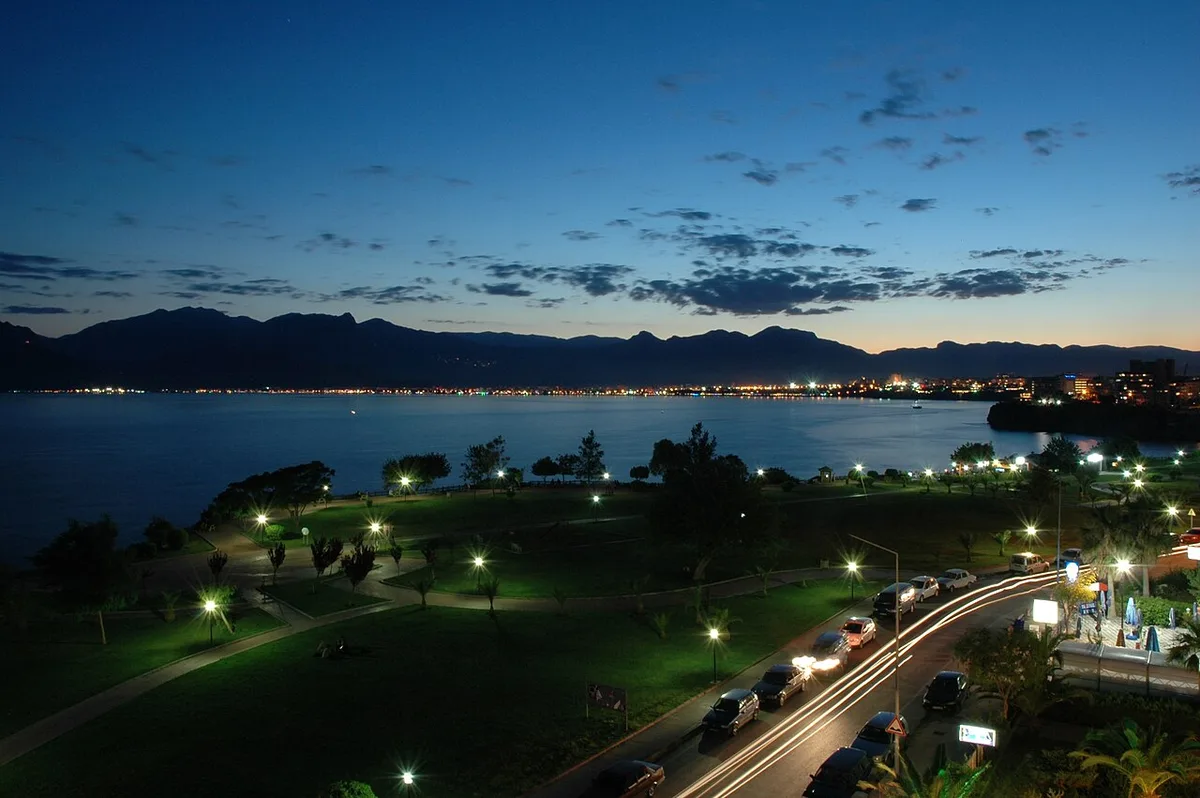
The old Roman harbour of Antalya. Photo via Wikimedia Commons.
How Antalya eats
Antalya sells beach holidays by the million, but the city behind the hotels keeps a distinct regional kitchen: piyaz made nowhere else like it (white beans under a tahini sauce), şiş köfte grilled for the lunch crowd, pumpkin dessert drowned in tahini, and the Yörük (nomad) inheritance of gözleme and bazlama from the Taurus foothills at its back. The orange is the city's symbol because the groves were here first.
Kaleiçi, the old town inside Roman and Ottoman walls above the little harbor, is the visitor's dining room; the local table runs east and west of it in Konyaaltı and Lara, where the markets and köfte shops serve the city itself. Eat one dinner in the old town's courtyards, then eat like Antalya for the rest.
Learn the foods
Start here, not with a restaurant. Learn what these foods are, where they come from, and how locals eat them, and the whole city opens up: every menu, every market, every street corner starts making sense.
Antalya piyazı
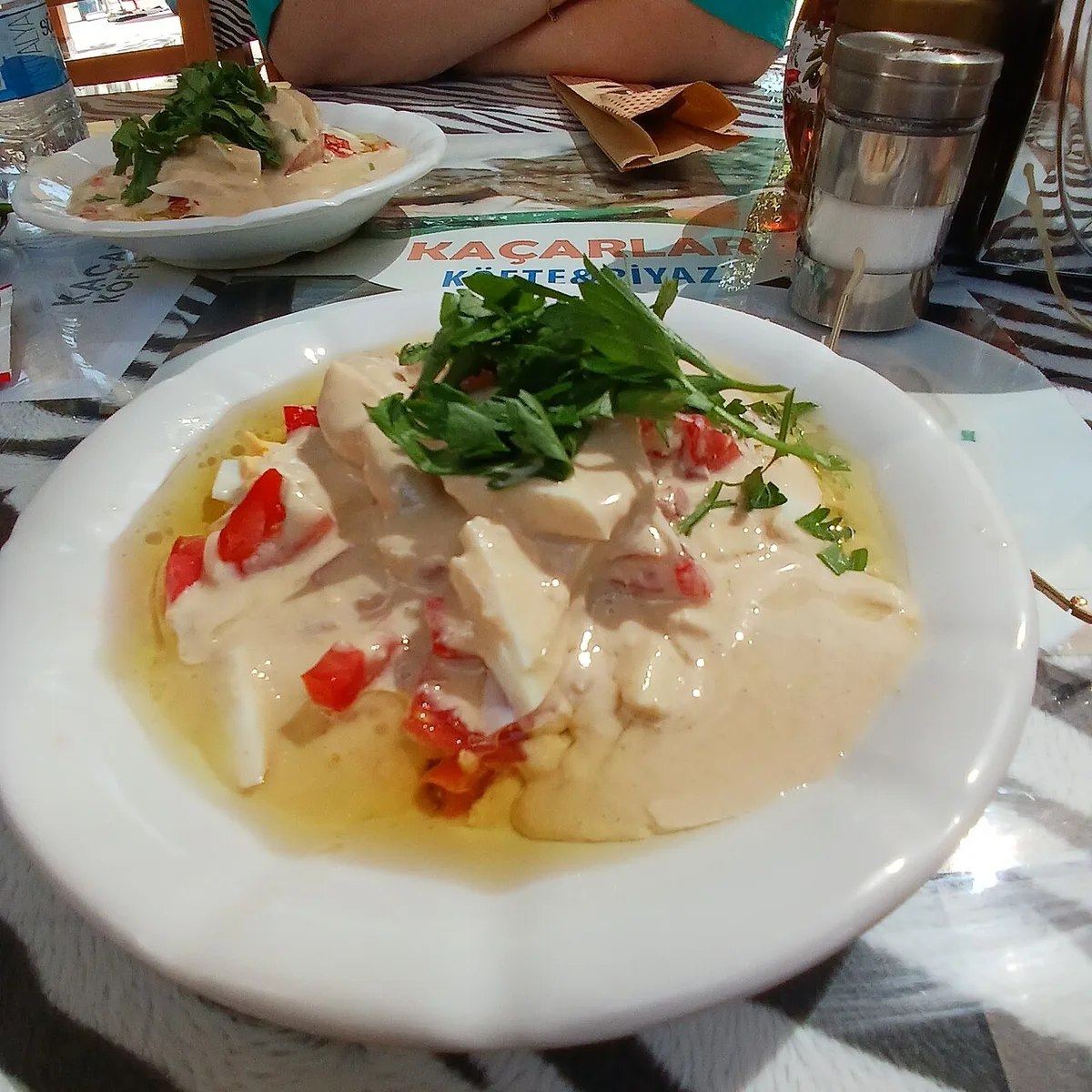
The city's signature: white beans in a sauce of tahini, lemon, vinegar, and garlic, topped with tomato, onion, parsley, and a boiled egg. Nowhere else in Turkey puts tahini on the beans, and Antalya defends the invention absolutely.
Where it comes from: Piyaz elsewhere is a bean salad side; here, the tahini (tarator) version, born in the city's old köfte shops, became the main event and a registered regional specialty. The köfte is arguably the piyaz's accompaniment, and locals will say so.
How to eat it: With şiş köfte, in that order of importance, the sauce mopped with bread. Order 'tahinli piyaz' in full; the plain version is for other cities.
Şiş köfte
Hand-minced meatballs grilled on flat skewers, served with the piyaz, grilled tomato and pepper, and lavaş. The Antalya lunch, unchanged for generations.
Where it comes from: The köfte-piyaz shop is Antalya's lokanta archetype: a grill, a bean pot, and a lunch queue of the whole center. 7 Mehmet, the city's famous restaurant since 1937, built its name on this table before growing grand.
How to eat it: At noon, with ayran, bread working both plates. The tomato's char is part of the order, not an accident.
Tahinli kabak tatlısı
Pumpkin dessert the Antalya way: candied pumpkin pieces under a pour of tahini and crushed walnuts. The city's second tahini signature, and the correct ending to the köfte lunch.
Where it comes from: Kabak tatlısı is national; the tahini pour is the Mediterranean's local signature, turning a simple sweet into the region's emblem. Tahini here is not an ingredient but a dialect.
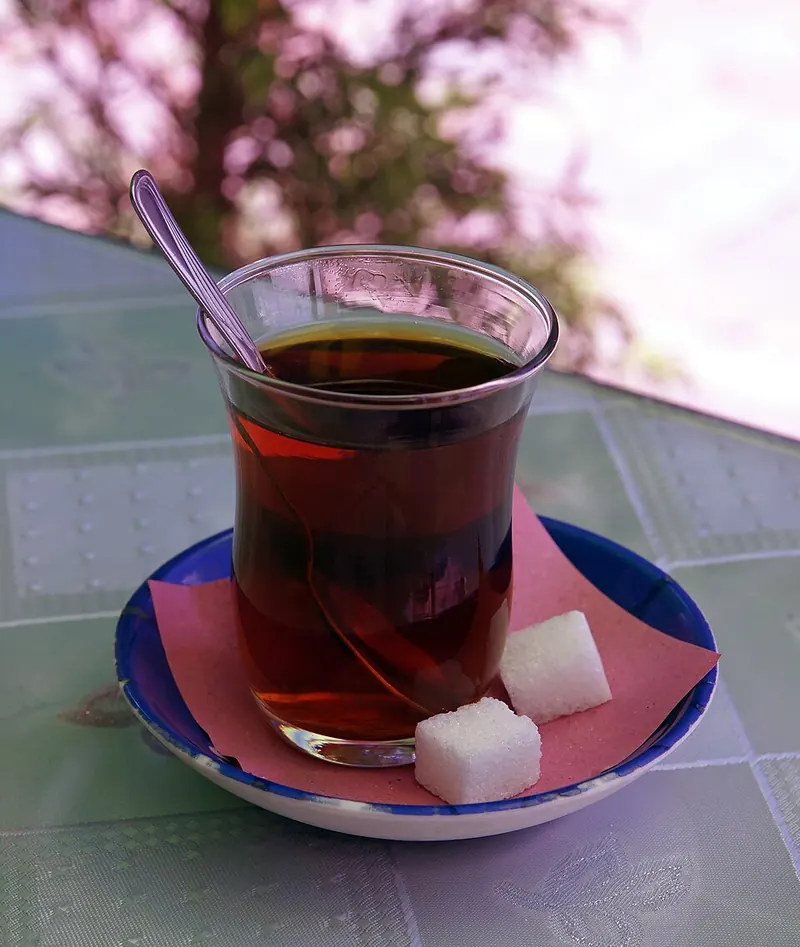
How to eat it: Shared, with çay, the tahini taken with every bite. If the shop's tahini is stone-ground and local, the dessert explains itself.
Gözleme and bazlama
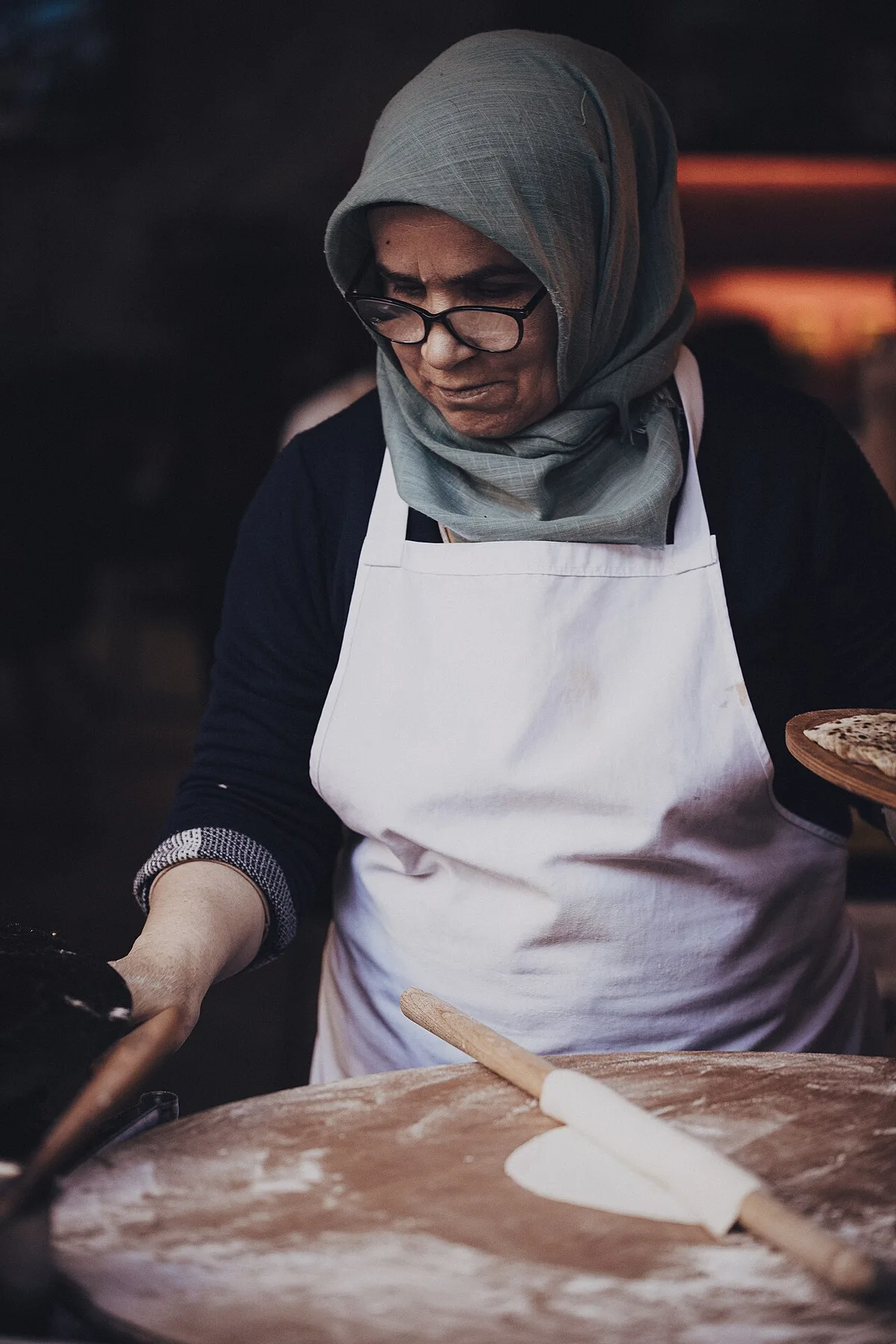
The Yörük griddle breads: gözleme rolled tissue-thin and filled with cheese, potato, or greens; bazlama its puffy, soft cousin. Made by women at market stalls and village stops across the province.
Where it comes from: The Taurus foothills were Yörük nomad country, and the sac griddle traveled with the tents. The gözleme stand (a woman, a rolling pin like a dowel, dough to order) is the province's oldest fast food, still its best roadside stop.
How to eat it: Hot off the sac, cheese first, with çay or ayran. At markets, eat it standing where it was rolled; it waits for no table.
Tandır and the Taurus lamb
Slow lamb from the clay oven, and the mountain dishes behind it: the highland villages' celebration cooking, served in the city's tandır houses and on the plateau road trips (Korkuteli's şiş is a rival claim).
Where it comes from: Antalya's back is the Taurus range, and its lamb culture is highland: tandır pits, whole-animal feasts, and the yayla (summer pasture) towns an hour up the mountain. The city eats the coast; its feasts come from the hills.
How to eat it: At a tandır house or on a Korkuteli run, with bazlama and the mountain ayran. Weekend lunch is the feast's hour.
The serpme breakfast, garden style
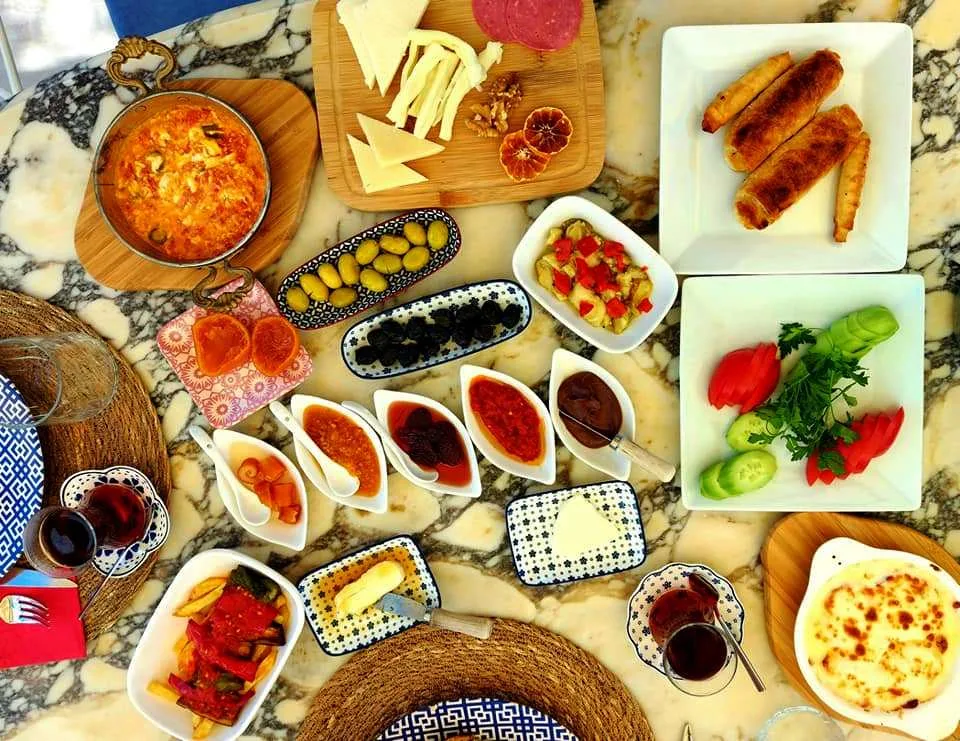
The full Turkish spread taken in the citrus and garden restaurants toward Düden and the city's green edge: village cheeses, olives, honey, bazlama from the sac, menemen, and the garden's own oranges as juice and marmalade.
Where it comes from: Antalya's breakfast escapes the city: the garden restaurants (many around the Düden falls road and the village edges) serve the spread where the produce grows. The çay comes in the double pot and refills by ritual, and nobody's morning survives intact, happily.
How to eat it: For the table ('serpme'), two hours minimum, the gözleme ordered when the sac fires. Sunday is the city's day for it; book or arrive early.
Citrus, and the Finike orange
The city's fruit: Finike's oranges (a protected name, sweet enough to be a dessert), lemons, and the marmalades and juices that follow them into every breakfast and sweet shop in the province.
Where it comes from: The orange on the city's statues and festival is not decoration: the coastal plain's groves (Finike's most famous) built the region before the hotels did, and their harvest calendar still runs under the tourist one.
How to eat it: Fresh juice at breakfast in season (winter is citrus season here, when the north shivers), marmalade on the breakfast table, a box of Finike oranges if your luggage allows.
Street food, decoded
Antalya's street food is the köfte shop and the market stall: şiş köfte and piyaz at noon in the center, gözleme rolled at the weekly markets, corn and ice cream on the cliff promenade at night. The resort strip is a separate country; the city's system is older, cheaper, and entirely findable.
The weekly markets are the calendar: the Wednesday market in Muratpaşa and the great Saturday market in Lara are where the province's produce lands and where the gözleme women set up their sacs. Graze the market, lunch at the köfteci, and dine once in a Kaleiçi courtyard for the walls and the swallows.
The köfte-piyaz shop
Grill, bean pot, tahini sauce, noon queue: the city's lunch archetype, eaten at speed and remembered for years. Işıklar and the center keep the classic counters.
The Kaleiçi courtyard
Ottoman house gardens behind wooden doors: the old town's dinner format, romantic by architecture. Choose for the cooking, forgive the courtyard premium once.
The market gözleme stand
A woman, a sac, dough rolled to order at the weekly markets: the province's oldest fast food, eaten standing with ayran.
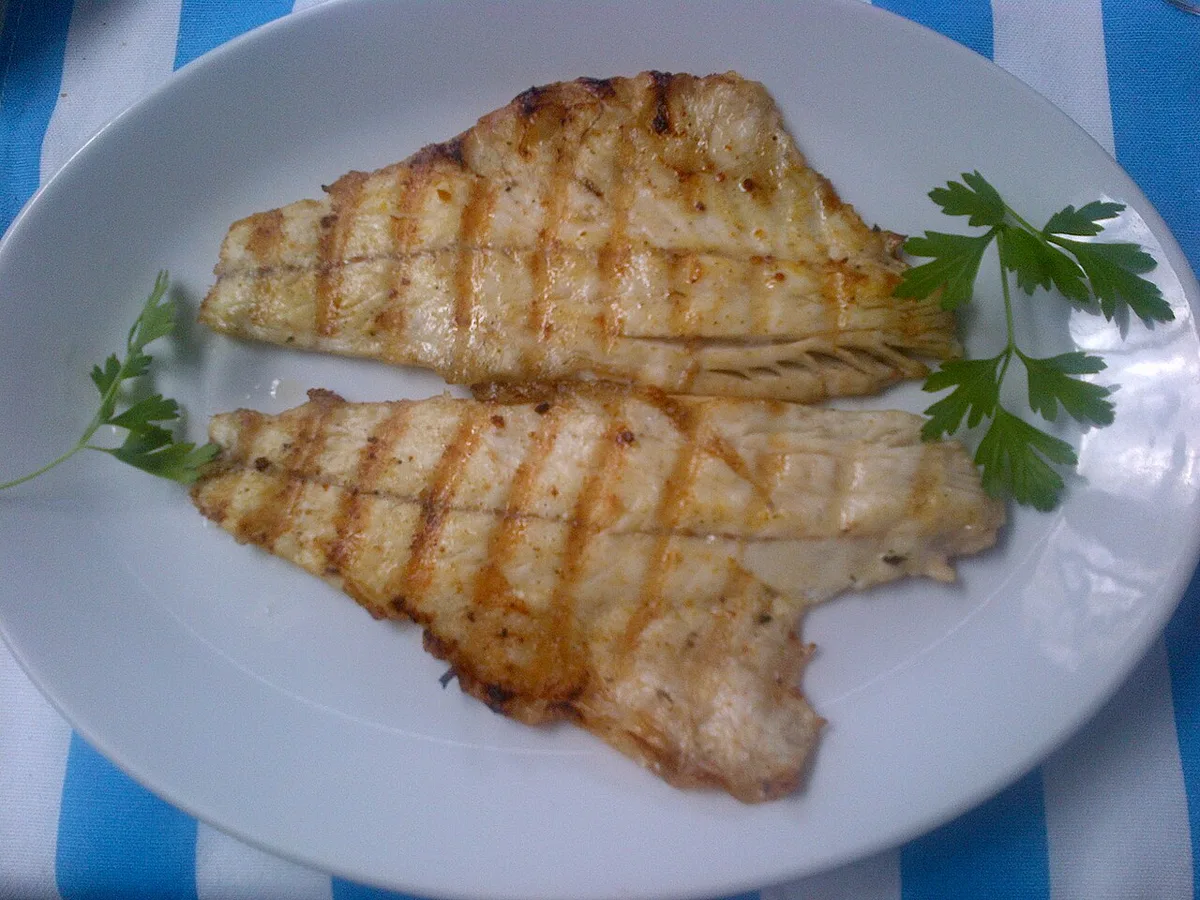
The harbor fish grill
Below the cliffs in the Roman harbor: the day's fish at the quay's grills, boats and swallows for company, the elevator back up.
The garden breakfast
Toward Düden and the green edges: serpme spreads under citrus and pine, the city's Sunday institution in its natural habitat.
The cliff promenade night
Tea gardens and carts along the falez cliffs after dark: corn, ice cream, and the bay's lights. Summer's schedule, locals' edition.
The rules that keep it safe and good
Piyaz is a main here: ordering it 'on the side' outs the visitor, and the köfte is incomplete without it.
The midday summer heat is a scheduling fact: lunch early or late, siesta like the city, and let dinner run past ten.
Market days rotate by district; ask any shopkeeper 'pazar hangi gün' (which day is the market) and plan the graze accordingly.
In Kaleiçi, check the board before the courtyard: the honest houses price in the open and cook the piyaz as a headline.
Tahini is the local test of a dessert menu: kabak tatlısı without it is the national version; with it, you are home.
The markets
Markets are where Antalya actually shops and eats. Each one has a different job; go in the morning, when the food counters are at their busiest.
AThe Wednesday Market (Çarşamba Pazarı)
Muratpaşa's great midweek market: the province's produce, textiles above, food lanes and gözleme sacs below. The city's biggest weekly provisioning.
Eat: Gözleme at the sacs, fruit as you shop, the market's own lunch counters at noon.
BThe Lara Saturday Market
The famous Cumartesi Pazarı in the Lara-Çağlayan district: produce, cheeses, olives, and street food for the residential east, visitors welcome and outnumbered.
Eat: A full market graze: bazlama, olives, cheese, fruit, in no order.
CKaleiçi's Bazaar Streets
The old town's lanes of jewelers, carpets, and sweet shops inside the walls: commerce since the harbor mattered, prettiest in the morning before the heat.
Eat: Lokum and citrus marmalades from the sweet shops; save lunch for the center.
DKonyaaltı's Beach Stalls and Markets
The west beach's promenade stalls and the market streets behind it: the locals' shore, fish restaurants at its end, mountains over everything.
Eat: Fish at the west end's grills; ice cream on the promenade after.
EThe Old Harbor Fish Stalls
The Roman harbor's morning: the boats, the catch, and the quay's grills below the cliffs. Small, early, and the old town's pantry.
Eat: The day's fish at the quay, harbor cats supervising.
Neighborhoods: 1 Kaleiçi (Old Town) · 2 The Old Harbor and Cliffs · 3 Işıklar and the Center · 4 Konyaaltı · 5 LaraMarkets: A The Wednesday Market (Çarşamba Pazarı) · B The Lara Saturday Market · C Kaleiçi's Bazaar Streets · D Konyaaltı's Beach Stalls and Markets · E The Old Harbor Fish StallsPins mark neighborhood centers, so you can place each area against where you are staying. Taxi times under each neighborhood below are measured from Kaleiçi.
1Kaleiçi (Old Town)
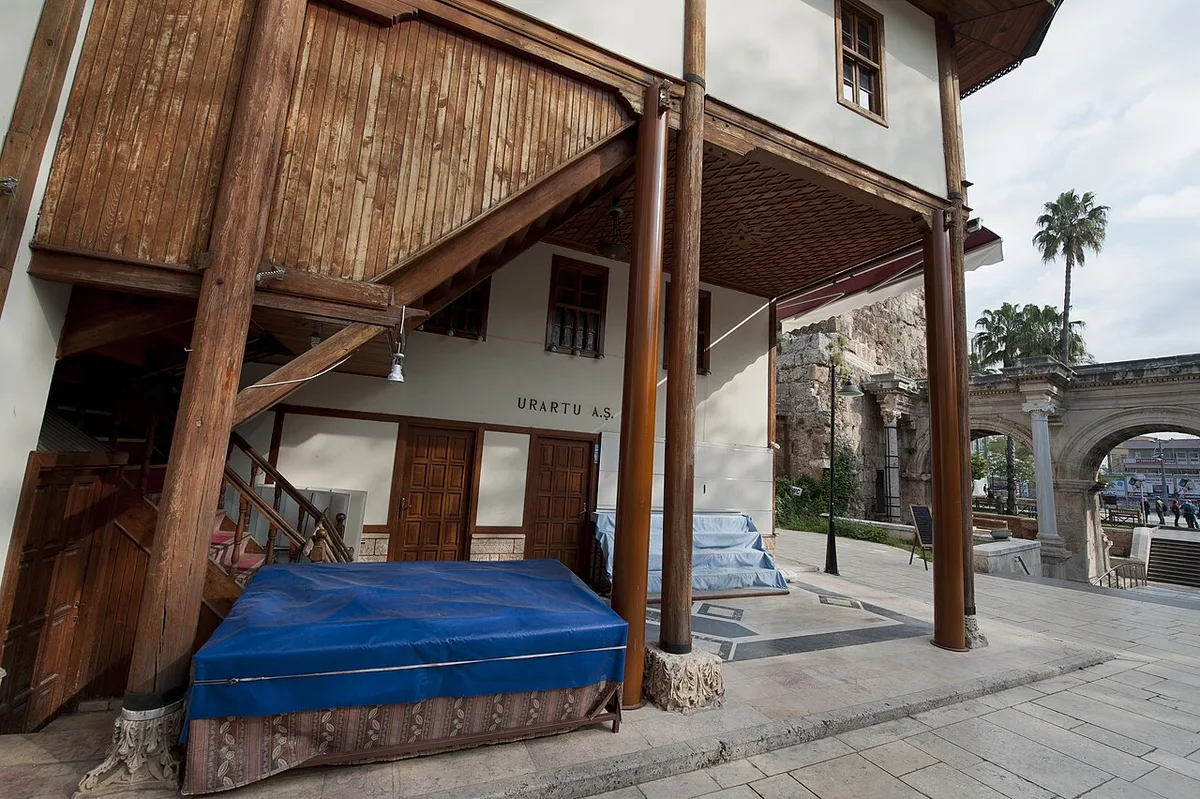
The walled old town above the Roman harbor: Ottoman houses turned courtyard restaurants, Hadrian's Gate at its top, and the city's most romantic (and most priced-for-romance) tables.
From Kaleiçi: Kaleiçi is the reference point; you are there
2The Old Harbor and Cliffs
Down the cliff elevator: the Roman harbor's fish grills and the cliff-top tea gardens above the whole bay, the city's postcard and its evening walk.
From Kaleiçi: 10 min on foot (or the elevator)
3Işıklar and the Center
The modern center's shopping streets east of the walls: köfte-piyaz shops, lokantas, and the city's everyday lunch at everyday prices.
From Kaleiçi: 10 min on foot
4Konyaaltı
The long beach west: the locals' shore of fish restaurants, beach cafes, and the Saturday graze of market streets behind it, mountains as the backdrop.
From Kaleiçi: 20 min by tram or bus
5Lara
East along the cliffs: the hotel strip in front, and behind it the residential city's markets (the famous Saturday market) and family restaurants. Antalya's suburb, eating well.
From Kaleiçi: 25 min by bus
The people behind the food
The names that explain how Antalya cooks the way it does now.
7 Mehmet
Institution, since 1937
Antalya's famous restaurant, grown from a köfte-piyaz shop into the city's grand table without surrendering the piyaz: the place the city takes its honored guests, and the proof that the local canon can carry a great house.
The piyaz masters of the center
Craft, Işıklar and the old shops
The köfteci dynasties whose tahini sauce ratios are family property: their counters set the standard every visitor's piyaz is secretly judged against.
The Yörük gözleme women
Craft, the markets and village roads
The rollers of the sac breads, working markets and roadside stops across the province: dough to order, fillings from the garden, the Taurus inheritance served hot in minutes.
The Finike growers
Craft, Finike
The orange families of the coast's famous grove town, whose fruit seasons the whole province's breakfasts. Their harvest is the city's sweetest calendar page.
The Kaleiçi courtyard families
Institution, the Old Town
The families who turned their Ottoman houses into the old town's restaurants and pensions, cooking for the walls' romance and the city's occasions alike.
If you only eat ten things here
Piyaz and şiş köfte at a center köfteci, noon, ayran, no debate.
Kabak tatlısı with the full tahini pour, çay after.
A Kaleiçi courtyard dinner, swallows over the walls.
Gözleme at the Wednesday market, rolled in front of you.
The harbor fish lunch, elevator down, slow walk up.
A Düden-side garden breakfast: serpme under the citrus.
Finike oranges in season, juice at breakfast, box if you can.
Lara's Saturday market graze, bazlama in hand.
7 Mehmet for the city's grand version of its own table.
The cliff tea gardens at night, the bay lit, corn from a cart.
Eating well here
piyaz
In Antalya, say it and tahini is understood. Elsewhere, specify 'tahinli' and prepare to explain yourself.
şiş köfte
The flat-skewer meatballs, the piyaz's partner. The pair is ordered as one thought.
gözleme
The sac-rolled filled flatbread. Watch yours made; that is the format, not a delay.
bazlama
The soft, puffy griddle bread of the breakfast spread. Tear, load, repeat.
kabak tatlısı
The pumpkin dessert. In Antalya the tahini pour is added by default and by pride.
portakal
Orange: the city's emblem, festival, and breakfast juice. Finike's is the name to drop.
afiyet olsun
'May it be health': the blessing the köfteci calls after your tray.
hesap, lütfen
'The bill, please': at the garden breakfasts it arrives with one more tea.
How do I escape the resort food?
Eat one meal in Kaleiçi for the setting, then use the center (Işıklar) and Konyaaltı for the city's own table: köfte-piyaz at noon, fish on the west beach, markets on their days. The tram and buses run the whole strip; the all-inclusive wristband is not a fence.
What makes the piyaz different, really?
Tahini. The sauce (tahini, lemon, vinegar, garlic, bean liquid) turns the bean salad into a rich, nutty plate that carries the meal; the egg and tomato on top are the city's standard garnish. Once eaten, the plain piyaz of other cities reads as a draft.
When is Antalya best?
Spring and autumn for the city itself (the summer heat empties the streets at noon and fills them at midnight). Winter is citrus season and the locals' favorite: mild, green, and the old town quiet.
Are the Kaleiçi restaurants tourist traps?
The courtyards charge for their beauty, and the best of them cook honestly for it. The trap test is the same as anywhere: piyaz on the menu as a main, locals at the next table, and prices on the board before you sit.
What day trips pair with lunch?
Perge and Aspendos east (ruins in the morning, köfte on the road back), Termessos up the mountain (a picnic city: bring gözleme), and the Düden falls with a garden breakfast before. The Taurus road to Korkuteli is the meat lover's version.